

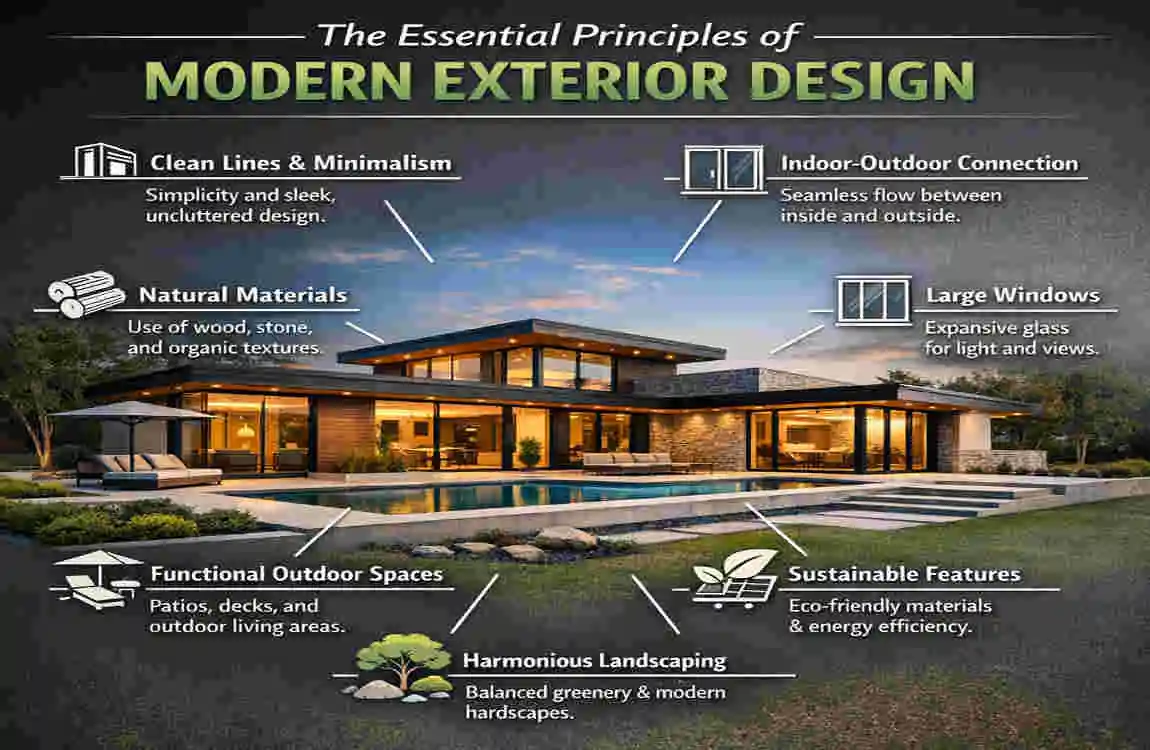
Modern exterior design is about more than making a house look nice from the street. It is about creating a home that feels balanced, useful, welcoming, durable, and visually clear.
If you have ever asked what the principles of exterior design are, the short answer is this: exterior design brings together appearance and function. It shapes how a home looks, how it performs in different weather, how it fits into its surroundings, and how comfortable it feels to live in.
A successful exterior should work with the home’s architecture, not against it. It should also connect well with its surroundings. That means considering the structure, materials, colors, landscaping, lighting, and long-term upkeep.
Creating Balance and Visual Harmony
Understand Exterior Proportions
Proportion is one of the first things people notice in a home exterior, even if they do not realize it. It refers to the size relationship between the parts of the house.
For example, windows should feel right in relation to the walls. Doors should not look too small or too large. Rooflines should match the overall shape of the house. When these parts work together, the home feels intentional and well designed.
Poor proportions can make a home feel awkward or unsteady. Good proportions make it feel grounded and attractive.
Use Symmetry and Asymmetry Effectively
Symmetry means both sides of a home feel similar. This is common in traditional architecture and often creates a calm, formal look.
Asymmetry, on the other hand, is often used in modern homes. It allows designers to place windows, doors, roof elements, and materials in a more free-flowing way. Done well, it creates a clean and contemporary look.
The key is not to make the house feel random. Even asymmetrical design should still feel balanced. The eye should move smoothly across the exterior.
Maintain Architectural Consistency
Exterior design works best when all the parts speak the same language. Materials, colors, roof shape, windows, and landscaping should all feel connected.
If you mix too many styles, the home can feel confused. A modern exterior with traditional trim, rustic stone, and bold decorative details may end up looking crowded instead of stylish.
Consistency helps the home feel calm, unified, and easier to read visually.
Choosing the Right Exterior Materials
Natural and Modern Materials
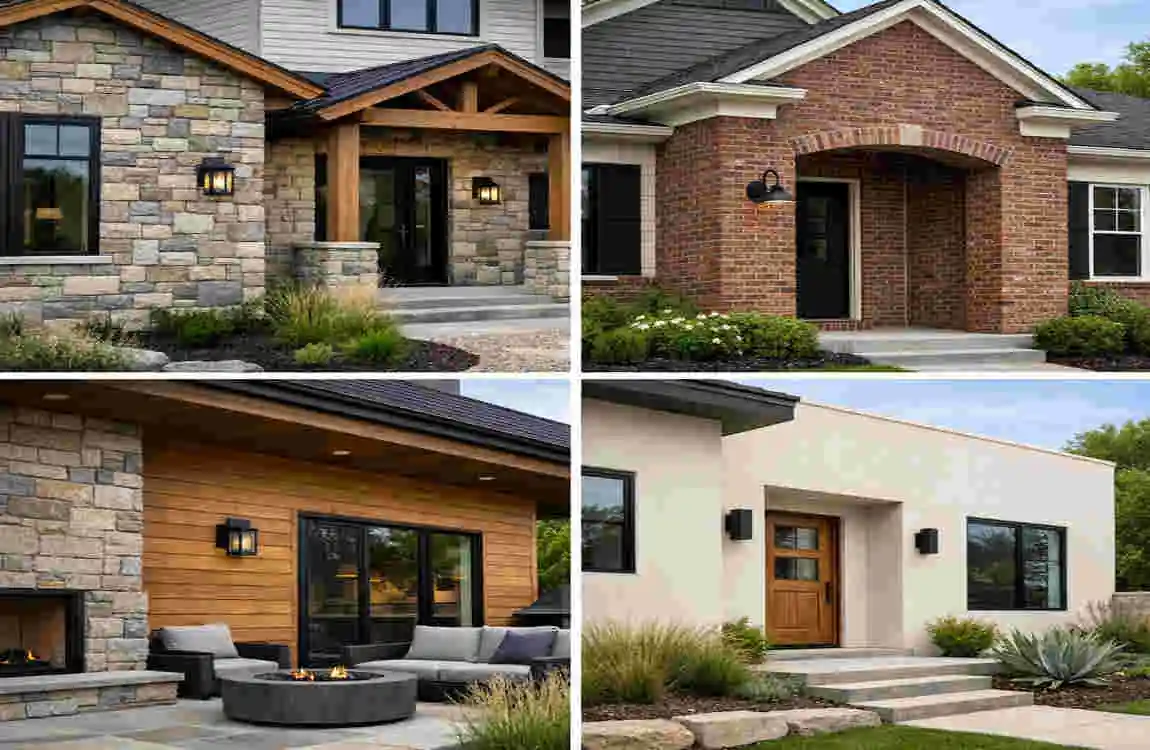
Materials shape the character of a house. They also affect how the home feels, how it ages, and how much care it needs.
Common exterior materials include:
- Brick
- Stone
- Wood
- Concrete
- Stucco
- Metal
- Composite materials
Each material brings a different texture and mood. Brick feels steady and classic. Stone feels strong and natural. Wood adds warmth. Metal and concrete often create a more modern, clean appearance.
When these materials are chosen carefully, they give the home depth and personality.
Consider Durability and Maintenance
A beautiful material is not enough. It must also suit the climate and your lifestyle.
If your home faces heavy rain, wind, intense sun, snow, or humidity, the exterior materials must withstand that exposure. Some materials need more frequent upkeep than others.
For example, wood may bring warmth, but it often needs more attention than brick or metal. A low-maintenance material can save time and money over the years.
Combine Materials Carefully
Modern exteriors often use two or three materials together. This can make the house look richer and more layered.
The trick is to keep the combination simple and coordinated. Use materials that match in tone, texture, or finish. If one material is bold, keep the others quiet.
Too many competing textures can make the exterior feel busy. A few well-chosen materials are usually enough.
Color, Contrast, and Exterior Character
Selecting a Cohesive Color Palette
Color helps define the mood of a home. A modern exterior usually works best with a simple and cohesive palette.
That often means using one main color, one secondary color, and one accent color. Neutral shades are especially popular because they feel clean and timeless.
Gray, white, beige, black, charcoal, and soft earth tones are all common in modern design. These shades create a calm base that lets the architecture stand out.
Create Contrast Without Overdoing It
Contrast gives a house visual energy. It can come from the trim, windows, doors, roof edges, or material changes.
A dark frame around a light wall can look sharp and modern. A bold front door can create a strong focal point. But contrast should be used with care.
If you use too many competing colors, the exterior can look confused. A modern house usually looks best when contrast is controlled and purposeful.
Use Accent Colors Strategically
Accent colors work best in smaller areas. Front doors are a classic place to use them. So are shutters, planters, lighting fixtures, and small architectural details.
Accent color should support the home, not overpower it. It should pleasantly draw the eye and add personality without causing visual clutter.
Functionality and Practical Exterior Design
Design for Everyday Use
A good exterior should look nice, but it should also work well every day. That means thinking about how people move around the home.
Entrances, walkways, driveways, patios, balconies, and outdoor seating areas should be practical and comfortable. The layout should make it easy for people to enter, leave, gather, and relax.
If the design is too awkward, even a beautiful house can feel hard to use.
Consider Privacy and Security
Privacy matters just as much as beauty. A home’s exterior should feel open enough to be welcoming, yet protected enough to feel secure.
Landscaping, fencing, screening, window placement, and outdoor lighting can all help. Trees and shrubs can soften the view without completely blocking it. Well-placed windows can bring in light while still protecting privacy.
This balance helps the home feel safe, calm, and lived in.
Plan for Climate and Weather
Exterior design should respond to local weather. Sun, wind, rain, snow, and humidity all affect how a home performs.
Roof overhangs can help shield walls and windows. Good drainage can prevent water buildup. Shading can reduce heat gain. Ventilation can help with moisture and temperature control.
Weather-resistant materials also matter. When design responds to climate, the house stays more comfortable and lasts longer.
Landscaping and the Connection With Nature
Integrate the Home With Its Surroundings
Landscaping is not just decoration. It helps connect the home to the surrounding land.
Plants can soften sharp architectural lines. Paths can guide the eye to the entrance. Trees and shrubs can frame the building and make it feel settled in the landscape.
The best exterior design makes the house feel like it belongs where it stands.
Choose Plants for the Design
Plants should support the architecture, not hide it. Their height, color, shape, and seasonal change all matter.
Tall plants can frame the house. Low plants can keep the front of the home open. Bright flowers can add life, while green shrubs can create structure.
Think about maintenance too. A design that looks great but requires constant care may become difficult to manage later.
Create Outdoor Living Spaces
Modern exterior design often extends into outdoor living. Patios, decks, terraces, gardens, fire areas, and seating zones can all become part of the home.
These spaces increase usable square footage practically. They also make the home feel more open to nature.
When done well, outdoor areas feel like a natural part of the architecture rather than an afterthought.
Lighting, Texture, and Architectural Details
Use Exterior Lighting for Beauty and Safety
Lighting is one of the most useful tools in exterior design. It improves safety, helps people move around at night, and highlights the home’s best features.
Common lighting types include:
- Pathway lights
- Wall sconces
- Entry lighting
- Landscape lighting
- Architectural lighting
Good lighting does more than brighten the space. It creates a mood and showcases the texture and shape of the home.
Add Texture and Depth
A flat exterior can feel dull. Texture adds depth and interest to the house.
This can come from stone, siding patterns, wood panels, recessed sections, or landscaping layers. Even small shifts in material or shape can make a big difference.
Modern design does not need to be busy. It just needs enough variation to feel alive.
Keep Details Simple
Modern exteriors usually work best with simple details—clean lines and thoughtful placement matter more than heavy decoration.
Too many ornaments, trims, or unrelated features can weaken the design. Simplicity allows the architecture to shine.
Sustainability and Modern Exterior Design
Choose Energy-Efficient Features
Exterior design affects energy use more than many people realize. Windows, walls, shading, and insulation all play a role.
Energy-efficient windows can reduce heat loss or heat gain. Good insulation helps the home stay comfortable. Passive design can help the house work with the climate rather than fight it.
When the exterior is well designed, the home often becomes more efficient inside, too.
Consider Sustainable Materials
Sustainable materials can reduce long-term environmental impact. They may be recycled, locally sourced, responsibly harvested, or chosen for long life.
Durability matters here. A material that lasts longer usually needs replacement less often, which can reduce waste over time.
So sustainability is not only about what the material is made from. It is also about how long it will serve the home.
Incorporate Green Design
Green design can be both attractive and practical. Native plants, shade trees, rain gardens, permeable surfaces, and efficient outdoor water use all support a healthier site.
These features help the house work with the environment rather than against it. They can also reduce maintenance and improve comfort.
Common Exterior Design Mistakes to Avoid
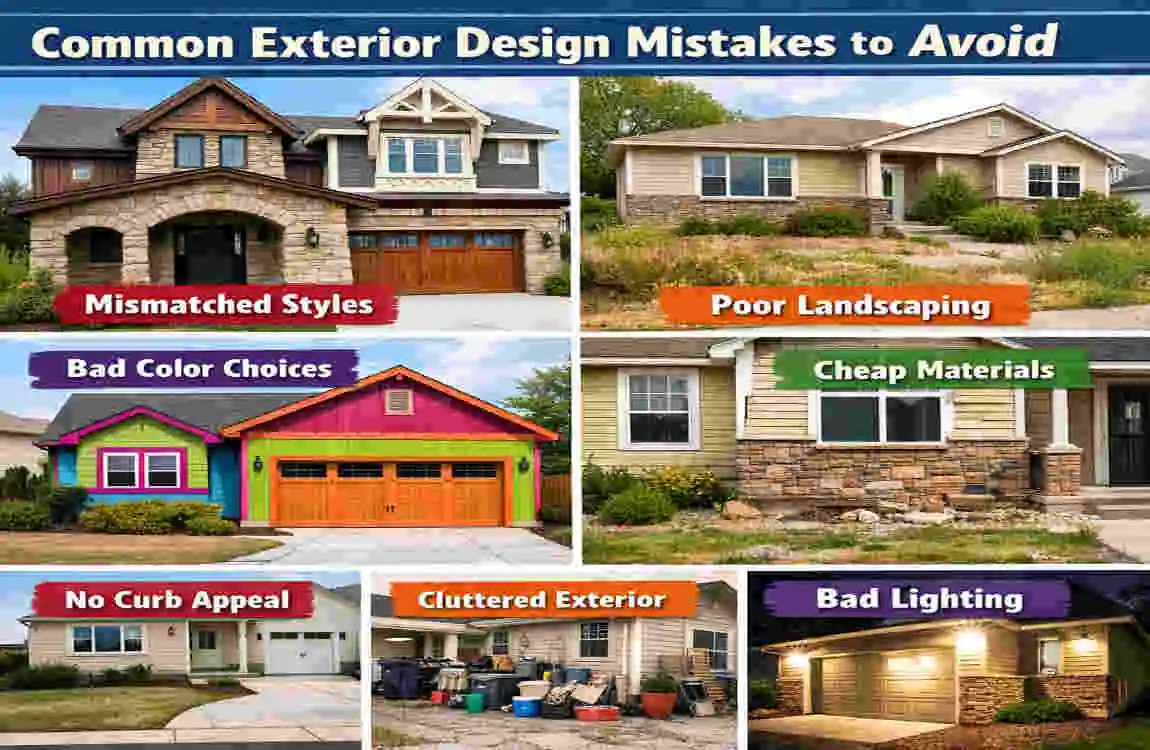
Some exterior designs look good at first but fail over time because they ignore the basics.
Common mistakes include:
- Using too many colors or materials
- Ignoring the home’s architectural style
- Choosing appearance over durability
- Poor exterior lighting
- Weak drainage planning
- Overcrowded landscaping
- Forgetting maintenance needs
- Making the house look nice but not functional
The best exterior design avoids excess and focuses on balance, purpose, and long-term use.
How to Apply the Principles to a Modern Home
Start With the Home’s Structure
Begin with the shape of the house. Look at the roofline, wall proportions, openings, and overall style.
The architecture should guide the design choices, not the other way around.
Select a Simple Color and Material Palette
Choose a small group of materials and colors that work together. This makes the design easier to manage and calmer visually.
A simple palette often looks more modern than a crowded one.
Establish Visual Balance
Check whether the windows, doors, and exterior features feel evenly placed. The home should look stable and intentional from the street.
Plan the Entry Carefully
The entrance is one of the most important parts of the exterior. It should be easy to find, comfortable to reach, and visually clear.
Integrate Landscaping
Use plants and outdoor features to support the architecture. Landscaping should frame the home, not hide it.
Add Practical Outdoor Living Areas
A patio, deck, or seating zone can make the exterior more useful. These spaces should feel connected to the home and easy to access.
Use Lighting to Improve Safety and Appearance
Layered lighting can improve both function and style. It helps at night and adds warmth to the exterior.
Review Long-Term Costs and Maintenance
Before finalizing the design, think about upkeep, climate, and sustainability. A good-looking exterior should also be realistic to maintain.
Frequently Asked Questions
What are the principles of exterior design?
The main principles include balance, proportion, harmony, color, material selection, functionality, landscaping, lighting, and sustainability.
What makes a good modern house exterior?
Clean lines, simple materials, balanced proportions, practical layouts, coordinated colors, and thoughtful landscaping all help create a good modern exterior.
What are the most important elements of exterior design?
The main elements are the home’s shape, roof, windows, doors, materials, colors, lighting, landscaping, and outdoor spaces.
How do I choose colors for my house exterior?
Choose a main color, a secondary color, and an accent color. Make sure they work with the home’s style and surroundings.
How can landscaping improve exterior design?
Plants, pathways, trees, and outdoor features can frame the home and make it feel more connected to nature.
What materials are best for modern exterior design?
Brick, stone, wood, stucco, concrete, metal, and composite materials are all common. The best choice depends on climate, budget, style, and maintenance.
Why is exterior lighting important?
Lighting improves safety, security, nighttime appearance, accessibility, and the look of architectural details.
How can I make my home’s exterior look more modern?
Use a simpler color palette, clean materials, better lighting, improved landscaping, and a more unified entrance.
| Principle | Short Description |
|---|---|
| Clean Lines | Use simple shapes and uncluttered architectural lines. |
| Balanced Proportions | Keep windows, doors, walls, and roof elements visually balanced. |
| Natural Materials | Incorporate wood, stone, brick, glass, or metal for texture and character. |
| Neutral Colors | Choose timeless shades with subtle contrasting accents. |
| Large Windows | Maximize natural light and create a strong indoor-outdoor connection. |
| Functional Design | Make every exterior feature practical as well as attractive. |
