

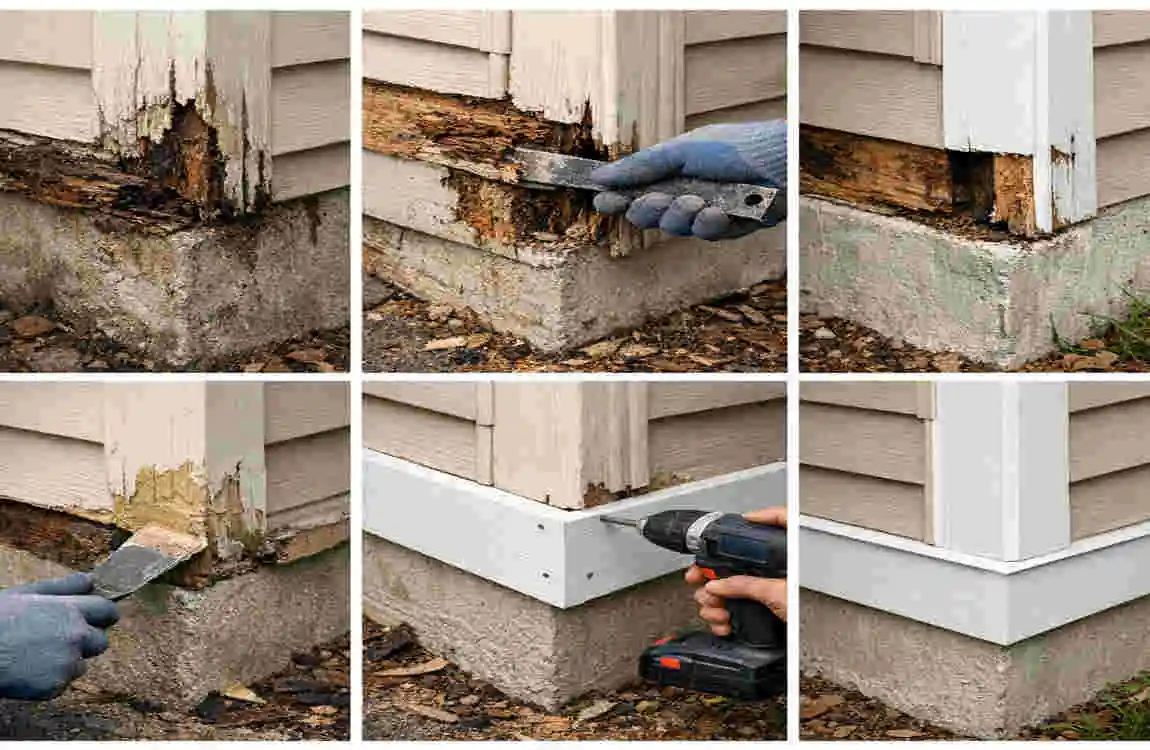
Wood rot is a very common problem on the outside of a home. It usually starts when wood stays wet for too long. Rain, snow, humidity, poor drainage, or leaking gutters can slowly break down the wood.
At first, the damage may look small. You may notice peeling paint, a soft spot, or a little discoloration. But if you ignore it, the problem can spread and lead to bigger cosmetic and even structural damage.
What Causes Wood Rot on a House Exterior?
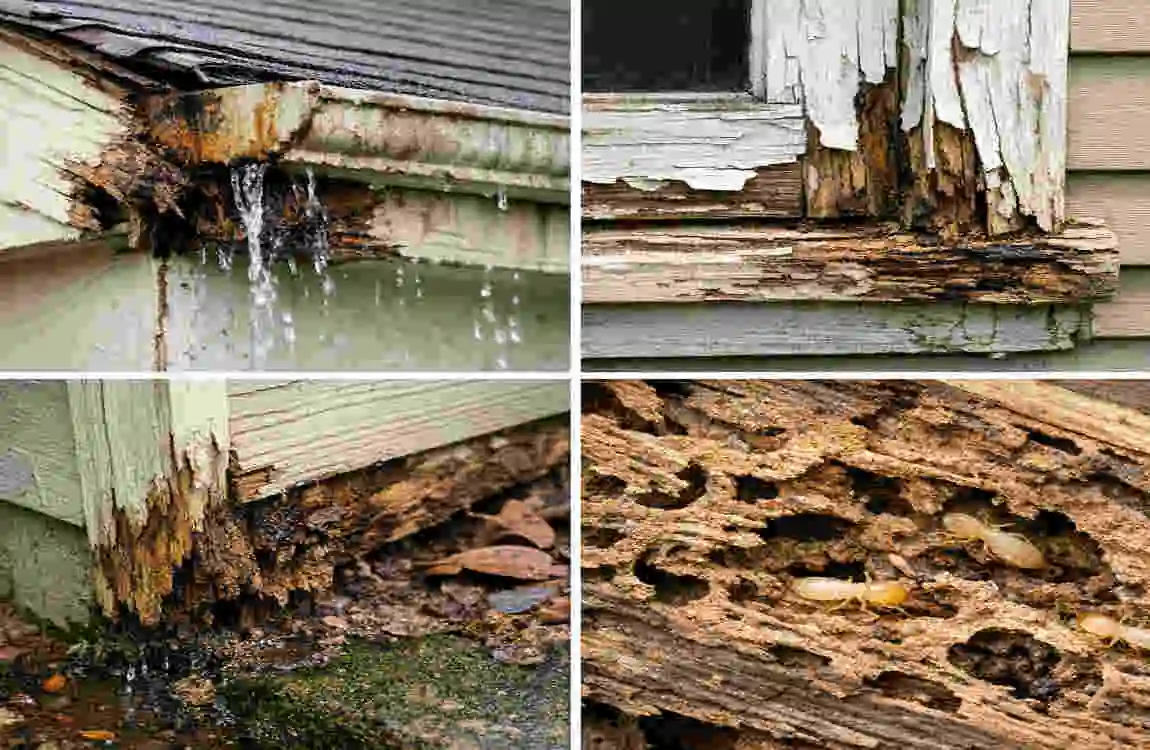
Moisture and Water Exposure
Wood and water do not mix well for long periods. When exterior wood gets wet repeatedly, it starts to weaken. Rain, snow, and humidity all add moisture. If water sits near a board instead of draining away, rot can begin much faster.
Clogged gutters and loose downspouts are common causes. They let water spill onto siding, trim, and other wood surfaces. Over time, constant wetting creates the perfect conditions for decay.
Poor Drainage and Improper Installation
Sometimes the problem is not just weather. Water may enter because flashing was installed badly, joints were not sealed, or siding and trim were fitted in a way that traps moisture.
If a surface has the wrong slope, water can collect rather than run off. That standing water slowly seeps into the wood.
Lack of Maintenance
Paint and caulk are important shields. When paint cracks or caulk fails, bare wood is exposed. Once that happens, moisture can get inside the wood more easily.
Regular inspections help a lot. Small defects are much cheaper and easier to fix than full rot repairs.
Different Types of Wood Rot
You may hear the terms “dry rot” and “wet rot“.
- Wet rot usually happens when wood stays damp for a long time.
- Dry rot is a type of decay that can spread in wood that has been affected by moisture and fungi, even if the surface seems dry later.
Common warning signs include:
- Soft or spongy wood
- Dark or discolored areas
- Crumbling surfaces
- Cracks and splits
- Fungal growth
- Musty smells
Remember, not every stain means the whole board must be replaced. Sometimes only part of the wood is damaged.
How to Tell If Exterior Wood Needs Repair or Replacement
Signs of Minor Wood Damage
Small surface issues do not always mean rot. You may only have:
- Peeling paint
- Tiny cracks
- Light discoloration
- Slight trim damage
In these cases, sanding, filling, priming, and repainting may be enough.
Signs the Wood Is Rotted
Rot is more serious. You usually know it is rot when:
- The wood feels soft when pressed
- A screwdriver or awl sinks into it easily
- The surface crumbles
- Damage goes beyond the painted layer
If the wood is already soft and weak, paint will not fix it. Covering the damage only hides the issue for a short time.
Checking for Hidden Damage
Rot often spreads behind trim, siding, and other exterior materials. That means the visible damage may be only part of the problem.
After removing the damaged section, check the surrounding area for moisture, softness, or staining. If the framing is wet or damaged, it may need professional attention.
When to Call a Professional
You should call a pro when:
- Structural framing is affected
- The rot covers a large area
- Damage is near electrical or plumbing lines
- The moisture source is hard to find
- Roof, window, or flashing repairs are needed
For small, accessible repairs, DIY may be fine. For bigger problems, professional help is the safer choice.
How to Replace Rotted Wood on Exterior of House
Gather the Right Tools and Materials
Before you begin, gather what you need:
- Pry bar
- Hammer
- Utility knife
- Screwdriver or drill
- Measuring tape
- Saw
- Chisel
- Exterior-grade replacement wood
- Exterior screws or nails
- Wood preservative or consolidant
- Exterior wood filler
- Primer
- Exterior paint
- Exterior-grade caulk
- Safety glasses and gloves
Having everything ready makes the job smoother and safer.
Find and Fix the Moisture Source
Do not replace wood until you know why it rotted. If water keeps getting in, the new wood may rot too.
Check:
- Gutters
- Downspouts
- Roof edges
- Window seals
- Flashing
- Caulking
Fixing the source is just as important as replacing the board.
Remove the Damaged Exterior Material
Carefully remove trim, siding, or other material covering the rot. Use a pry bar and a utility knife without damaging the surrounding good wood.
Take out all the damaged material. Even small rotten pockets can keep spreading decay.
Inspect the Framing and Surrounding Area
Once the bad wood is open, inspect what is behind it. Look for:
- Soft spots
- Damp framing
- Staining
- Mold or mildew
- Damage that goes beyond the original area
If the area is wet, let it dry before installing new wood. If the framing is damaged, do not guess—get a professional opinion.
Measure and Cut the Replacement Wood
Measure carefully so the replacement piece fits well. Choose an exterior-rated material that matches the job and local weather exposure.
Cut the piece to fit with proper clearance. A snug fit is good, but you do not want a piece so tight that it traps water.
Install the New Wood
Place the new piece in position and fasten it with exterior-rated screws or nails. Work cleanly and make sure the piece sits correctly.
Good installation matters because gaps and poor alignment can let water get back in.
Seal Joints and Protect the Surface
Apply caulk where needed, especially at joints that need sealing. Then prime all exposed wood, including cut ends.
End grain is especially important to protect because it absorbs moisture quickly. After priming, paint with quality exterior paint.
Reinstall Trim, Siding, or Other Exterior Materials
Put back anything you removed during the repair. Make sure it directs water away from the house instead of trapping it.
Before finishing, do one last check for:
- Open gaps
- Exposed wood
- Missing caulk
- Poor drainage paths
Choosing Replacement Materials and Preventing Future Wood Rot
Selecting the Right Replacement Wood
Different materials work better in different places. Common choices include:
- Pressure-treated wood
- Cedar
- Redwood
- Exterior-rated engineered wood
- Composite materials
The best choice depends on moisture, location, appearance, and budget. Areas that get wet often need stronger protection.
Improve Exterior Water Management
Water control is one of the best ways to prevent rot. Keep gutters clean, extend downspouts away from the foundation, and make sure roof drainage works properly.
Also check that sprinklers are not spraying siding or trim every day. The ground around the house should slope away so water moves away from the walls.
Maintain Paint and Caulking
Paint is not just for looks. It helps seal the wood. Caulk also protects joints to keep them watertight.
Inspect both often. If you see peeling paint or cracked caulk, repair it quickly before water gets inside.
Keep Wood Away From Constant Moisture
Wood should not stay in constant contact with wet soil, leaves, or debris. Keep these areas clear and allow air to move around vulnerable spots.
Dry, clean wood lasts much longer.
Repair Costs, DIY Considerations, and Common Mistakes
What Affects Exterior Wood Rot Repair Cost?
Costs vary based on:
- Size of the damage
- Type of wood
- Location of the repair
- Hidden damage
- Labor costs
- Need for flashing, roofing, or structural work
- Painting and finishing
A small trim repair may be affordable. A larger repair near a window or roof edge may cost much more.
DIY vs. Professional Wood Rot Repair
Repair SituationDIY PotentialProfessional Help
Small trim rot Often suitable Optional
Small siding section Possible Useful for complex siding
Window-frame rot Depends on damage Recommended for hidden moisture
Fascia or soffit rot Possible with experience Recommended if roof damage is involved
Structural framing rot Not recommended Strongly recommended
Extensive exterior rot Usually unsuitable Recommended
Common Mistakes to Avoid
Avoid these common errors:
- Painting over rotten wood
- Replacing wood without fixing the moisture source
- Leaving damaged pieces behind
- Using interior-grade materials outdoors
- Failing to seal exposed wood
- Trapping water with bad installation
- Ignoring hidden framing damage
- Using the wrong caulk or fasteners
A careful repair now saves time and money later.
Final Inspection and Long-Term Exterior Wood Maintenance
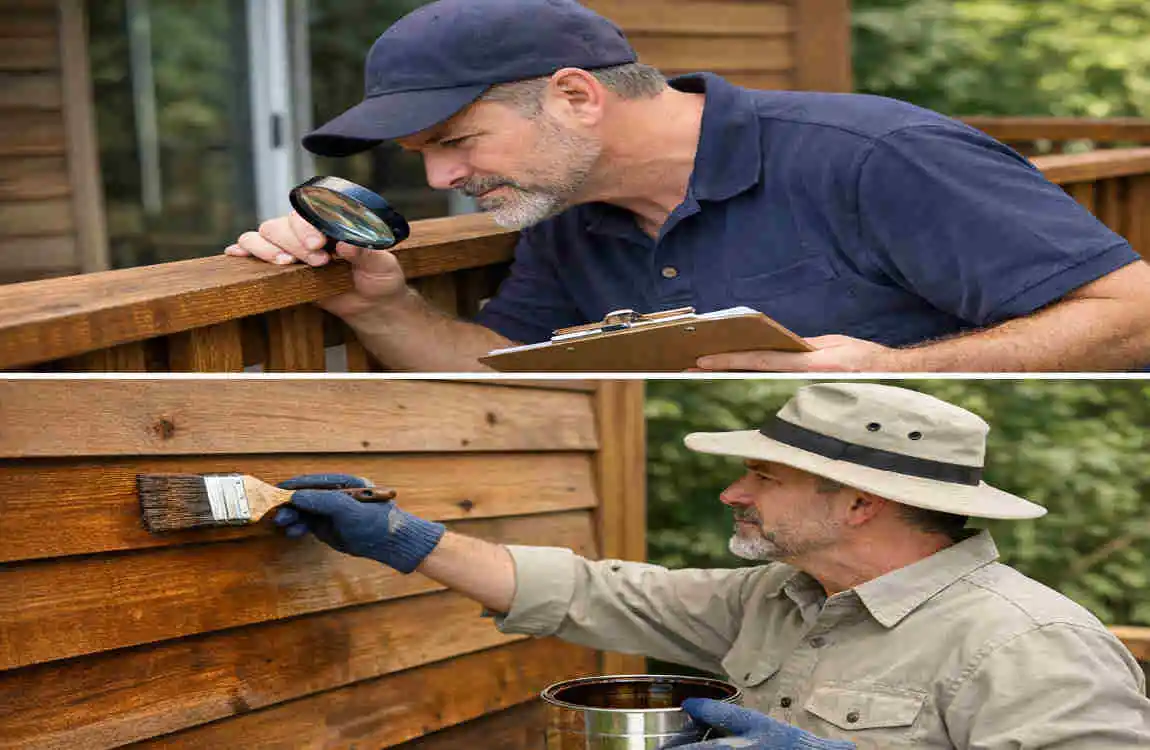
How to Check Your Repair
After the repair, make sure:
- All rotten wood has been removed
- Joints are sealed properly
- Paint and primer cover the surface
- Drainage works around the area
- No wood is left exposed
If possible, check the area again after heavy rain.
Simple Maintenance Routine
A little routine care goes a long way.
- Every few months: Look for standing water, gutter problems, or obvious moisture issues.
- Twice a year: Inspect siding, trim, doors, windows, fascia, and soffits.
- Before repainting: Check for soft wood and hidden damage.
- After severe weather: Look for leaks, cracks, and loose flashing.
How to Prevent Wood Rot in the Future
The best prevention is simple:
- Keep exterior wood painted and sealed
- Fix roof and gutter issues quickly
- Maintain good drainage
- Replace failing caulk
- Keep wood clean and dry
- Inspect small problems before they grow
FAQ: House Exterior Wood Rot
Can you replace just the rotted section of exterior wood?
Yes. If the rest of the board and the structure are still sound, you can usually replace only the damaged section.
How do you replace rotted wood on exterior of house?
The basic process is to fix the moisture source, remove damaged wood, inspect the area, cut and install new exterior-grade material, seal it, prime it, and paint it.
Can you repair rotted wood instead of replacing it?
Small surface damage may sometimes be repaired. But if the wood is soft, crumbly, or weak, replacement is usually the better choice.
What is the best wood for exterior repairs?
It depends on the location. Pressure-treated wood, cedar, redwood, engineered exterior wood, and composite materials can all work well in the right setting.
How can you stop exterior wood from rotting again?
Fix leaks, improve drainage, maintain caulk and paint, and inspect the area regularly.
Is exterior wood rot a structural problem?
It can be. Trim rot may only be cosmetic, but rot in framing, beams, or posts can become structural.
Should I replace rotten wood before painting?
Yes. Painting over rot does not fix the problem. The damaged wood should be repaired or replaced first.
| Aspect | Information |
|---|---|
| What Is Wood Rot? | Wood rot is decay caused mainly by prolonged moisture and fungal growth. |
| Common Locations | Siding, trim, window frames, doors, fascia, soffits, and porch components. |
| Warning Signs | Soft or spongy wood, discoloration, cracking, peeling paint, mold, and musty odors. |
| Main Causes | Leaks, poor drainage, clogged gutters, high humidity, and inadequate exterior sealing. |
| Minor Repair | Remove damaged material, treat the area, fill small sections with exterior wood filler or epoxy, and repaint. |
| Major Damage | Severely rotted boards or structural components usually need partial or complete replacement. |
