

If you want a door that looks elegant and enhances how your home feels, an exterior French door is a great choice. It brings in more natural light, creates wider access to outdoor spaces, and gives your home a more open and welcoming look.
Many homeowners choose this upgrade because it improves both style and function. It can connect a patio, deck, or backyard more smoothly to the home. It can also help improve ventilation when you want fresh air moving through the space.
What Is an Exterior French Door?
Understanding French Door Design
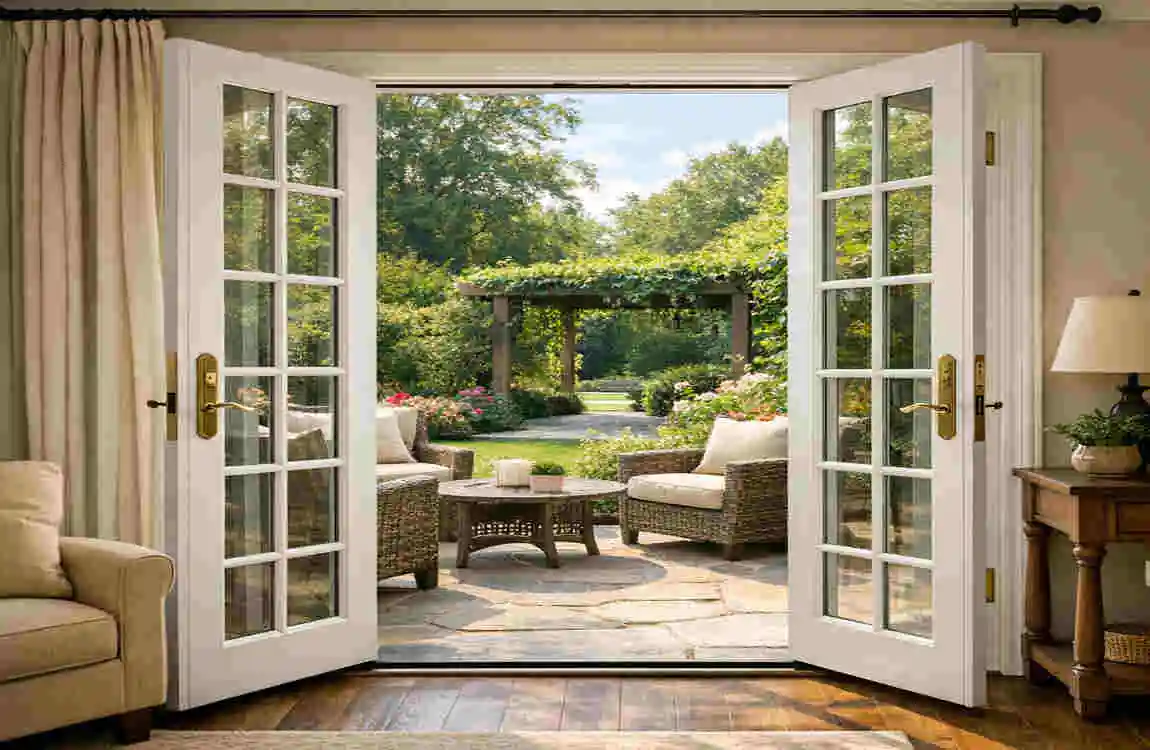
A French door is usually made of two doors that meet in the middle. One or both panels may open, depending on the design. This makes the doorway feel wider and more inviting than a standard single door.
French doors can open in two ways:
- Inswing: the doors open into the home
- Outswing: the doors open outward
Each style has its own benefits. Inswing doors are common when you have enough indoor space. Outswing doors can work better when you want to save interior room.
French doors also come in different materials. The most common ones are wood, fibreglass, and steel. Wood has a classic look, fibreglass is low-maintenance, and steel offers strength and durability.
Why Install an Exterior French Door?
There are many reasons homeowners like French doors.
They bring in more daylight, which can make a room feel bigger and brighter. They also create a wider opening, which is helpful when carrying furniture or moving between indoor and outdoor areas.
French doors also add charm. They can make a home feel more polished and attractive from both inside and outside. In many cases, they can also improve home value and support better energy performance when installed correctly.
Tools and Materials You Need
Essential Tools
Before you start, gather the right tools. Having everything ready will make the job smoother and less stressful.
- Measuring tape
- Level
- Drill and screwdriver
- Hammer
- Utility knife
- Pry bar
- Caulking gun
- Shims
- Safety glasses and gloves
Installation Materials
You also need the right materials for the door installation itself.
- Prehung exterior French door
- Exterior-grade screws
- Construction or flashing tape
- Exterior caulk
- Low-expansion spray foam
- Door threshold seal
- Shims
A prehung French door is usually easier to install DIY because the door and frame are already assembled. That saves time and helps reduce alignment problems.
How to Measure for an Exterior French Door
Measure the Existing Door Opening
Measuring is one of the most important parts of the whole job. If the opening is wrong, the door will not fit well, even if the door itself is high quality.
Measure the width at the top, middle, and bottom of the opening. Then measure the height on both sides and in the centre. This helps you spot uneven framing.
You should also check whether the rough opening is square. If the sides are not even, the door may need extra adjustment during installation.
Check the Wall and Floor
Look closely at the sill, wall framing, and floor area. The opening should be solid and free from rot, mould, or water damage.
The sill should also be level. If it is not, the door may not close properly or may leave gaps that let in water and air.
Choose the Correct Door Size
Do not rely only on the size of the old door. Older doors may have been trimmed or installed in a way that does not reflect the true rough opening.
Instead, compare your measurements with the manufacturer’s rough-opening instructions. Leave enough space for shimming and adjustment so the frame can be set correctly.
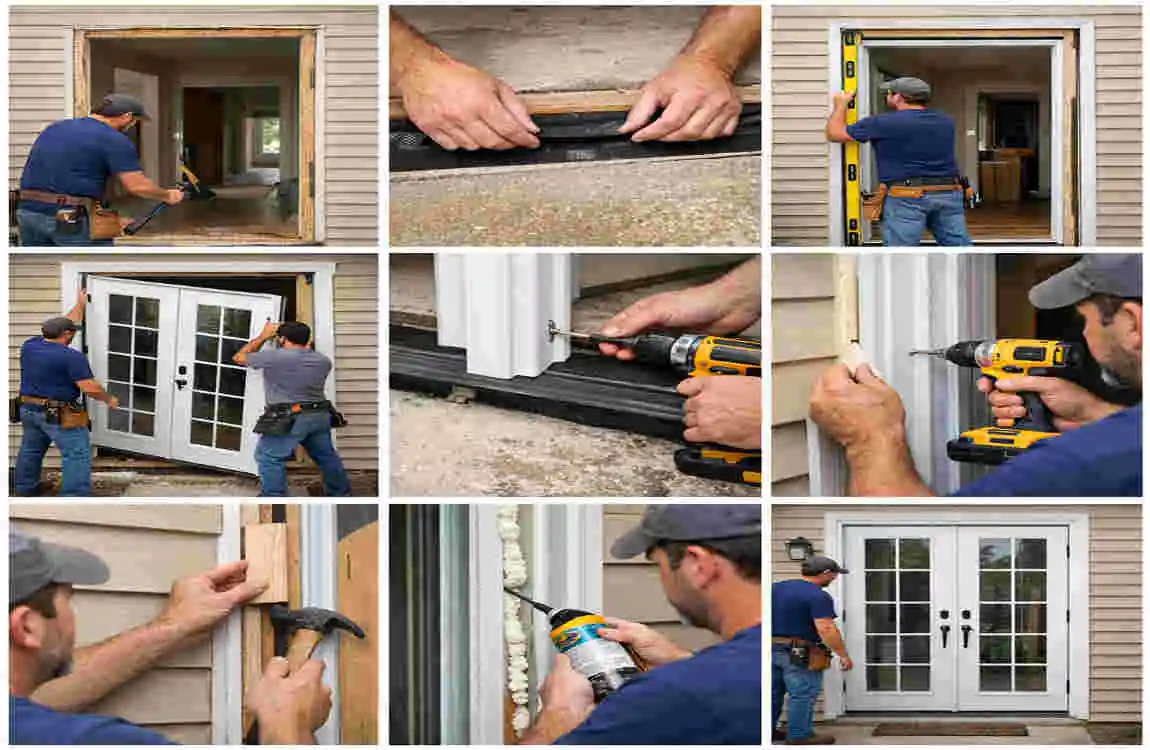
How to Install an Exterior French Door Step by Step
Prepare the Door Opening
Start by removing the old door, trim, and any damaged materials around the opening. Clean the area well so there is no dust, debris, or loose wood.
If you find rot or damage in the framing, repair it before moving forward. The new door should always go into a clean, sound, and secure opening.
Apply Flashing and Waterproofing
Waterproofing is critical. Exterior doors are exposed to rain, moisture, and changing weather conditions, so they need reliable protection.
Install sill flashing based on the manufacturer’s instructions. Seal weak points around the opening and ensure water has a path to drain rather than collect under the threshold.
Dry-Fit the French Door
Before fastening anything, place the prehung door into the opening. This is called a dry fit.
Check that the frame fits well and that the doors can swing open and shut without rubbing. This step helps you catch problems early before the door is permanently attached.
Apply Exterior Caulk
Use a steady bead of exterior-grade caulk where the manufacturer recommends it. Focus on the sill and side areas where water could enter.
Be careful not to block any drainage channels built into the door system. Those spaces are there to help water move away safely.
Position the Door Frame
Set the door unit into the opening carefully. Keep it centred and supported while you work.
If the door is large or heavy, ask someone to help hold it in place. That makes alignment easier and safer.
Secure the Frame With Shims
Shims help keep the frame straight and balanced. Place them behind the hinge areas and at the fastening points recommended by the manufacturer.
The goal is to keep the jamb plumb, level, and square. Do not over-shim, as excessive pressure can twist the frame.
Fasten the Door
Now drive the exterior-rated screws through the frame and shims. Work slowly and check the frame after each step.
As you tighten the screws, keep watching the door alignment. Small adjustments now can save a lot of time later.
Check the Doors
Open and close both panels several times. The gap around the doors should look even, and the doors should latch without forcing them.
If the doors rub, stick, or do not close properly, adjust the shims or hinges before moving on.
Install Hardware
Attach the handles, locks, hinges, and any other hardware that came with the door. Make sure the strike plate lines up correctly with the latch.
Then test the locking system. The door should close securely and operate smoothly.
Seal Around the Door
Add exterior sealant around the outside frame where needed. Use low-expansion spray foam only in areas recommended for insulation and air sealing.
Do not use too much foam. Excess foam can press against the frame and affect how the door opens and closes.
Install Interior and Exterior Trim
Once the door is secure, replace or install the trim around it. Make sure the trim is sealed properly so air and moisture do not sneak in behind it.
If needed, paint or finish exposed surfaces so everything looks clean and complete.
Common Mistakes to Avoid
Skipping Accurate Measurements
This is one of the biggest mistakes. Even a small measuring error can lead to gaps, poor alignment, or a door that does not fit at all.
Installing on an Uneven Sill
If the sill is not level, the doors may not shut properly. That can create drafts and water leaks.
Using Too Much Spray Foam
More foam is not better. Too much pressure can bend the frame and cause problems with door movement.
Forgetting Waterproofing
A French door can look beautiful and still fail if water gets behind it. Flashing and sealant are essential.
Not Checking the Door During Installation
Keep testing the door as you work. Checking level, plumb, and latch action early helps you avoid bigger problems later.
- Measure carefully before you buy
- Keep the frame level and square
- Seal against moisture
- Test the door several times during installation
How to Make an Exterior French Door Energy Efficient
A well-installed French door can also improve comfort and energy efficiency. The key is sealing the whole system properly.
Use good weatherstripping around the door. Seal gaps around the frame and check the threshold for air leaks. Proper flashing also helps keep moisture out, which protects the wall structure.
If possible, choose insulated glass. That can help reduce heat loss and improve comfort. Over time, it is also important to inspect and maintain the seals so that the door continues to perform well.
Exterior French Door Maintenance Tips
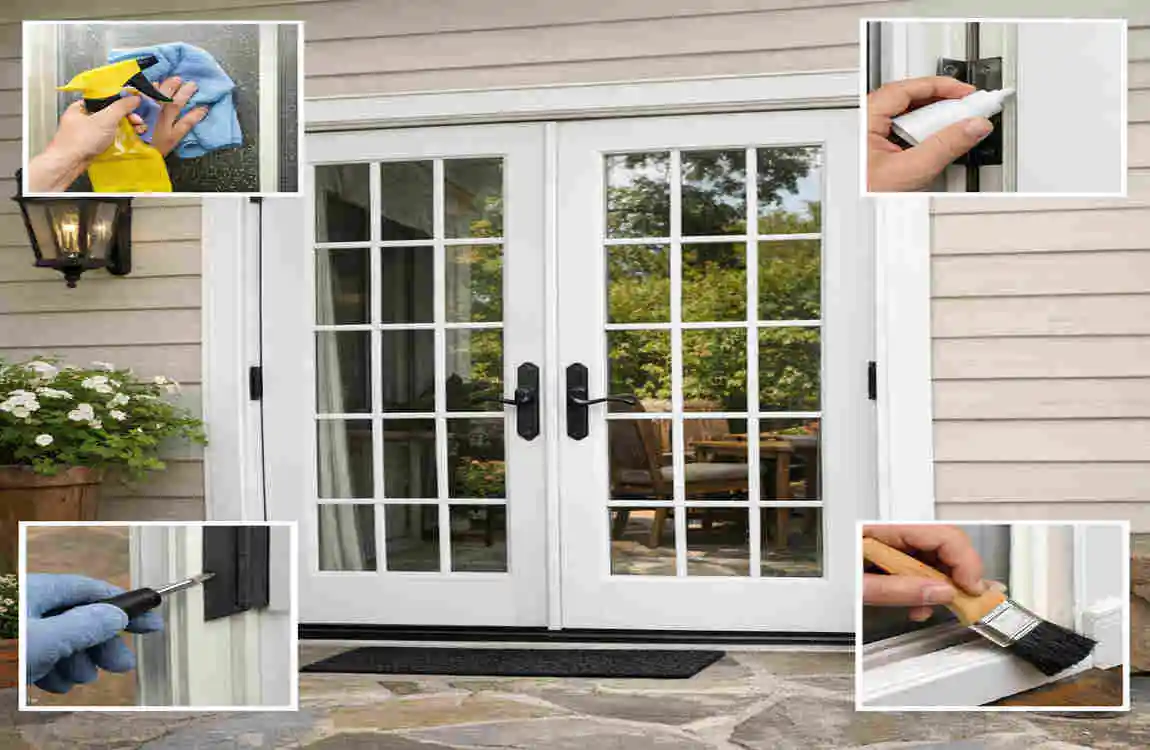
French doors do not need difficult care, but they do need regular attention.
Check the caulking from time to time. If it cracks or pulls away, replace it. Clean and lubricate the hardware so the doors keep opening smoothly.
Also inspect the weatherstripping, especially near the bottom and sides. If you notice wear, replace it before drafts or leaks become a bigger issue.
Keep an eye on the threshold and nearby floor area. Any sign of water damage should be addressed quickly. If the doors begin to shift or rub, check the alignment right away.
When Should You Hire a Professional?
Some French door projects are great for DIY, but others are better left to a professional.
You should consider hiring help if:
- the rough opening has structural damage
- the wall framing needs to be changed
- the opening is badly out of square
- the door is very large or heavy
- you are unsure about waterproofing
- local building rules require professional work
If the project involves major repairs or complicated sealing, a professional can save time and reduce the risk of mistakes.
Frequently Asked Questions
Can I install an exterior French door myself?
Yes, many skilled DIY homeowners can do it, especially with a prehung door and a sound rough opening.
How long does it take to install an exterior French door?
A simple replacement may take several hours. More complex jobs can take longer if repairs or waterproofing are needed.
Do exterior French doors need special waterproofing?
Yes. Flashing, sealant, and good drainage details are important for keeping moisture out.
Should exterior French doors open inward or outward?
Either option can work. The best choice depends on space, weather, and the door design.
Can I install French doors in an existing exterior doorway?
Often, yes, if the opening is the right size and in good condition.
What is the biggest mistake when installing French doors?
Poor measurements and an uneven frame are two of the most common problems.
| Step/Topic | Quick Information |
|---|---|
| Measure the Door Opening | Measure the width, height, and depth of the rough opening to ensure the French door fits correctly. |
| Gather Tools & Materials | You may need a French door unit, shims, screws, level, drill, tape measure, caulk, flashing, and insulation. |
| Remove the Old Door | Carefully remove the existing door, trim, and damaged materials without harming the surrounding wall. |
| Prepare the Opening | Clean the opening and check that the sill and framing are solid, level, and square. |
| Apply Flashing & Sealant | Install sill flashing and exterior-grade sealant to help prevent water from entering around the door. |
| Position the French Door | Place the door unit into the opening and temporarily secure it while checking that it is plumb and level. |
