

Water damage can quietly cause big problems in a home. Rain, humidity, and temperature changes can slowly break down exterior walls over time. That is why learning how to waterproof exterior wall surfaces is so important.
When walls are not protected, you may notice damp patches, peeling paint, cracks, mold, or white powdery marks called efflorescence. These signs often mean moisture is getting in where it should not.
A good waterproofing system helps protect the structure, reduce repair costs, and keep your home looking better for longer. Let’s look at the most useful modern solutions in simple terms.
Modern Exterior Wall Waterproofing Solutions
Exterior Waterproof Coatings
Waterproof coatings create a protective layer on the outside of the exterior wall. They help block rain and surface moisture before it can soak into the material.
Common options include elastomeric, acrylic, and cement-based coatings. Each one works best on different wall types. For example, a flexible elastomeric coating can work well on walls with small movement, while cement-based coatings are often better on concrete or masonry.
The key is to choose a product that matches your wall material and your local weather. A coating that works in a dry climate may not be the best choice in a wet or very cold area.
Waterproof Membranes
Waterproof membranes are thin protective layers that stop water from passing through. They come in sheet form or as liquid-applied products.
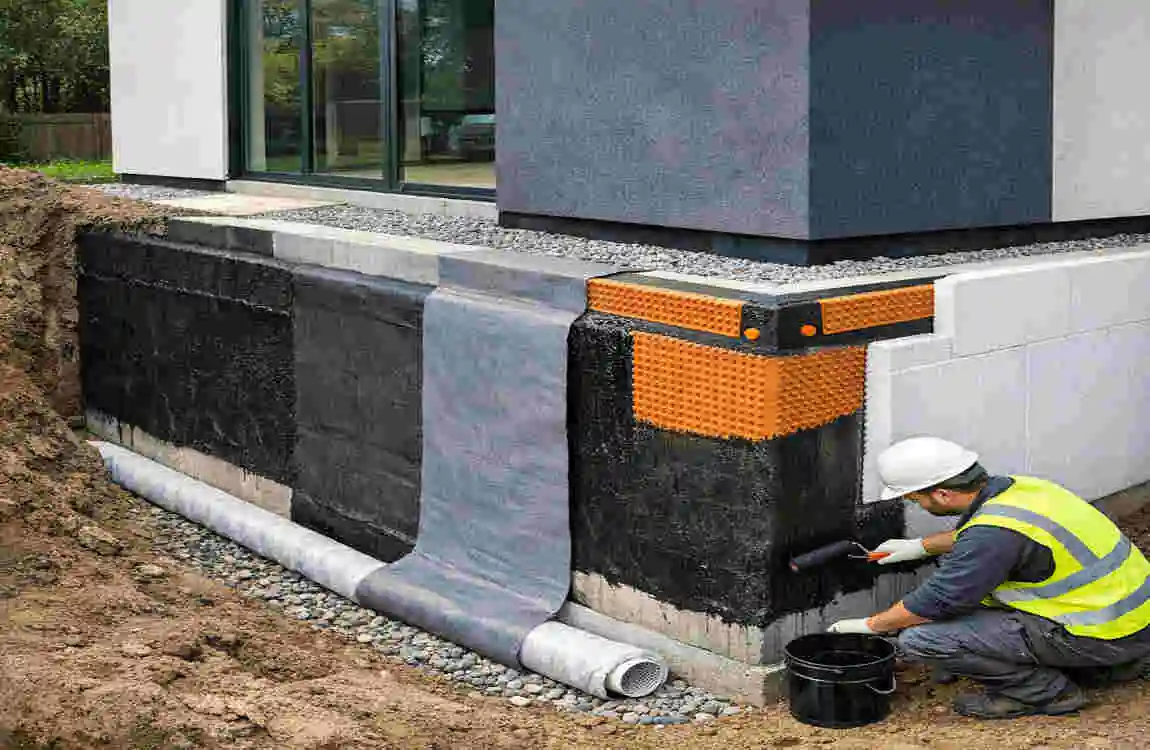
These are often used in more exposed or vulnerable areas, such as foundations, retaining walls, and below-ground surfaces. They are especially useful where regular paint-style coatings are not strong enough.
Good surface preparation matters here. If the wall is dirty, cracked, or damp, the membrane may not bond properly.
Waterproof Mortar and Cementitious Treatments
Cement-based waterproofing systems are commonly used on brick, concrete, masonry, and foundation walls. These materials bond well with mineral surfaces and can create a durable barrier.
They are often used where the exterior wall requires stronger, more rigid treatment. In some cases, a professional should apply them to ensure even, long-lasting coverage.
Drainage and Water Management Systems
Waterproofing should never depend on wall treatment alone. Drainage is just as important.
If water keeps collecting near the wall, even the best coating may fail over time. Gutters, downspouts, sloping ground, and foundation drains all help move water away from the building.
Keeping these systems clean is a simple but very effective way to reduce pressure on the wall.
How to Waterproof Exterior Wall: Step-by-Step Guide
Inspect the Exterior Wall
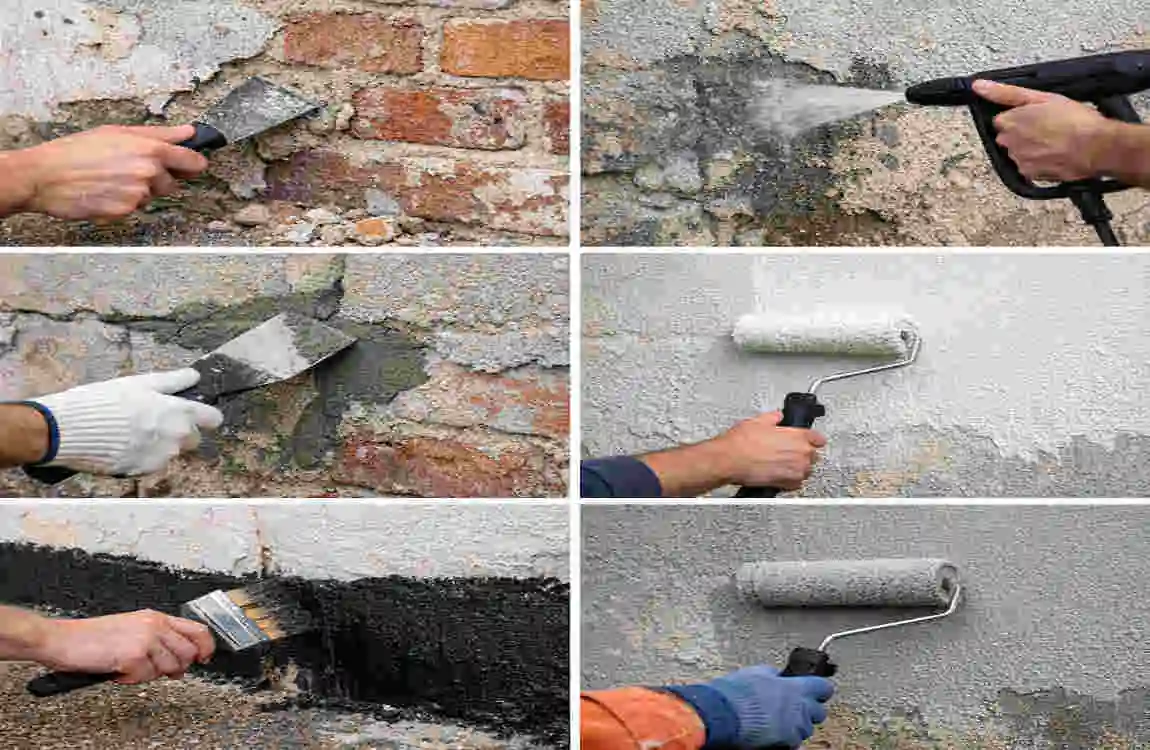
Start by checking for cracks, holes, loose mortar joints, peeling finishes, and signs of water intrusion. Try to find where the moisture is coming from.
Sometimes the issue is rain. Other times it may be poor drainage, leaking pipes, or damaged joints. It helps to identify the source before choosing a waterproofing product.
Clean and Prepare the Surface
A waterproofing product works best on a clean, dry, stable surface. Remove dirt, algae, moss, loose paint, and damaged material first.
Then repair weak areas and let the wall dry properly. If you skip this step, the waterproofing layer may fail much sooner.
Repair Cracks and Joints
Small cracks may only need a sealant, while larger cracks may need more serious repair. Expansion joints, corners, and openings around pipes or vents should be sealed carefully.
These tiny gaps often become the biggest entry points for water.
Apply the Waterproofing System
Follow the product instructions closely. Some systems need a primer first, while others need more than one coat. Make sure the surface gets full coverage.
Also allow enough time for drying or curing. Rushing this step can weaken the final result.
Protect Vulnerable Areas
Pay special attention to windows, doors, corners, wall-to-foundation joints, and utility penetrations. These are common weak spots.
Flashing and good sealants help stop water from slipping into these areas. A small gap may not look serious, but over time it can lead to major damage.
Choosing the Right Waterproofing Solution for Different Wall Types
Wall TypeBest ApproachKey Note
Brick Breathable coatings or treatments Avoid trapping moisture
Concrete Coatings, cementitious systems, membranes Repair cracks first
Stucco Moisture-resistant coatings Check flashing and joints
Stone Breathable waterproofing products Use carefully selected materials
Basement/Foundation Membranes and drainage systems Often needs professional help
Brick Walls
Brick walls need products that allow the exterior wall to breathe. If moisture gets trapped, it can cause damage from inside the wall.
Concrete Walls
Concrete can handle stronger waterproofing systems, but cracks and joints must be fixed before treatment begins.
Stucco Walls
Stucco often benefits from moisture-resistant coatings and careful crack repair. Openings around windows and doors also need to be well sealed.
Stone Walls
Natural stone needs careful product selection. A breathable system is usually safer because stone can react badly if moisture is trapped.
Basement and Foundation Walls
These areas often need the strongest protection. Membranes, drainage boards, and perimeter drainage are common solutions. In many cases, professional excavation may be required.
Common Waterproofing Mistakes to Avoid
Some mistakes can make waterproofing fail early. Try to avoid these:
- Applying products to dirty or damaged walls
- Ignoring cracks before coating
- Using the wrong product for the exterior wall material
- Blocking natural moisture movement in masonry
- Relying only on waterproof paint when drainage is the real problem
Weather matters too. Do not apply waterproofing in poor conditions unless the product allows it.
Maintenance, Costs, and When to Hire a Professional
How to Maintain Waterproofed Walls
Waterproofing is not a one-time job. Check the walls regularly, especially after storms.
Keep gutters clear, inspect sealants, and repair small cracks early. If the coating wears down over time, recoat it when needed.
Factors That Affect Waterproofing Cost
The cost depends on:
- Wall size
- Surface condition
- Waterproofing system used
- Labor and material prices
- Wall access
- Crack or structural repair needs
- Drainage or excavation work
A simple exterior wall coating will cost less than a full foundation waterproofing job.
FAQ About How to Waterproof Exterior Wall
How to waterproof an exterior wall effectively?
The best way is to identify the moisture source, repair any damage, clean the surface, and then apply the appropriate coating, membrane, or treatment.
What is the best waterproofing for exterior walls?
There is no single best option. The right choice depends on the wall material, climate, and whether the wall is above or below ground.
Can I waterproof an exterior wall myself?
Yes, for smaller surface projects. But foundation work, major cracks, and ongoing leaks usually need professional help.
Does waterproof paint stop exterior wall leaks?
It can reduce moisture entry, but it may not solve structural cracks, drainage problems, or flashing issues.
How often should exterior walls be waterproofed?
It depends on the product, weather, and wall type. Regular inspections help you know when maintenance or recoating is needed.
| Waterproofing Solution | Key Benefit | Best For |
|---|---|---|
| Liquid Waterproof Membrane | Creates a seamless protective barrier | Concrete and masonry walls |
| Waterproof Exterior Paint | Helps resist rain and surface moisture | Mild dampness and maintenance |
| Cementitious Coating | Durable and moisture-resistant | Concrete and brick walls |
| Bituminous Membrane | Strong protection against water penetration | Foundations and below-grade walls |
| Silane/Siloxane Sealer | Repels water while allowing walls to breathe | Brick and stone exteriors |
| Drainage & Waterproofing System | Redirects water away from walls | Areas with heavy moisture |
| Crack-Sealing Materials | Prevents water entering through cracks | Aging or damaged exterior walls |
