

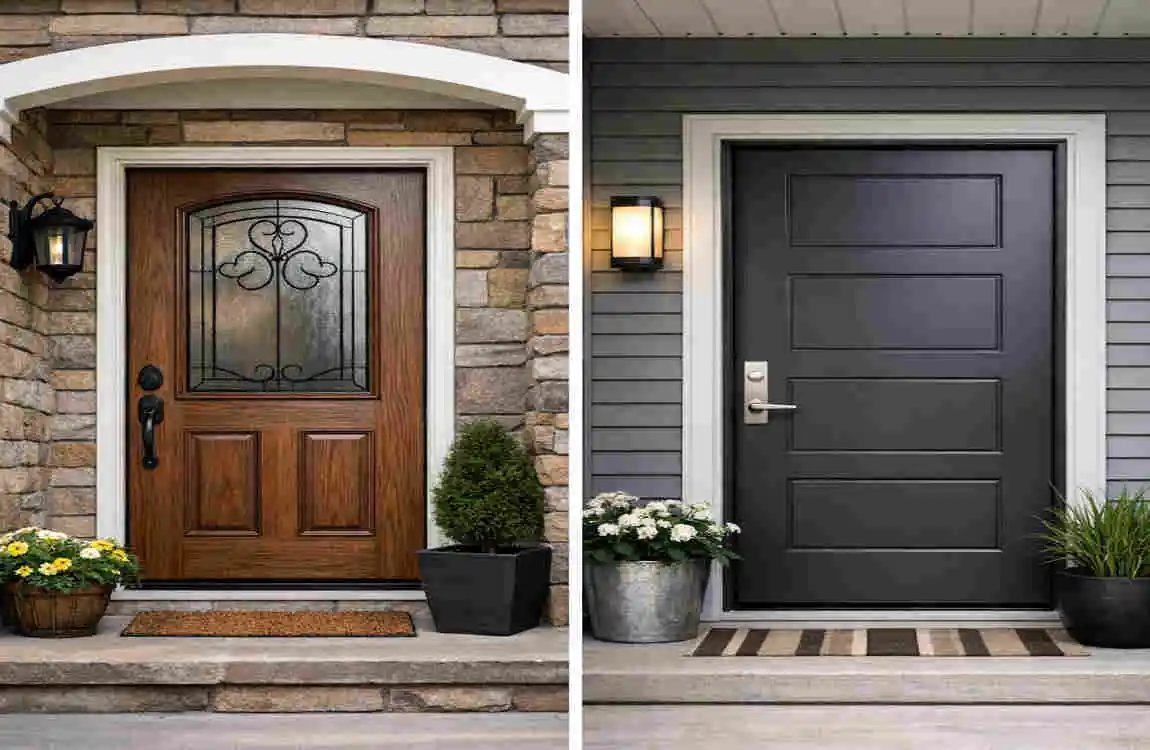
Your front door does more than open and close. It affects security, comfort, energy use, and curb appeal. It is one of the first things people notice about your home, and it also plays a big role in daily protection.
When homeowners compare fiberglass vs. steel front doors, they usually consider durability, maintenance, insulation, appearance, and cost. Both are popular for good reason, but they perform differently.
Fiberglass Front Doors: Features, Benefits, and Drawbacks
What Is a Fiberglass Front Door?
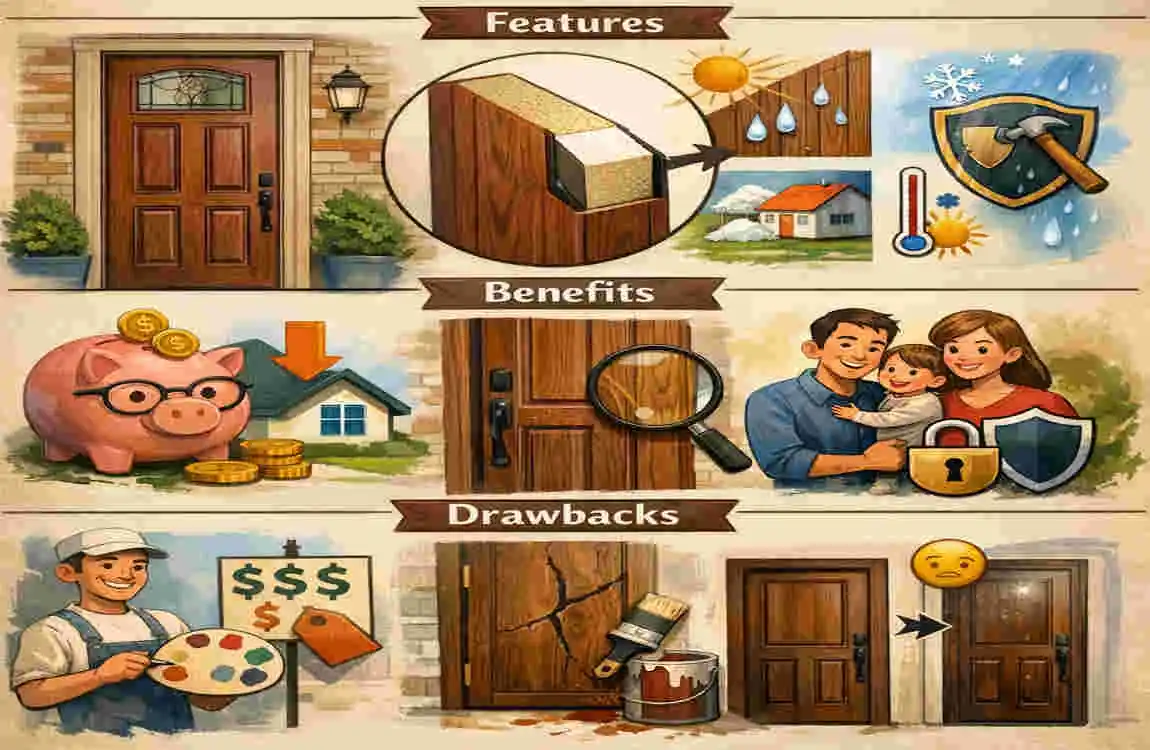
A fiberglass front door is made from strong fiberglass and shaped to look and feel like a real entry door. Many are built with a core that adds strength and insulation, while the outer surface can be smooth or textured.
One of the biggest reasons people choose fiberglass is its wood-like look. It can mimic traditional wood grain very closely, but it does not need the same level of upkeep.
Benefits of Fiberglass Front Doors
Fiberglass doors offer several strong advantages for modern homes.
They resist moisture, rust, and corrosion, which makes them a smart choice in damp or changing weather. They also tend to hold up well against everyday wear.
They are often energy efficient too. Many fiberglass doors include insulated cores that help maintain indoor temperatures.
Another major benefit is appearance. Fiberglass comes in many styles, finishes, and colors. You can choose a look that feels modern, classic, or even rustic.
Drawbacks of Fiberglass Doors
Fiberglass is not perfect for every situation.
It can cost more than some basic steel doors, especially if you choose a higher-end style. It may also crack or break if it takes a very hard impact.
Quality matters a lot with fiberglass. Better-built doors last longer and perform better, while cheaper versions may not be as strong or attractive over time.
Repairs can also be more involved than simply repainting a steel door.
Steel Front Doors: Features, Benefits, and Drawbacks
What Is a Steel Front Door?
A steel front door uses steel skins over a core, usually with insulation inside. Many also include a frame and protective finish to help prevent damage and rust.
There are basic steel doors and higher-quality versions. The stronger models often have better insulation, heavier construction, and better hardware support.
Benefits of Steel Front Doors
Steel doors are known for strength and security. If you want a solid-feeling front entry, steel is often a strong option.
They also tend to be more affordable than some premium fiberglass choices. That makes them appealing for homeowners who want value and durability.
Steel handles impact well. It can withstand rough use, busy households, and heavy traffic around the entryway.
When properly insulated, steel doors can also perform very well in terms of energy efficiency.
Drawbacks of Steel Doors
Steel doors can dent if they are hit hard enough. That is one of their main drawbacks.
If the surface gets scratched and the finish is damaged, rust can become a concern over time. This is especially true in humid or coastal areas.
Steel doors may also not give you the same wood-like look that fiberglass can provide. While they can still look clean and attractive, they are usually more limited in that area.
Fiberglass vs. Steel Front Doors: Key Differences
Durability and Lifespan
Both fiberglass and steel are durable, but they handle wear differently.
Fiberglass resists moisture and does not rust. Steel is strong and tough, but it can be dented or scratched more easily if hit hard.
The lifespan of either door depends a lot on installation, climate, and maintenance. A high-quality door that is installed properly will usually last much longer than a lower-quality one.
Security and Strength
Steel usually has the edge in raw strength. It feels solid and can withstand forced-entry attempts well.
That said, a front door’s security is not based solely on the material. Locks, hinges, frame strength, and installation all matter just as much.
A fiberglass door with a strong frame and quality hardware can also be very secure.
Energy Efficiency and Insulation
Both materials can offer good insulation. What matters most is the door core, weatherstripping, and the quality of the full door system.
Fiberglass is often praised for energy efficiency because many models are built with strong insulating cores. Steel doors can also be efficient when properly insulated.
If you care about lowering heating and cooling loss, look at the entire door setup, not just the outer material.
Weather Resistance
Fiberglass usually performs better in wet or humid environments. It does not rust, and it handles rain and moisture well.
Steel can still work very well outdoors, but it needs proper surface protection. If the coating is damaged, rust can form.
In hot, cold, rainy, or snowy weather, both can perform well if the product quality is good and the installation is done right.
Maintenance Requirements
Fiberglass is usually easier to maintain. It does not need much attention beyond routine cleaning and occasional checks.
Steel also has low maintenance needs, but it may require more care if the finish gets scratched or damaged.
For either door, you should inspect the weatherstripping, hinges, locks, and seals periodically.
Appearance and Design Options
Fiberglass offers a wide range of styles. It can look like painted wood, stained wood, or a smooth modern surface.
This makes it a strong choice if you want a traditional or upscale look without the maintenance of real wood.
Steel doors are also available in many styles, but they are usually best known for painted finishes and clean, simple designs. They work well in modern, traditional, and practical home styles.
Cost and Long-Term Value
Prices vary a lot depending on quality, hardware, glass inserts, and finish. So it is not accurate to say one material is always cheaper.
In general, steel can be more budget-friendly at the entry level. Fiberglass often costs more up front, especially for premium styles.
But long-term value matters too. A door that needs less maintenance, lasts longer, and improves energy performance can save money over time.
How to Choose Between Fiberglass and Steel Front Doors
Choose Fiberglass If You Prioritize
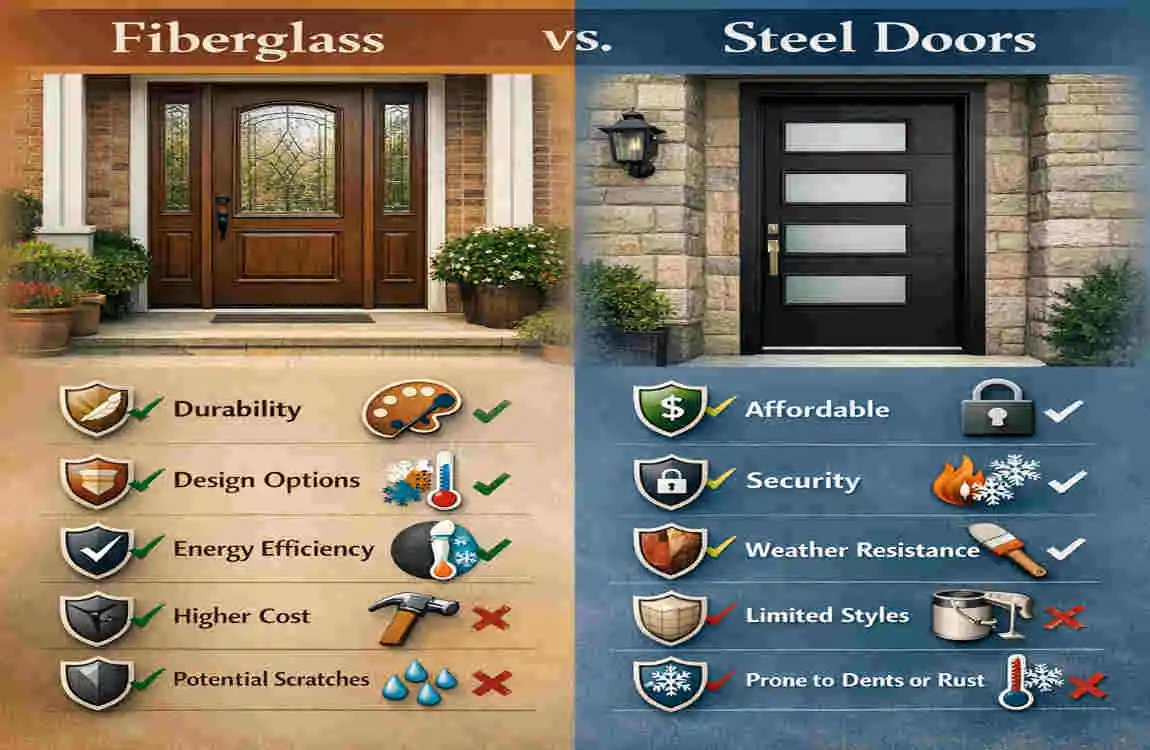
Fiberglass is a great option if you want:
- Low maintenance
- Moisture resistance
- Wood-like appearance
- Good energy efficiency
- Flexible design choices
- Long-lasting exterior appeal
It is often a great fit for homeowners who want beauty and performance together.
Choose Steel If You Prioritize
Steel may be the better choice if you want:
- Strong construction
- Good security
- Impact resistance
- Budget-friendly value
- A practical painted finish
- A solid everyday entry door
It is a very sensible choice for homeowners who prioritize strength and functionality.
Consider Your Local Climate
Climate can make a big difference.
If you live in a humid, rainy, or coastal area, fiberglass may be easier to live with because it resists moisture and rust.
If your home sees heavy use and you want a tough, secure door, steel can still be a very good choice, as long as it is properly protected and maintained.
Consider Your Home’s Architectural Style
Your front door should match the look of your home.
Fiberglass works beautifully with farmhouse, traditional, colonial, and wood-style homes. Steel often fits modern, simple, and practical exterior styles.
Hardware and glass inserts can also change the look. A small design change can make a big visual difference.
Installation, Maintenance, and Buying Tips
Why Professional Installation Matters
Even the best door can perform poorly if it is installed badly.
The frame must fit correctly. The door must seal tightly. The weatherstripping must be in the right place. If any of these are off, you can get drafts, leaks, or security problems.
A proper installation helps the door last longer and work as it should.
What to Check Before Buying
Before you choose a door, look at the full product, not just the material.
Check these details:
- Door thickness and construction
- Insulation or core material
- Warranty coverage
- Weather resistance
- Frame quality
- Lock and hardware compatibility
- Glass options
- Finish and upkeep needs
These details help you judge real value, not just appearance.
Maintenance Tips for Fiberglass and Steel Doors
A few simple habits can keep your door in good shape for years.
- Clean the surface regularly
- Inspect seals and weatherstripping
- Lubricate hinges and hardware when needed
- Touch up damaged finishes quickly
- Check for dents, cracks, rust, or moisture issues
- Follow the manufacturer’s care instructions
These small steps can protect your investment and reduce repair costs.
Frequently Asked Questions
Are fiberglass or steel front doors better?
It depends on your needs. Fiberglass is often better for appearance and moisture resistance, while steel is often better for strength and security.
Is fiberglass stronger than steel for a front door?
Not in raw strength. Steel is usually stronger, but overall performance also depends on frame quality, locks, and installation.
Do steel front doors rust?
They can rust if the finish is damaged and moisture reaches the metal. Good coatings and regular care help prevent that.
Are fiberglass doors energy efficient?
Yes. Many fiberglass doors are very energy efficient because they often have insulated cores and good weather sealing.
Which lasts longer, fiberglass or steel doors?
Both can last a long time. Lifespan depends on product quality, climate, use, and maintenance.
Are fiberglass doors more expensive than steel doors?
Sometimes yes, but pricing varies by model, size, finish, glass, and hardware. Steel can be more affordable at the base level.
Which front door requires less maintenance?
Fiberglass usually needs less attention because it resists rust and moisture very well.
Which door is better for home security?
Steel often offers security advantages, but the frame, hinges, and lock system are just as important.
Can fiberglass doors look like real wood?
Yes. Many fiberglass doors feature realistic wood-grain textures and stain finishes.
Should I choose fiberglass or steel for my home?
Choose fiberglass if you want style, insulation, and low maintenance. Choose steel for strength, security, and value.
| Feature | Fiberglass Front Doors | Steel Front Doors |
|---|---|---|
| Durability | Highly durable and resistant to dents | Very strong but can dent |
| Weather Resistance | Excellent against moisture and weather | Good, but may rust if damaged |
| Energy Efficiency | Excellent insulation | Good insulation, especially with a quality core |
| Maintenance | Low maintenance | Low to moderate maintenance |
| Appearance | Can mimic wood and offers many finishes | Modern, smooth, or traditional styles |
| Security | Strong and secure | Excellent security due to strong material |
| Cost | Usually more expensive | Often more affordable |
| Best For | Homeowners wanting style and low maintenance | Homeowners prioritizing strength and value |
