


Brick gives a home a strong, timeless look. But over time, it can collect dust, dirt, algae, mildew, soot, and stains. Weather, nearby trees, moisture, and pollution can all leave the surface looking dull.
That is why knowing how to clean a brick exterior safely is so helpful. A clean brick home looks fresher, more cared for, and more inviting. The good news is that you usually do not need harsh chemicals to get good results.
Why Should You Clean a Brick Exterior?
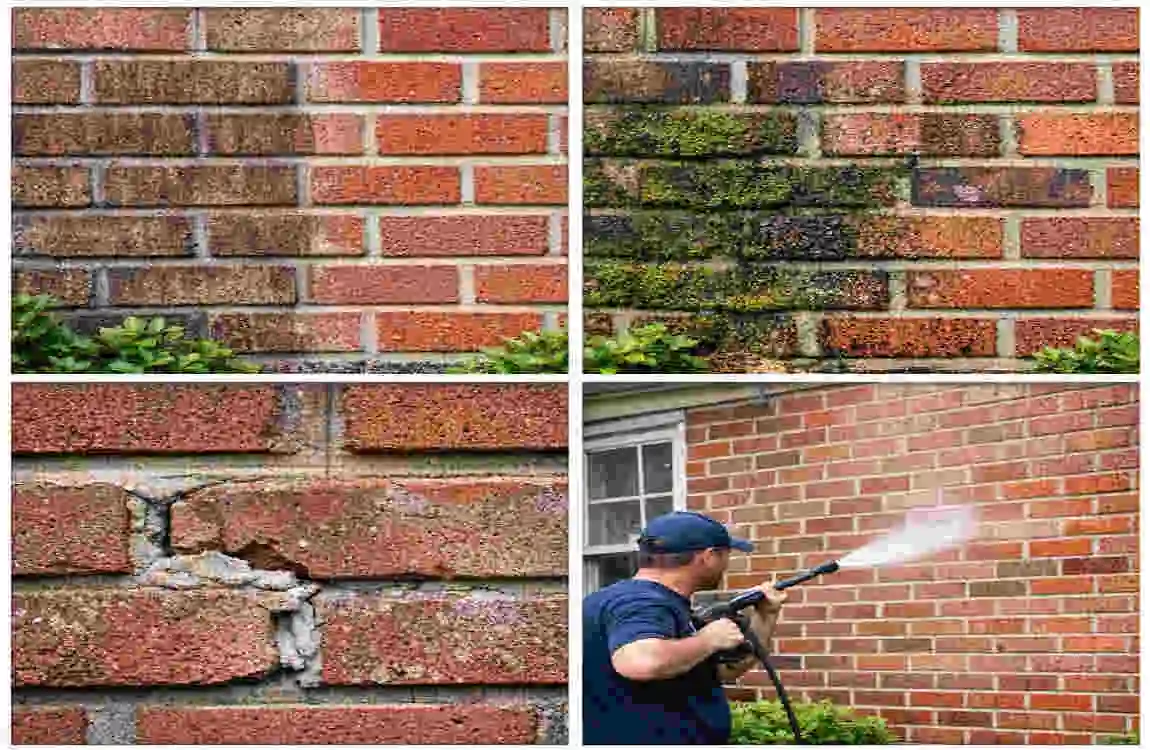
Improve Curb Appeal
Clean brick can make a home look brighter right away. Even if the house is older, a well-cleaned exterior can give it a more polished and attractive appearance.
If you are trying to improve your home’s look, this is one of the simplest places to start.
Remove Dirt and Organic Growth
Brick walls often collect mud, moss, algae, mildew, and stains. These are not just cosmetic issues. If left alone, they can make the surface look worn and neglected.
Regular cleaning helps remove buildup before it becomes harder to handle.
Protect the Brick Surface
Brick may look tough, but it can still be damaged by the wrong cleaning method. Too much water, strong chemicals, and aggressive pressure washing can harm the brick and mortar.
Gentle cleaning is usually the safer choice. It protects the surface while still removing dirt.
What You Need Before Cleaning Exterior Brick
Basic Cleaning Supplies
Before you start, gather a few simple items:
- Soft-bristle brush
- Garden hose
- Bucket
- Mild cleaning solution
- Clean sponge or cloth
- Protective gloves
- Safety glasses
These tools are usually enough for light to moderate cleaning.
Safety Equipment
Safety matters, especially if you are working near ladders or upper walls. Wear gloves, eye protection, and sturdy shoes with good grip.
Also protect nearby plants, windows, doors, and outdoor fixtures. A little preparation can prevent damage later.
Check the Brick First
Look closely at the brick before cleaning. Check for:
- Cracks
- Loose mortar
- Crumbling areas
- Broken bricks
If the masonry is already damaged, it should be repaired before you wash it. Cleaning over weak spots can make the problem worse.
How to Clean Brick Exterior Step by Step
Remove Loose Dirt and Debris
Start by brushing away loose dust, cobwebs, leaves, and surface dirt. Work from the top downward so debris falls away as you clean.
This first step makes the rest of the job easier.
Pre-Wet the Brick
Lightly wet the brick with clean water before applying any cleaner. This helps the brick absorb less of the cleaning solution.
It also reduces the chance of the cleaner drying too quickly on the wall.
Apply a Mild Cleaning Solution
Use the gentlest cleaner that can do the job. A mild solution is often enough for everyday dirt.
Always test it on a small hidden area first. That small step can save you from a bigger problem if the cleaner reacts badly with the brick or mortar.
Scrub Gently
Use a soft-bristle brush and moderate pressure. Clean in small sections to control the process.
Do not scrub hard. The goal is to lift dirt, not wear down the brick or mortar joints.
Rinse Thoroughly
Once the dirt is loosened, rinse the wall with clean water. Make sure all cleaning solution is removed.
Leftover cleaner can leave marks or attract more dirt later.
Allow the Brick to Dry
Let the brick dry naturally. After it dries, check the results. If some stains remain, you can decide whether another gentle round is needed.
How to Remove Common Brick Exterior Stains
Dirt and Dust
For simple dirt, water and a soft brush are often enough. This is the easiest type of cleaning and usually does not need special products.
If the dirt is light, start small before using any cleaner.
Mold, Mildew, and Algae
Organic growth often needs a cleaner made for exterior masonry. These stains can cling to the surface and may not come off with water alone.
Use a product designed for brick, and rinse it well after cleaning.
White Powdery Stains
White deposits on brick are often efflorescence. This happens when salts move through the masonry with moisture and appear on the surface.
Scrubbing harder does not always solve the issue. If the problem keeps recurring, you may need to check for sources of moisture.
Rust Stains
Rust stains can come from metal fixtures, fasteners, gutters, or even irrigation water. If you keep treating the stain without fixing the source, it may return again and again.
Look for the cause first.
Soot and Smoke
Soot often appears near fireplaces, grills, chimneys, or areas exposed to smoke. It can also accumulate in areas affected by pollution.
Use a masonry cleaner, and do not assume a single product works for every dark stain.
Can You Pressure Wash a Brick Exterior?
When Pressure Washing May Be Appropriate
Yes, sometimes. A sound, sturdy brick surface may withstand controlled low-pressure washing. But the key word is controlled.
The equipment and technique matter just as much as the pressure itself.
Risks of Excessive Pressure
Too much pressure can cause serious damage, including:
Possible Damage What It Means
Damaged mortar The joints may weaken or wash out
Surface erosion The brick surface can wear down
Water penetration Moisture can get inside the wall
Chipping or flaking Brick pieces may break away
Damage to older masonry Fragile brick can be harmed easily
Older or delicate brick is especially at risk.
Safer Pressure-Washing Practices
If you use a pressure washer, keep it very gentle. Use the lowest effective pressure, hold the nozzle at a safe distance, and never focus directly on mortar joints.
Test a small area first. If the brick reacts badly, stop and switch to a safer method.
Common Mistakes to Avoid When Cleaning Brick
Here are the biggest mistakes homeowners should avoid:
- Using very strong chemicals without testing
- Scrubbing with hard or metal brushes
- Using excessive pressure
- Ignoring damaged mortar
- Letting cleaner dry on the wall
- Cleaning without protecting landscaping
- Skipping the test patch
- Mixing different cleaning chemicals
These mistakes can create more problems than the original dirt.
How Often Should You Clean a Brick Exterior?
There is no single schedule that works for every home. The best timing depends on climate, shade, moisture, pollution, and nearby plants.
In many cases, a regular inspection is more useful than a strict calendar. If you notice buildup early, it is usually easier to clean.
Seasonal maintenance also helps. A quick check in spring and fall can catch stains, algae, or mortar issues before they grow.
Natural and Mild Cleaning Options
Water and Soft Brushing
For light dirt, plain water and a soft brush may be enough. This is often the best place to start because it is the least risky method.
Mild Soap Solution
A gentle soap-and-water mix can help with surface dirt. Use only a small amount of soap, and rinse thoroughly after cleaning.
Too much soap can leave residue behind.
When Commercial Brick Cleaners Are Better
If the stain is stubborn, a masonry-safe cleaner may work better. This is often the case for mildew, algae, soot, or deep stains.
Always follow the label instructions and test first.
DIY Cleaning vs. Hiring a Professional
When DIY Cleaning Makes Sense
DIY cleaning can work well for:
- Small areas
- Light dirt
- Easy-to-reach walls
- Sound brick and mortar
If the brick is in good shape, a careful homeowner can often handle the job.
When to Hire a Professional
A professional is the better choice when you have:
- A large or multi-story home
- Historic or delicate masonry
- Heavy staining
- Crumbling mortar
- Major mold or organic growth
- Uncertainty about the right cleaning method
If you are unsure, it is safer to ask for help.
Benefits of Professional Masonry Cleaning
Professionals bring the right tools and experience. They know how to handle different brick types and can lower the chance of damage.
They are also better equipped to deal with difficult stains and fragile surfaces.
How to Keep Brick Exterior Clean Longer
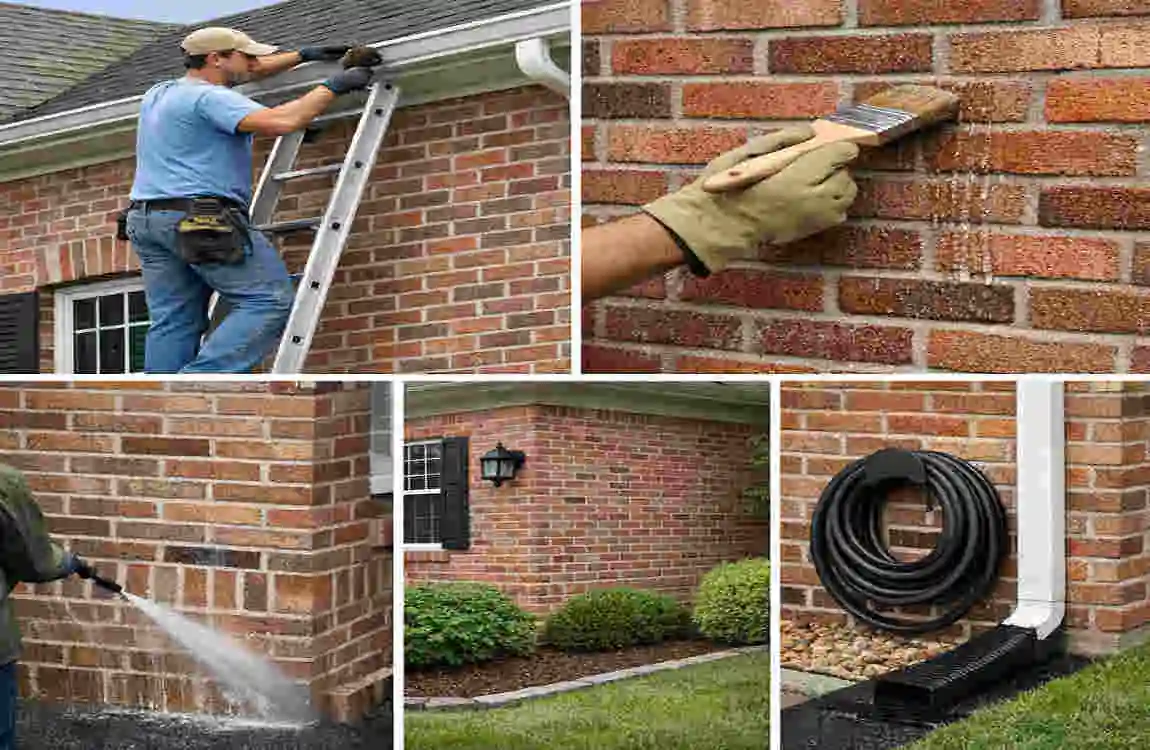
A few simple habits can help your brick stay cleaner for longer:
- Keep gutters and downspouts working properly
- Prevent water from running against the brick
- Trim plants touching the wall
- Remove stains early
- Check mortar joints from time to time
- Keep nearby areas free of dirt and debris
- Fix moisture problems quickly
These small steps can make future cleaning much easier.
FAQ: How to Clean Brick Exterior
Can I clean brick exterior with a pressure washer?
Yes, sometimes. But only if the brick is sound and the pressure is kept low. Too much pressure can damage both brick and mortar.
What is the best way to clean exterior brick?
Start with water and a soft brush. If needed, move to a mild masonry-safe cleaner.
Can I use bleach to clean brick?
Bleach may work for some organic stains when properly diluted, but it is not a universal brick cleaner. Use caution and test first.
How do I remove green algae from brick?
Use gentle brushing and a masonry-safe cleaner made for organic growth. Rinse thoroughly after cleaning.
How do I remove white stains from brick?
White stains are often efflorescence. Check for moisture problems, because the stains may return if the source is not fixed.
How often should exterior brick be cleaned?
There is no fixed rule. Inspect it regularly and clean it when dirt, stains, or growth become noticeable.
Is vinegar safe for cleaning brick?
Not always. Acidic cleaners can affect some masonry materials and mortar, so it is best to avoid vinegar unless you know it is safe for your specific brick.
Should I seal brick after cleaning?
Not always. It depends on the condition and type of brick. If sealing is needed, use a breathable masonry-compatible product.
| Key Area | Smart Tips for a Clean Brick Exterior |
|---|---|
| Regular Cleaning | Remove dirt, dust, and stains with a soft brush and gentle cleaning solution. |
| Avoid Harsh Chemicals | Use brick-safe cleaners to prevent discoloration and surface damage. |
| Remove Mold & Algae | Treat green or dark growth early with an appropriate exterior cleaner. |
| Check Mortar Joints | Inspect for cracks, gaps, or crumbling mortar and repair them promptly. |
| Protect the Brick | Address water leaks and drainage issues to prevent moisture damage. |
| Improve Curb Appeal | Pair clean brick with fresh landscaping, lighting, and a well-maintained entrance. |
