

How to clean stucco exterior walls is a question many homeowners ask once dirt, stains, or mildew start to show. Stucco looks beautiful, but it also has a textured surface that can hold dust, algae, and weather marks more easily than smoother wall finishes.
The good news is that stucco can usually be cleaned safely with the right gentle method. You do not need harsh tools or strong pressure in most cases. In fact, using too much force can damage the surface and create bigger problems later.
Understanding Stucco Exterior Walls
What Is Stucco?
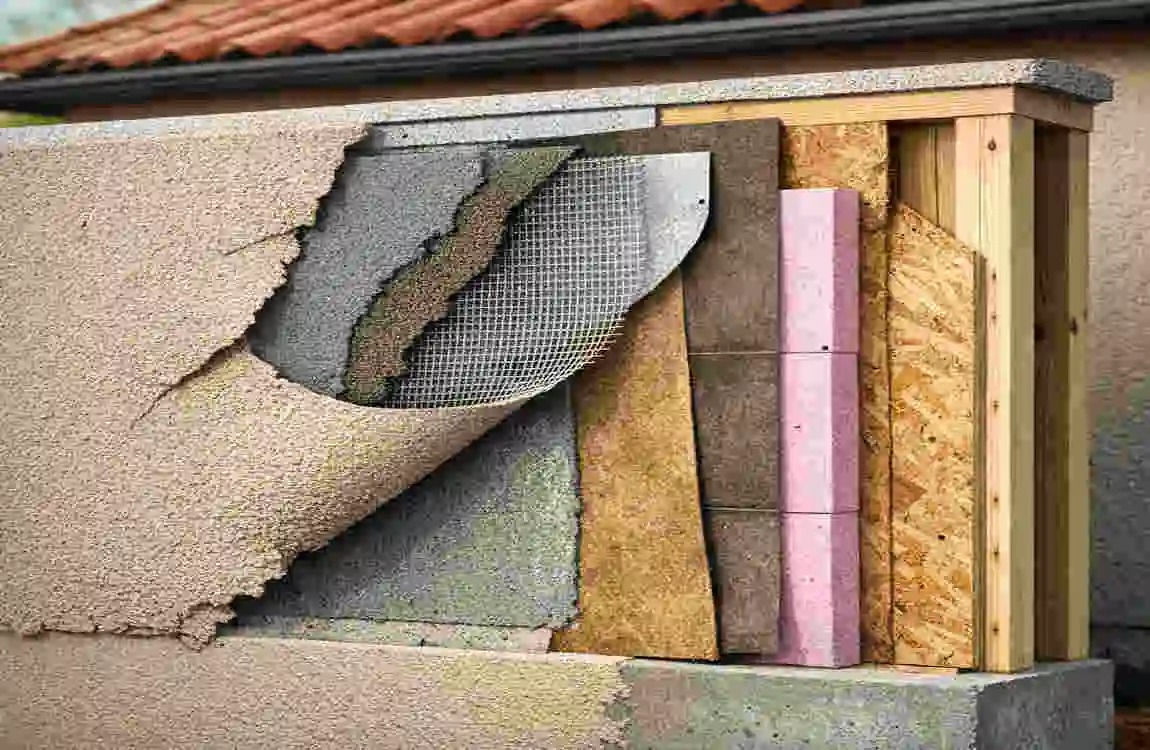
Stucco is a cement-based exterior finish used on many homes. It has a textured look and can be applied in traditional or modern systems.
Because of that texture, stucco can trap dust, pollen, and other outdoor debris. It also absorbs stains more visibly than some flat surfaces.
Why Does Stucco Get Dirty?
Stucco gets dirty for a few simple reasons:
- Dust and air pollution
- Rainwater and mineral deposits
- Algae, mold, and mildew
- Soil splash from landscaping
- Smoke or outdoor stains
Homes in shaded, damp, rainy, or dusty areas usually need cleaning more often.
How Often Should Stucco Be Cleaned?
There is no single rule for every home. Some walls may only need cleaning once in a while, while others may need more regular care.
A better approach is to inspect the walls often. If you notice green marks, dark spots, or dust buildup, it is probably time to clean.
How to Clean Stucco Exterior Walls
Inspect the Stucco First
Before you wash anything, check the wall carefully.
Look for:
- Cracks
- Holes
- Loose patches
- Damaged areas around windows or doors
If stucco is already damaged, water can get behind it. That is why repairs should happen before deep cleaning.
Gather the Right Supplies
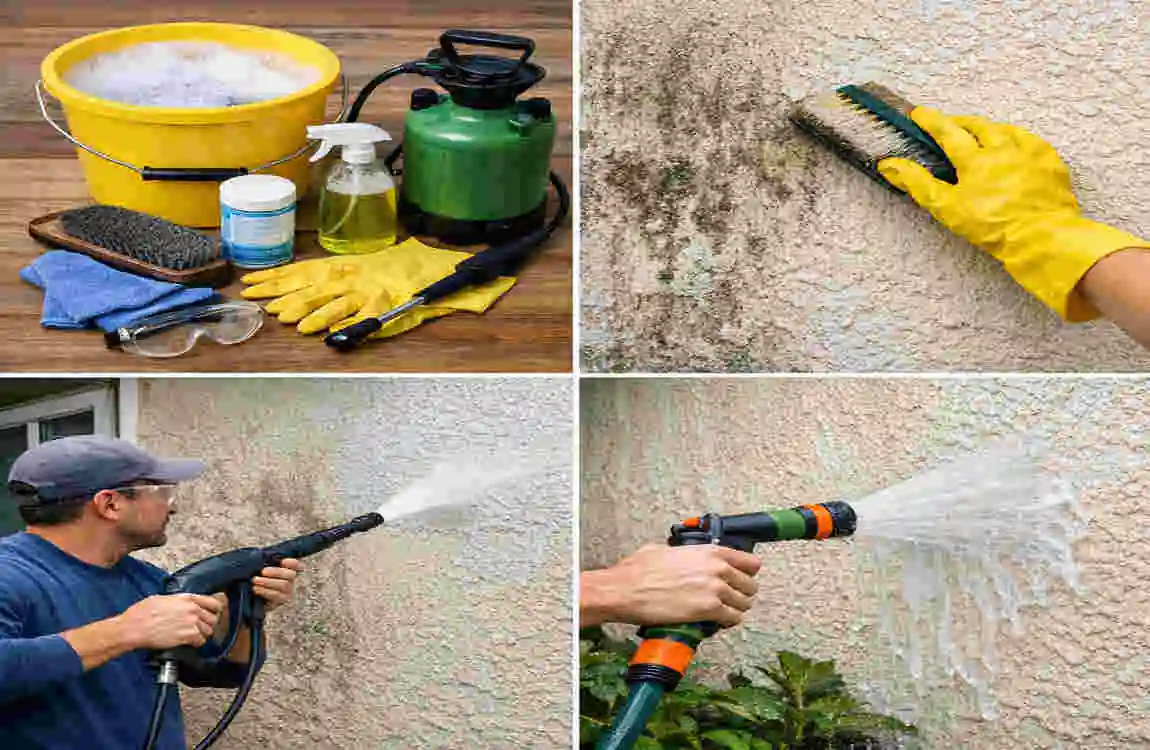
You do not need anything complicated. A simple cleaning setup usually includes:
- Garden hose with a gentle spray
- Soft-bristle brush
- Bucket
- Mild exterior-safe detergent
- Clean water
- Gloves and eye protection
A ladder or extension tool may help if the walls are high.
Prepare the Area
Move outdoor furniture, planters, and decorations away from the wall—close windows and doors.
If needed, cover nearby plants and protect electrical areas from excess water. This keeps the cleaning process safer and easier.
Start With Water
Always begin with a gentle rinse. This removes loose dirt before you scrub.
Work from the top downward so dirty water runs off the wall instead of spreading lower.
Use a Mild Cleaning Solution
For most stucco walls, a mild cleaner is the safest choice. Follow the product label carefully and avoid mixing chemicals.
Strong cleaners can sometimes harm the finish or leave marks. Gentle is usually better.
Clean Small Sections
Do not try to clean the whole wall at once. Work in small sections so the solution does not dry too fast.
Use a soft brush and light pressure. You want to lift dirt, not scrub the stucco surface apart.
Rinse Thoroughly
After cleaning, rinse the wall well with clean water.
Make sure all soap and loose dirt are gone. Let the surface dry naturally after that.
How to Remove Common Stucco Stains
Dirt and Dust
For normal dirt, water is often enough. If the stain remains, use a mild detergent and a soft brush.
Avoid abrasive pads or rough tools. They can wear down the stucco texture.
Mold and Mildew
Mold and mildew usually appear in damp or shaded areas. If you see dark spotting, use an appropriate exterior cleaner made for the surface.
Also, check for the cause. If moisture keeps coming back, cleaning alone will not solve the issue.
Algae and Green Stains
Green stains often show up where walls stay damp longer than they should. A gentle cleaner can remove them, but you should also improve airflow or drainage if possible.
This helps reduce regrowth.
Rust Stains
Rust can come from nearby metal fixtures, fasteners, or outdoor items. Use a product that is safe for stucco and designed for stain removal.
Test it on a small hidden area first.
Water and Mineral Stains
Hard water can leave pale marks or streaks on stucco. A stucco-safe cleaner may help, but do not scrape the surface.
Scraping can damage the finish and make the area look worse.
Can You Pressure Wash Stucco?
Is Pressure Washing Safe?
In many cases, high-pressure washing is not the best choice for stucco. Too much pressure can crack the surface or force water behind it.
If pressure is used at all, it should be tightly controlled and in accordance with the manufacturer’s guidance.
Safer Alternatives
Safer options include:
- Gentle hose rinsing
- Soft washing
- Professional exterior cleaning
These methods are less likely to damage the wall.
When to Avoid Pressure Washing
Do not pressure wash if the stucco is:
- Cracked
- Loose
- Old and fragile
- Near vulnerable windows or openings
If the wall already has damage, water intrusion becomes a real concern.
Common Mistakes to Avoid
A few simple mistakes can cause real damage. Try to avoid these:
- Using too much pressure
- Scrubbing with stiff brushes
- Applying strong chemicals without checking compatibility
- Leaving cleaner on too long
- Not rinsing fully
- Cleaning in very hot, freezing, or wet weather
- Ignoring cracks or moisture problems
If stains return often, the cause may be drainage, shade, or poor airflow rather than dirt alone.
How to Protect Stucco After Cleaning
Fix Cracks and Damage
If you notice cracks or loose areas, repair them with the right stucco material. A professional should check larger damage.
Improve Drainage
Keep gutters clean and ensure downspouts direct water away from the wall. Less water around the home means fewer stains and less damage.
Maintain Landscaping
Trim plants that press against the stucco. Also, adjust the sprinklers so they no longer keep soaking the wall.
Consider Professional Help
A professional may be helpful for:
- Large homes
- Multi-story walls
- Difficult stains
- Fragile stucco
- Visible water damage
DIY vs. Professional Stucco Cleaning
When DIY Makes Sense
DIY cleaning works well when the wall has light dirt, dust, or small stains and the surface is easy to reach.
When to Hire a Professional
Get expert help if you have:
- Heavy mold or mildew
- Persistent staining
- Cracked or deteriorating stucco
- Water intrusion concerns
- Tall or hard-to-reach walls
Professionals may also use soft-washing tools that are safer for delicate surfaces.
Seasonal Stucco Cleaning Tips
Spring
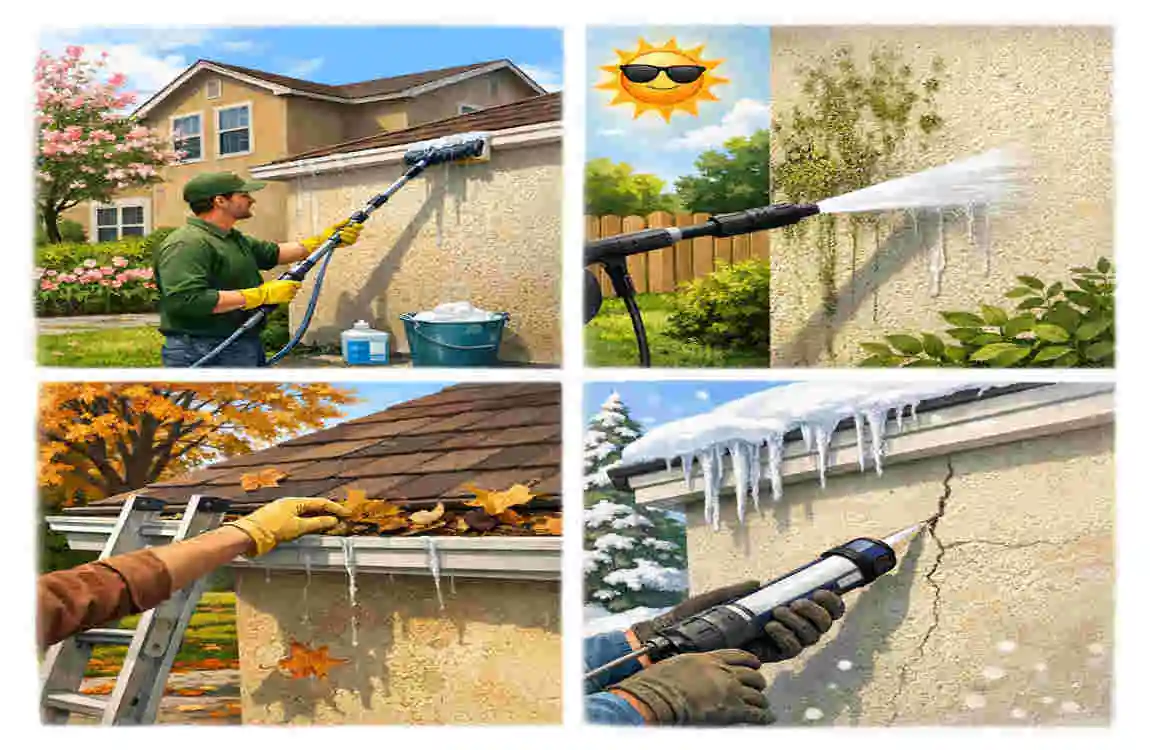
Spring is a good time to wash away winter dirt and inspect for cracks or water damage.
Summer
Clean before extreme heat when possible. Also check shaded areas for algae growth.
Fall
Remove leaves and debris—clean gutters so rainwater does not run down the walls.
Winter
Avoid heavy wet cleaning during freezing weather. Focus on inspection and minor upkeep instead.
Frequently Asked Questions
Can I use a pressure washer to clean stucco exterior walls?
You can, but it is risky. High pressure can damage stucco or force water inside the wall. A gentle method is usually safer.
What is the best cleaner for stucco walls?
A mild exterior-safe cleaner is usually best. Always check the label and follow stucco care instructions.
How do you remove green algae from stucco?
Use a stucco-safe exterior cleaner and gentle washing. Also fix the moisture or shade issue that caused it.
Can bleach be used to clean stucco?
Sometimes, but only if the product is suitable for the surface and used exactly as directed. It may affect nearby plants or finishes.
How often should exterior stucco be cleaned?
It depends on climate, shade, moisture, and dirt buildup. Regular inspection is more useful than following a fixed schedule.
| Key Point | Short Information |
|---|---|
| What Is Stucco? | A durable exterior wall finish made from cement, sand, lime, or modern stucco materials. |
| Why Clean Stucco? | Cleaning removes dirt, dust, algae, mildew, stains, and buildup while improving curb appeal. |
| Best Cleaning Method | Use a soft brush, garden hose, and mild cleaning solution for routine cleaning. |
| Pressure Washing | Use low pressure carefully because high pressure can damage or crack the stucco surface. |
| Mildew & Algae | A suitable exterior cleaner can help remove green or dark organic growth. |
| Stubborn Stains | Gently scrub difficult areas rather than using excessive pressure or harsh chemicals. |
