

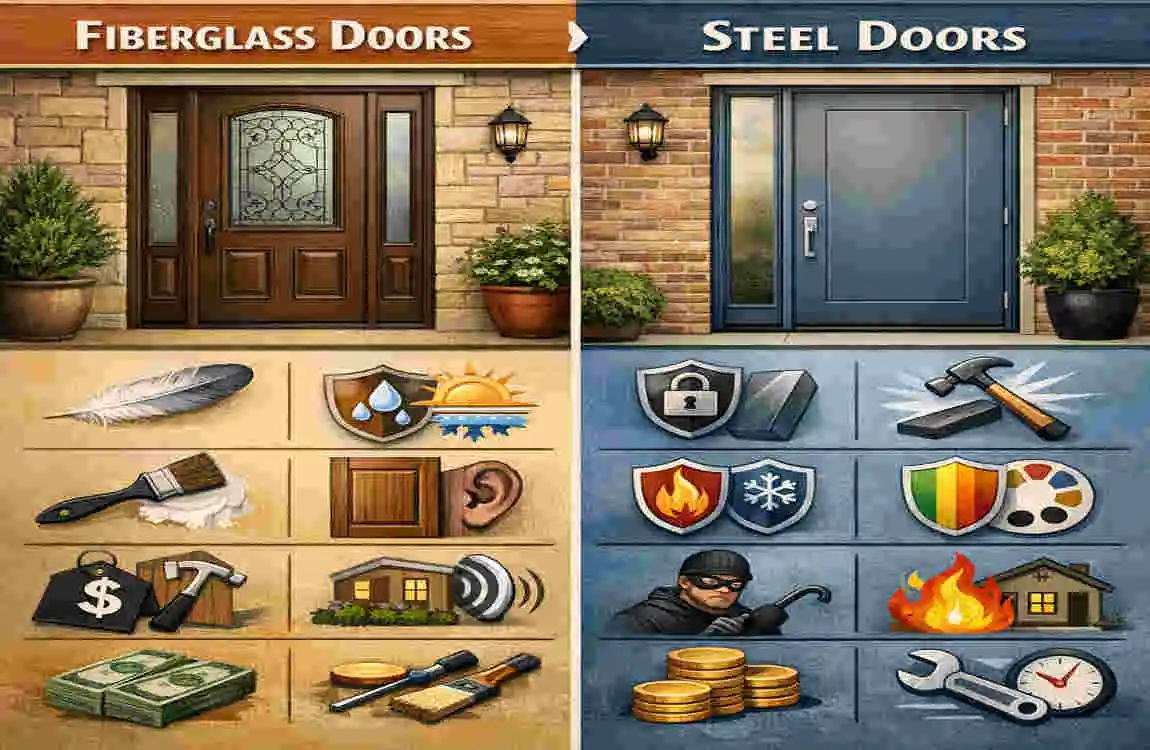
Choosing the right front door is a bigger decision than many homeowners expect. Your exterior door affects security, energy efficiency, durability, and curb appeal all at once. It also sets the tone for the whole home the moment someone approaches it.
Two of the most popular choices today are fibreglass and steel exterior doors. Both can work very well, but they do not perform in the same way. That is why many homeowners ask the same question: Are fibreglass exterior doors better than steel doors?
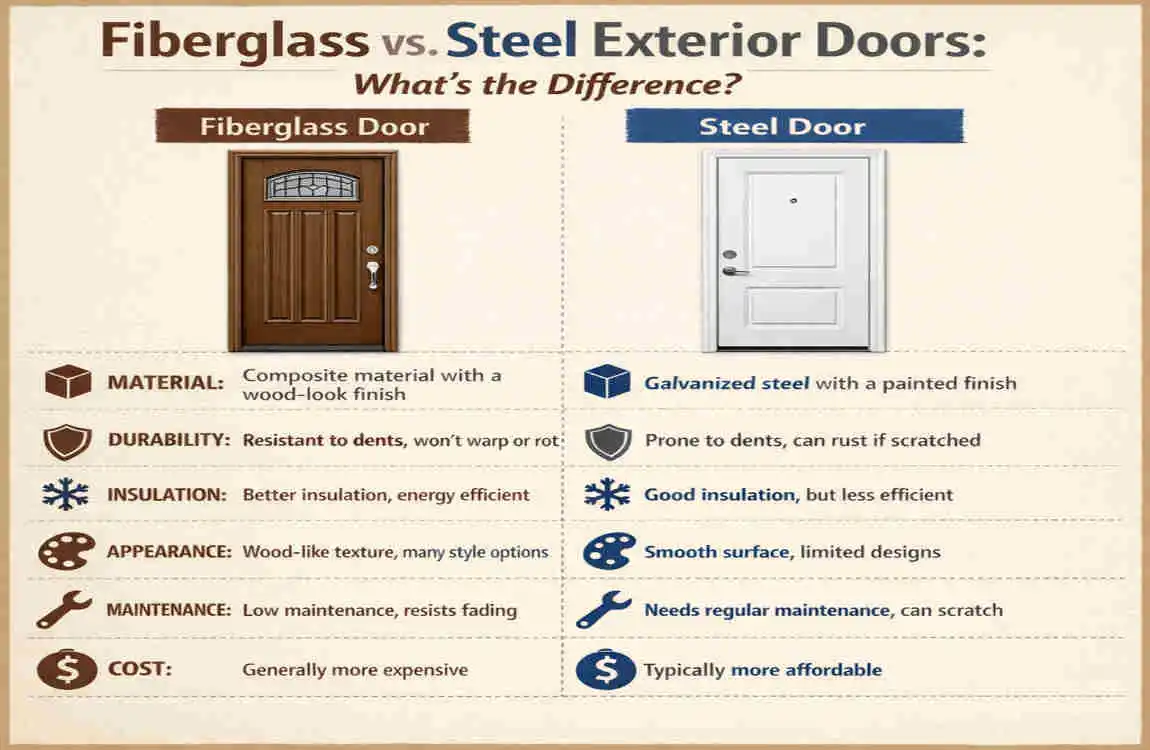
Fibreglass vs Steel Exterior Doors: What’s the Difference?
What Is a Fibreglass Exterior Door?
A fibreglass exterior door is made from a strong composite material that is shaped to look like wood, with smooth, painted panels or decorative entry styles. Many fibreglass doors have an insulated core, which helps with temperature control and comfort.
One reason homeowners like fibreglass is its flexibility. It can look like real wood without the same level of upkeep. That makes it a popular choice for people who want a stylish front door without spending a lot of time on maintenance.
Fibreglass doors also handle changing weather well. They do not rot, and they do not rust. That makes them a smart option in many climates.
What Is a Steel Exterior Door?
A steel exterior door uses a strong steel skin over an insulated core. In many cases, the steel panel is smooth or lightly textured and may be painted with a solid finish.
Steel doors are often chosen for strength and security. They feel solid, they resist impact well, and they can be a very practical choice for many homes.
They are common because they deliver good performance without always costing as much as premium fibreglass. If you want a tough, reliable entry door, steel is often near the top of the list.
Key Differences at a Glance
FeatureFiberglassSteel
Durability Excellent Excellent
Security Very good Excellent
Energy efficiency Excellent Very good
Rust resistance Excellent Can rust if damaged
Maintenance Low Low to moderate
Appearance Highly customizable Modern and traditional options
Cost Moderate to high Often more affordable
Are Fibreglass Exterior Doors Better Than Steel Doors?
Durability and Weather Resistance
When you compare these two materials, durability is one of the first things to look at. Fibreglass handles moisture very well. It does not swell, warp, or rot the way some wood doors can. It also resists dents and scratches fairly well, especially when made with a quality outer surface.
That makes fibreglass a strong choice for homes in areas with rain, humidity, heat, or cold. It tends to remain stable as the weather changes, helping it maintain its shape and appearance over time.
Steel is also very durable. It has a solid feel and handles everyday use well. The main weakness is not the steel itself, but the finish. If the protective coating is scratched or damaged and the exposed metal is not repaired, rust can form.
So, if your area gets a lot of moisture or you want a door that requires very little attention, fibreglass often has the edge. If you want a door that feels extra solid and strong, steel performs very well too.
Energy Efficiency
A good exterior door should help keep warm air in during winter and cool air in during summer. Both fibreglass and steel can do that well, but the details matter.
Fibreglass usually performs very well because it often has a high-quality insulating core. That insulation helps reduce heat transfer through the door. Many fibreglass doors also seal well and work nicely with proper weatherstripping.
Steel doors can also be energy efficient, especially when they include an insulated core. A well-made steel door can do a very good job of helping control indoor temperatures. In many homes, the real difference comes down more to the door construction than the outer surface alone.
If energy performance is one of your top concerns, do not look only at the material. Check the core, the weatherstripping, the threshold, and the quality of the installation. A poorly installed premium door can still let in drafts.
Security and Strength
When homeowners ask about front door safety, steel usually has the stronger reputation. That is because steel exterior doors are often seen as the tougher option for impact resistance and overall stiffness.
A steel door can feel more forceful and solid when closed. That makes many people feel more confident about security, especially on a main entry door.
That said, the door material is only one part of home security. The frame, locks, hinges, and installation quality all matter just as much. A strong door with weak hardware or a poor frame will not protect the home as well as it should.
Fibreglass doors remain very secure when well built. They resist everyday wear and can perform well for normal residential use. If you want a strong door with a more decorative appearance, fibreglass can still be an excellent choice.
Maintenance Requirements
Maintenance is another area where fibreglass often stands out. Most fibreglass doors are easy to clean and require little maintenance. A simple wipe-down is usually enough to keep them looking good.
They also require less repainting or repair than some other materials. That makes them attractive to homeowners who want a low-maintenance exterior door.
Steel doors are also fairly easy to care for, but they may require more attention if the finish is damaged. A small dent, scratch, or chipped paint area should be repaired quickly to prevent rust from forming.
So, in terms of upkeep, fibreglass is usually the easier option. Steel is still manageable, but it may need more touch-up work over time.
Fibreglass vs Steel: Cost, Style, and Long-Term Value
Which Door Is More Affordable?
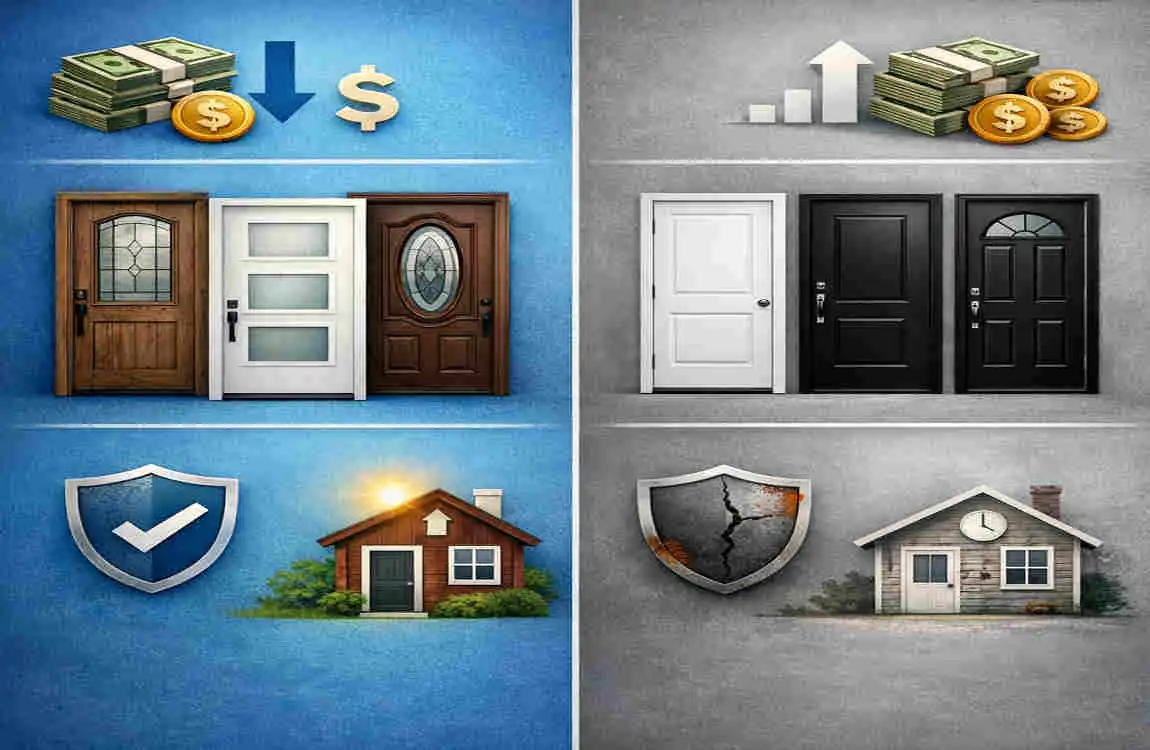
Price often plays a big role in the decision. In general, steel exterior doors are often more affordable upfront than fibreglass doors. That makes them attractive if you want a strong entry door without incurring a high upfront cost.
Fibreglass doors usually cost more upfront, especially if you choose wood-look finishes, decorative glass, or premium insulation. Still, the higher price may be worth it if you want better weather resistance and less maintenance.
The total cost can also change based on:
- Door size
- Glass inserts
- Hardware
- Finish
- Custom design
- Installation complexity
So, when comparing prices, do not just look at the door itself. Look at the full project.
Which Looks Better?
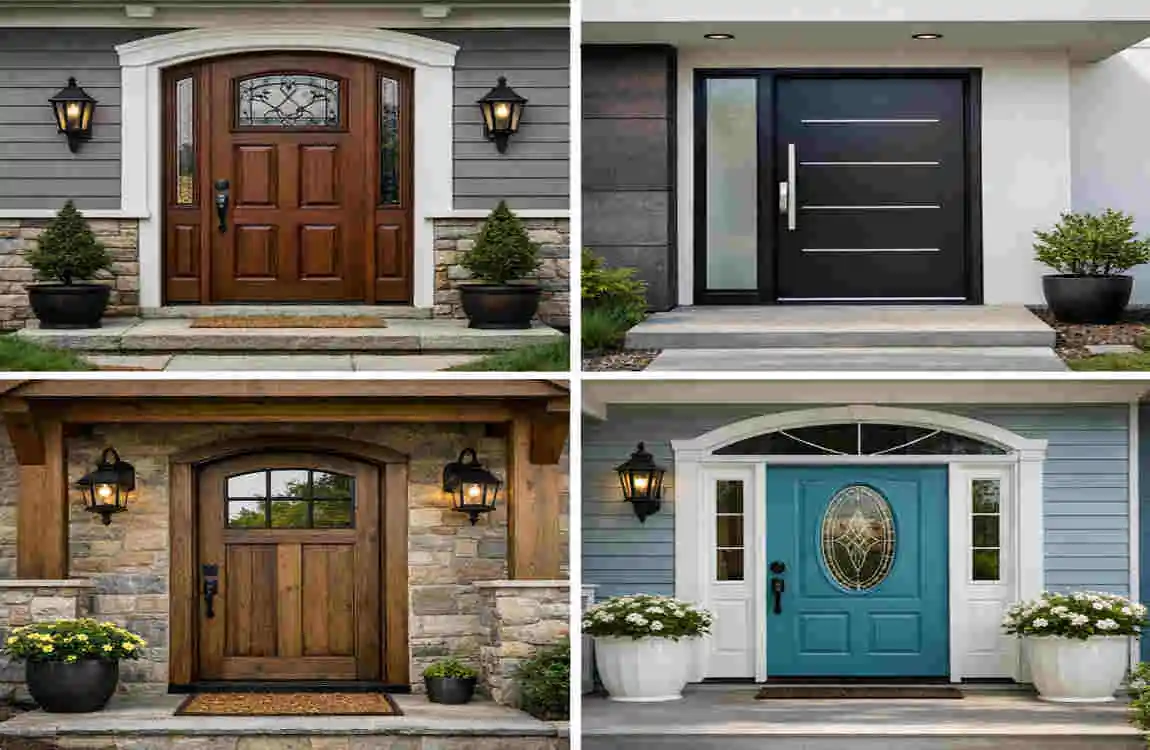
This part is more personal, but fibreglass often wins for style flexibility. Many fibreglass entry doors are made to look like real wood. That gives you a warm, natural appearance without the upkeep of actual wood.
Fibreglass can also be painted or stained in a wide range of finishes. It works well in traditional and farmhouse homes, as well as many modern designs.
Steel doors usually have a more straightforward look. They can still look very attractive, especially with painted finishes, glass panels, or decorative details. They are often a good match for simple, clean, and practical home styles.
If you want the rich appearance of wood, fibreglass may be the better choice. If you want a crisp and simple front door, steel can look excellent.
Which Offers Better Long-Term Value?
Long-term value is about more than the price tag. It includes how long the door lasts, how much maintenance it needs, how well it performs, and how often you may need to repair it.
Fibreglass can offer strong long-term value because it tends to withstand weather well and requires less upkeep. That can save time and money over the years.
Steel can also be a smart long-term choice if you want a durable door at a lower starting cost. If you take care of the finish and keep the door protected from damage, it can perform very well for a long time.
The cheapest door is not always the best value. A slightly higher-quality door may save you more in the long run.
Pros and Cons of Fibreglass and Steel Exterior Doors
Fibreglass Door Pros
- Excellent weather resistance
- Low maintenance
- Good insulation
- Wood-like appearance
- Resistant to rust
- Many design options
Fibreglass is a great all-around option for many homeowners. It gives you style, comfort, and easy care in one package.
Fibreglass Door Cons
- Can cost more than basic steel doors
- May crack or become damaged under severe impact
- Some lower-quality models may not perform as well as premium ones
Fibreglass is strong, but like any product, quality matters. A better-made door usually performs better and lasts longer.
Steel Door Pros
- Strong and secure
- Often budget-friendly
- Good energy performance with an insulated core
- Durable for many residential applications
- Available in many styles and finishes
Steel is a reliable choice when strength and value matter most. It is especially useful for homeowners who want a practical entry door.
Steel Door Cons
- Can dent
- Damaged finishes may expose metal to rust
- May require repainting or touch-ups
- Can transfer heat or cold depending on construction and insulation
Steel does well in many homes, but it needs proper care. If the finish is damaged, repair should be done quickly.
How to Choose the Best Exterior Door for Your Home
Choose Fibreglass If You Want
Choose fibreglass if your main priorities are:
- Low maintenance
- Strong weather resistance
- Better resistance to moisture and rust
- A wood-style appearance
- Good insulation
- Long-term aesthetic flexibility
Fibreglass is often a great choice for homeowners who want a beautiful door with minimal upkeep.
Choose Steel If You Want
Choose steel if your main priorities are:
- Strong security
- A durable entry door
- A potentially lower upfront cost
- A simple painted finish
- A strong option for high-use entrances
Steel is a solid option when you prioritise strength and practicality.
Consider Your Climate
Climate matters more than many people realise. If you live in a humid, rainy, or coastal area, fibreglass may be especially appealing because it does not rust.
If your home faces extreme heat, cold, snow, or changing weather conditions, both materials can still work well if built properly. The key is to choose a door that is designed for your environment.
Consider Installation Quality
Even the best door can fail if it is installed poorly. That is why installation matters so much.
A good installation should include:
- Proper frame alignment
- Correct flashing
- Strong weatherstripping
- Level threshold placement
- Careful sealing around the frame
If any of these steps are rushed or done badly, drafts and leaks can happen. So when you compare doors, also compare the installer.
FAQ: Fibreglass vs Steel Exterior Doors
Are fibreglass exterior doors better than steel doors?
Not always. Fibreglass is often better for low maintenance, weather resistance, appearance, and insulation. Steel can be the best choice if strength, security, and affordability matter most.
Which lasts longer, fibreglass or steel doors?
Both can last for many years. Lifespan depends on the quality of the door, the installation, the climate, and how well it is maintained.
Are fibreglass doors more energy-efficient than steel doors?
They can be, but not always. Energy efficiency depends on the door core, weatherstripping, frame, and installation quality as much as the outer material.
Do fibreglass doors rust?
No. Fibreglass does not rust, which makes it a strong choice for wet or humid climates.
Do steel exterior doors rust?
Yes, they can rust if the finish is damaged and the exposed metal is not repaired.
Are steel doors safer than fibreglass doors?
Steel often has the edge in impact resistance, but security also depends on the lock, frame, hinges, and installation. A complete system matters most.
Which is cheaper: fibreglass or steel?
Basic steel doors are often cheaper upfront. Fibreglass may cost more upfront, but it can offer strong value over time through lower maintenance needs.
Which exterior door is best for a home?
The best door depends on your budget, climate, security needs, energy goals, style preferences, and maintenance expectations.
| Feature | Fiberglass Door | Steel Door |
|---|---|---|
| Durability | Very durable and resists dents | Extremely strong and impact-resistant |
| Weather Resistance | Excellent against moisture and temperature changes | Good, but can rust if damaged |
| Maintenance | Low maintenance | May need rust prevention and repainting |
| Energy Efficiency | Excellent insulation | Good insulation with a proper core |
| Appearance | Many colors, textures, and wood-look styles | Clean, modern, and traditional options |
| Security | Strong and secure | Excellent security |
| Cost | Usually moderate to high | Often more affordable |
