

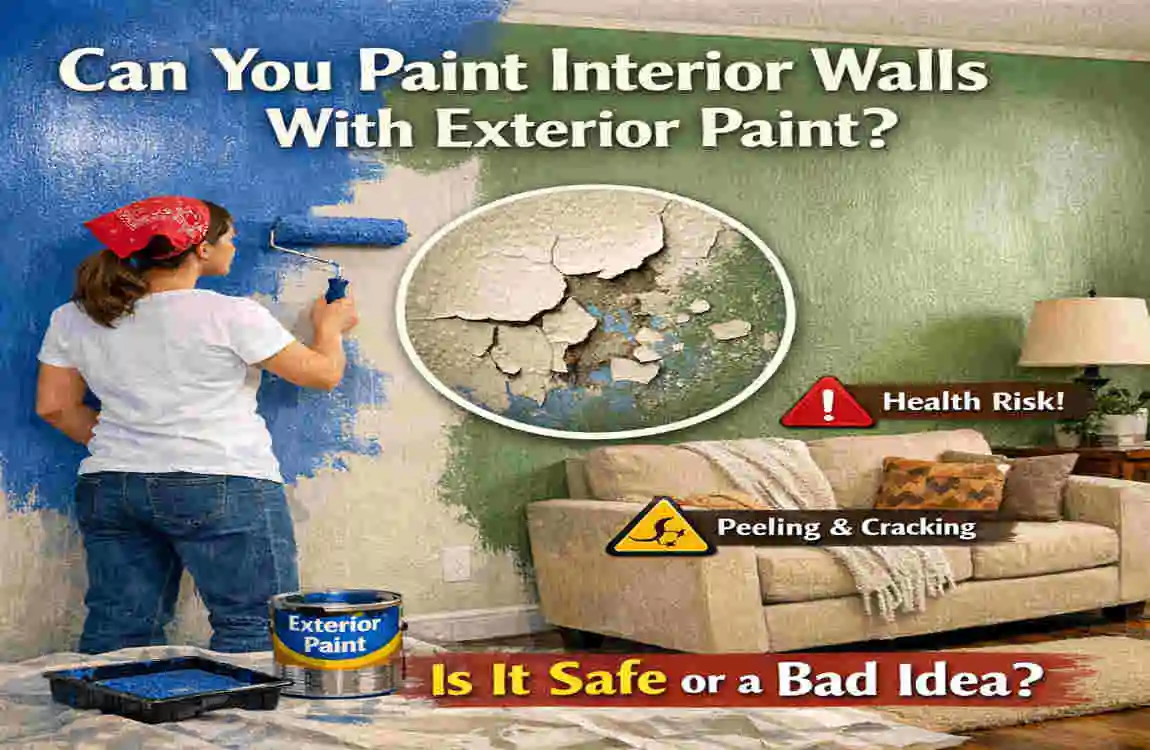
Many homeowners wonder whether they can use exterior paint for interior walls when they have leftover paint or want a tougher finish. At first glance, it may seem like a smart idea. Exterior paint is designed to handle harsh conditions, so it should work even better indoors.
But interior and exterior paints are made for different jobs. Interior paint is designed for rooms you live in every day. Exterior paint is built to resist sunlight, rain, temperature changes, and outdoor wear. That difference matters for air quality, appearance, comfort, and long-term results.
Can You Use Exterior Paint for Interior Walls?
The short answer
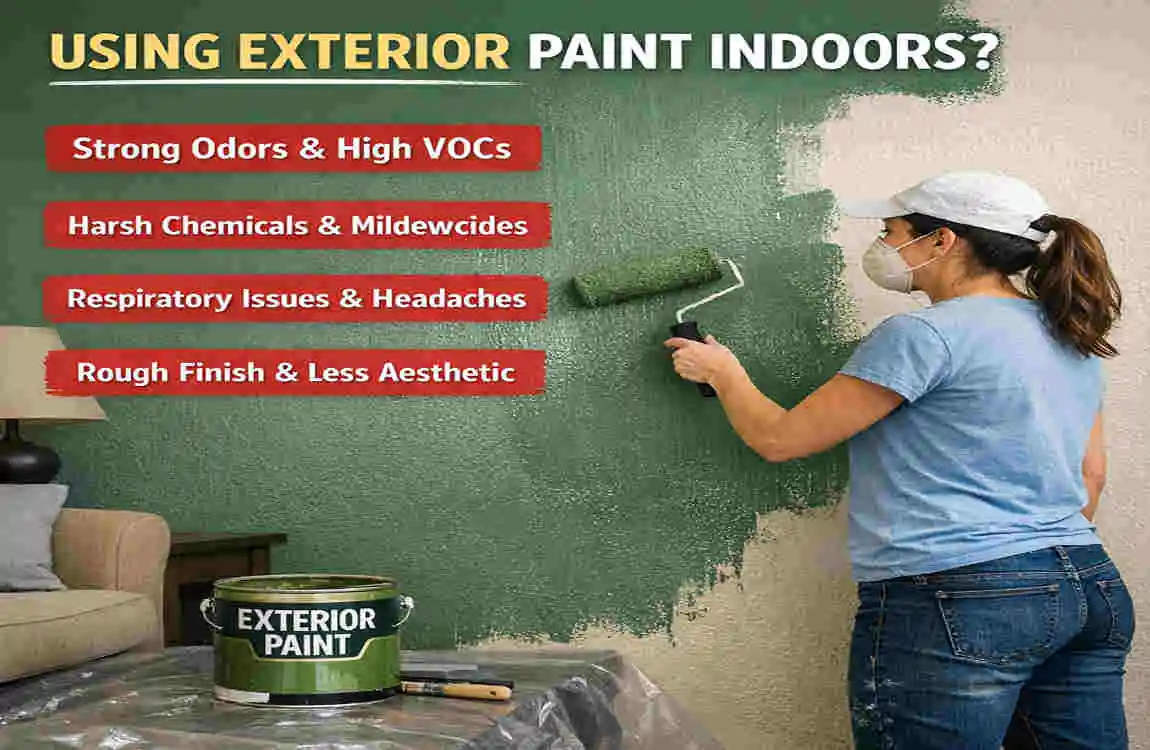
The short answer is usually no. Exterior paint is not normally recommended for interior walls.
It may seem like a strong, durable choice, but it is not designed with indoor living in mind. Paint for outdoor use is built to withstand the weather, not to provide the best finish or the healthiest air inside your home.
Why it is usually a bad idea
Exterior paint is designed to withstand UV rays, rain, humidity, and temperature fluctuations. To do that, it often uses a different mix of ingredients than interior paint.
Those ingredients may help outdoors, but indoors they can cause problems. You may notice a stronger smell, slower drying, or a finish that does not look quite right inside a room.
Why checking the label matters
Not every paint product is the same. Some formulas are more flexible than others, and some products may have special instructions.
That is why you should always check the paint label, safety notes, and manufacturer instructions before using any paint indoors. If the product does not clearly say it is safe for interior use, do not assume it is.
Interior vs. Exterior Paint: What’s the Difference?
Interior Paint
Interior paint is designed for rooms such as bedrooms, living rooms, kitchens, hallways, and bathrooms. It focuses on a few key things:
- Easy cleaning
- Good appearance
- Lower odour or lower emissions
- Smooth application on indoor walls
It is designed to work in spaces where people spend a lot of time. That means comfort and indoor air quality matter just as much as looks.
Exterior Paint
Exterior paint is made for outside surfaces. It must withstand sun, rain, wind, temperature fluctuations, and moisture.
Because of that, it often contains additives that make it more resistant to weather. Those same additives are not always the best choice for indoor spaces.
Key Differences
Here is a simple comparison:
FeatureInterior PaintExterior Paint
Main Use Indoor walls Outdoor surfaces
Weather Resistance Low High
Cleaning Easy Varies
Indoor Use Recommended Usually not recommended
Formulation Indoor-focused Weather-focused
This table clearly shows the main point: each paint type is designed for a different environment.
What Happens If You Use Exterior Paint Indoors?
Odour and ventilation concerns
One of the first things people notice with exterior paint indoors is the smell. Exterior formulas can release stronger odours than interior paint.
In a closed room, that smell may linger longer than expected. Poor ventilation makes the problem worse. That is why exterior paint is especially unpleasant in spaces like bedrooms, nurseries, and small rooms with limited airflow.
Indoor comfort and air quality issues
Some exterior coatings may include ingredients that are not ideal for regular indoor use. Even if the paint dries well, it may still affect how comfortable the room feels for a while.
If you spend a lot of time in that room, this matters. A wall finish should not just look good. It should also support a healthy and pleasant indoor environment.
Drying and finish problems
Exterior paint may dry differently indoors than you expect. It can feel tacky longer, have a different texture, or create a finish that does not suit interior lighting.
The result may look heavier or less refined than interior paint. In some rooms, that can make the walls look less polished.
Why bedrooms and nurseries are a bigger concern
Bedrooms, nurseries, and other living spaces are places where people spend long periods of time. That makes comfort and air quality even more important.
You want a product specifically made for indoor use, especially in spaces used by children, older adults, or anyone sensitive to strong odours.
When Might Exterior Paint Be Used Inside?

Rare situations only
There may be unusual cases where a manufacturer approves a product for both interior and exterior use. If that happens, it will be clearly stated on the label or in the product instructions.
This is the key point: do not guess. The product must explicitly state that it is suitable for interior use.
Non-living spaces may be different.
Some people may use certain exterior-rated coatings in enclosed, non-living spaces, such as utility or storage areas, only if the product label allows it.
Even then, you should still read the instructions carefully. Just because a product can be used in a garage or workshop does not mean it belongs in a bedroom or family room.
Never assume exterior-rated means safe indoors.
This is a common mistake. People often think “stronger” means “better for everything.” That is not true with paint.
A weather-resistant formula is not automatically the best choice for indoor walls. The room, the airflow, and the product’s exact purpose all matter.
What Paint Should You Use for Interior Walls?
Choose interior wall paint.
For most rooms, the best choice is a good-quality interior wall paint made for the exact space you are painting.
Different rooms need different levels of durability and washability. A bedroom does not need the same paint finish as a bathroom or kitchen.
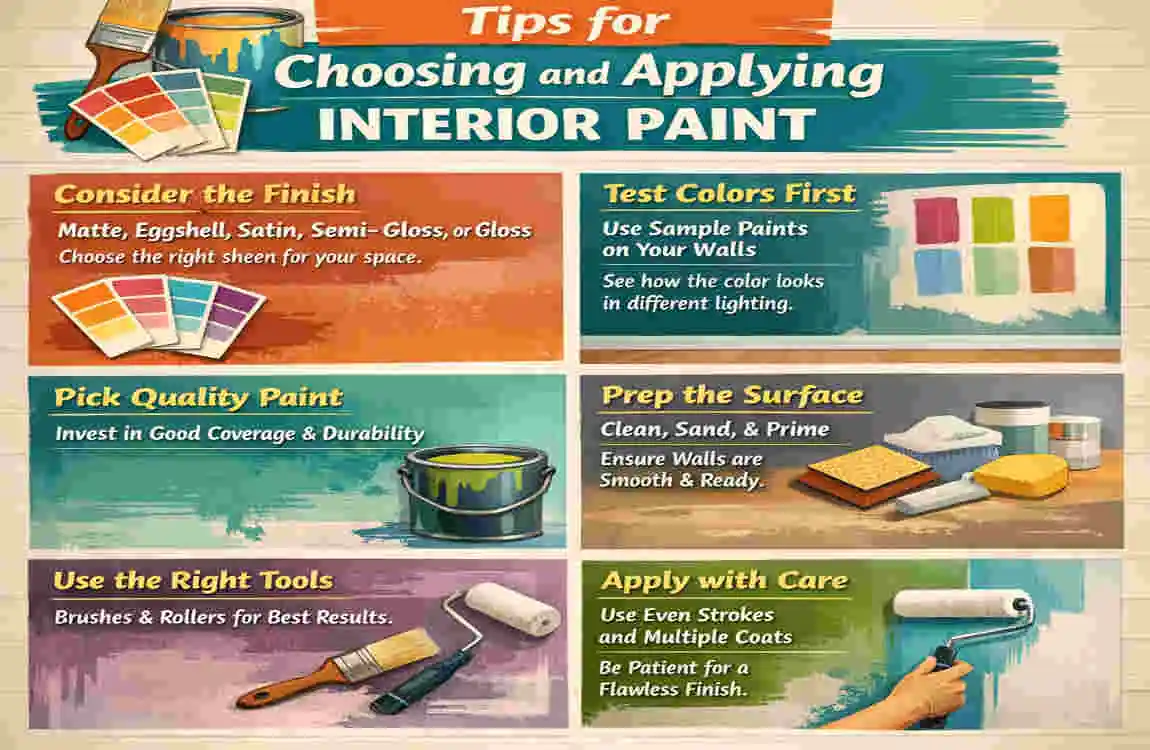
Common interior paint finishes
Here are the main options:
- Flat or matte: soft look, good for low-traffic rooms
- Eggshell: slight sheen, easy to live with
- Satin: more durable, good for busy rooms
- Semi-gloss: shinier, easy to clean, often used in kitchens or bathrooms
Which finish works where?
- Bedrooms: flat, matte, or eggshell
- Living rooms: eggshell or matte
- Kitchens: satin or semi-gloss
- Bathrooms: satin or semi-gloss
- Hallways: eggshell or satin for better cleaning
Look for low-odour or low-VOC paint.
If you want a more comfortable indoor painting experience, choose low-odour or low-VOC paint when possible. These options are often better for occupied homes because they reduce the strong smell that can come with painting.
Think about more than colour.
Colour matters, but it should not be your only concern. You should also think about:
- Durability
- Washability
- Room use
- Lighting
- Finish level
A paint colour can look great, but if the finish is wrong, the room may not perform well in daily use.
Tips for Choosing and Applying Interior Paint
Check the paint label.
Always confirm that the product is intended for interior use. The label should say this clearly.
If the label is unclear, do not take a chance. Look at the technical information or choose a different product.
Prepare the wall properly.
Good paint work starts with good wall prep. Clean the surface, fix small cracks, and remove dust before painting.
If the wall has rough spots, lightly sand them so the paint can go on smoothly. This helps the final result look cleaner and more even.
Use proper ventilation
Open windows and use airflow when painting. Good ventilation helps the room dry faster and reduces lingering odours.
Follow the product instructions carefully. Some paints need more ventilation than others.
Match the finish to the room.
Choose the paint sheen based on how the room is used. A decorative room and a high-traffic room do not need the same finish.
The right finish makes the wall easier to live with after the paint dries.
Follow manufacturer instructions
Do not skip the recommended drying and recoat times. Paint needs time to set properly.
If you apply the next coat too soon, the finish may not cure well. That can affect how the wall looks and how long it lasts.
FAQ: Can You Use Exterior Paint for Interior?
Can you use exterior paint for interior?
In most cases, no. Exterior paint is usually not the best choice for interior walls because it is made for outdoor conditions, not indoor living spaces.
Is exterior paint toxic to use indoors?
It depends on the product. That is why reading the label and manufacturer guidance is so important. Some formulas are more suitable than others, but you should not assume safety without checking.
Can exterior latex paint be used inside?
Not automatically. The product’s specific labelling and intended use matter more than the word “latex.” Always check whether it is approved for interior walls.
What happens if I accidentally use exterior paint indoors?
Open windows, improve ventilation, and check the product information right away. If the smell is strong or the room feels uncomfortable, monitor it carefully and consider asking a professional for advice.
Can you mix interior and exterior paint?
Usually, no. Mixing different paint types is generally not recommended unless the manufacturer explicitly allows it.
Is exterior paint more durable than interior paint?
Exterior paint is more durable in outdoor weather conditions. Interior paint is designed for indoor wear, cleaning, and appearance. They are durable in different ways.
What is the best paint for interior walls?
A quality interior wall paint that fits the room is the best choice. Pick the right finish, choose a reliable product, and make sure it is intended for indoor use.
Many homeowners wonder whether they can use exterior paint for interior walls when they have leftover paint or want a tougher finish. At first glance, it may seem like a smart idea. Exterior paint is designed to handle harsh conditions, so it should work even better indoors.
But interior and exterior paints are made for different jobs. Interior paint is designed for rooms you live in every day. Exterior paint is built to resist sunlight, rain, temperature changes, and outdoor wear. That difference matters for air quality, appearance, comfort, and long-term results.
Can You Use Exterior Paint for Interior Walls?
The short answer
The short answer is usually no. Exterior paint is not normally recommended for interior walls.
It may seem like a strong, durable choice, but it is not designed with indoor living in mind. Paint for outdoor use is built to withstand the weather, not to provide the best finish or the healthiest air inside your home.
Why it is usually a bad idea
Exterior paint is designed to withstand UV rays, rain, humidity, and temperature fluctuations. To do that, it often uses a different mix of ingredients than interior paint.
Those ingredients may help outdoors, but indoors they can cause problems. You may notice a stronger smell, slower drying, or a finish that does not look quite right inside a room.
Why checking the label matters
Not every paint product is the same. Some formulas are more flexible than others, and some products may have special instructions.
That is why you should always check the paint label, safety notes, and manufacturer instructions before using any paint indoors. If the product does not clearly say it is safe for interior use, do not assume it is.
Interior vs. Exterior Paint: What’s the Difference?
Interior Paint
Interior paint is designed for rooms such as bedrooms, living rooms, kitchens, hallways, and bathrooms. It focuses on a few key things:
- Easy cleaning
- Good appearance
- Lower odour or lower emissions
- Smooth application on indoor walls
It is designed to work in spaces where people spend a lot of time. That means comfort and indoor air quality matter just as much as looks.
Exterior Paint
Exterior paint is made for outside surfaces. It must withstand sun, rain, wind, temperature fluctuations, and moisture.
Because of that, it often contains additives that make it more resistant to weather. Those same additives are not always the best choice for indoor spaces.
Key Differences
Here is a simple comparison:
FeatureInterior PaintExterior Paint
Main Use Indoor walls Outdoor surfaces
Weather Resistance Low High
Cleaning Easy Varies
Indoor Use Recommended Usually not recommended
Formulation Indoor-focused Weather-focused
This table clearly shows the main point: each paint type is designed for a different environment.
What Happens If You Use Exterior Paint Indoors?
Odour and ventilation concerns
One of the first things people notice with exterior paint indoors is the smell. Exterior formulas can release stronger odours than interior paint.
In a closed room, that smell may linger longer than expected. Poor ventilation makes the problem worse. That is why exterior paint is especially unpleasant in spaces like bedrooms, nurseries, and small rooms with limited airflow.
Indoor comfort and air quality issues
Some exterior coatings may include ingredients that are not ideal for regular indoor use. Even if the paint dries well, it may still affect how comfortable the room feels for a while.
If you spend a lot of time in that room, this matters. A wall finish should not just look good. It should also support a healthy and pleasant indoor environment.
Drying and finish problems
Exterior paint may dry differently indoors than you expect. It can feel tacky longer, have a different texture, or create a finish that does not suit interior lighting.
The result may look heavier or less refined than interior paint. In some rooms, that can make the walls look less polished.
Why bedrooms and nurseries are a bigger concern
Bedrooms, nurseries, and other living spaces are places where people spend long periods of time. That makes comfort and air quality even more important.
You want a product specifically made for indoor use, especially in spaces used by children, older adults, or anyone sensitive to strong odours.
When Might Exterior Paint Be Used Inside?
Rare situations only
There may be unusual cases where a manufacturer approves a product for both interior and exterior use. If that happens, it will be clearly stated on the label or in the product instructions.
This is the key point: do not guess. The product must explicitly state that it is suitable for interior use.
Non-living spaces may be different.
Some people may use certain exterior-rated coatings in enclosed, non-living spaces, such as utility or storage areas, only if the product label allows it.
Even then, you should still read the instructions carefully. Just because a product can be used in a garage or workshop does not mean it belongs in a bedroom or family room.
Never assume exterior-rated means safe indoors.
This is a common mistake. People often think “stronger” means “better for everything.” That is not true with paint.
A weather-resistant formula is not automatically the best choice for indoor walls. The room, the airflow, and the product’s exact purpose all matter.
What Paint Should You Use for Interior Walls?
Choose interior wall paint.
For most rooms, the best choice is a good-quality interior wall paint made for the exact space you are painting.
Different rooms need different levels of durability and washability. A bedroom does not need the same paint finish as a bathroom or kitchen.
Common interior paint finishes
Here are the main options:
- Flat or matte: soft look, good for low-traffic rooms
- Eggshell: slight sheen, easy to live with
- Satin: more durable, good for busy rooms
- Semi-gloss: shinier, easy to clean, often used in kitchens or bathrooms
Which finish works where?
- Bedrooms: flat, matte, or eggshell
- Living rooms: eggshell or matte
- Kitchens: satin or semi-gloss
- Bathrooms: satin or semi-gloss
- Hallways: eggshell or satin for better cleaning
Look for low-odour or low-VOC paint.
If you want a more comfortable indoor painting experience, choose low-odour or low-VOC paint when possible. These options are often better for occupied homes because they reduce the strong smell that can come with painting.
Think about more than colour.
Colour matters, but it should not be your only concern. You should also think about:
- Durability
- Washability
- Room use
- Lighting
- Finish level
A paint colour can look great, but if the finish is wrong, the room may not perform well in daily use.
Tips for Choosing and Applying Interior Paint
Check the paint label.
Always confirm that the product is intended for interior use. The label should say this clearly.
If the label is unclear, do not take a chance. Look at the technical information or choose a different product.
Prepare the wall properly.
Good paint work starts with good wall prep. Clean the surface, fix small cracks, and remove dust before painting.
If the wall has rough spots, lightly sand them so the paint can go on smoothly. This helps the final result look cleaner and more even.
Use proper ventilation
Open windows and use airflow when painting. Good ventilation helps the room dry faster and reduces lingering odours.
Follow the product instructions carefully. Some paints need more ventilation than others.
Match the finish to the room.
Choose the paint sheen based on how the room is used. A decorative room and a high-traffic room do not need the same finish.
The right finish makes the wall easier to live with after the paint dries.
Follow manufacturer instructions
Do not skip the recommended drying and recoat times. Paint needs time to set properly.
If you apply the next coat too soon, the finish may not cure well. That can affect how the wall looks and how long it lasts.
FAQ: Can You Use Exterior Paint for Interior?
Can you use exterior paint for interior?
In most cases, no. Exterior paint is usually not the best choice for interior walls because it is made for outdoor conditions, not indoor living spaces.
Is exterior paint toxic to use indoors?
It depends on the product. That is why reading the label and manufacturer guidance is so important. Some formulas are more suitable than others, but you should not assume safety without checking.
Can exterior latex paint be used inside?
Not automatically. The product’s specific labelling and intended use matter more than the word “latex.” Always check whether it is approved for interior walls.
What happens if I accidentally use exterior paint indoors?
Open windows, improve ventilation, and check the product information right away. If the smell is strong or the room feels uncomfortable, monitor it carefully and consider asking a professional for advice.
Can you mix interior and exterior paint?
Usually, no. Mixing different paint types is generally not recommended unless the manufacturer explicitly allows it.
Is exterior paint more durable than interior paint?
Exterior paint is more durable in outdoor weather conditions. Interior paint is designed for indoor wear, cleaning, and appearance. They are durable in different ways.
What is the best paint for interior walls?
A quality interior wall paint that fits the room is the best choice. Pick the right finish, choose a reliable product, and make sure it is intended for indoor use.
| Question | Short Answer |
|---|---|
| Can you use exterior paint indoors? | It is generally not recommended because exterior paints may contain additives designed for outdoor conditions. |
| Why avoid exterior paint indoors? | Some formulas can release stronger fumes or odors and are not designed for indoor air quality. |
| Is exterior paint more durable? | Yes, but its outdoor durability does not necessarily make it better for interior walls. |
| What paint is best indoors? | Use interior wall paint designed for low odor, easy cleaning, and indoor surfaces. |
| Can exterior paint damage walls? | It may not bond or perform as intended on interior surfaces, depending on the product and wall material. |
