

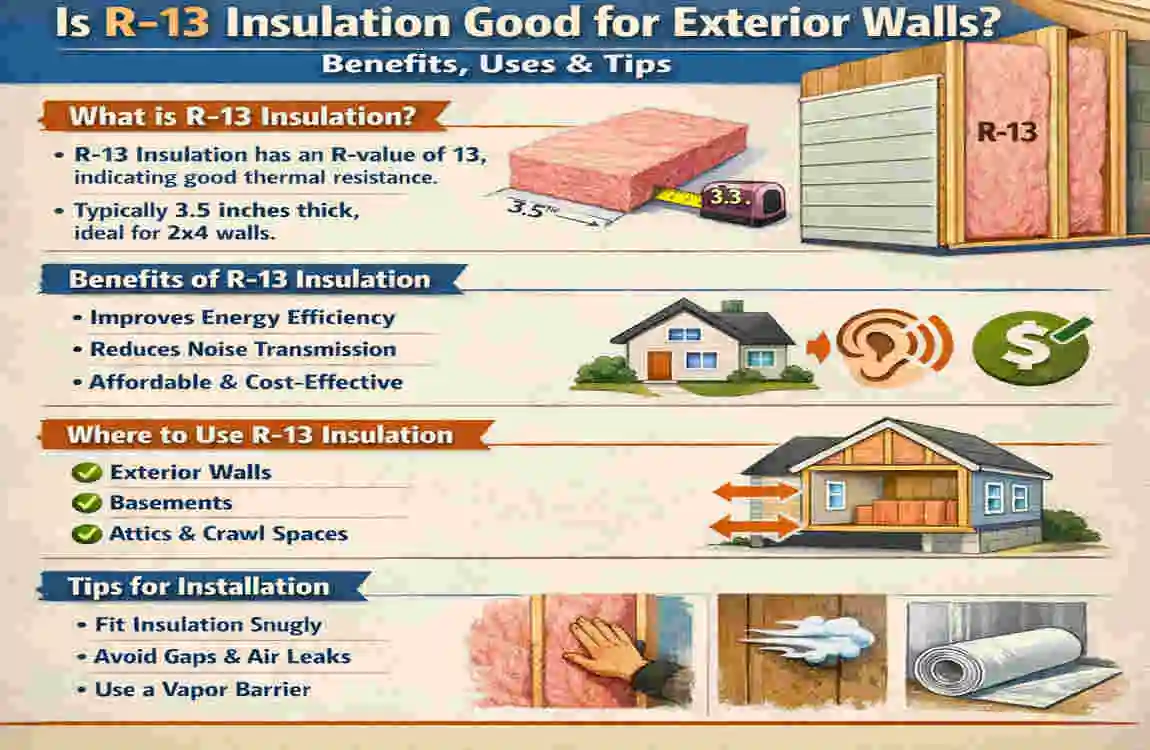
Yes, R-13 insulation can be good for exterior walls in the right situation. It works well in many standard 2×4 wall cavities, especially when the wall is properly built, sealed, and meets local building codes. But it is not the best choice for every home, every climate, or every wall design.
| Topic | Short Information |
|---|---|
| R-13 Insulation | Provides moderate thermal resistance for exterior walls |
| Common Use | Often used in framed walls where R-13 fits the wall cavity |
| Main Benefit | Helps reduce heat transfer and improve indoor comfort |
| Energy Efficiency | Can lower heating and cooling demands when properly installed |
| Best Applications | Suitable for certain wood-frame walls, renovations, and mild climates |
| Limitations | May provide less insulation than higher-R-value options |
| Installation Tip | Fill the wall cavity properly without gaps or compression |
| Moisture Control | Use appropriate air and moisture barriers for the wall assembly |
| Overall | R-13 can be useful, but the ideal value depends on climate, wall design, and local building codes |
The main idea is simple: R-13 helps slow heat flow, which can make a home more comfortable and energy efficient.
Is R-13 Enough for Every Exterior Wall?
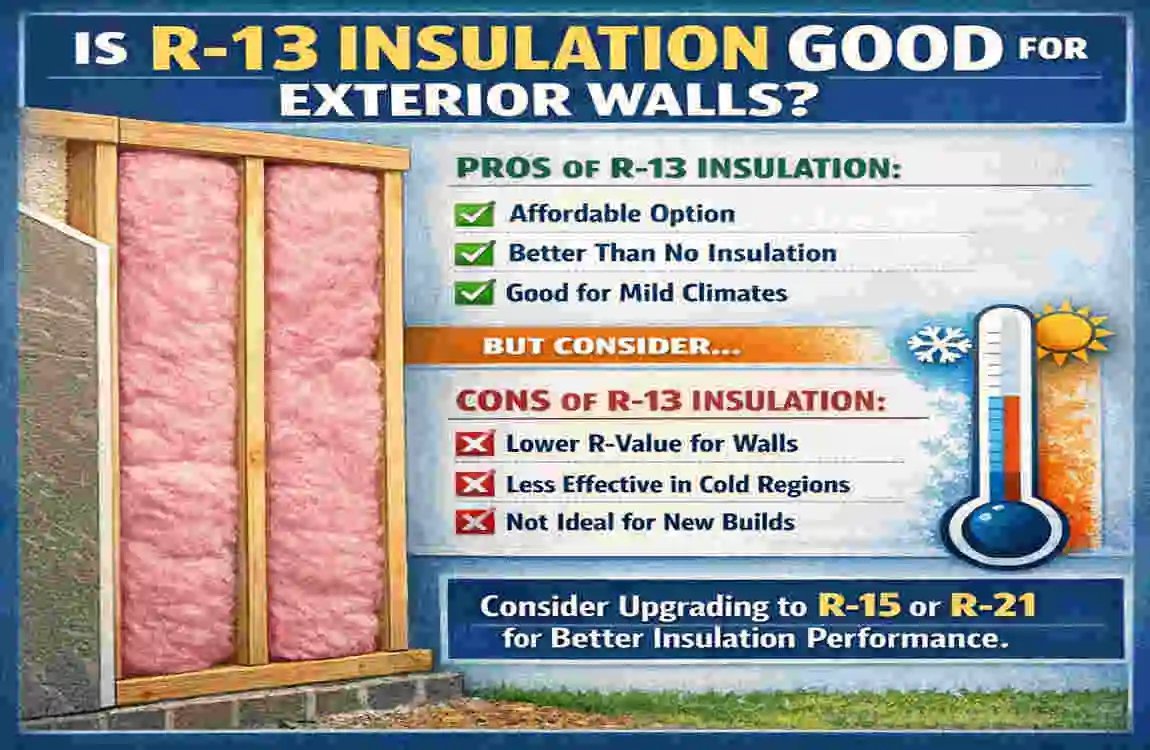
No, not always. R-13 may be enough in some mild climates or in walls designed around that level. Still, it may fall short in colder areas or in energy-efficient homes that need higher thermal resistance.
A few things affect whether R-13 is suitable:
- Climate zone
- Wall cavity depth
- Local building codes
- Energy-efficiency goals
- Air sealing and moisture control
In colder regions, builders often use higher-R insulation or add continuous insulation to improve performance. In warmer places, R-13 may be perfectly reasonable for certain wall setups.
Benefits of Using R-13 Insulation in Exterior Walls
R-13 insulation offers several practical benefits, especially for standard wall construction.
Main Benefits
Benefit What It Means in Practice
Heat control Slows heat moving in or out of the home
Energy savings Can reduce heating and cooling demand
Comfort Helps keep indoor temperatures more even
Noise reduction Can help lower outside sound
Affordable Often a practical choice for common wall cavities
Easy to install Fits many standard wall spaces well
R-13 is often popular because it gives a good balance of cost, performance, and ease of installation.
Where Is R-13 Commonly Used?
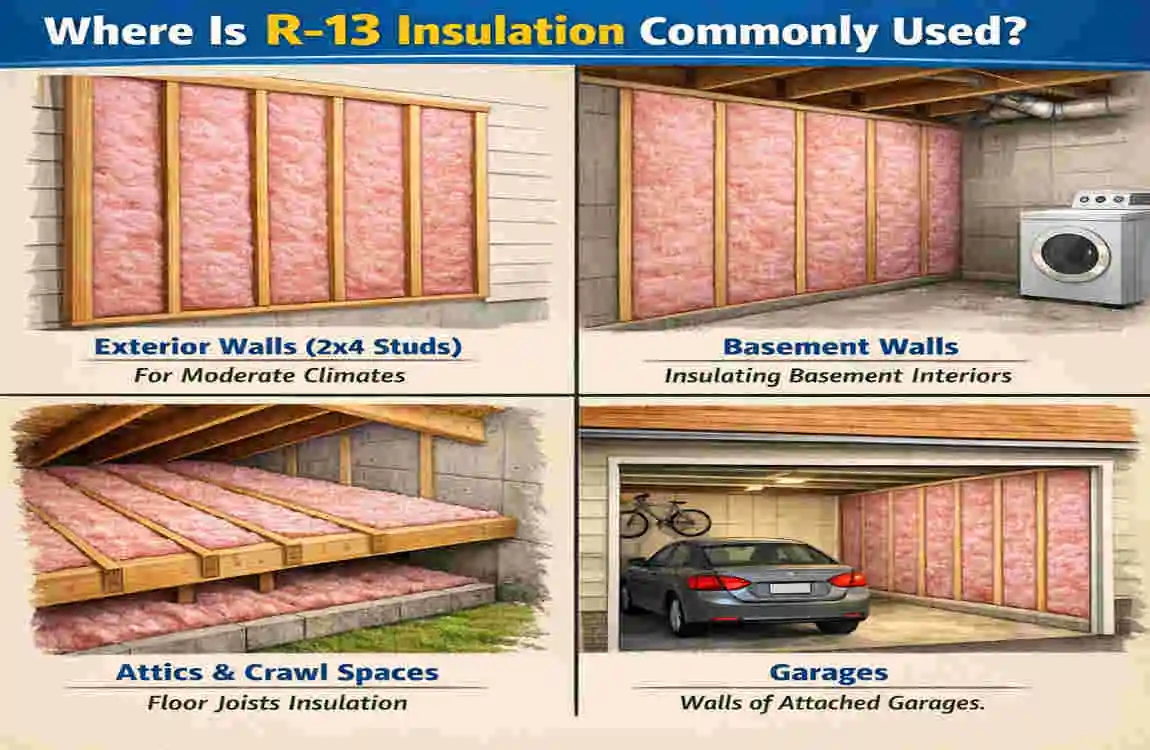
R-13 insulation is often used in:
- Standard residential exterior walls
- 2×4 wall cavities
- New home construction
- Remodeling projects
- Above-grade walls
- Garages and converted spaces in some cases
It can also be used in interior walls, but exterior walls are where thermal performance matters most.
Where It May Not Be Enough
R-13 may not be ideal for:
- Cold climate homes
- High-performance or energy-efficient builds
- Walls that allow deeper insulation
- Projects with strict energy code requirements
R-13 Fiberglass vs. Mineral Wool
Both are common, but they are not the same.
- Fiberglass R-13
- Usually more affordable
- Easy to find
- Works well when installed carefully
- Mineral wool R-13
- Better fire resistance
- Often better for sound control
- More moisture resistant
- Usually costs more
Always check the product label, because the actual thickness, fit, and performance can vary.
How to Install R-13 Insulation in Exterior Walls
Installation matters a lot. Even good insulation can perform poorly if it is not fitted well.
Simple Steps
- Inspect the wall cavity
- Check for wiring, pipes, or damage.
- Measure carefully
- Make sure the insulation fits the cavity depth.
- Cut to fit
- Avoid forcing it in too tightly.
- Place it evenly
- Fill the cavity without large gaps or voids.
- Seal air leaks
- Pay attention to outlets, edges, and openings.
- Cover properly
- Follow the wall system’s drywall and finishing requirements.
Should R-13 Be Compressed?
No, not more than necessary. A little snug fit is fine, but heavy compression can reduce performance. The goal is a clean, even fit, not a packed or squashed one.
How to Improve an R-13 Exterior Wall
If you already have R-13 in place, you can still improve the wall’s performance.
Good upgrades include:
- Air sealing around windows and doors
- Sealing cracks and penetrations
- Adding continuous insulation
- Using better windows and exterior doors
- Reducing drafts and air leaks
Remember: the whole wall assembly matters more than insulation alone.
R-13 vs. Higher R-Value Options
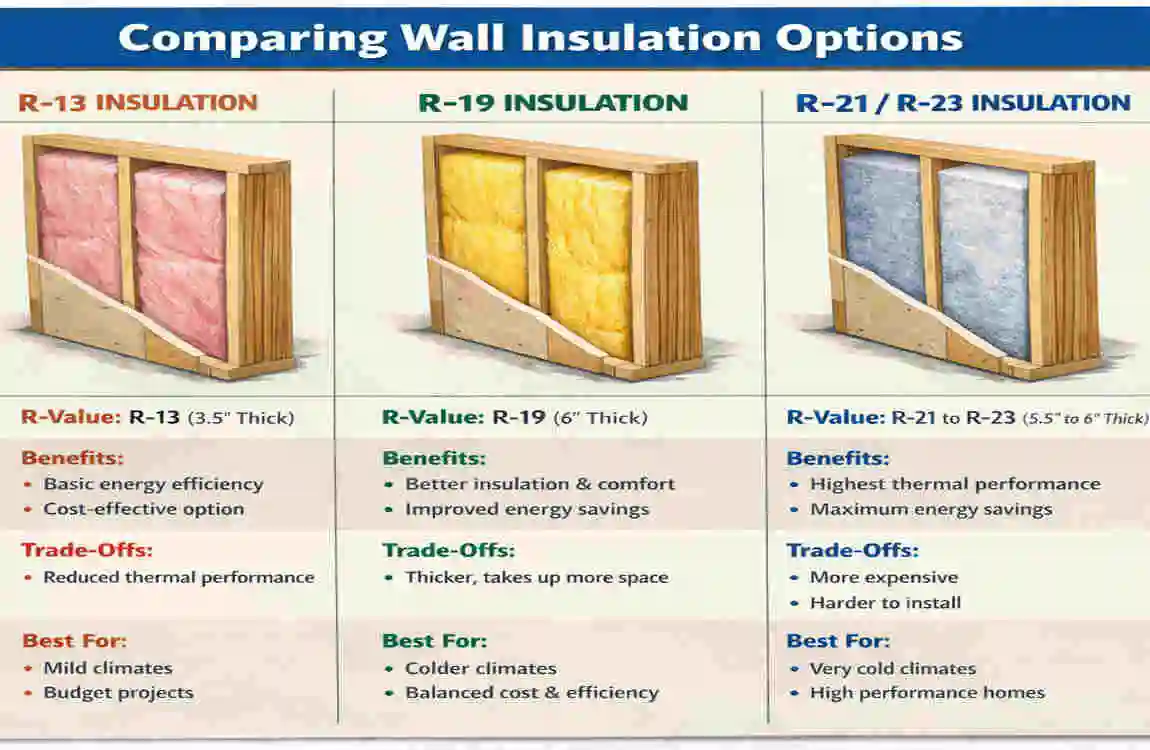
Higher R-values usually mean better resistance to heat flow, but they may need more space or different wall construction.
Insulation Relative R-Value Common Consideration
R-13 13 Suitable for some standard wall applications
R-15 15 Slightly better resistance in similar spaces
R-19 19 Often used in deeper wall cavities
R-21+ 21+ Higher-performance wall assemblies
Higher is not always better for every wall. The best choice depends on framing depth, code rules, climate, and budget.
Tips for Choosing the Right Exterior Wall Insulation
Keep these points in mind:
- Start with local climate and building code requirements
- Measure the wall cavity depth
- Choose insulation that fits without compression
- Think about air sealing and moisture control
- Compare material cost and installation ease
- Check whether the wall needs fire or sound performance
- Do not ignore windows, doors, and cracks, since they can cause major heat loss
Common Mistakes to Avoid
- Choosing based only on price
- Leaving gaps around insulation
- Compressing the material too much
- Ignoring air leaks
- Using R-13 where a higher rating is needed
- Forgetting about moisture issues
Frequently Asked Questions
Is R-13 insulation good for exterior walls?
Yes, in many cases. It works well in standard wall cavities, but climate, wall design, and local codes matter.
Is R-13 enough for a 2×4 exterior wall?
Often, yes, because R-13 is commonly used in 2×4 walls. Still, local requirements may call for more.
Is R-13 or R-15 better for exterior walls?
R-15 has slightly better thermal resistance, but the best choice depends on the wall design and code rules.
Can you use R-13 insulation in a 2×4 wall?
Yes. It is one of the most common uses for R-13 insulation.
Does R-13 insulation help reduce energy bills?
Yes, if installed correctly and as part of a well-sealed wall system.
How can I make an R-13 wall more energy efficient?
Focus on air sealing, better windows and doors, and continuous insulation where possible.
