

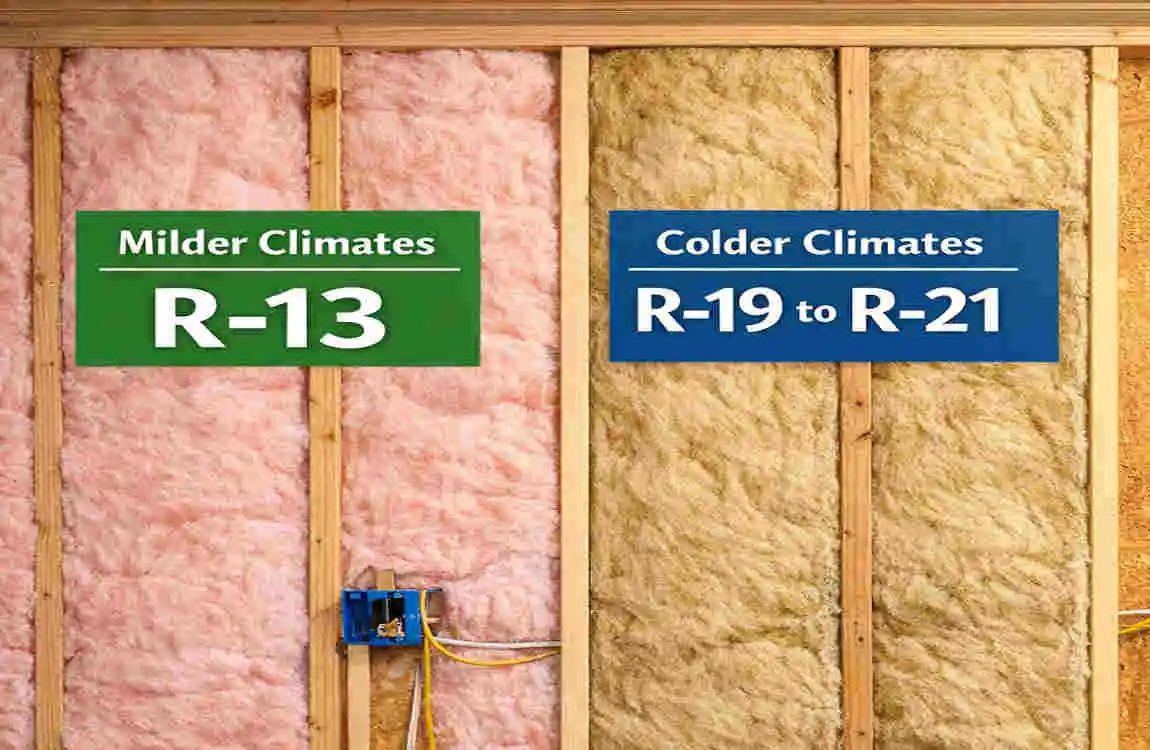
If you are asking what R-value insulation for exterior walls is best, you are already thinking in the right direction. Insulation affects comfort, energy use, and even how steady the temperature feels in your home.
In simple terms, R-value tells you how well insulation slows heat flow. The higher the R-value, the better the insulation usually performs. But the right choice also depends on your climate, your wall type, and whether you are building new or upgrading an older home.
Understanding R-Value for Exterior Wall Insulation
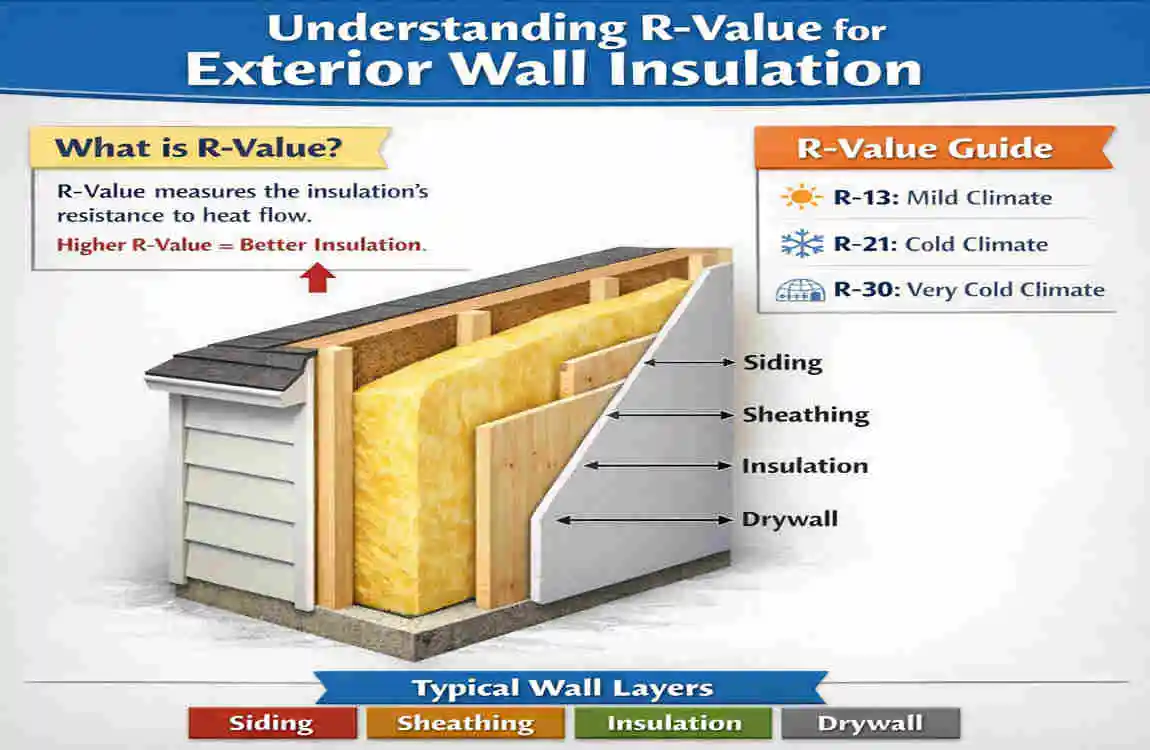
What R-value means
R-value is a number that shows how much resistance insulation has to heat moving through it. If heat moves easily, the R-value is low. If heat moves slowly, the R-value is higher.
That is why people look at R-value when choosing insulation for walls, attics, and floors. It gives a quick way to compare materials.
Why exterior walls need insulation
Exterior walls separate your indoor space from the outside weather. Without enough insulation, heat can escape in winter and enter in summer.
That usually means:
- Higher energy bills
- Uneven room temperatures
- More drafts
- Less comfort overall
Good wall insulation helps your home stay more stable year-round.
R-value vs. thickness
A thicker insulation product is not always better on its own. What matters most is how much resistance the material provides, not just how much space it takes up.
Some thinner materials have higher R-values than bulkier ones. That is why product type matters just as much as thickness.
R-value vs. U-value
You may also hear about U-value. That is the opposite idea. While R-value measures resistance, U-value measures heat flow.
So:
- High R-value = better resistance
- Low U-value = better performance
Most homeowners focus on R-value because it is easier to understand.
What R-Value Insulation for Exterior Walls Is Recommended?
General R-value ranges
No single answer fits every home. Still, many exterior walls fall somewhere around R-13 to R-21 in common wood-framed walls. Some homes use more, especially in colder climates or with added exterior insulation.
Climate matters a lot.
The right insulation depends heavily on where you live.
- Cold climates usually need higher R-values
- Moderate climates can often use mid-range values
- Warm climates may still need insulation, but the goal may focus more on cooling comfort and moisture control
New construction vs. existing homes
New homes have more flexibility. Builders can plan for deeper wall cavities or add continuous exterior insulation.
Existing homes are different. You often have to work with the wall space already there, which may limit how much insulation you can fit.
Why one R-value does not work for every house
A house in a cold region should not use the same insulation strategy as a house in a warm one. Wall thickness, framing, and local building codes all affect the choice.
That is why the best answer to what R-value insulation for exterior walls is usually: it depends.
Types of Insulation for Exterior Walls
Fiberglass batt insulation
Fiberglass batts are one of the most common choices. They are affordable and widely available.
They work best when installed carefully. If you compress them or cut them poorly, their performance drops.
Blown-in fiberglass
This type is useful in existing walls. It can fill gaps better than batts in some situations.
It is a good option when you want better coverage without major wall removal.
Cellulose insulation
Cellulose is made from recycled material and is often blown into wall cavities. It can provide good coverage and decent sound control.
It also tends to fill small gaps well, which can improve comfort.
Spray foam insulation
Spray foam can seal air leaks and insulate at the same time. That makes it a strong choice for tricky spaces.
It usually costs more, but it can perform very well, especially where air sealing matters.
Rigid foam board insulation
You can install rigid foam boards on the exterior or inside certain wall systems. They offer solid thermal resistance in a thinner profile.
This can help when you don’t have much wall space.
Mineral wool insulation
Mineral wool is durable, fire-resistant, and resists heat flow well. It also handles moisture better than some other materials.
It is often valued for its strength and sound control.
Factors That Affect the Right Exterior Wall R-Value
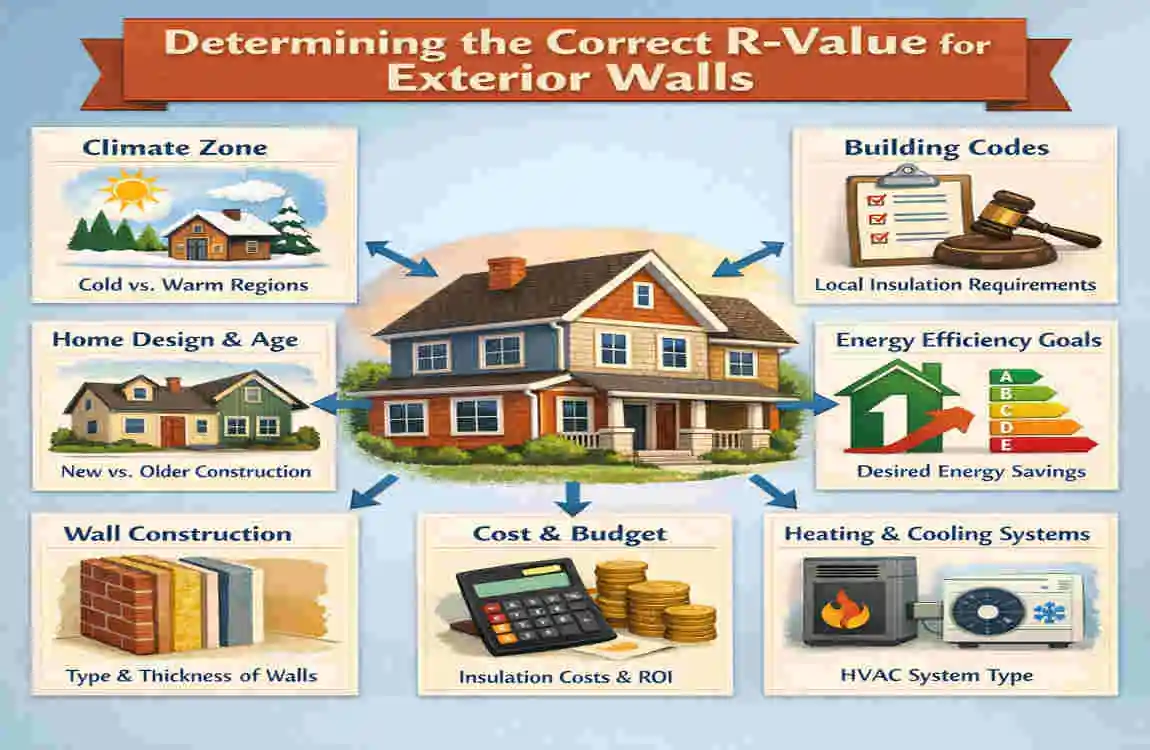
Climate and weather
Your climate is one of the biggest factors. Cold winters usually call for more insulation. Hot summers may require better resistance to heat gain.
Wall design and framing
Some walls have more depth than others. A deeper cavity can hold more insulation. Framing also creates small thermal breaks that affect performance.
Air leakage
Insulation alone is not enough if air can move freely through gaps. A wall with poor air sealing can still feel drafty even if the R-value looks good on paper.
Moisture and humidity
Moisture changes how walls perform. If insulation traps moisture, the wall can suffer damage over time.
That is why moisture control is just as important as insulation level.
Budget and energy goals
A higher R-value often costs more. That does not always mean it is the best choice for every home.
Sometimes the smartest move is to balance cost, comfort, and long-term savings.
How to Choose and Install Exterior Wall Insulation
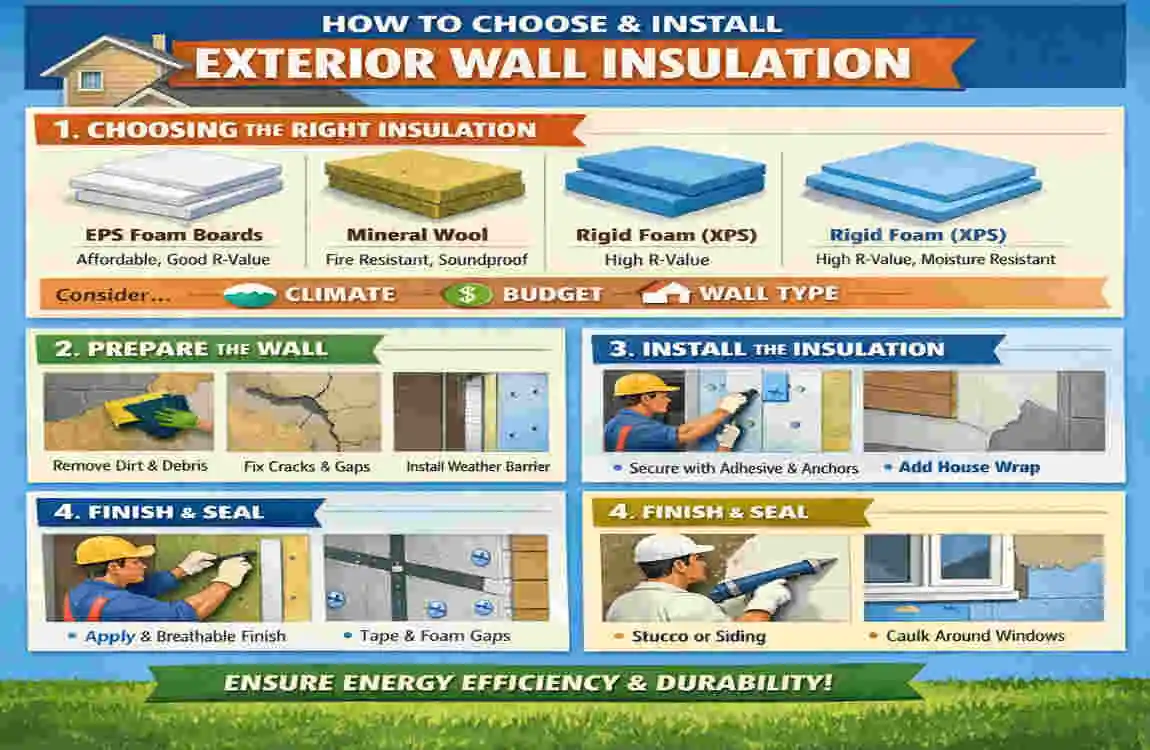
Check the existing wall.
Before choosing insulation, inspect the wall condition. Look for old damage, signs of moisture, or gaps around outlets and openings.
Measure available space
You need to know how much room is inside the wall cavity. This helps you avoid choosing insulation that is too thick or hard to fit.
Match the material to the job.
Choose the product based on the wall type and your goal. For example:
- Use batts for open cavities
- Use blown-in insulation for existing walls
- Use spray foam for sealing and tight spaces
- Use rigid foam when exterior added insulation is needed
Seal air gaps
Even the best insulation will not help much if air leaks remain. Seal around pipes, outlets, windows, and other openings.
Avoid compression
If you squeeze insulation too tightly, it loses performance. Good installation matters just as much as the product itself.
When to hire a professional
A professional may be the best choice if:
- The walls are already finished
- Moisture is present
- You need exterior insulation
- You want to improve air sealing at the same time
- You are not sure what the wall system needs
Cost, Energy Efficiency, and Long-Term Benefits
What affects cost
Insulation cost depends on the material, wall size, labor, and whether the job is new construction or retrofit work.
Spray foam and rigid foam often cost more than basic batts. But they may also provide better performance in some homes.
Is higher R-value worth it?
Sometimes yes, sometimes not. A higher R-value can improve comfort and reduce heating or cooling costs. But once you reach a certain level, the extra benefit may become smaller.
That is why a good balance matters.
Long-term benefits
Better exterior wall insulation can help:
- Reduce drafts
- Improve indoor comfort
- Lower energy bills
- Reduce noise
- Support a more efficient home overall
Over time, those benefits can make the upgrade worthwhile.
FAQ About R-Value Insulation for Exterior Walls
What R-value insulation for exterior walls is generally recommended?
It depends on climate and wall design, but many homes use roughly R-13 to R-21 or higher.
Is R-13 insulation enough for exterior walls?
It may be enough in some warm or moderate climates, but colder areas often need more.
Is R-19 better than R-13 for exterior walls?
Yes, in terms of heat resistance, R-19 offers more insulation than R-13.
What R-value is best for exterior walls in a cold climate?
Cold climates often need higher R-values, sometimes combined with exterior continuous insulation.
What R-value should exterior walls have in a warm climate?
Warm climates can often use lower R-values than cold climates, but air sealing still matters.
Can you put R-30 insulation in exterior walls?
Only if the wall depth and design allow it; many standard exterior walls cannot easily fit that much.
Does thicker insulation always mean better performance?
No. Thickness helps only when the material is installed correctly and fits the wall properly.
What is the best insulation type for exterior walls?
There is no single best type. The right choice depends on your home, budget, and wall condition.
Can you add exterior insulation to an existing house?
Yes, in many cases. It can improve performance, especially during major siding or wall projects.
Does exterior wall insulation help reduce energy bills?
Yes, it can help reduce heating and cooling loss when installed properly.
Should I choose a higher R-value or focus on air sealing first?
Ideally, do both. Air sealing often improves comfort a lot, and insulation adds long-term resistance.
| Item | Quick Information |
|---|---|
| R-Value | Measures how well insulation resists heat flow |
| Typical Exterior Wall Range | About R-13 to R-23 in many homes |
| Cold Climates | Often require higher R-values, such as R-20 to R-30+ |
| Warm Climates | Commonly use around R-13 to R-19 |
| Best Insulation Types | Fiberglass, mineral wool, cellulose, and spray foam |
| Higher R-Value | Generally provides greater resistance to heat transfer |
