


If you own a home in Florida, you already know how stressful electrical problems can be. Storms, salt air, heat, and age can all wear down exterior electrical lines over time. That is why many homeowners ask the same question: Is FPL exterior electrical line coverage worth it?
The short answer is: it depends on your home, your risk level, and your budget. For some homeowners, this protection can be a helpful safety net. For others, it may feel like an extra monthly cost they do not really need.
FPL Exterior Electrical Line Protection: What Does It Cover?
What exterior electrical lines are
Exterior electrical lines are the parts of your home’s electrical system that sit outside the house or connect the home to the utility supply. These are not the wires inside your walls. They are the lines and components that help bring power into the property.
That matters because outside lines are often more exposed to weather, moisture, and physical damage.
Homeowner responsibility vs. utility responsibility
Many homeowners assume the utility company handles everything related to power delivery. In reality, responsibility is often split.
The utility may handle some parts of the service line. At the same time, the homeowner is responsible for certain equipment on their property. This is why exterior line coverage can be useful. It helps cover parts that may fall under the homeowner’s responsibility.
Typical components that may be covered
Coverage can vary, but it may include items like:
- Exterior service lines
- Underground electrical connections
- Weather-related line damage
- Certain connection points outside the home
- Repairs tied to the service line itself
The exact details depend on the current plan terms, so always check carefully.
Common causes of exterior electrical line damage
Many things, especially in Florida, can damage exterior electrical lines. Some common causes include:
- Storms and high winds
- Lightning strikes
- Fallen trees or branches
- Flooding or moisture
- Animal damage
- Aging materials
- Accidental digging or ground work
Even if the home looks fine from the outside, hidden damage may still be present.
Who may benefit most?
This type of protection may be more useful if you:
- Own an older home
- Live in a storm-prone area
- Have underground lines on your property
- Want more predictable repair costs
- Do not want a surprise bill for an outside-line issue
If your home is newer or your emergency fund is strong, the value may feel less obvious.
How FPL Exterior Electrical Line Coverage Works

How the protection plan generally operates
The plan usually works like a service protection add-on. You pay a recurring fee, and if a covered exterior electrical line problem happens, you may be able to request service through the plan.
That can reduce the stress of a sudden repair.
Service enrollment and eligibility
Not every home may qualify the same way. Eligibility can depend on the home’s age, the type of electrical setup, and the plan’s current rules.
Before enrolling, homeowners should confirm what is included, what is excluded, and whether the property meets the plan requirements.
What happens when a line problem occurs
If an issue occurs, the homeowner usually reports it and starts a service request. A technician or approved provider may then inspect the issue and determine whether the damage is covered.
If the issue is covered, the repair process may begin based on the plan rules.
Repair and service process
The repair process often includes:
- Reporting the issue
- Checking whether the problem is covered
- Scheduling service
- Inspecting the damaged line or component
- Completing the repair if approved
This process can feel simpler than arranging everything yourself, especially during an emergency.
Possible service-call limitations
Plans often come with limits. For example, plans may limit how often service is available, what counts as a covered issue, or how much repair work is included.
That is why the fine print matters so much. The plan’s value depends on the details.
Covered versus non-covered issues
Not every electrical problem is covered. Some issues may be excluded if they involve indoor wiring, misuse, poor maintenance, or damage not caused by the exterior line itself.
Always confirm exactly where the coverage begins and ends.
Why checking the current plan terms matters
Plan details can change over time. A plan that looked good a few years ago may not have the same value today.
If you are considering enrollment, read the current terms carefully before deciding.
What Does FPL Exterior Electrical Line Protection Cost?
Monthly or recurring protection costs
Most protection plans use monthly or recurring payments. That means you pay a small amount over time instead of one large bill later.
This is appealing to homeowners who want predictable expenses.
What repair costs may look like without coverage?
Without coverage, exterior electrical line repairs can become expensive fast. The total may include:
- Diagnostic fees
- Labor
- Materials
- Emergency service charges
- Permit-related or equipment-related costs
A small issue may stay manageable. A bigger weather-related repair can become much more costly.
Factors that affect repair costs
Repair cost depends on several things:
- Location of the damage
- Length of the line involved
- Whether the line is underground or above ground
- How quickly the repair is needed
- Labor rates in your area
- Whether extra equipment is required
That is why a monthly plan can feel appealing. It turns an unpredictable cost into a more regular one.
Simple cost comparison example
ScenarioWith CoverageWithout Coverage
Monthly cost Small recurring fee $0 until something breaks
Emergency repair May be covered if eligible Could lead to a large bill
Budget planning Easier to predict Harder to predict
Peace of mind Higher Depends on savings
This does not mean the plan is always the best deal. It just shows why some homeowners like the predictability.
Possible exclusions or extra charges
Even with coverage, limits, deductibles, or service charges may still apply. Some repairs may not be included.
That is why the real question is not just the price. It is the value.
Is FPL Exterior Electrical Line Coverage Worth It?
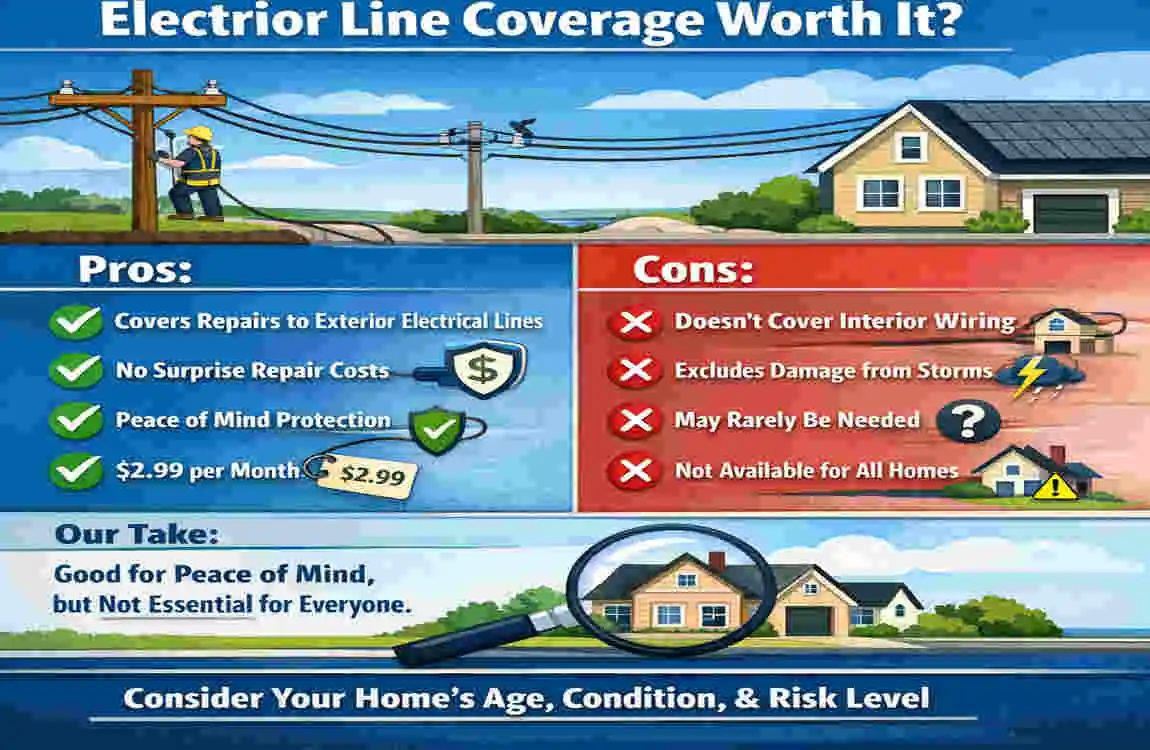
Direct answer: Is FPL exterior electrical line coverage worth it?
For some homeowners, yes. For others, no.
If your home has older exterior electrical components, lives in a storm-prone area, or would be hard to repair quickly on your own, the coverage may be worth considering. If your risk is low and you already keep an emergency repair fund, you may decide the plan is not necessary.
When the coverage may be a good value
It may be worth it if you want:
- Predictable monthly costs
- Less stress after a storm
- Help with surprise repair bills
- Convenient service handling
- Extra support for an older property
This is especially true if your exterior electrical system is aging or exposed to frequent weather damage.
When it may not be worth the cost
You may decide to skip it if:
- Your home is newer
- Your exterior lines are in good condition
- You already have strong emergency savings
- Your homeowners insurance already provides enough protection
- The plan covers less than you expected
If you rarely deal with electrical issues, the monthly fee may feel unnecessary.
Age and condition of the home
Older homes often have more electrical wear. That doesn’t mean they are unsafe, but they may need more maintenance.
If your exterior wiring, service connections, or underground lines are old, coverage may provide more value.
Property location and exposure to storms
Homes in areas with heavy rain, high winds, and frequent storms face more risk. If your property is exposed to falling branches, moisture, or flooding, the plan may be more useful.
Emergency repair concerns
Think about how you would handle a sudden repair bill. Would you pay it easily, or would it strain your budget?
If a surprise electrical repair would cause stress, coverage may be worth more to you.
Coverage vs. emergency savings
Some homeowners prefer to save their own repair fund instead of paying for a plan. That can work well if you are disciplined and keep the money set aside.
The right choice depends on whether you value:
- Guaranteed monthly spending
- Or self-funded emergency savings
Questions to ask before enrolling
Before you sign up, ask yourself:
- What exactly is covered?
- What is excluded?
- What are the monthly costs?
- Are there service fees or limits?
- Would I rather save this money myself?
Those answers will make the decision much clearer.
FPL Exterior Electrical Line Protection vs. Homeowners Insurance
Main differences
Homeowners insurance and exterior line protection are not the same thing. Insurance usually covers major losses tied to events like storms, fire, or other insured damage.
A protection plan is usually more limited and focused on certain electrical line problems.
What insurance may cover
Your homeowners insurance may help with some types of storm damage, depending on the policy and the cause. But not every electrical issue is automatically covered.
Wear and tear is treated differently.
Normal wear and tear is often different from sudden damage. Insurance usually does not replace parts simply because they are old or worn out.
That is one reason homeowners look at separate protection plans.
Overlap and gaps
Some overlap exists, but gaps remain. Insurance may cover a storm-related loss, while a protection plan may cover a service-line issue that falls outside the insurance scope.
The best move is to review both.
Why reviewing your policy matters
Do not assume you already have full protection. Read your homeowners policy carefully, and review the details related to electrical damage and exterior lines.
When separate protection may still matter
A separate plan may still be useful if your insurance has exclusions, high deductibles, or limited help for service-line issues.
Pros, Cons, and Alternatives to FPL Exterior Electrical Line Coverage
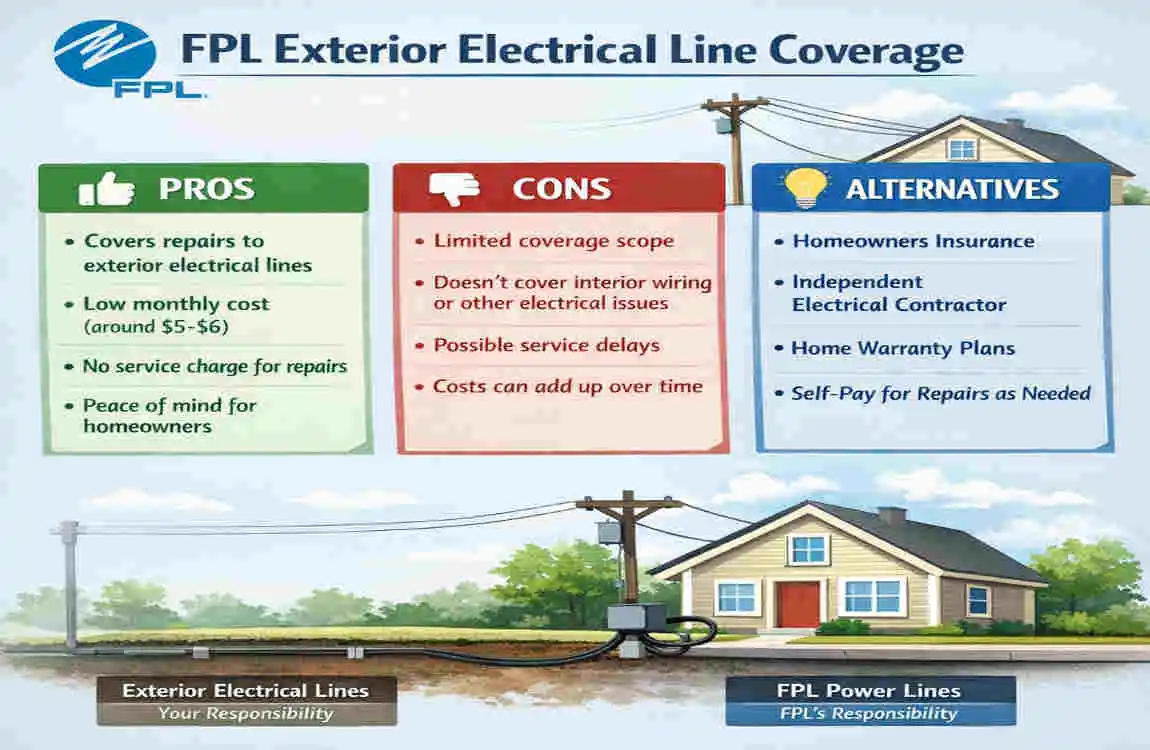
Potential benefits
Here are the main advantages:
- Predictable recurring cost
- Possible help with surprise repair bills
- Convenient service handling
- Helpful for older homes
- May reduce stress after weather damage
Potential drawbacks
There are also downsides:
- You pay even when you never need a repair
- Not every problem is covered
- Some limits or exclusions may apply
- You may already have overlapping protection
- The plan may not be a strong value for newer homes
Alternatives to consider
If you do not want the coverage, you still have options:
- Build a home repair fund
- Review your homeowners insurance
- Schedule routine electrical inspections
- Hire a licensed electrician when needed
- Compare other service plans carefully
FAQ About FPL Exterior Electrical Line Protection
Is FPL exterior electrical line coverage worth it?
It can be worth it for homeowners who want predictable costs and extra help with exterior electrical repairs. If your home is newer or you already save for repairs, it may not be necessary.
What does FPL exterior electrical line protection cover?
It generally covers certain exterior electrical line issues, but exact coverage depends on the plan terms. Always check the current details.
How much does exterior electrical line protection cost?
The cost is usually a recurring monthly fee. The exact amount can change, so review the current plan before enrolling.
Does homeowners insurance cover exterior electrical lines?
Sometimes it may cover storm-related damage, but not all electrical issues. Wear and tear is often handled differently.
Are underground electrical lines covered?
Possibly, but not always. Coverage depends on the plan and the specific cause of the damage.
What electrical repairs are usually excluded?
Common exclusions may include indoor wiring, poor maintenance, misuse, or issues not tied to the exterior line itself.
Can older homes qualify for exterior electrical line protection?
Often yes, but eligibility depends on the plan. Older homes may actually benefit the most if their electrical systems are exposed to more wear.
How do I know if I already have electrical line coverage?
Check your homeowners insurance, utility service details, and any service plan paperwork you already have.
| Aspect | Short Information |
|---|---|
| What It Is | Protection for exterior electrical lines from weather, physical damage, and electrical hazards |
| Main Purpose | Helps reduce damage to outdoor wiring and electrical connections |
| Common Risks | Storms, rain, lightning, falling branches, animals, and accidental impact |
| Key Protection | Proper conduit, weatherproof fittings, grounding, and secure cable installation |
| Benefits | Improves electrical safety and may extend the service life of outdoor wiring |
| Is It Worth It? | Often worthwhile for exposed or vulnerable exterior electrical lines |
| Professional Check | A licensed electrician can identify protection needs and code requirements |
| Maintenance | Inspect exposed wiring, fittings, and conduit for cracks, corrosion, or damage |
