

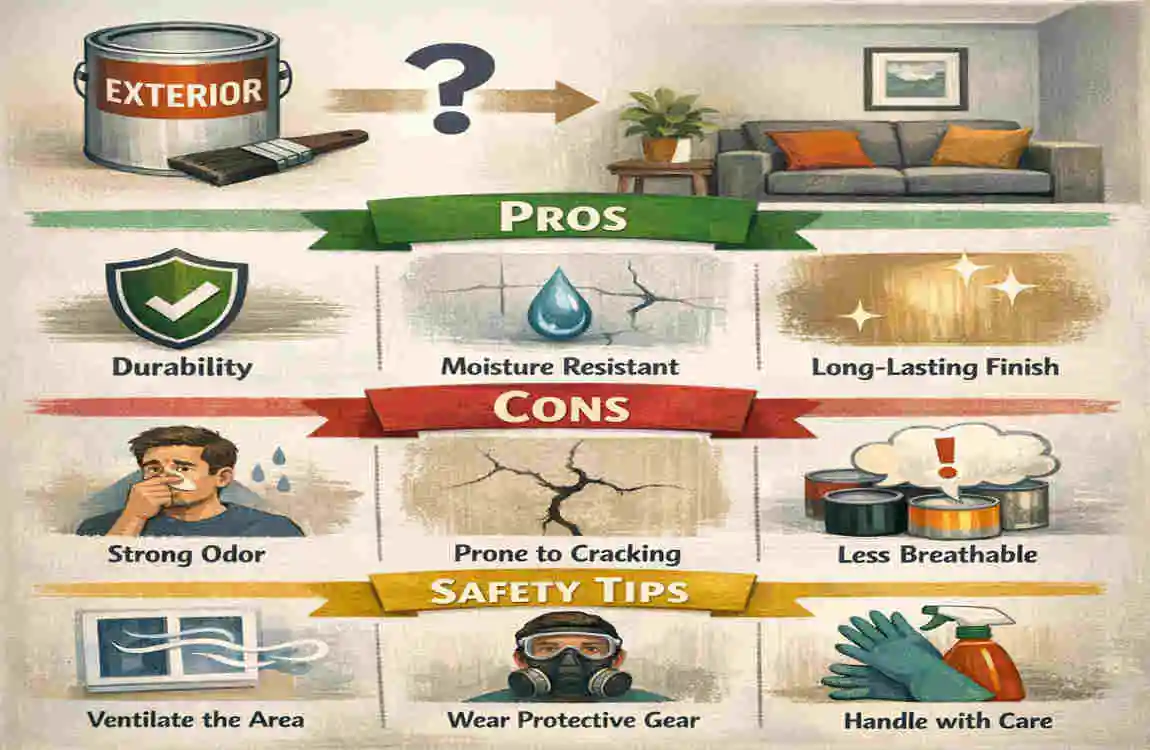
Exterior paint is made for outdoor conditions like sun, rain, wind, and temperature changes. Interior paint is made for indoor comfort, easier cleaning, and better air quality. That difference matters a lot when you are painting inside your home.
You might think exterior paint is stronger, so it should work well indoors. In some spaces, that may seem true at first. But over time, it can cause problems like strong odours, slower curing, poor indoor air quality, and the wrong finish for the room.
Exterior Paint vs Interior Paint: What Is the Difference?
What exterior paint is designed for
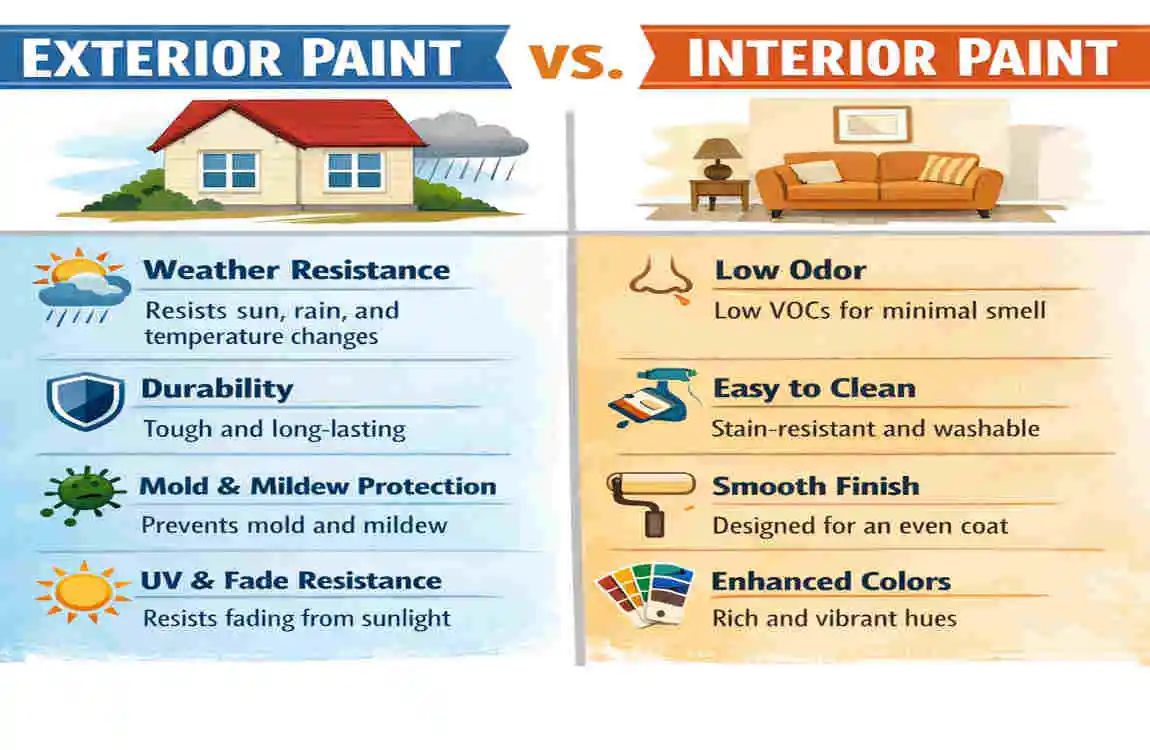
Exterior paint is built to withstand the weather. It needs to handle:
- Sunlight
- Rain
- Humidity
- Temperature swings
- Expansion and contraction of outdoor surfaces
Because of that, exterior paint is usually more flexible and more durable against outdoor stress. It protects siding, trim, doors, and other outside surfaces.
What interior paint is designed for
Interior paint is made for life inside the home. That means it focuses on:
- Lower odor
- Better indoor air quality
- Easier cleaning
- Good appearance under indoor lighting
- Different finishes for different rooms
Interior paint is also made for walls, ceilings, trim, and spaces where people spend a lot of time. That makes comfort just as important as durability.
Main ingredient and performance differences
The biggest differences usually come from the binders, pigments, and additives used in the paint.
Exterior paint often includes ingredients that help it resist moisture and weather damage. It may also contain stronger additives for mildew resistance and outdoor durability.
Interior paint, on the other hand, is usually made to perform well in enclosed spaces. It is often formulated to have less odour and a smoother indoor finish.
Can they be used interchangeably?
Not really. Paint manufacturers create separate products for a reason. Even if both paints look similar in the can, they are not always built for the same job.
Using the wrong one may not cause instant failure, but it can cause problems later with smell, finish, or long-term wear.
Is It Safe to Use Exterior Paint Inside?
VOCs and indoor air quality
One of the biggest concerns is VOCs, or volatile organic compounds. These are chemicals released into the air as paint dries.
Exterior paint may contain more VOCs or stronger-smelling additives than interior paint. That does not automatically make it unsafe in every case, but it can be a concern in closed indoor spaces.
If you use exterior paint inside, ventilation becomes very important. Open windows, use fans, and avoid staying in the room for long periods until the paint has fully dried and the smell has settled.
Paint additives and preservatives
Exterior paint may include additives that help it survive outdoors. These ingredients can be useful on a fence or siding, but they may not be ideal for a bedroom or living room.
Inside the home, you want paint made for indoor surfaces and indoor exposure. That usually means better comfort and fewer unwanted fumes.
Odour and ventilation
Exterior paint can have a stronger and longer-lasting smell than interior paint. In a closed room, that odour can linger longer than you expect.
Good airflow helps, but it doesn’t change the fact that the product may not be meant for indoor use. If a room has poor ventilation, exterior paint is even less ideal.
Manufacturer instructions matter
Always check the label. That is the simplest and most important step.
If the product says exterior only, do not assume it is fine indoors just because the surface is dry. The label tells you how the manufacturer tested the paint and where it is supposed to be used.
What Happens If You Use Exterior Paint Inside?
Strong or lingering odour
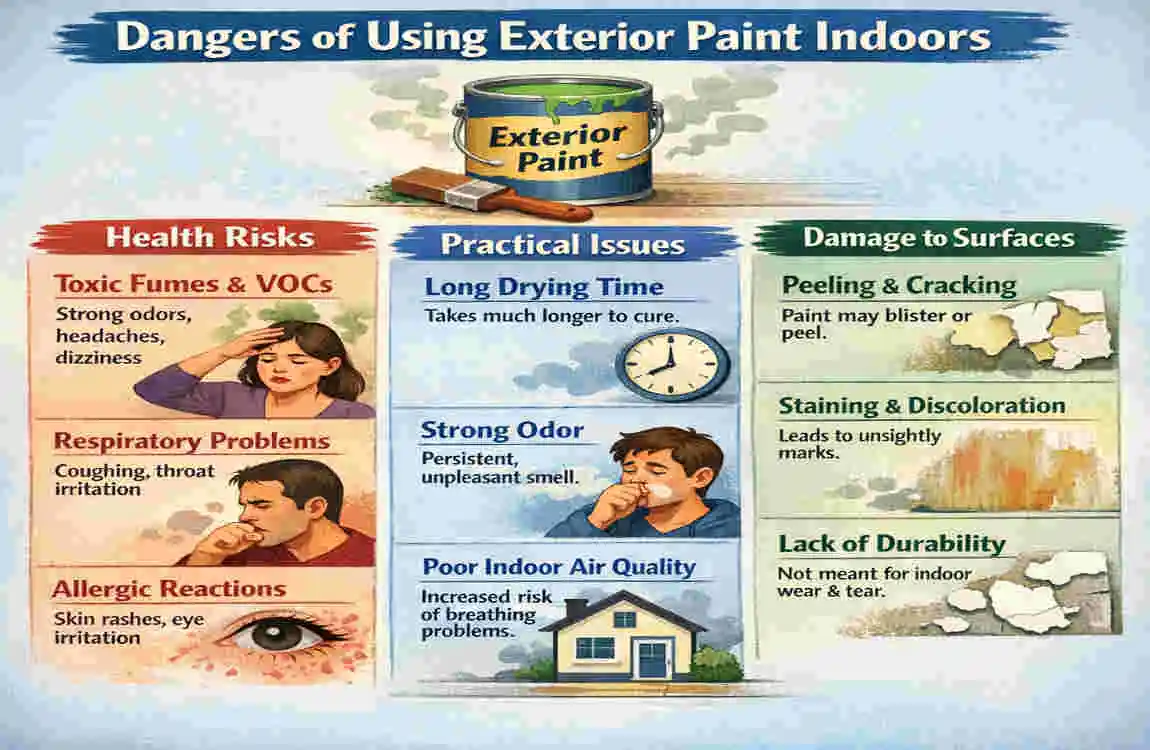
Many people notice the smell first. Exterior paint can leave a room smelling strong for longer than interior paint would.
That odour may fade with time and ventilation, but it can be unpleasant in bedrooms, living rooms, or other daily-use spaces.
Possible poor indoor performance
Exterior paint is not always the best match for interior conditions. It may dry differently, cure differently, or create a finish that does not suit your room.
In some cases, you may see issues like:
- Uneven appearance
- Too much shine
- Poor adhesion
- Cracking or peeling over time
This doesn’t happen every time, but it is a risk worth considering.
Cleaning and maintenance
Interior rooms often need regular cleaning, especially in busy homes. Interior paint is usually chosen with that in mind.
Exterior paint may not give you the same easy cleaning experience indoors, depending on the finish and formula. If you paint a kitchen wall or hallway, that matters a lot.
Appearance and finish
The finish may look different under indoor lighting than it does outside. Some exterior paints can look harsher, flatter, or less refined indoors.
You may also find the sheen doesn’t match the rest of the house. That can make the room feel off, even if the colour itself looks good.
Long-term considerations
Using the wrong paint may create more work later. You might need to repaint sooner, add primer, or deal with odour and surface issues.
So while exterior paint might seem like a quick fix, it can become a longer and more expensive project.
When Might Exterior Paint Be Considered for Indoor Projects?
Garages and utility areas
A garage is different from a bedroom or living room. It usually has more airflow and less concern about finish quality and comfort.
That is one reason some people consider exterior paint there. Even then, you should still check the product label first.
Workshops and unfinished spaces
Unfinished basements, storage rooms, and workshops sometimes have special conditions. Some homeowners want a tougher coating in these areas.
But “tougher” does not automatically mean “better.” A product that is approved for the space is always the safer choice.
High-moisture areas
Bathrooms and laundry rooms deal with moisture, so people understandably look at exterior paint. But moisture resistance alone doesn’t make paint suitable for indoor use.
A bathroom still needs paint that is made for interior walls and safe indoor conditions.
Special surfaces
Some surfaces, like concrete, masonry, wood, or metal, may need special coatings. In those cases, the right product depends more on the surface than on the room name.
That is why label instructions matter so much. Always match the paint to both the surface and the space.
Better alternatives to exterior paint
If you want durability indoors, these are usually better choices:
- Interior washable paint
- Kitchen and bathroom paint
- Low-VOC paint
- Interior primer
- Specialised coatings for concrete or metal
These products are made for indoor use, so they usually give better results with fewer worries.
How to Choose the Right Paint for Indoor Walls
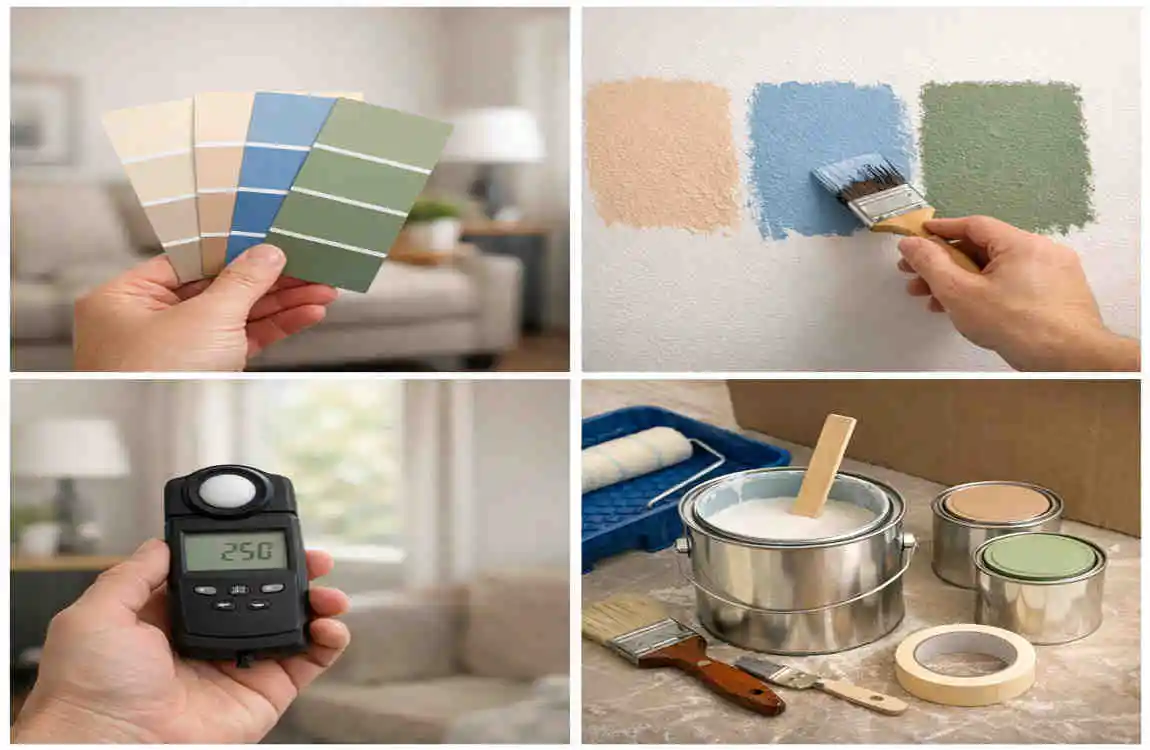
Choose paint based on the room.
Each room has different needs:
- Living rooms: smooth finish and good colour depth
- Bedrooms: low odour and calm appearance
- Kitchens: washable and stain-resistant
- Bathrooms: moisture resistance
- Hallways: durable and easy to clean
- Garages or utility rooms: tougher finishes if needed
Select the right finish.
Paint finish matters just as much as colour.
FinishBest ForMain Benefit
Flat Ceilings, low-traffic walls Hides flaws
Eggshell Living rooms, bedrooms Soft look, easy to live with
Satin Kitchens, hallways Easy to clean
Semi-gloss Trim, bathrooms Durable and moisture-friendly
Gloss Doors, detailed trim Strong shine and easy cleaning
Think about air quality.
If you care about indoor comfort, look for low-VOC or zero-VOC paint options. These are usually a better fit for homes, especially when children, pets, or sensitive family members are around.
Check the label before buying.
Before you buy, look for:
- Interior use
- Surface compatibility
- Finish type
- Drying time
- Curing time
- Ventilation advice
That small step can save you from a bad paint choice.
FAQ About Using Exterior Paint Inside
Can you use exterior paint inside a house?
You can, but it is usually not recommended for normal indoor rooms because it is made for outdoor conditions and may have a stronger odour and different additives.
Can exterior paint be used on an interior wall?
Only if the product label allows it and the space is suitable. Always check the instructions first.
Is exterior paint more durable than interior paint?
It is more durable for weather exposure, not necessarily better for indoor walls. Interior paint is designed for indoor wear and cleaning.
Is exterior paint toxic indoors?
It can raise concerns because of VOCs, fumes, and additives. Safety depends on the specific product, so check the label and safety information.
Can you use exterior paint in a garage?
Sometimes yes, especially if the garage is well ventilated and not fully treated like a living space. Still, check the label first.
Can exterior paint be used in a bathroom?
Usually, interior bathroom paint is the better choice. Moisture resistance alone does not make exterior paint the right indoor option.
How long does exterior paint smell indoors?
It depends on the formula, room size, ventilation, temperature, and humidity. The smell can last longer than interior paint in the same space.
Can you paint over exterior paint with interior paint?
Yes, but proper surface prep matters. Make sure the paint is fully cured, clean, and ready for the next coat.
| Feature | Exterior Paint Inside |
|---|---|
| Can you use it? | Yes, but it is generally not the preferred choice |
| Durability | Usually designed for outdoor exposure |
| Odor | May have a stronger smell |
| Indoor air quality | Check the product label and VOC information |
| Finish | Available in different finishes, depending on the product |
| Best use | Exterior walls, siding, doors, and outdoor surfaces |
| Indoor use | Use only when the manufacturer specifically allows it |
| Better option | Choose paint specifically formulated for interior walls |
| Safety tip | Follow the label, ventilation, and curing instructions |
| Bottom line | Interior paint is usually the better choice for indoor rooms |
