

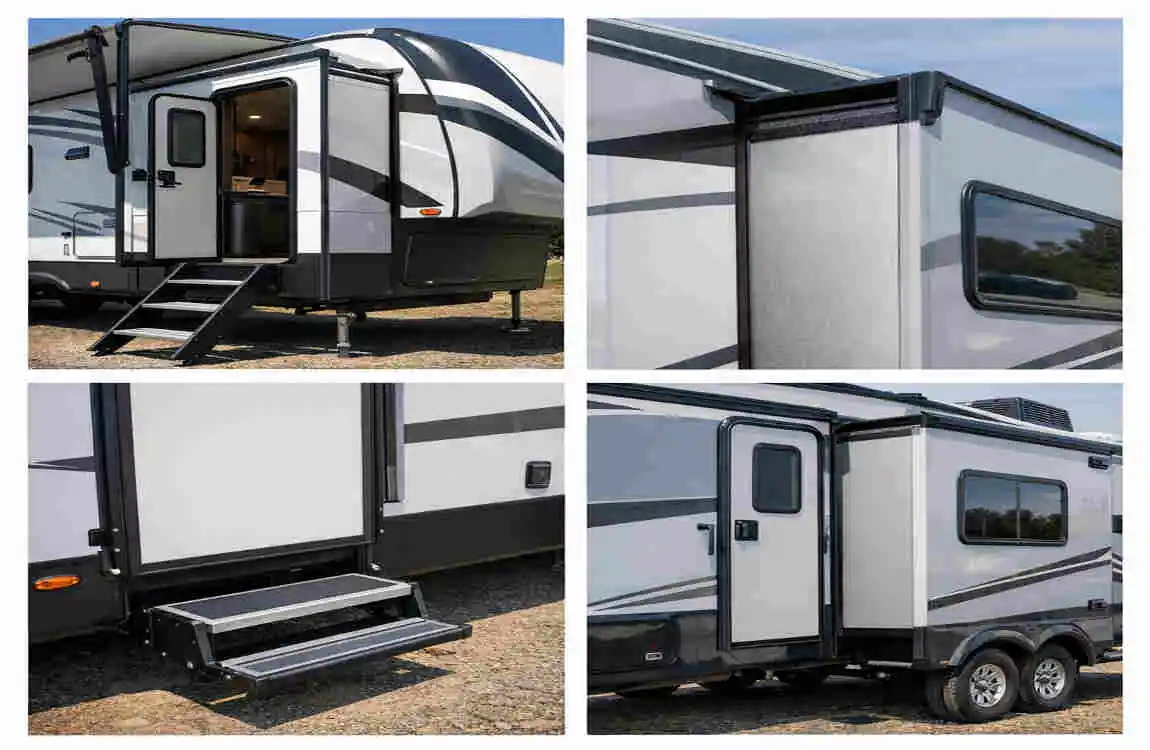
Exterior doors on a slide-out can make a home, RV, or compact mobile space feel more practical and easier to use. They help improve access, save interior room, and add convenience when the layout is tight.
Exterior doors on a slide-out are doors installed on a section that moves outward from the main structure. This setup is common in RVs, mobile homes, and some compact living spaces.
The goal is simple: create extra access without crowding the main interior. Instead of using one large fixed wall section, the slide-out gives you more space and sometimes a better entry point.
Benefits of Exterior Doors on a Slide-Out
Better access and easier movement
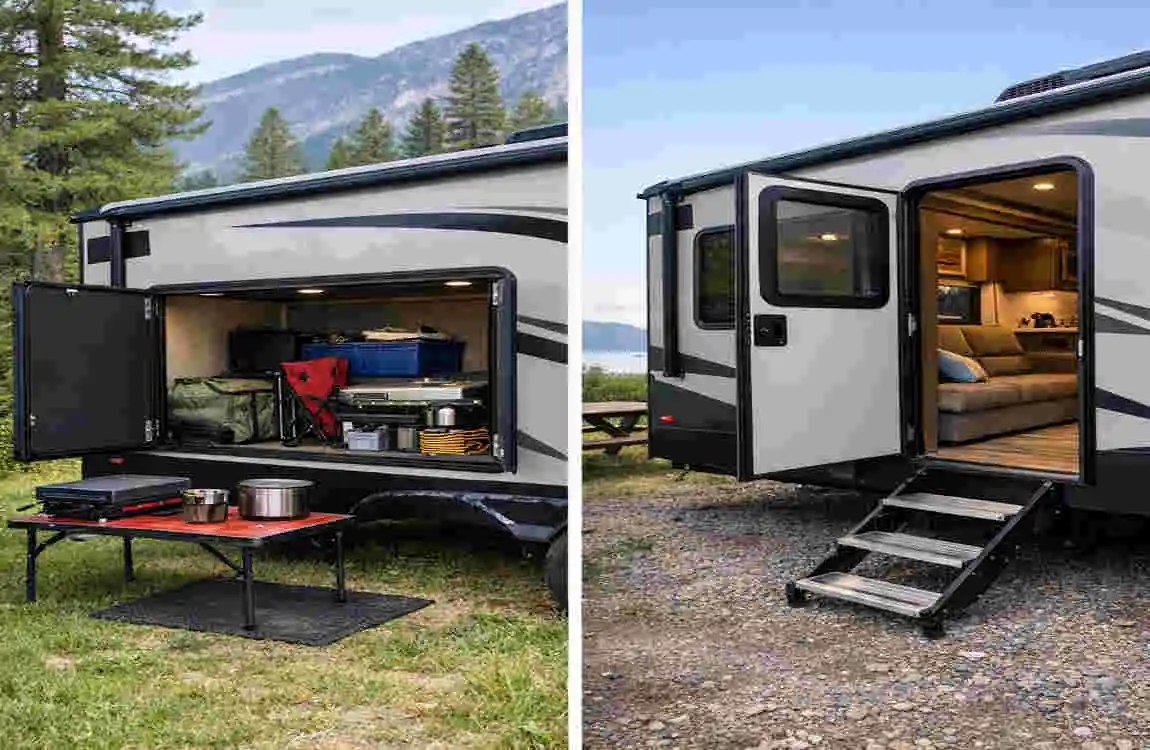
One of the biggest benefits is easy access. If the slide-out holds a bedroom, sitting area, or workspace, a separate door can make daily use much simpler.
You don’t always have to go through the main entrance. That can save time and reduce crowding.
More usable interior space
A door on a slide-out can help you design the rest of the room more freely. You may not need to place furniture around a central hallway or main door path.
This gives you more options for arranging the room comfortably.
Better outdoor connection
If the slide-out opens toward a patio, deck, or parking area, the door makes it easier to move in and out. That can help with family life, guests, or outdoor activities.
It also makes the whole space feel more connected to the outside.
Improved property appeal
A well-designed door can make the space look more modern and functional. Buyers often notice small details that make a home or RV easier to live in.
A second entrance can feel like a smart upgrade when it is done correctly.
Exterior Door Design Options for Slide Outs
Swing doors vs. sliding doors
Swing doors are common and familiar. They open inward or outward and are easy to use.
Sliding doors save space because they do not swing into the room or outside path. If space is very tight, that can be a big advantage.
Single vs. double doors
A single door is usually simpler and lighter. It works well in smaller slide-outs or compact layouts.
A double-door setup can look more open and allow wider access. But it also needs more space and more support.
Glass-panel and full-glass styles
Glass-panel doors can bring in natural light and make the space feel brighter. They are useful if the slide-out room feels small or closed in.
Full-glass styles look modern, but they should include good insulation and durable frames. Otherwise, they may lose heat or feel too exposed.
Strong materials for long-term use
Common materials include fiberglass, steel, and lightweight insulated options. Fiberglass is popular because it resists weather and usually needs less care.
Steel is strong, but it may be heavier. Lightweight insulated doors often work best when the structure needs to stay easy to move and support.
Matching the look of the home
The door should blend with the siding, trim, windows, and roofline. If the rest of the structure is modern, a clean, simple door works well.
If the design is more traditional, a classic panel style may fit better. The goal is a balanced look, not a door that feels out of place.
Structural and Installation Considerations
Can the slide-out support a door?
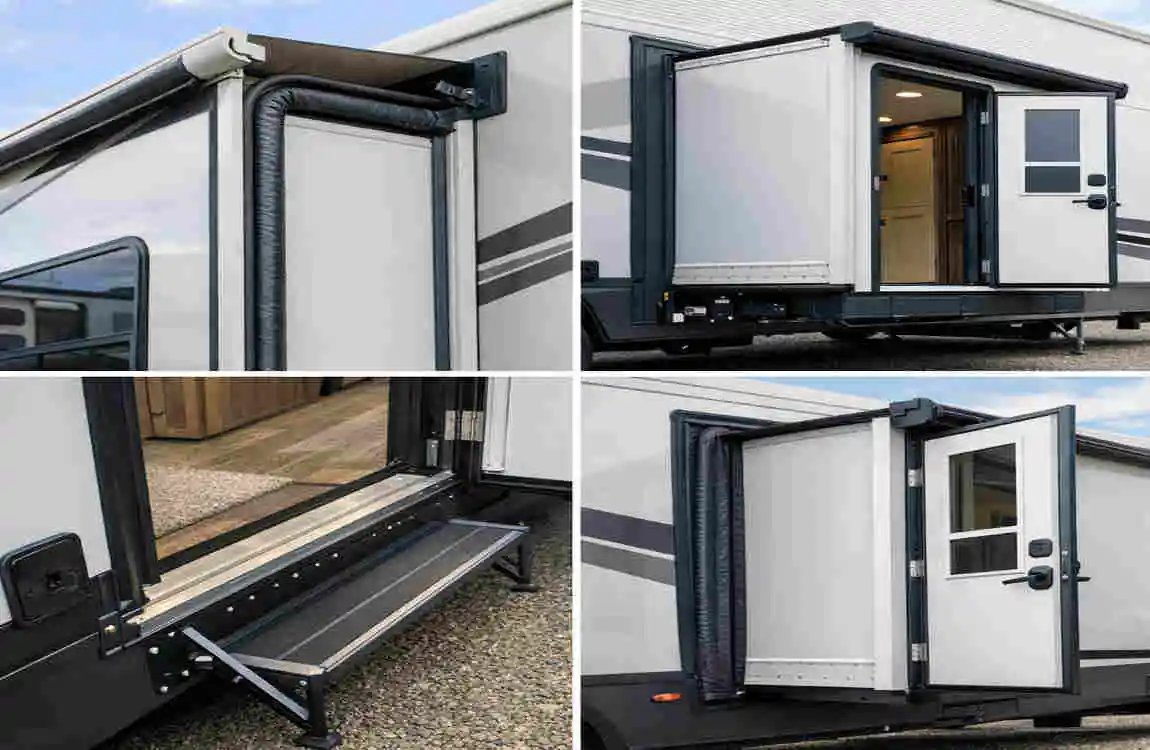
This is the first question to ask. Not every slide-out is made to hold an exterior door. The frame must be strong enough to support the door opening without weakening the structure.
A professional should check the load, framing, and movement before cutting in a new opening.
Framing and stability
The area around the door needs proper framing. That means support on the sides, top, and bottom of the opening.
Without strong framing, the door may shift, sag, or stop sealing correctly over time.
Clearance matters
The door must not hit furniture, steps, railings, or other outside features when the slide-out moves. Clearance is very important.
Even a good-looking design can become a problem if it blocks movement or rubs during operation.
Why professional installation helps
This is not usually a simple DIY project. A pro can check the structure, cut the opening correctly, install flashing, and make sure the door seals tightly.
That reduces the chance of leaks, warping, and slide-out problems later.
Weatherproofing, Insulation, and Energy Efficiency
Protecting the door from rain and moisture
A slide-out door needs strong water protection. Rain can enter through gaps, weak seals, or poor flashing.
Good waterproofing helps prevent damage to the frame, walls, and flooring.
Weatherstripping and seals
Weatherstripping helps close small gaps around the door. It keeps out air, water, dust, and noise.
Over time, seals can wear out. That is why routine checks matter so much.
Insulation and temperature control
An insulated door helps reduce heat loss in cold weather and heat gain in hot weather. This can improve comfort and lower energy use.
This matters even more in RVs or mobile homes, where thin walls can make temperature changes feel sharper.
Simple maintenance tips
Here are a few easy things to check regularly:
- Inspect seals for cracks or gaps
- Clean hinges and locks
- Check the frame for moisture damage
- Make sure the door closes evenly
- Replace worn weatherstripping early
These small steps can help the door last longer.
Smart Design Ideas and Common Problems
Create a useful entry area.
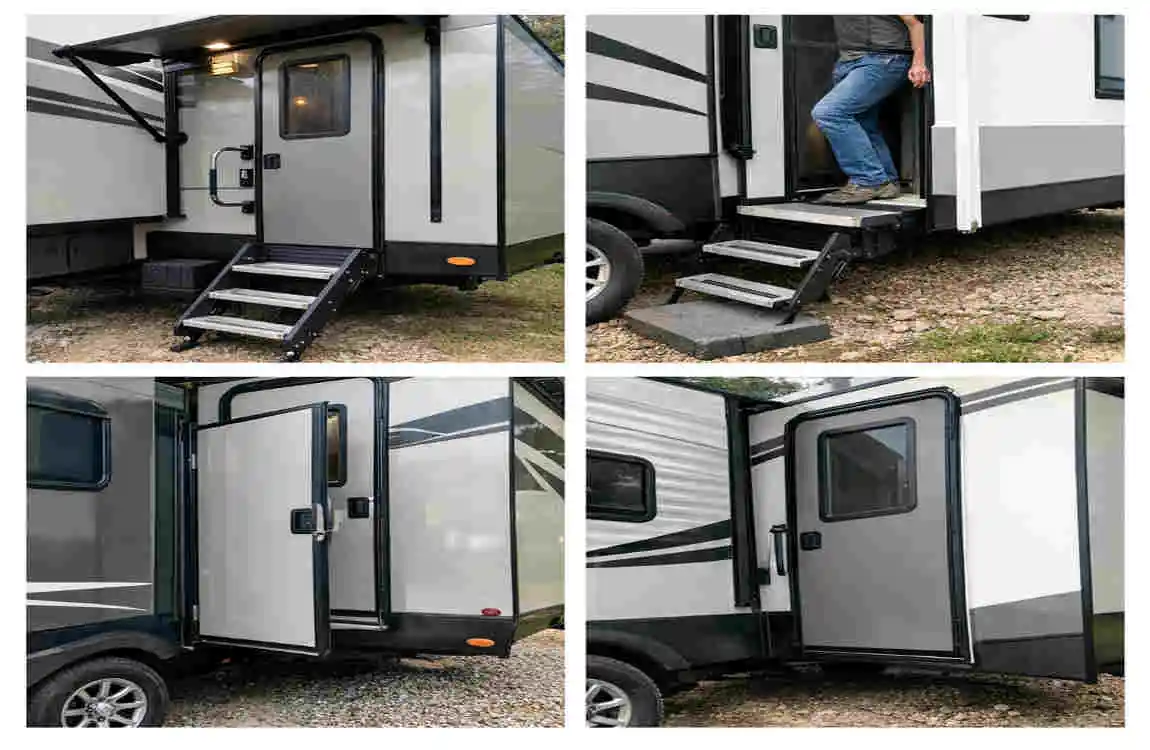
A slide-out door works best when you plan the outside area well. A small landing, steps, or deck can make entry safer and easier.
Even a simple mat or light can improve the space.
Add light and visibility.
Placing windows near the door can make the area feel open and bright. Exterior lighting is also helpful, especially at night.
This improves both comfort and safety.
Improve security
A good lock matters. Use strong hardware, solid handles, and secure latches.
If the door is easy to reach from outside, it should be secure and convenient.
Common problems to watch for
The most common issues include:
- Sticking or rubbing
- Leaks
- Drafts
- Misalignment
- Swelling or warping
These problems often come from poor installation, wear over time, or movement in the slide-out structure.
When to repair or replace
If the door no longer seals well, keeps leaking, or becomes hard to open, you may need to repair it. If the frame is damaged or the structure has shifted, replacement may be the better choice.
Do not ignore small problems. They often grow into bigger repairs later.
FAQ About Exterior Doors on a Slide-Out
Can you put exterior doors on a slide-out?
Yes, but the slide-out must be designed to support it. Check the framing, weight, and clearance first.
What type of exterior door works best on a slide-out?
That depends on the space and structure. Lightweight insulated doors and space-saving sliding doors often work well.
How do you waterproof exterior doors on a slide-out?
Use strong flashing, proper seals, weatherstripping, and good drainage. Install the door frame carefully to block moisture.
Can a slide-out door affect the slide mechanism?
Yes, if it is too heavy, poorly placed, or installed without enough clearance. That is why design planning is important.
Should you hire a professional?
In most cases, yes. A professional can protect the structure, improve safety, and help prevent leaks or movement issues.
| Feature | Information |
|---|---|
| What It Means | Exterior doors installed on a slide-out room or extension of a building/RV |
| Main Benefit | Saves interior space while improving access to the exterior |
| Door Types | Sliding glass, hinged, French, folding, and compact patio doors |
| Best Materials | Fiberglass, aluminum, steel, vinyl, and treated wood |
| Weather Protection | Use proper flashing, seals, thresholds, and waterproof membranes |
| Space Saving | Sliding doors need less clearance than traditional swinging doors |
| Security | Choose strong locks, reinforced frames, and impact-resistant glass |
