

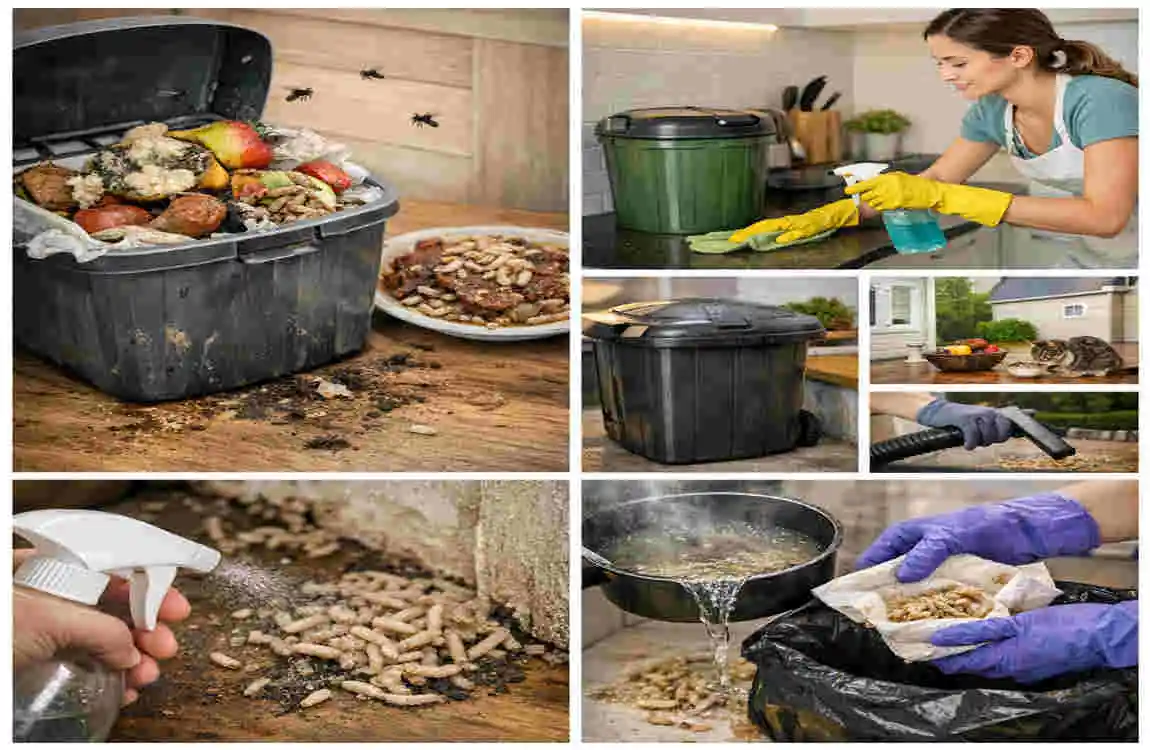
If you have ever walked into a room and suddenly spotted tiny white worms near trash, food, or a drain, you may have asked yourself, how do you get maggots in your house? It can feel shocking, but the answer is usually simple.
Maggots are not appearing out of nowhere. They come from fly eggs that hatch in places with food, moisture, and heat. That is why they often show up around garbage, spoiled food, pet waste, or hidden decay.
The good news is that maggots are usually a warning sign, not a permanent problem. If you find the source quickly and clean it well, you can stop the infestation and keep it from coming back.
What Are Maggots?
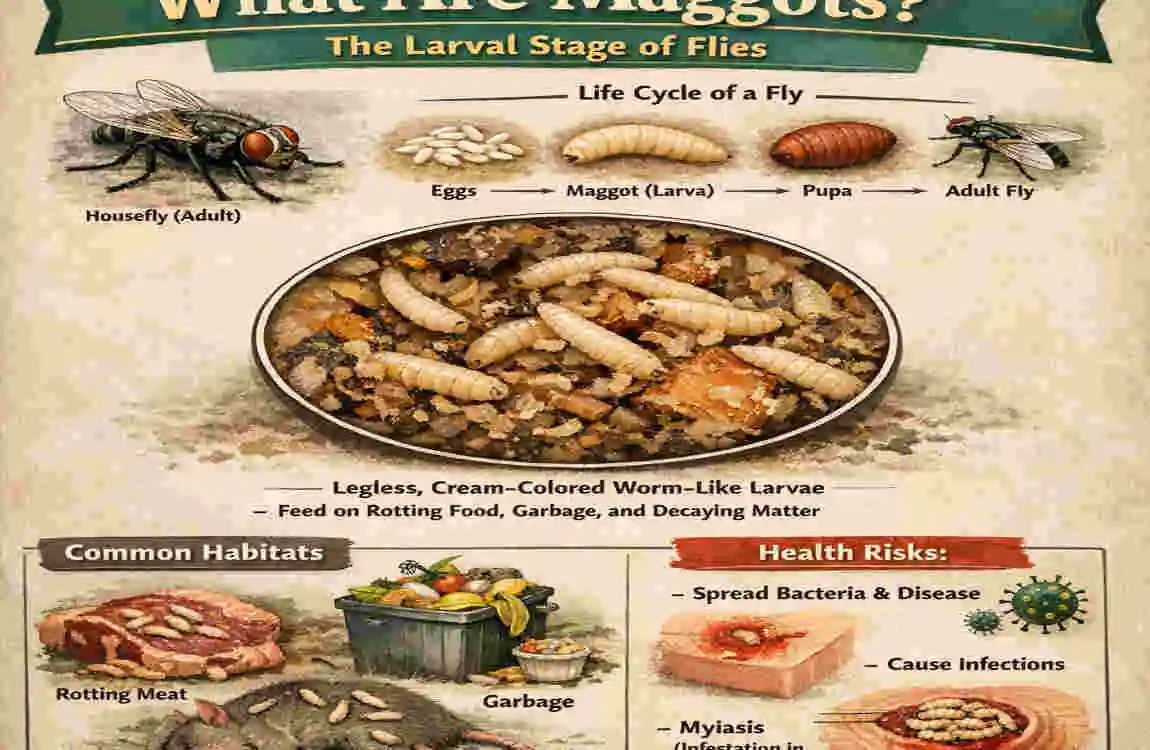
The Life Cycle of a Fly
Maggots are the larvae stage of a fly. A fly does not start as a flying insect. It goes through several stages:
- Eggs are laid on decaying material
- Larvae, which are maggots, hatch from the eggs
- Pupae form after the maggot grows
- Adult flies emerge and continue the cycle
This life cycle is why maggots can show up so quickly. Once a fly finds the right spot, it lays eggs, and the problem can grow fast.
Why Maggots Are Found Indoors
Maggots are usually found indoors because something in the clean home has become a breeding and feeding site for flies. That might be spoiled food, a dirty bin, pet food, or even a dead animal hidden in a wall or attic.
They do not appear because a house is “dirty” in the abstract. They appear because a specific source is attracting flies.
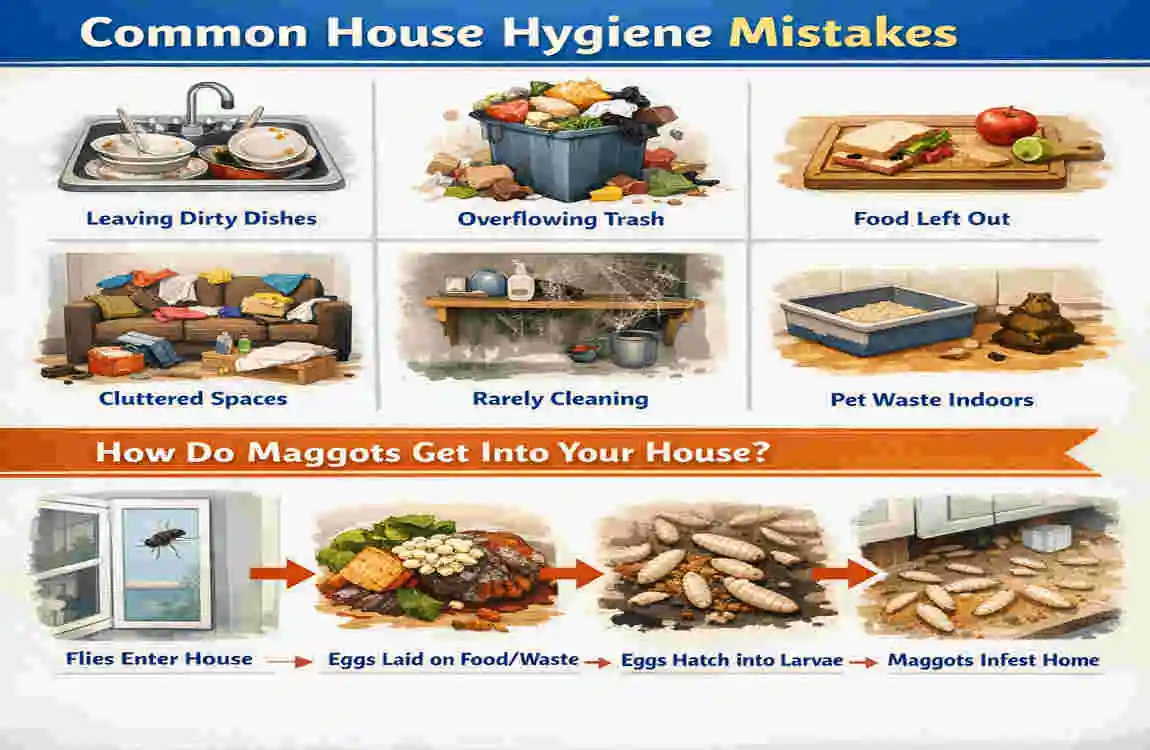
How Do You Get Maggots in Your House?
Rotten Food Left Out
Spoiled food is one of the biggest reasons maggots appear. Fruit, meat, leftovers, or old takeout can attract flies very quickly.
If flies land on the food and lay eggs, maggots may appear within a day.
Overflowing Garbage Bins
Trash bins are another common source. When garbage sits too long, it starts to smell, and flies are drawn to it.
If the bin is uncovered or not emptied often, it becomes an easy breeding area.
Pet Food Left Overnight
Pet food can also cause problems. Wet food left in a bowl overnight is especially attractive to flies.
If you feed pets outdoors, the risk may be even higher.
Dead Rodents or Animals Inside Walls
Sometimes the source is hidden. A dead mouse, rat, bird, or other animal inside a wall, attic, or crawl space can attract flies.
This often leads to a bad smell before you see maggots.
Dirty Drains
Kitchen and bathroom drains can collect food residue, soap film, and moisture. That creates a good place for flies and other pests.
A dirty drain may not always directly cause maggots, but it can create conditions that lead to them.
Compost Bins
Compost bins can attract flies if they are not managed well. Food scraps, fruit peels, and warm damp material can create a perfect breeding ground.
Moist, Warm Areas
Heat and moisture help fly eggs hatch faster. So if your clean home has damp corners, wet trash, or warm hidden areas, the risk goes up.
Common Places Where Maggots Hide
Kitchen Trash
This is one of the first places to check. Food scraps and grease make kitchen trash a common source of odor.
Under Appliances
Maggots may hide under refrigerators, stoves, or dishwashers if food spills collect there and go unnoticed.
Garbage Disposal
Food trapped in a garbage disposal can smell bad and attract flies.
Bathrooms
Bathrooms may seem unlikely, but damp waste, dirty bins, or clogged drains can create the right conditions.
Basements
Basements often stay cool and dark. If there is hidden moisture, trash, or decay, maggots may appear there.
Garages
Garages often hold bins, old boxes, pet supplies, and stored items. That makes them another possible problem area.
Pet Feeding Areas
If pets eat in one place every day, food scraps can build up around the bowl, attracting flies.
Signs You Have a Maggot Infestation
Small White Worms
The most obvious sign is the maggots themselves. They are usually small, white, and wriggling.
Increased Fly Activity
If you notice more flies in the house, that may mean they found a place to lay eggs.
Bad Odors
A strong, rotten smell often points to spoiled food or hidden decay.
Hidden Food Decay
Sometimes you will not see the source right away. Check behind bins, under appliances, and inside storage spaces.
Are Maggots Dangerous?
Health Risks
Maggots do not usually bite people, but they can still pose a health risk because they often breed in dirty or decaying material.
Food Contamination
If maggots get near food, they can make it unsafe to eat. Even if the food looks fine, it may need to be thrown out.
Bacteria and Germs
Flies can carry bacteria from trash, waste, and decay. That is why it is important to clean the area carefully.
Risks to Pets
Pets may try to eat spoiled food or disturbed waste. That can expose them to germs, so keep them away from the affected area.
How to Remove Maggots from Your House
Find the Source
First, find out where the maggots are coming from. If you remove only the maggots, not the source, they may return.
Look in trash cans, food storage areas, drains, and hidden corners.
Dispose of Infested Materials
Throw away spoiled food, dirty trash, or other contaminated items in a sealed bag right away.
Clean with Hot Water and Soap
Use hot water and soap to scrub the area thoroughly. This helps remove eggs, residue, and odors.
Use Vinegar or Salt
White vinegar or salt can help kill maggots when applied to affected areas. These are common clean home remedies and easy to apply.
Disinfect the Area
After cleaning, disinfect the surface to remove bacteria and reduce odor.
Seal Trash Properly
Always use a trash bag and keep the lid closed. Take out the trash often, especially if it contains food.
How to Prevent Maggots in Your House
Empty Garbage Frequently
Do not let trash sit for days, especially in warm weather. Empty it often.
Store Food Correctly
Keep food in sealed containers and refrigerate leftovers quickly.
Clean Kitchen Daily
Wipe counters, sweep floors, and clean spills before they attract flies.
Keep Drains Clean
Flush drains regularly and remove food buildup or grime.
Seal Entry Points
Use screens, close gaps, and keep windows and doors protected so flies cannot get inside easily.
Control Fly Population
If flies are already in the house, deal with them quickly before they lay eggs.
Natural Remedies for Maggot Control
Some people prefer simple household remedies before using stronger products. These may help with small infestations:
- Boiling water
- White vinegar
- Salt
- Baking soda
- Essential oils like peppermint or eucalyptus
These can be useful, but they work best when you also remove the source of the problem.
Chemical Treatments
Household Insect Sprays
Some sprays are designed to kill fly larvae and adult flies. Always read the label and use them safely.
Fly Control Products
Fly traps and insect control products can help reduce the number of flies in and around your clean home.
Professional Pest Control
If the infestation keeps coming back, a pest control expert may be the best option. They can identify hidden sources and properly treat the area.
When Should You Call a Pest Control Expert?
Call a professional if you notice:
- Recurring infestations
- Hidden dead animals
- Severe fly infestations
- Large numbers of maggots
A pest control expert can help when the source is hard to find, or the problem is too large to handle on your own.
Common Mistakes to Avoid
Ignoring the Source
If you only clean the visible maggots and ignore the cause, the problem can come back fast.
Leaving Trash Uncovered
Open trash bins make it easy for flies to lay eggs.
Using Chemicals Without Cleaning
Spraying insecticide without removing the food source is not enough.
Not Disinfecting Affected Areas
Even after the maggots are gone, the area can still hold germs and odors.
Frequently Asked Questions
How do you get maggots in your house?
Maggots usually appear when flies lay eggs on rotting food, garbage, pet waste, or dead animals inside the clean home.
Can maggots appear without flies?
No. Maggots are the larval stage of flies and come from eggs laid by adult flies.
How long does it take for maggots to appear?
Under warm conditions, fly eggs can hatch into maggots in 8 to 24 hours.
What kills maggots instantly?
Boiling water, salt, vinegar, or the right insecticide can kill maggots quickly when used properly.
Are maggots harmful to humans?
They usually do not bite, but they can spread bacteria and contaminate food and surfaces.
Why do maggots keep coming back?
A hidden source such as spoiled food, dirty bins, clogged drains, or a dead animal may still be present.
| Topic | Information |
|---|---|
| What Are Maggots? | Maggots are the larval stage of flies, usually houseflies or blowflies, that hatch from eggs. |
| Main Causes | Rotting food, uncovered trash, pet waste, dead animals, dirty drains, and spoiled organic matter attract flies. |
| How They Get Inside | Adult flies enter through open doors, windows, vents, or cracks and lay eggs on decaying materials. |
| Common Locations | Kitchen trash cans, garbage bins, compost, drains, under appliances, pet feeding areas, and crawl spaces. |
| Signs of an Infestation | Clusters of white worm-like larvae, increased fly activity, foul odors, and decaying organic material. |
| Health Risks | Maggots themselves rarely bite, but they may indicate unsanitary conditions that can spread bacteria through flies. |
| How to Remove Them | Dispose of the source, clean thoroughly, use boiling water or disinfectant on affected areas, and seal garbage properly. |
