

Spiders are fascinating creatures, but let’s face it—most of us would rather not share our homes with them. Whether it’s the sight of a web in the corner of your living room or the sudden appearance of a spider scuttling across the floor, these eight-legged visitors can be unsettling. If you’ve been searching for how to stop spiders from coming into your house, you’re in the right place. This guide will walk you through practical, natural, and professional methods to keep your home spider-free.
Why Do Spiders Invade Homes?
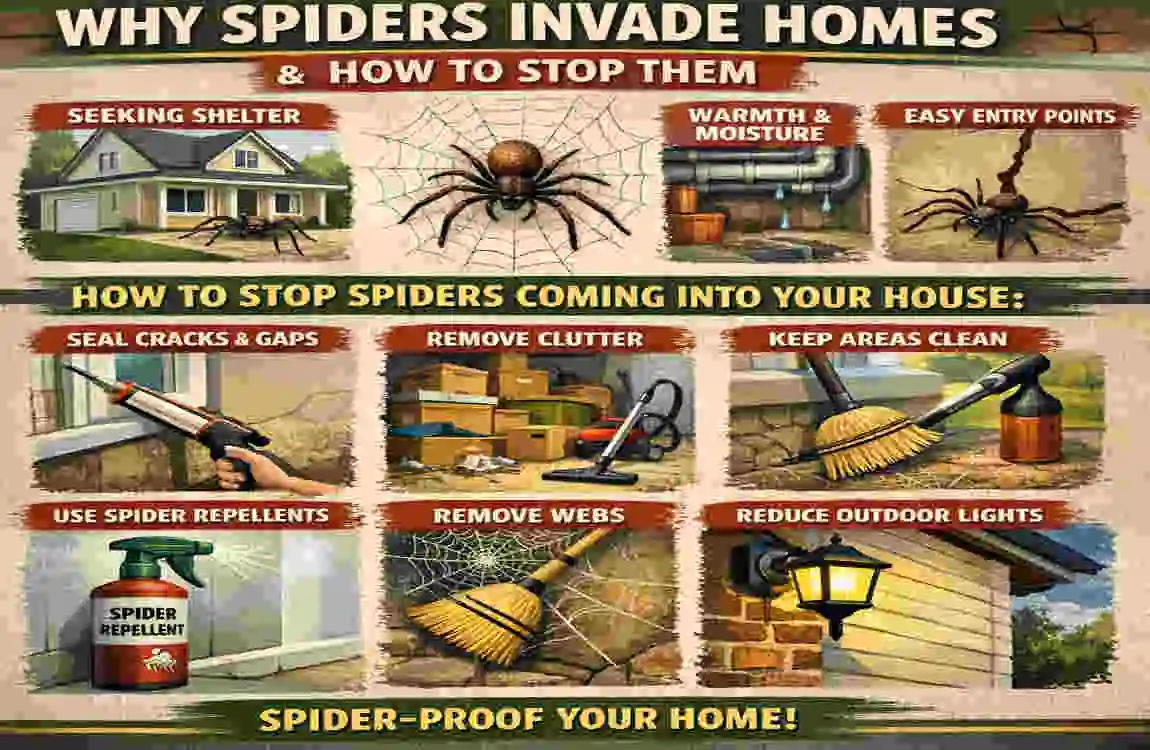
Before diving into prevention strategies, it’s important to understand why spiders enter your home. Knowing their motivations can help you tackle the problem more effectively.
Food Sources: Insects
Spiders are natural predators, and their primary food source is insects. If your home has a bug problem, spiders will follow. Poor lighting, open food containers, or crumbs can attract insects, which in turn attract spiders.
Seasonal Factors
Spiders are more likely to enter homes during certain times of the year. For instance:
- Monsoon seasons or humid climates can drive spiders indoors to escape the rain.
- Cooler months in autumn and winter often see spiders seeking warmth and shelter.
Common Spider Species
While most spiders are harmless, some common species you might encounter include:
- House spiders: Known for their small size and web-building habits.
- Wolf spiders: Larger and more active, but non-venomous.
Understanding these factors is the first step toward preventing spiders in the home.
Seal Entry Points
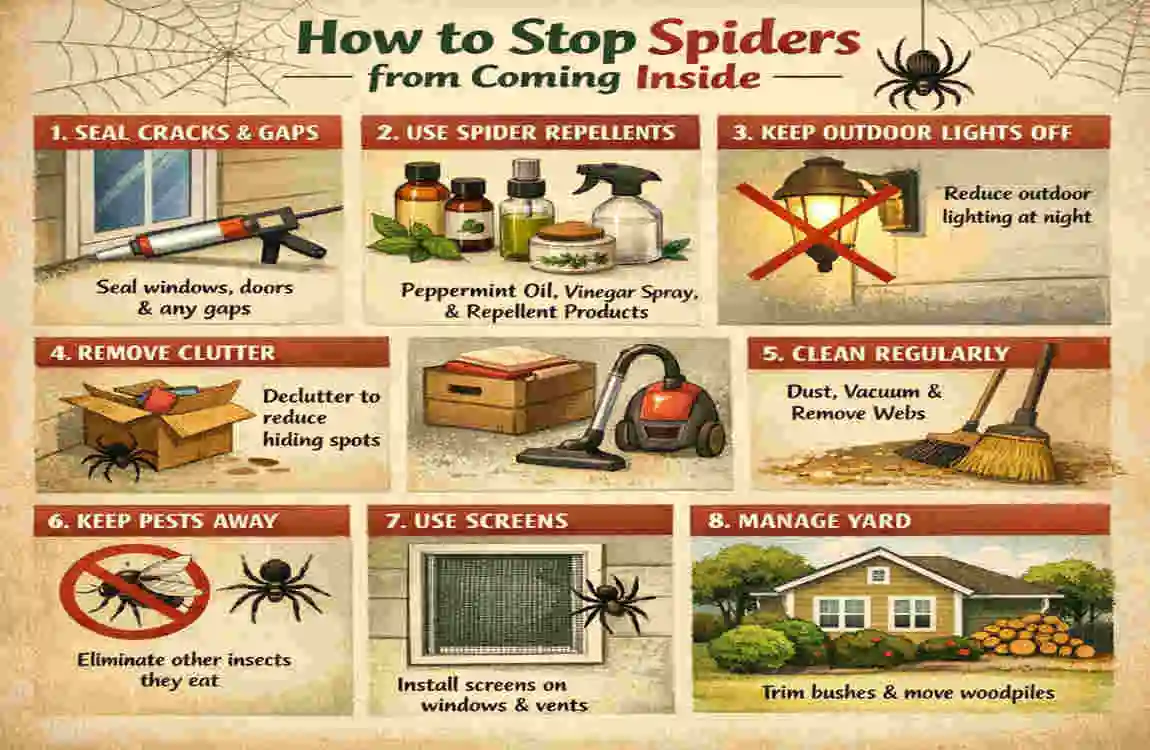
One of the most effective ways to keep spiders out of your home is to seal their entry points. Spiders are small and can squeeze through tiny gaps, so this step requires attention to detail.
Inspect and Seal Cracks
- Use silicone caulk to seal cracks and gaps around windows, doors, and foundations. Pay special attention to areas larger than 1/8 inch.
- Check for gaps around utility lines, faucets, and pipes.
Install Door Sweeps and Weatherstripping
- Add door sweeps to the bottom of exterior doors to block spiders from crawling in.
- Apply weatherstripping around windows and doors to close off any gaps.
Use Mesh Screens
- Install fine mesh screens on vents and repair any torn screens on windows.
Visual Checklist Table
Entry Point Sealing Tool Frequency
Windows/Doors Caulk/Weatherstrip Quarterly
Vents Fine Mesh Annually
Cracks in Walls Silicone Sealant As Needed
By sealing these entry points, you can block up to 90% of spiders from entering your home.
Maintain Cleanliness Indoors
A clean home is less inviting to spiders. Regular cleaning not only removes spiders but also eliminates their food sources.
Vacuum and Dust Regularly
- Vacuum corners, baseboards, and ceilings weekly to remove webs and egg sacs.
- Dust furniture and shelves to prevent spiders from settling in.
Declutter Your Space
- Spiders love hiding in cluttered areas. Keep your home organized by:
- Storing items in airtight containers.
- Avoiding piles of clothes, boxes, or papers.
Shake Out Linens
- Shake out bed linens, curtains, and towels regularly to ensure no spiders are hiding in them.
Avoid Eating in Bedrooms
- Food crumbs can attract insects, which in turn attract spiders. Keep snacks confined to the kitchen or dining area.
Natural Spider Repellents
If you prefer eco-friendly solutions, natural repellents are a great way to deter spiders without using harsh chemicals.
Peppermint Oil Spray
- Mix 10-15 drops of peppermint oil with water in a spray bottle.
- Spray the mixture in corners, closets, and other spider-prone areas.
Other Essential Oils
- Eucalyptus, lavender, and tea tree oils are also effective. Their strong scents repel spiders naturally.
Diatomaceous Earth
- Sprinkle food-grade diatomaceous earth along baseboards and entry points. This natural powder is safe for pets and humans but lethal to spiders.
DIY Recipes Table
Repellent Ingredients Application Areas
Peppermint Spray Oil + Water Corners, Closets
Mint Sachets Crushed Leaves Cabinets
Diatomaceous Earth Food-Grade Powder Baseboards
Application Tips
- Place cotton balls soaked in essential oils in cabinets and drawers.
- Refresh natural repellents every two weeks for maximum effectiveness.
Outdoor Prevention Strategies
Keeping spiders out starts with maintaining the exterior of your home. Here’s how to make your yard less inviting to spiders.
Trim Vegetation
- Keep bushes and trees at least 1-2 feet away from your house to prevent spiders from using them as bridges.
Plant Spider-Repelling Plants
- Add mint, lavender, or eucalyptus plants around your home’s perimeter. These plants naturally deter spiders.
Adjust Outdoor Lighting
- Switch to yellow bulbs or turn off outdoor lights at night. Bright lights attract insects, which attract spiders.
Use Perimeter Sprays
- Apply a natural or commercial spray, such as Miss Muffet’s Revenge, around the foundation of your home.
Traps and Direct Removal
Sometimes, you need to deal with spiders that have already made their way inside.
Sticky Traps
- Place sticky traps in basements, garages, and other spider-prone areas to monitor and catch spiders.
Spider Catchers
- Use a spider vacuum or catcher for humane removal. These tools allow you to relocate spiders outdoors without harming them.
Advanced and Professional Tips
For severe infestations or persistent problems, professional help may be necessary.
When to Call a Professional
- If you notice more than 10 webs per week, it’s time to consult a pest control expert.
Integrated Pest Management (IPM)
- Combine multiple methods, such as sealing entry points, using repellents, and professional treatments, for long-term results.
Monsoon Preparation
- In regions, prepare for the monsoon season by sealing cracks and applying perimeter sprays in advance.
Common Mistakes to Avoid
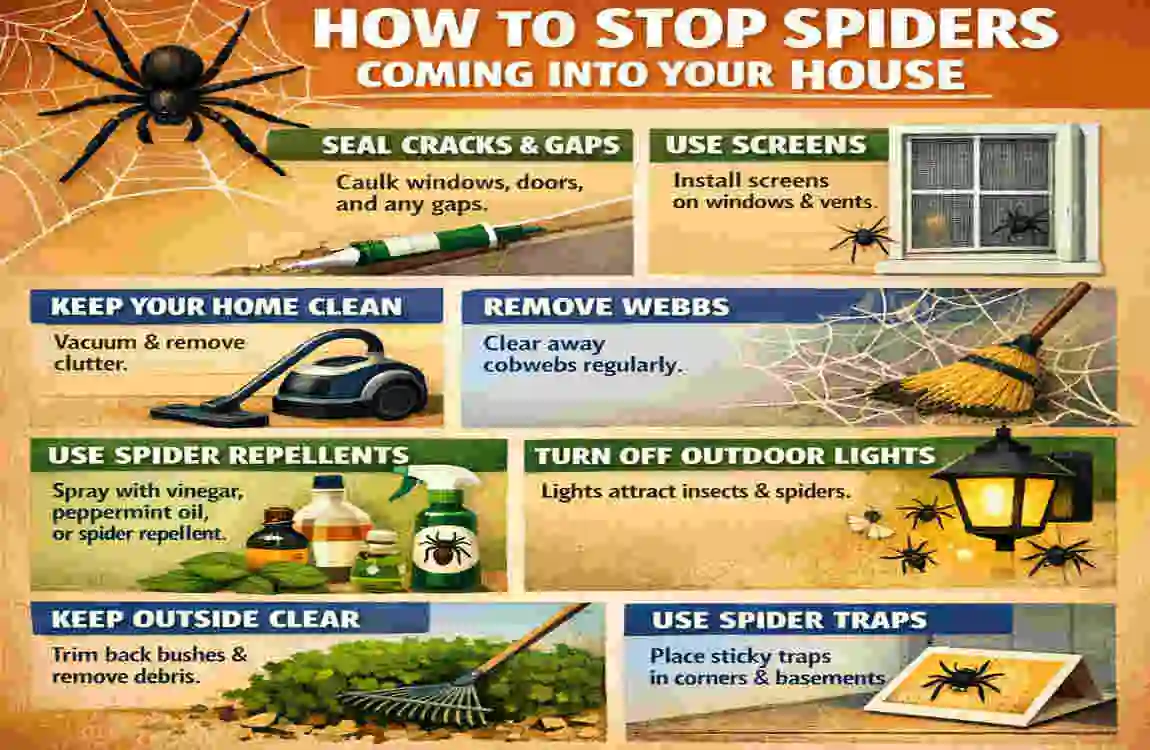
Even with the best intentions, some common mistakes can undermine your efforts.
Leaving Lights On
- Bright lights attract insects, which attract spiders. Turn off unnecessary lights at night.
Ignoring Clutter
- A cluttered home provides hiding spots for spiders. Regular decluttering is essential.
Over-Reliance on One Method
- Using only one prevention method, like repellents, won’t be as effective as combining multiple strategies.
How to Stop Spiders Coming Into Your House – FAQ
Why are spiders coming into my house?
Spiders usually enter looking for food (insects), warmth, or shelter—especially during colder months.
How can I stop spiders from entering?
Seal cracks around doors, windows, and walls, and install door sweeps or window screens to block entry points.
What smells do spiders hate?
Strong scents like peppermint, vinegar, citrus, and eucalyptus can repel spiders.
Does cleaning help keep spiders away?
Yes, regular cleaning removes webs, dust, and insects, making your home less attractive to spiders.
How do I keep spiders out of my bedroom?
Vacuum frequently, keep the area clutter-free, and avoid leaving food or lights on that attract insects.
Are there natural remedies to repel spiders?
Yes, you can spray a mix of water and peppermint oil around corners, windows, and doorways.
Do lights attract spiders?
Lights attract insects, and insects attract spiders—so reducing outdoor lighting can help.
Should I use insecticides?
Only if necessary. Natural methods and preventive measures are usually safer and more effective.
