


If you want your home to look brighter and feel cleaner, window care matters more than many people think. Clean glass lets in more natural light, improves your view, and makes your space feel fresh. But many homeowners still ask the same basic question: do you clean interior and exterior windows?
The short answer is yes. Both sides need attention because they collect different kinds of dirt. The inside usually picks up dust, fingerprints, and household buildup. The outside gets hit with rain spots, pollen, road dust, and other outdoor mess.
That is why interior window cleaning and exterior window cleaning are not the same. Each side may need a different method, different tools, and sometimes a different level of care.
Why Should You Clean Interior and Exterior Windows?
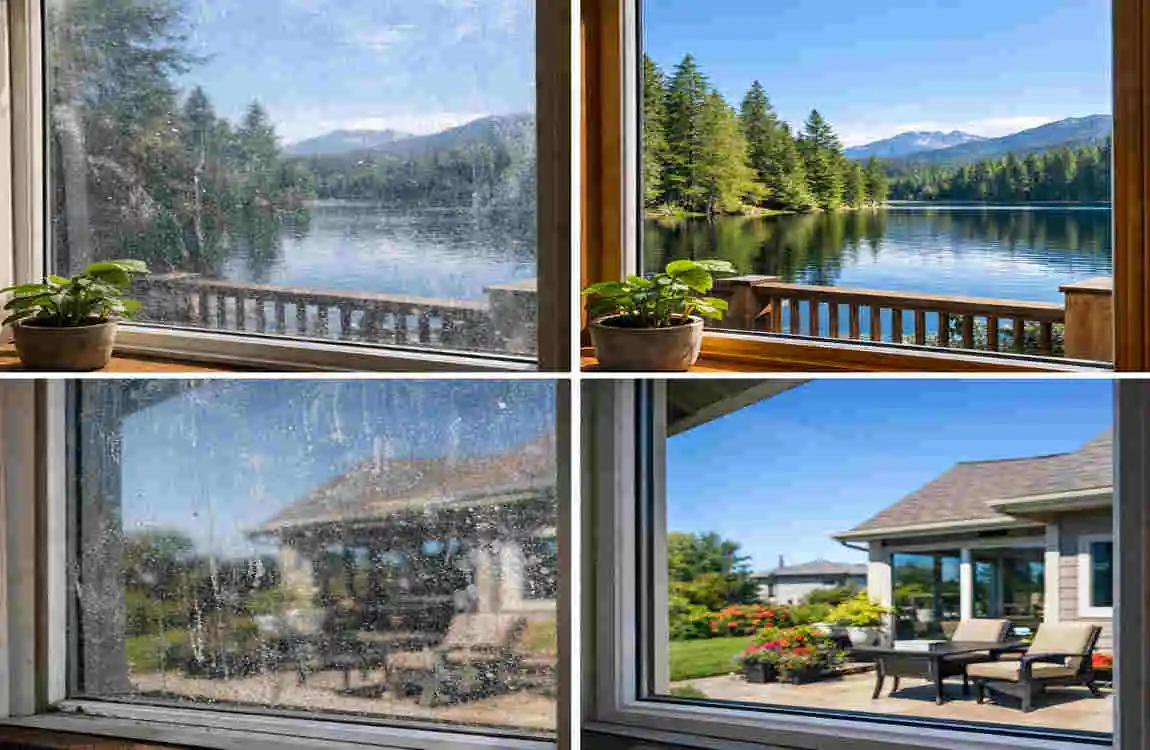
Benefits of Cleaning Interior Windows
Inside windows may look clean at first glance, but they often hold a thin layer of dust and oils. Children touching the glass, cooking grease in the air, and everyday living all leave marks over time.
Clean interior windows help your home feel brighter. They also make rooms look more polished and cared for. When the glass is clear, you get better visibility and a fresher overall feel.
Benefits of Cleaning Exterior Windows
Outside windows face much harsher conditions. Dirt, pollen, bird droppings, rainwater, and pollution can build up fast. Over time, this buildup can become harder to remove.
Regular exterior window cleaning helps protect the glass from stubborn stains and mineral spots. It also improves curb appeal, which matters a lot if you want your home to look neat from the street.
Why Both Sides Matter
Cleaning only one side of the window is a bit like washing only half a mirror. The glass may still look dull because dirt on the other side blocks light, reducing clarity.
Both sides collect different messes, so both need care. When you clean them regularly, future cleaning becomes easier and faster.
How Often Should You Clean Interior and Exterior Windows?
Recommended Cleaning Schedule
Most homes do well with window cleaning a few times a year. A good general schedule is every 3 to 4 months for many households.
If you live in a dusty area, near busy roads, or in a place with high pollen or rainfall, you may need to clean more often. Busy family homes may also need more frequent cleaning because fingerprints and smudges appear quickly.
Signs Your Windows Need Cleaning
Your windows usually give clear signs when they need attention. Look for:
- Visible dust or streaks
- Fingerprints and smudges
- Water spots or mineral marks
- Reduced sunlight coming through
- A dull or cloudy look
If you notice these signs, it is time for a proper clean.
Seasonal Window Cleaning
Seasonal care makes window maintenance easier.
- Spring: Great time to remove winter buildup and pollen.
- Summer: Useful for keeping bright windows clear during long sunny days.
- Fall: Helps clear dust and prepare for colder weather.
- Winter: Focus on reachable windows and light maintenance when possible.
What Do You Need to Clean Interior and Exterior Windows?
Basic Window Cleaning Supplies
You do not need a huge list of tools. In most cases, these basics are enough:
- Microfiber cloths
- Squeegee
- Bucket
- Soft brush
- Mild glass cleaner
- Clean water
- Extension pole for higher windows
These tools help you clean without scratching the glass or leaving lint behind.
Choosing the Right Cleaning Solution
A good glass cleaner works well for most interior windows. You can also use a simple homemade mix if you prefer, as long as it does not leave residue.
Avoid harsh chemicals unless the product clearly says it is safe for glass and window frames. Strong cleaners can damage seals, finishes, or nearby surfaces.
Tools for Hard-to-Reach Windows
If your windows are high or awkward to reach, regular tools may not be enough. A telescoping pole, a long-handled squeegee, or professional equipment can help.
When reaching safely becomes difficult, it is better to step back and choose the safer option. That may mean hiring professional window cleaners.
How to Clean Interior and Exterior Windows Step by Step
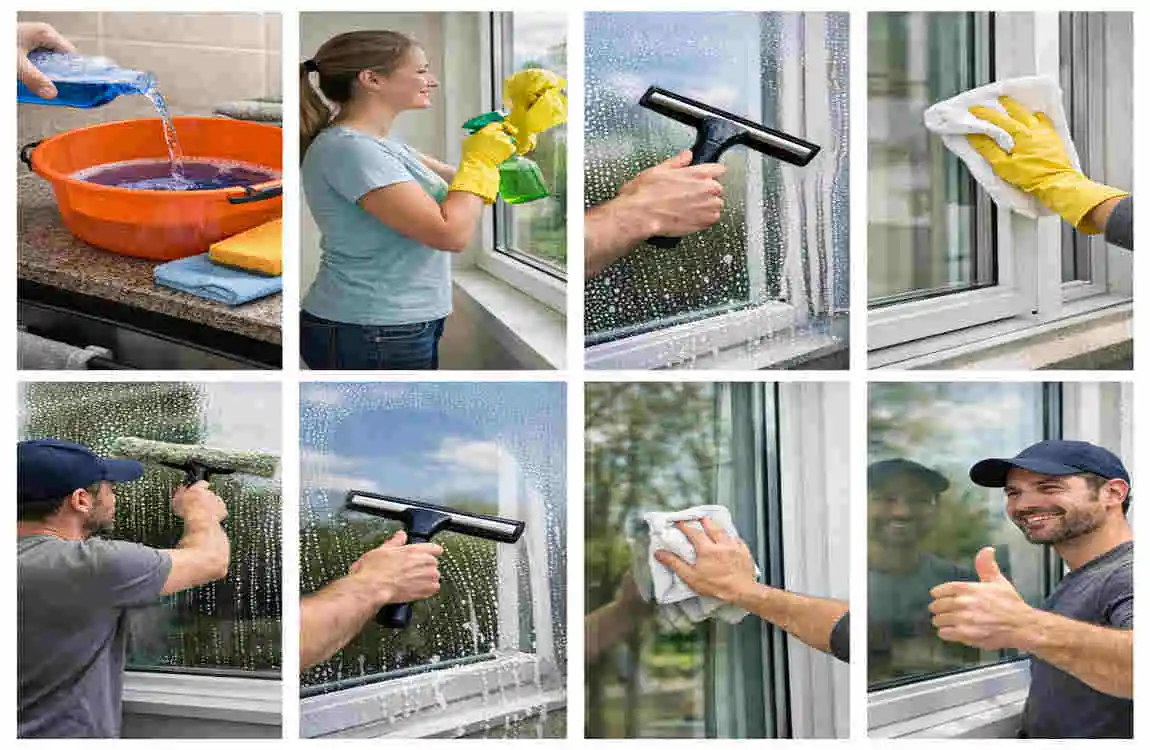
Remove Dust and Loose Dirt
Start by wiping down the frame, sill, and surrounding area. Dust and loose debris should come off before you use any liquid.
This step matters because wet cleaner can turn dust into muddy streaks. A quick dry wipe makes the rest of the job much easier.
Clean the Interior Glass
For the inside, spray a small amount of cleaner onto the glass or onto a microfiber cloth. Work from top to bottom so drips do not run over already cleaned spots.
Use a squeegee for a smooth finish, or wipe with a clean microfiber cloth. Dry the edges carefully, since small wet lines often show up near the corners.
Clean the Exterior Glass
Outside glass usually needs a little more effort. First, rinse off loose dirt so you are not rubbing grit across the surface.
Then apply your cleaning solution and use a squeegee in steady strokes. Wipe the blade after each pass if needed. Finish by drying any leftover moisture with a clean cloth.
Inspect for Streaks
Look at the glass from different angles. Some streaks only show up when light hits the window in a certain way.
If you spot marks, clean those small areas again with a dry microfiber cloth. A final touch-up often makes all the difference.
Clean Frames, Tracks, and Sills
Window cleaning is not just about the glass. Dust and dirt often collect in tracks, corners, and sills too.
Wipe these areas carefully and remove trapped debris. Keeping them clean helps your windows work better and keeps dirt from coming back onto the glass.
Common Window Cleaning Mistakes to Avoid
A few small mistakes can leave windows looking worse instead of better. Try to avoid these:
- Cleaning in direct, strong sunlight
- Using too much cleaning solution
- Rubbing with abrasive pads
- Cleaning without removing loose dust first
- Leaving water sitting on frames or sills
- Reusing dirty cloths
- Forgetting screens and tracks
- Reaching too far on ladders or unstable surfaces
When Should You Hire Professional Window Cleaners?

Windows That Are Difficult to Reach
Some windows are just not practical to clean on your own. This is especially true for second-story windows, skylights, and large glass areas.
If the window design is unusual or the surface is too high, professional help can save time and reduce risk.
Safety Considerations
Ladders, roof edges, and overreaching can be dangerous. A small slip can lead to serious injury.
If you need to stretch too far or use unstable equipment, stop and choose a safer option. This is one of the biggest reasons people hire professional window cleaning services.
Advantages of Professional Cleaning
Professional cleaners bring the right tools and experience. They can often clean faster and reach areas that are hard for homeowners to manage.
They are especially helpful for:
- High windows
- Large homes
- Skylights
- Hard-to-access glass
- Homes with many exterior panes
DIY vs. Professional Window Cleaning
FactorDIY CleaningProfessional Cleaning
Cost Usually lower Higher upfront cost
Convenience Requires your time Saves time
Equipment Basic tools Specialized tools
High Windows More difficult Easier and safer
Large Homes Time-consuming More efficient
Window Cleaning Maintenance Tips
Keeping windows cleaner for longer is not hard. A little routine care can make a big difference.
Simple Tips to Keep Windows Cleaner Longer
- Dust window areas regularly
- Clean screens from time to time
- Wipe fingerprints quickly
- Check exterior glass after storms
- Keep tracks free of debris
- Schedule deeper cleaning when needed
These habits reduce buildup and make your next cleaning session easier.
FAQ
Do you clean interior and exterior windows at the same time?
Yes, you can. In fact, cleaning both sides in the same session usually yields the best results. The methods may differ, but doing both together gives you clearer glass overall.
What is the best way to clean interior windows?
The best method for interior window cleaning is to remove dust first, then use a glass cleaner, microfiber cloth, or squeegee. Keep the amount of cleaner light to a minimum so you do not leave streaks.
How do you clean exterior windows safely?
Use stable footing, proper tools, and a safe reach. For windows that are too high or awkward, professional help is often the safest choice.
How often should I clean my windows?
Many homes benefit from cleaning several times a year. However, your ideal schedule depends on weather, dust, pollen, and how quickly your windows collect dirt.
Can I use household soap to clean windows?
You can use a mild solution, but too much soap may leave residue. A proper glass cleaner usually works better and is less likely to cause streaks.
Why do my windows have streaks after cleaning?
Streaks often happen because of too much cleaner, dirty cloths, dirty water, or poor drying technique. Cleaning in hot sun can also make streaks worse.
Should window screens be cleaned too?
Yes. Dirty screens can send dust back onto clean glass, making your windows look dirty again sooner.
Is professional window cleaning worth it?
Yes, especially for high, large, or hard-to-reach windows. It saves time, improves safety, and often gives a better finish.
| Area | Key Information |
|---|---|
| Interior Windows | Clean glass, frames, sills, and tracks to remove dust and fingerprints. |
| Exterior Windows | Remove dirt, pollen, water spots, and outdoor grime from the glass and frames. |
| Best Cleaning Time | Choose a cool, cloudy day to prevent cleaning solution from drying too quickly. |
| Cleaning Tools | Use a microfiber cloth, squeegee, bucket, mild glass cleaner, and soft brush. |
| Cleaning Frequency | Interior windows can be cleaned every few months; exterior windows may need more frequent cleaning in dusty areas. |
| Safety | Use proper ladders or professional equipment for high or difficult-to-reach windows. |
| Main Benefit | Regular cleaning improves natural light, appearance, and overall window maintenance. |
