

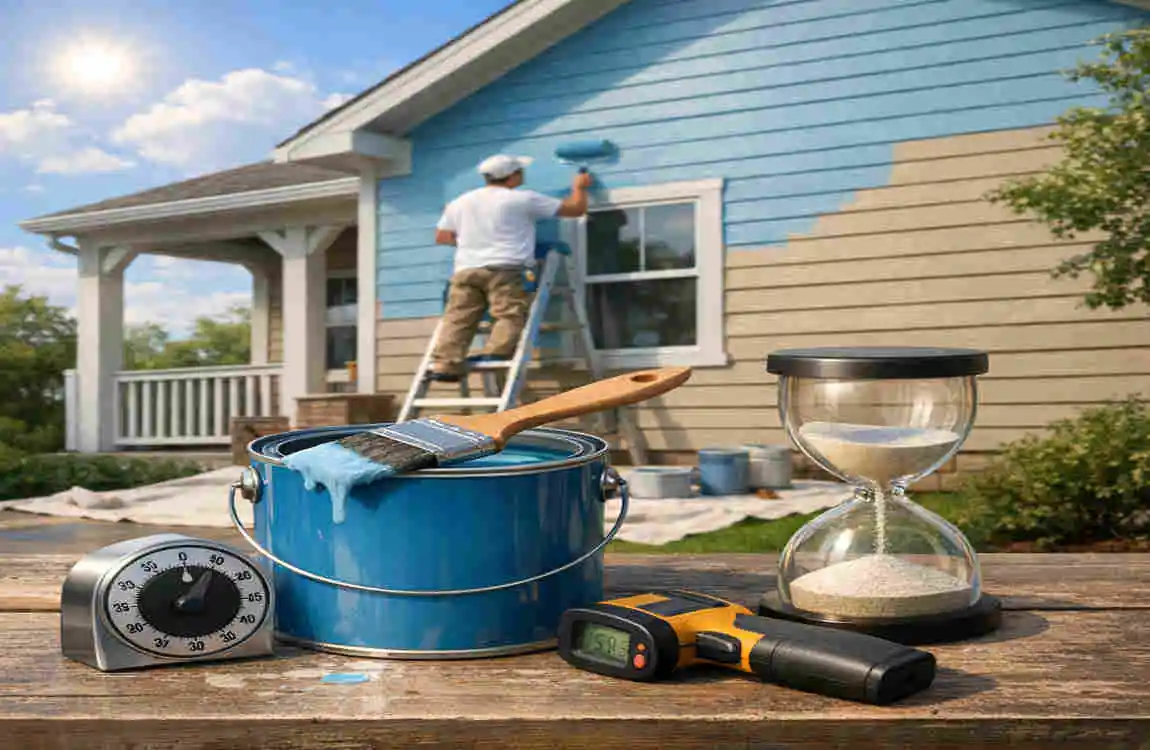
If you are planning an outside paint job, one of the first questions you will ask is how long exterior paint takes to dry. That question matters because weather, timing, and surface conditions can all affect the final result.
In many cases, exterior paint may feel dry to the touch within a few hours. But that is not the same as being fully cured. Curing takes much longer, and it affects how well the paint resists weather, wear, and moisture.
How Long Does Exterior Paint Take to Dry?
Typical Exterior Paint Drying Times
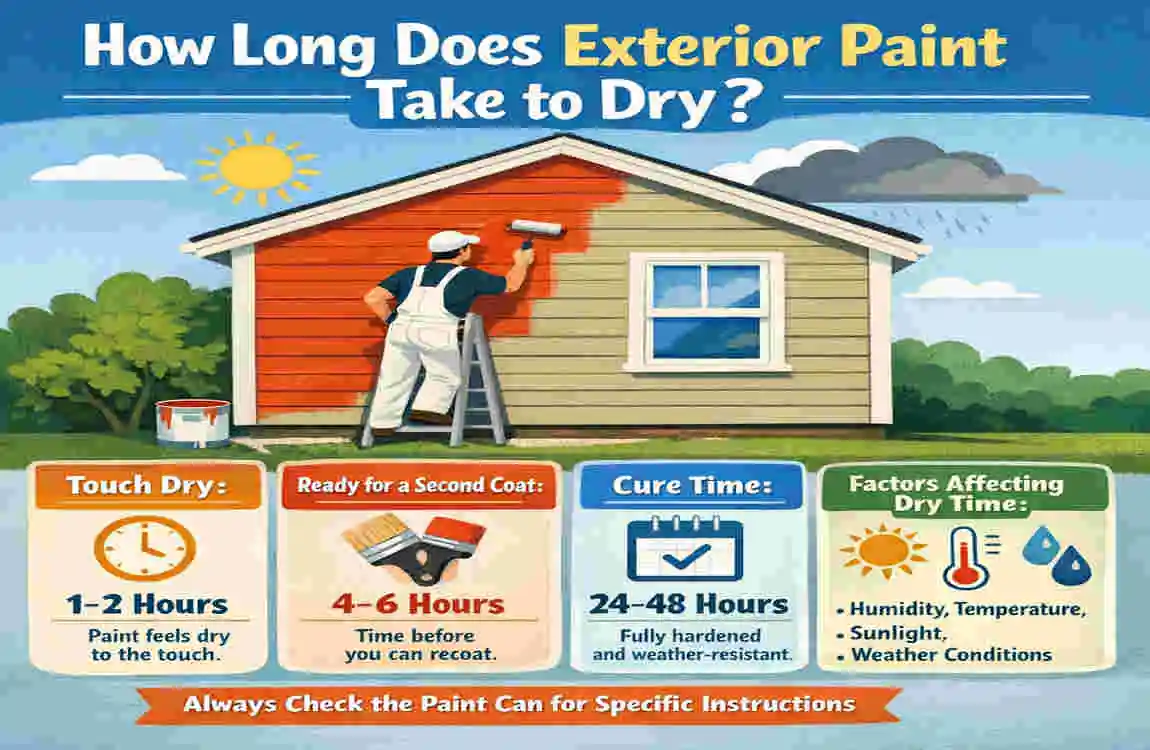
Most exterior paints follow three basic stages:
- Dry to the touch: often within 1 to 4 hours
- Ready for a second coat: often after 4 to 24 hours
- Fully cured: may take several days to a few weeks
These times are only general estimates. The product label always matters most because every paint formula is different.
The key thing to remember is that drying and curing are not the same. Drying means the surface is no longer wet. Curing means the paint has fully hardened and reached its maximum strength.
Paint Type Matters
Different paints dry at different speeds.
Latex or acrylic exterior paint usually dries faster than oil-based paint. That is why it is often preferred for homes in areas where the weather can change quickly.
Oil-based exterior paint usually takes longer to dry and cure. It can still give a durable finish, but it needs more patience.
Primer and specialty coatings may also have their own drying times. Some need longer before a top coat can be applied.
That is why checking the manufacturer’s instructions is so important. If you skip that step, you may repaint too soon and create problems later.
Factors That Affect Exterior Paint Drying Time
Temperature
Temperature plays a big role in drying. Paint usually works best in moderate weather. If it is too cold, the paint slows down. If it is too hot, the paint may dry too quickly on the surface.
Painting outside the recommended temperature range can lead to poor adhesion, uneven coverage, or a weak finish. You want the paint to dry steadily, not rush or stall.
Humidity
Humidity is one of the biggest reasons paint takes longer to dry. When the air already holds a lot of moisture, the water in the paint cannot evaporate as quickly.
That means high humidity can slow down both drying and curing. If the air feels damp, expect the paint to take longer to dry.
Wind and Airflow
A little airflow can help paint dry by moving moisture away from the surface. That can be useful when conditions are mild.
But too much wind can create problems. Strong wind may blow dust, dirt, or debris onto the fresh surface. It can also make paint dry unevenly.
Sunlight and Surface Temperature
Direct sunlight does not always help. In some cases, it makes the surface too hot too fast.
When that happens, the outer layer may dry before the paint underneath has settled properly. This can lead to brush marks, lap marks, or uneven color.
Paint Thickness
A thin coat usually dries better than a thick one. Thick coats trap moisture and take longer to harden.
That is why it is usually better to apply multiple thin coats rather than one heavy coat. It gives you a smoother finish and better drying results.
How to Know When Exterior Paint Is Dry
Dry to the Touch
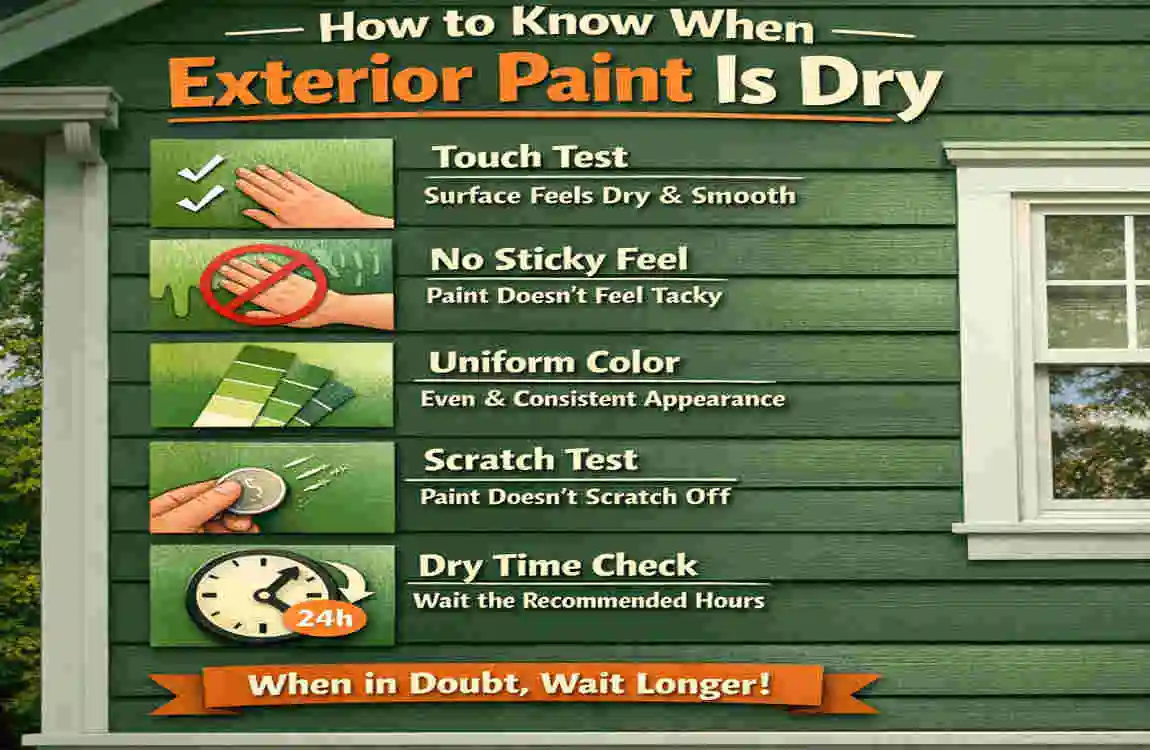
When paint is dry to the touch, it no longer feels sticky. This stage is useful, but it does not mean the job is finished.
If you touch it too soon, you may leave fingerprints, marks, or smudges. Even if the surface seems dry, it can still be soft underneath.
Ready for a Second Coat
Recoat time is different from touch-dry time. A surface may feel dry early on, but the next coat may still need to wait.
Always follow the waiting period listed by the paint maker. If you apply the second coat too early, it can cause peeling, wrinkling, or poor bonding.
Fully Cured Paint
Cured paint is fully hardened. At this stage, it has better strength, better weather resistance, and better durability.
Curing can take days or even longer, depending on the weather and the type of paint. So while the surface may look finished quickly, the deeper process continues.
How Weather Affects Exterior Paint Drying
Rain and Moisture
Rain is one of the biggest risks after painting. If moisture hits the fresh surface too soon, it can damage the finish or wash away part of the paint.
That is why you should always check the forecast before you start. You want enough dry time before the next rain arrives.
Cold Weather
Cold air slows the drying process. In very cold conditions, paint may not spread or bond properly.
Near-freezing temperatures can cause serious problems, especially if the paint is not designed for cold weather use. If possible, wait for a milder day.
Hot Weather
Hot weather can also be tricky. Paint may dry too quickly on the surface before it has time to level out.
That can lead to rough patches, lap marks, or visible roller and brush strokes. A hot, dry day may seem ideal, but excessive heat can damage the finish.
Best Weather for Exterior Painting
The best weather for exterior work is usually:
- Moderate temperatures
- Low to moderate humidity
- No rain in the forecast
- Gentle airflow
- No extreme heat or cold
These conditions help the paint dry at a steady pace and cure more evenly.
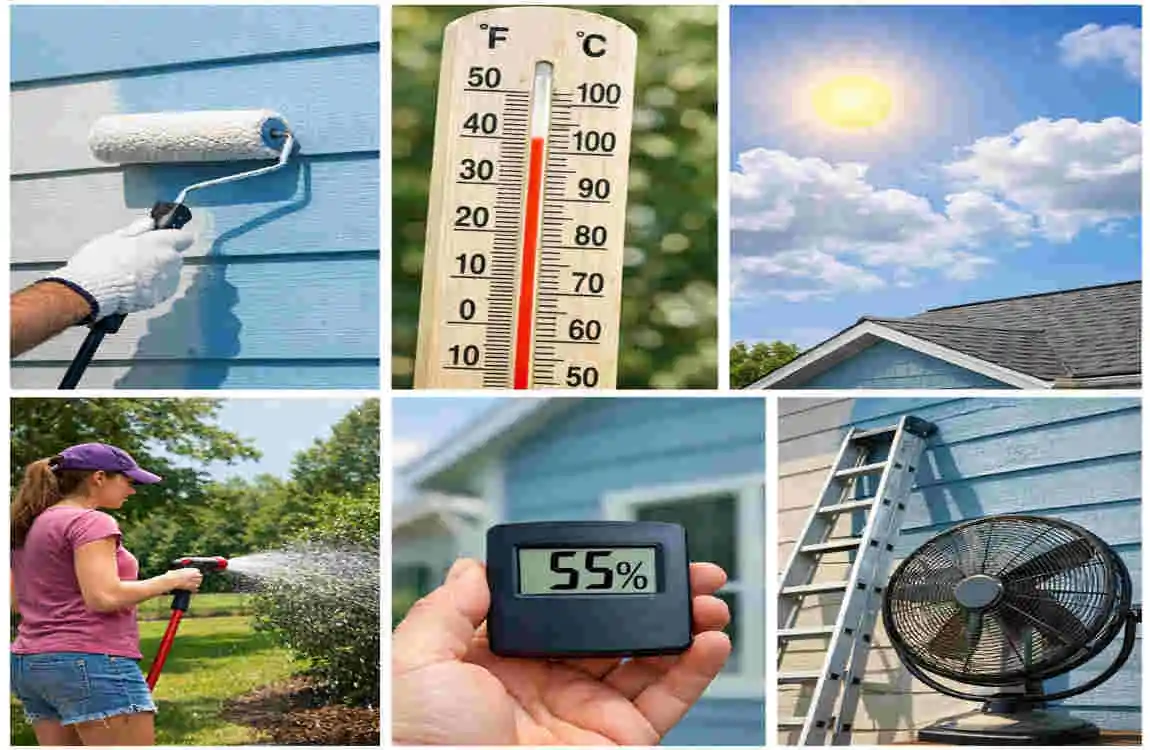
Tips to Help Exterior Paint Dry Properly
Prepare the Surface Well
A clean surface gives paint a better chance to dry and stick properly. Remove dirt, dust, grease, and loose paint before you begin.
If the surface is not prepared well, the paint may peel or dry unevenly.
Use the Right Primer
Primer helps the top coat bond to the surface. It can also improve the final look and help the paint dry more evenly.
If the surface is bare, stained, or repaired, primer is often very important.
Choose the Right Exterior Paint
Not all exterior paints are the same. Some are made for faster drying, while others are made for strength or weather resistance.
Pick a paint that fits your climate and your project. The right formula can make a big difference.
Apply Thin Coats
Thin coats usually dry better than thick ones. They also reduce drips, sagging, and uneven spots.
If you need better coverage, add another thin coat after the first one has had enough time to dry.
Follow Recoat Instructions
Do not guess when it is time for the next coat. The label tells you how long to wait.
If you paint again too soon, the lower layer may stay soft and cause problems later.
Check the Weather Before and After Painting
Always look at the forecast before you begin. You want enough dry time before rain, heavy dew, or dramatic weather changes.
It is also smart to check conditions after the paint is applied so you can protect the surface if needed.
Let the Final Coat Cure
The job is not really complete when the paint feels dry. You still need to let it cure.
During this time, avoid scrubbing, washing, or excessive touching of the surface. Give it space to harden properly.
Common Mistakes to Avoid
Here are some easy mistakes that can slow drying or ruin the finish:
- Painting before rain
- Painting in extreme heat or cold
- Using coats that are too thick
- Ignoring humidity
- Recoating too early
- Thinking touch-dry means fully cured
Avoiding these mistakes can save you time, money, and frustration.
FAQ: Exterior Paint Drying Time
How long does exterior paint take to dry?
In many cases, exterior paint dries to the touch within a few hours. But drying time depends on the paint type, weather, and surface conditions.
How long should exterior paint dry before rain?
That depends on the paint label and the forecast. Always check the product instructions because some paints need more protection time than others.
Can exterior paint dry overnight?
Yes, sometimes it can. But cool air, high humidity, or poor airflow can slow the process and leave the paint softer than expected.
How long should I wait between coats of exterior paint?
The wait time varies by product. Some paints allow recoating in a few hours, while others need much longer.
Does humidity make exterior paint dry slower?
Yes. Moist air slows evaporation, which means the paint takes longer to dry and cure.
Can I paint the exterior in hot weather?
You can, but extreme heat can cause paint to dry too quickly on the surface. That can cause uneven results.
How long does exterior paint take to cure fully?
Curing usually takes much longer than touch drying. Depending on the product and weather, it can take days or even weeks.
| Factor | Typical Drying Time | Key Tip |
|---|---|---|
| Latex/Water-Based Paint | 1–2 hours | Allow extra time before recoating |
| Oil-Based Paint | 6–8 hours | Needs good ventilation |
| Primer | 1–4 hours | Follow the product label |
| Second Coat | 2–8 hours | Make sure the first coat is fully dry |
| High Humidity | Longer than normal | Wait for drier weather |
| Hot, Dry Weather | Faster | Avoid painting in extreme heat |
| Rainy Weather | May not dry properly | Avoid painting before rain |
