

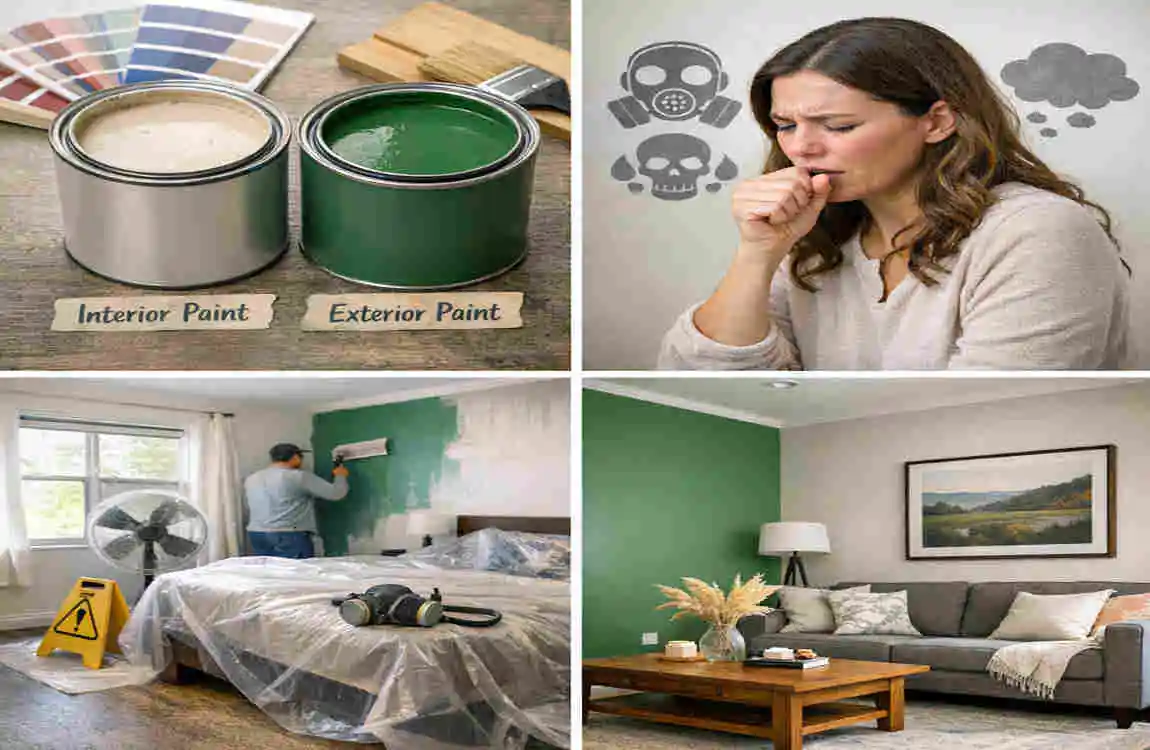
Many homeowners wonder whether exterior paint can be used inside when they have leftover paint from an outdoor project or want a tougher finish for a busy room. It is a fair question, especially when the colour looks perfect, and the can is already on hand.
The short answer is usually no: exterior paint is not the best choice for indoor walls unless the label clearly says it is safe for interior use as well. Exterior paint is designed for outdoor use, not for enclosed rooms.
What Is Exterior Paint?
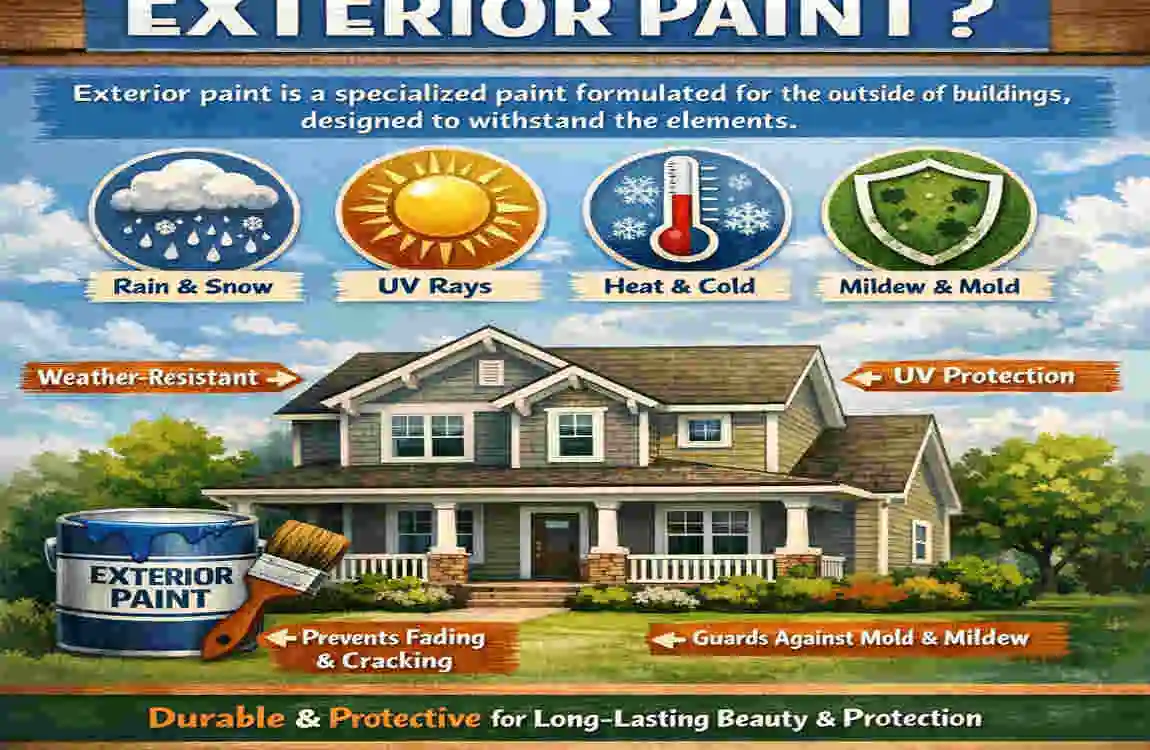
How Exterior Paint Is Formulated
Exterior paint is made to handle sunlight, rain, wind, heat, cold, and moisture. It has ingredients that help it stay flexible and withstand weather changes.
It usually includes resins, pigments, additives, and preservatives. These help the paint resist fading, cracking, peeling, and outdoor mould growth.
Exterior vs. Interior Paint
Interior paint is made for walls, ceilings, and surfaces inside the home. It is designed to be easier to live with indoors.
Exterior paint, on the other hand, is built for outdoor exposure. That means it may have stronger chemicals or additives that are useful outside but not ideal in closed indoor rooms.
Why Choosing the Right Paint Matters
Paint is not just about colour. It affects air quality, comfort, appearance, and the finish’s longevity.
If you choose the wrong type, you may deal with stronger smells, poor drying, or a finish that does not work well in your room.
Can Exterior Paint Be Used Inside?
Is Exterior Paint Safe for Indoor Walls?
In general, exterior paint is not recommended for regular indoor use unless the manufacturer clearly states it is suitable for indoor use.
That is why you should always check the label and product instructions before opening the can. Do not assume all exterior paints are safe to use indoors just because they are paint.
Why Exterior Paint May Not Be Suitable Indoors
Exterior paints may have stronger odours and release more fumes than interior paints. Outdoors, those smells spread out. Indoors, they can linger.
They may also contain additives made for harsh weather. These are helpful outside, but they are not always the best match for bedrooms, living rooms, or other enclosed spaces.
Drying and curing can also be problematic if the room lacks sufficient airflow. Poor ventilation can slow the process and make the smell stronger.
Situations Where It May Be Considered
There are some paints made for both indoor and outdoor use. These specialty products are different from standard exterior paint.
So the real rule is this: do not guess—read the label. If the can says it is suitable for interior surfaces, then it may be okay. If not, choose an interior paint instead.
Interior vs. Exterior Paint: Key Differences
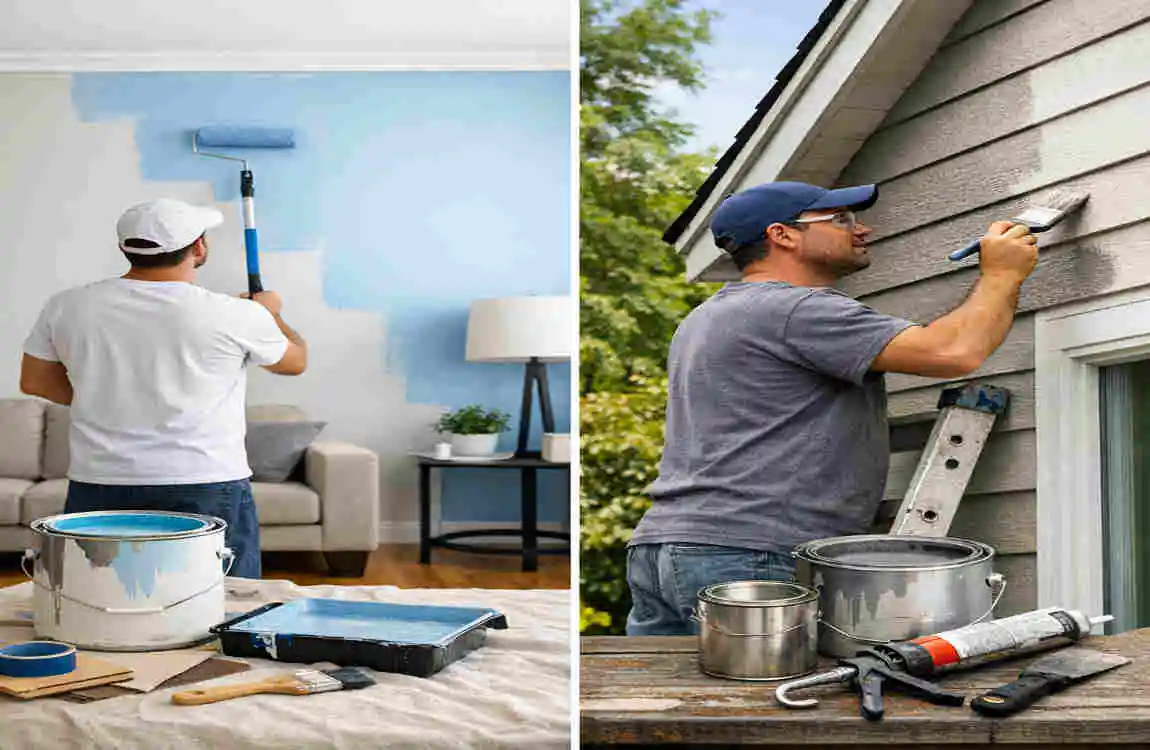
FeatureInterior PaintExterior Paint
Main purpose Indoor walls and ceilings Outdoor surfaces
Weather resistance Usually unnecessary Essential
Moisture resistance Varies by room Generally higher
Odour considerations Designed with indoor use in mind May have stronger odours
UV resistance Usually lower Higher
Best use Bedrooms, living rooms, hallways Siding, trim, outdoor walls
Durability and Weather Resistance
Exterior paint is designed to withstand rain, sunlight, and temperature fluctuations. That is why it often performs differently from indoor paint.
Interior paint does not need the same level of weather protection. Instead, it needs to handle things like touching, cleaning, and normal indoor wear.
Odour and Indoor Air Quality
Indoor spaces need products that are comfortable to breathe around. That is one reason interior paint is usually the better choice.
Some exterior paints have a stronger smell that can be hard to live with inside, especially in smaller rooms or homes with poor ventilation.
Finish and Appearance
Exterior paint may have a different feel or sheen than interior paint. It may also look slightly different once it dries.
For indoor walls, you usually want a smooth finish that complements your decor and withstands regular use. Interior paint is made with that in mind.
Risks of Using Exterior Paint Indoors
Strong Paint Odours
One of the biggest problems is the smell. Exterior paint can have a more noticeable odour, which becomes more obvious in closed rooms.
If you are sensitive to smells, the room can be uncomfortable for several days or longer.
Ventilation Concerns
Any painting project needs good ventilation. But with exterior paint, ventilation becomes even more important.
You should always follow the product’s safety instructions and keep windows or fans running when possible.
Longer Drying or Curing Issues
Paint does not just dry on the surface. It also needs time to cure, which means it fully hardens.
Heat, humidity, and poor airflow can slow that process. If the paint is not made for indoor use, the results may not be ideal.
Problems With the Final Finish
Exterior paint may not give you the same smooth result you would expect on indoor walls. It can sometimes feel too rough, too glossy, or just not right for close-up indoor surfaces.
That matters more in places where people often touch walls, like hallways, bedrooms, and family rooms.
Children, Pets, and Sensitive Spaces
Be extra careful in spaces used by children, pets, or people with sensitivities. Nurseries, bedrooms, and kitchens should use products made for indoor living.
If a room is occupied often, interior-rated paint is usually the safer and more practical choice.
When Should You Use Interior Paint Instead?
Bedrooms and Living Rooms
For common living spaces, interior wall paint is the better option. It usually has lower odour and is easier to live with.
Many homeowners also like washable or low-odour finishes for these rooms.
Kitchens and Bathrooms
Kitchens and bathrooms need paint that handles moisture and cleaning well. That does not mean exterior paint is best.
Instead, choose an interior formula made for humid spaces or frequent wiping.
Ceilings and Trim
Ceilings and trim often need different finishes. For example:
- Matte for ceilings
- Eggshell for soft wall coverage
- Satin for easy cleaning
- Semi-gloss for trim and doors
These finishes are usually available in interior paint lines.
Choosing Paint for Your Specific Surface
Always match the paint to the surface. Drywall, wood, masonry, and metal can all need different products.
Surface prep matters too. Clean, sand, patch, and prime where needed so the paint sticks well and looks better.
How to Choose the Right Paint for Indoor Projects
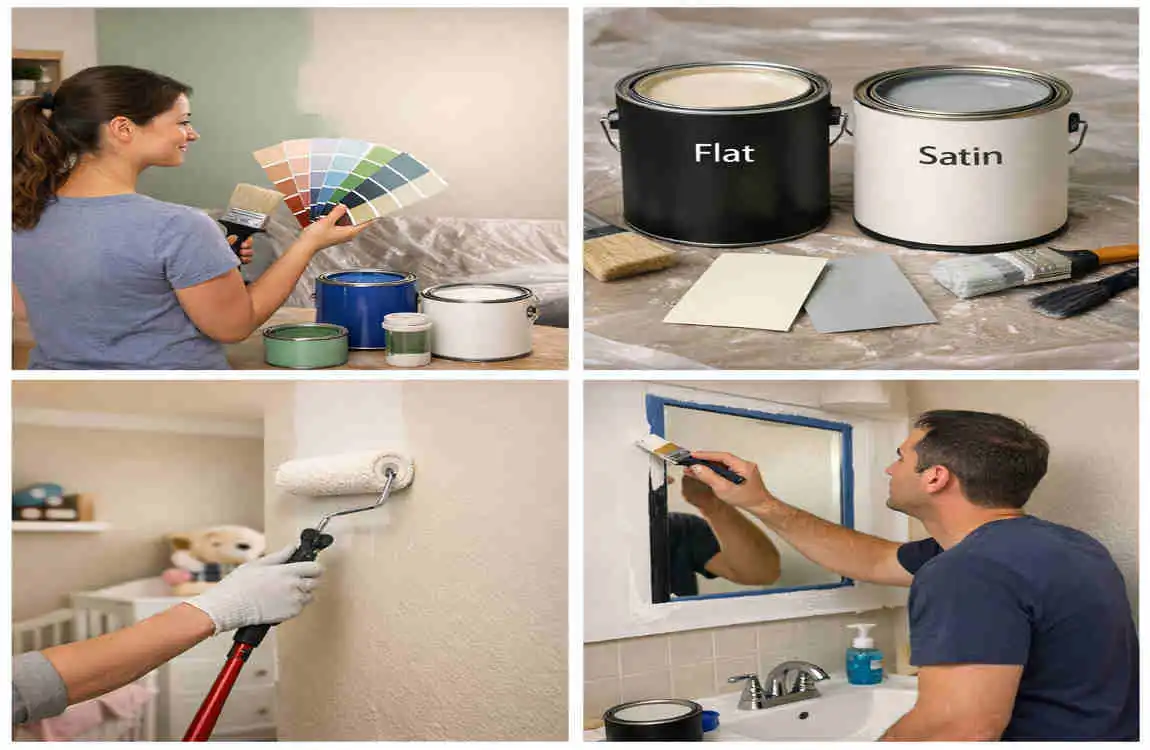
Check the Product Label
This is the first and most important step. Look for clear interior-use directions.
Do not rely on words like “tough” or “weather-resistant” alone. Those do not mean the paint is good for indoor rooms.
Read the Manufacturer’s Instructions
The can or product sheet usually explains how to apply the paint, how long it takes to dry, and what kind of cleanup is needed.
These details matter more than many people think. They help you avoid mistakes and get a better finish.
Consider Low-Odor and Low-Emission Options
If you are painting inside a home you live in, low-odour and low-emission products are often a smart choice.
They are easier to handle in enclosed spaces and usually create a more comfortable painting experience.
Match Paint to the Room
Think about how the room is used. A hallway needs different paint than a bathroom. A bedroom needs a different feel than a garage or laundry space.
Choosing based on the room helps you get better results and fewer problems later.
Prepare the Surface Properly
Good paint needs a good surface. Before painting, you should:
- Clean the wall
- Repair cracks or holes
- Sand rough spots
- Prime if needed
- Use the right finish for the room
This simple prep work can improve how the paint looks and how long it lasts.
FAQ: Can Exterior Paint Be Used Inside?
Can exterior paint be used inside?
Usually, no. Interior paint is normally the better choice for indoor walls and rooms. Only use exterior paint inside if the label clearly allows it.
Is exterior paint toxic indoors?
That depends on the exact product. Always read the label and follow safety instructions before using any paint indoors.
Can I use exterior paint on an interior door?
It is better to use a product made for interior use. The surface and label both matter.
Can exterior paint be used on interior wood?
Only if the product is rated for that use; for indoor wood, choose a coating made for the job.
What happens if you use exterior paint inside?
You may notice a stronger odour, slower curing, and a finish that is not as suitable for indoor use.
Is interior paint better than exterior paint for walls?
Yes, for indoor walls, interior paint is usually better because it is made for household conditions.
Can exterior and interior paint be mixed?
It is best not to mix them unless the manufacturer says it is okay.
| Aspect | Exterior Paint | Interior Paint |
|---|---|---|
| Can it be used inside? | Generally not recommended | Designed for indoor use |
| Durability | Made to resist weather and moisture | Made for normal indoor conditions |
| Odor & VOCs | May have stronger fumes | Usually formulated for better indoor air quality |
| Finish | Often tougher and more flexible | Available in finishes suited to walls and ceilings |
| Best use | Exterior walls, doors, trim | Bedrooms, living rooms, kitchens, and hallways |
| Safety tip | Choose paint specifically labeled for interior use | Follow the manufacturer’s instructions |
