

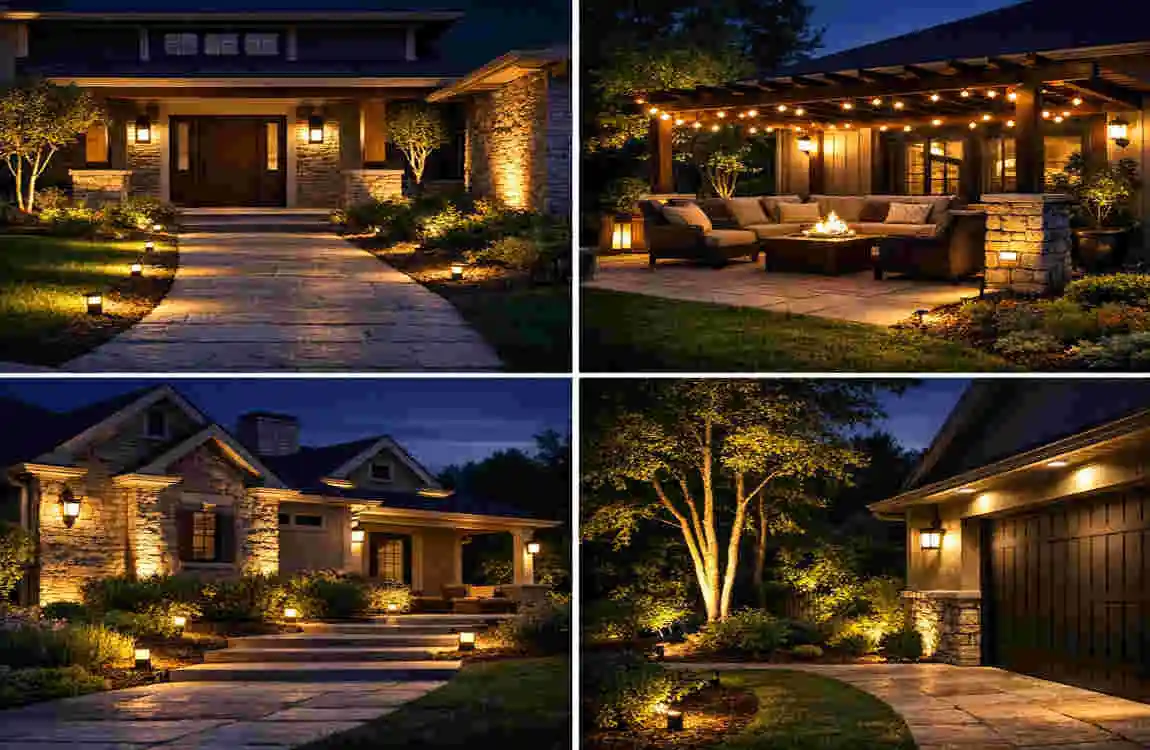
Knowing how to light your house exterior can make a big difference in how your home looks and feels after dark. Good lighting improves safety, highlights your home’s best features, and makes outdoor spaces more useful in the evening.
The best part is that you do not need a complicated design to get great results. A few well-placed lights can create a warm, welcoming look without making your yard feel too bright or crowded.
Why Exterior House Lighting Matters
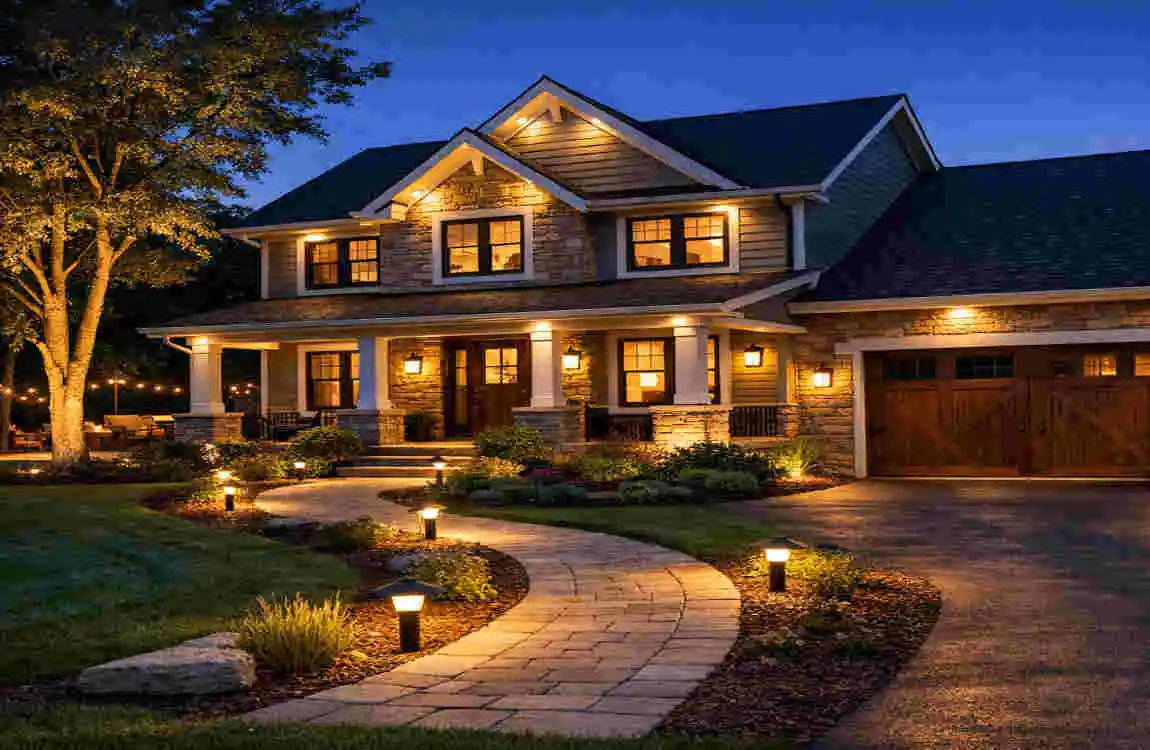
Improves Home Safety
Outdoor lighting helps reduce dark spots around your home. That matters because dark areas can make it harder to see steps, paths, uneven ground, and changes in level.
When you light pathways, stairs, and entrances, you make it easier for family members and guests to move around safely. It also helps reduce the risk of trips and falls.
This is one of the most practical reasons to invest in exterior lighting for your home. It is not only about style. It is about everyday safety.
Enhances Curb Appeal
Lighting can make a home look more polished at night. It can highlight doors, windows, stonework, plants, and other details that disappear in the dark.
A well-lit front exterior feels welcoming. It gives your home a finished look and helps it stand out in a simple, tasteful way.
If you want your home to look attractive from the street, lighting is one of the easiest tools you can use.
Makes Outdoor Areas More Usable
Patios, decks, porches, and gardens become much more useful when they are properly lit. Instead of ending your evening when the sun goes down, you can keep enjoying the space.
Soft lighting can make a seating area feel calm and comfortable. Brighter lighting can help when you need to cook, walk, or host guests outside.
How to Light Your House Exterior
Start With a Simple Lighting Plan
Before buying anything, walk around your property at night. Look at which areas feel too dark and which features you want to highlight.
Think about three simple lighting goals:
- Safety lighting for steps, paths, and entrances
- Task lighting for places where you need to see clearly
- Accent lighting for features you want to show off
When you plan first, you avoid buying lights that do not really solve a problem.
Choose the Right Type of Exterior Light
Different light types serve different purposes. A good exterior plan usually combines a few of them instead of relying on just one bright fixture.
Here are some of the most useful options:
- Wall-mounted lights for entrances and siding
- Porch and entry lights for front doors
- Pathway lights for walkways
- Landscape spotlights for trees and feature walls
- Floodlights for larger dark areas
- Step lights for stairs and risers
- String lights for patios and entertaining
- Solar lights for low-cost accent lighting
- Motion-sensor lights for security and convenience
You do not need every type. Start with the areas that matter most.
Light the Front Door and Entryway
Your front entrance should feel easy to see and welcoming. This is one of the most important parts of exterior lighting.
Wall sconces on both sides of the door can work very well if the space allows it. They create balance and make the entrance easier to see.
If the area is smaller, one strong fixture above the door may be enough. Just make sure the light is bright enough to help people see clearly, but not so bright that it creates glare.
Try to match the fixture style to your house’s architecture. That helps the lighting feel like part of the design rather than an afterthought.
Illuminate Walkways and Driveways
Walkways and driveways should be easy to follow at night. This is where pathway lights can really help.
Place lights along the route in a way that feels even and natural. You do not need to line every inch of the path. Balanced spacing is usually enough.
Also make sure the lights do not become obstacles themselves. Keep them out of the main walking path and away from places where people might bump into them.
Highlight Landscaping and Architecture
Spotlights and accent lights can be used to show off trees, shrubs, columns, stone walls, or other design features. This adds depth and character to the outside of the home.
You can also use uplighting to illuminate trees or walls. Downlighting, on the other hand, can create a softer and more natural effect.
The key is restraint. If everything is lit equally, nothing stands out. A few well-chosen highlights work much better than trying to light the whole yard like a stadium.
Best Exterior Lighting Ideas for Different Areas
Front Yard Lighting
Front yard lighting should combine safety and style. The goal is to help people move safely while also making the home look attractive.
A good front-yard setup might include pathway lights, a porch light, and one or two accent lights near a tree or an architectural detail.
This creates a layered look that feels complete but not overwhelming.
Backyard Lighting
Backyard lighting usually works best when it feels soft and relaxed. You want light where people gather, sit, or walk, but you do not want the yard to feel harsh.
String lights are popular for patios and decks because they create a warm, inviting mood. Soft wall lights or low landscape lights also work well.
If you entertain often, think about where guests will sit, stand, and move around. That will help you place lights in the right spots.
Porch Lighting
A porch needs enough light for visibility, but it should still feel comfortable. A warm fixture near the seating area or front door usually works well.
If the porch is used often in the evening, choose practical, pleasant lighting. You want people to feel welcome, not blinded.
Garage and Driveway Lighting
Driveways and garage areas often need brighter light because they are used by both cars and people. Motion-sensor lights are a smart choice here.
They help you see clearly when arriving home and can also support security by turning on when movement is detected.
Garden and Landscape Lighting
Garden lighting should feel gentle and natural. The goal is to show the shape of the plants and paths, not overpower them.
Low-level lighting around trees, flower beds, and garden features can add beauty without making the space feel too busy.
Choosing the Right Colour and Brightness
Warm vs Cool Exterior Lighting
Light colour changes the overall feel of the exterior.
Warm white light creates a cosy, welcoming feel. It is often the best choice for homes because it feels softer and more natural.
Cool white light looks brighter and cleaner. It can be useful in areas where visibility matters more than mood, such as driveways or security zones.
For many homes, warm light works best in front entries, patios, and gardens.
Avoid Excessive Brightness
Brighter is not always better. Too much light can create glare, reduce comfort, and make your home feel less inviting.
It can also bother neighbours if the light spills into nearby windows or yards. A better approach is to direct light only where you need it.
Think of lighting as a way to shape the space, not flood it.
Energy-Efficient Exterior Lighting Options
LED Exterior Lights
LED lights are one of the best choices for outdoor use. They use less electricity and usually last much longer than traditional bulbs.
They also come in many shapes, colours, and brightness levels, so it is easy to find one that fits your home.
Solar-Powered Lights
Solar lights are useful when you want a simple and low-cost lighting option. They are often a good choice for pathways, gardens, and decorative areas.
They work best in spots that get enough sunlight during the day. If the location is too shaded, performance may be weaker.
Motion Sensors and Timers
Motion sensors are great for security and convenience. They turn lights on when movement is detected, which helps save energy and adds peace of mind.
Timers are also useful. They can turn lights on at sunset and off later in the evening without any effort from you.
Smart Exterior Lighting
Smart lights give you even more control. You can often use schedules, remote controls, or apps to manage them.
This helps you reduce energy waste and adjust your lighting more easily as your needs change.
Exterior Lighting Safety Tips
Use Outdoor-Rated Fixtures
Always use fixtures designed for outdoor use. These are built to handle rain, moisture, dust, and changing temperatures better than indoor lights.
Check that the fixture is suitable for the location where you plan to install it.
Protect Electrical Connections
Outdoor wiring and connections must be protected properly. Moisture and exposed wires can cause serious problems if not handled properly.
If you are unsure about the electrical setup, it is better to hire a qualified professional.
Prevent Trip Hazards
Cords, wires, and low fixtures should never create a walking hazard. Keep everything neat and away from paths where people move regularly.
This is especially important around stairs, patios, and driveways.
Consider Professional Installation
If the project involves new wiring, new circuits, or mains electricity, a professional electrician is the safest choice.
That is especially true if you are unsure about local electrical rules or outdoor safety requirements.
Common Exterior Lighting Mistakes to Avoid
It is easy to make simple lighting mistakes when you start. The good news is that most of them are easy to avoid.
Some common mistakes include:
- Installing too many lights
- Using overly bright fixtures
- Creating harsh glare
- Ignoring steps and pathways
- Mixing too many fixture styles
- Pointing lights into windows
- Forgetting about tree growth
- Using indoor-rated fixtures outdoors
- Leaving lights on all night unnecessarily
If you avoid these problems, your lighting will look much cleaner and work much better.
How to Create a Balanced Exterior Lighting Design
Use Layers of Light
The best exterior lighting typically combines ambient, task, accent, and security lighting.
Ambient light gives the overall glow. Task light helps with specific jobs. Accent light highlights features. Security light helps protect the property.
When you combine these layers, the whole exterior feels more complete.
Keep the Design Consistent
Try to repeat similar fixture styles around the home. That creates a smoother and more organised appearance.
You do not need everything to match perfectly, but the design should feel coordinated.
Focus on Important Areas First
You do not need to light every inch of the property. Start with the most important places: the front door, the path, the driveway, and key outdoor gathering spots.
That approach keeps the design simple and effective.
Test the Lighting at Night
Lights can look very different once it gets dark. After installation, walk outside and see how everything feels.
Adjust the angle, brightness, or placement if something looks too harsh or too dim.
Simple Exterior Lighting Ideas on a Budget
You do not need a big budget to improve your home’s outside lighting.
Here are some low-cost ideas that can still make a real difference:
- Install solar pathway lights
- Replace old bulbs with LED bulbs
- Add simple wall or porch fixtures
- Use motion-sensor lights in important areas
- Hang string lights on a patio or porch
- Highlight one or two landscape features
- Use timers to reduce wasted electricity
Small changes can have a surprisingly big effect.
Maintenance Tips for Exterior House Lights
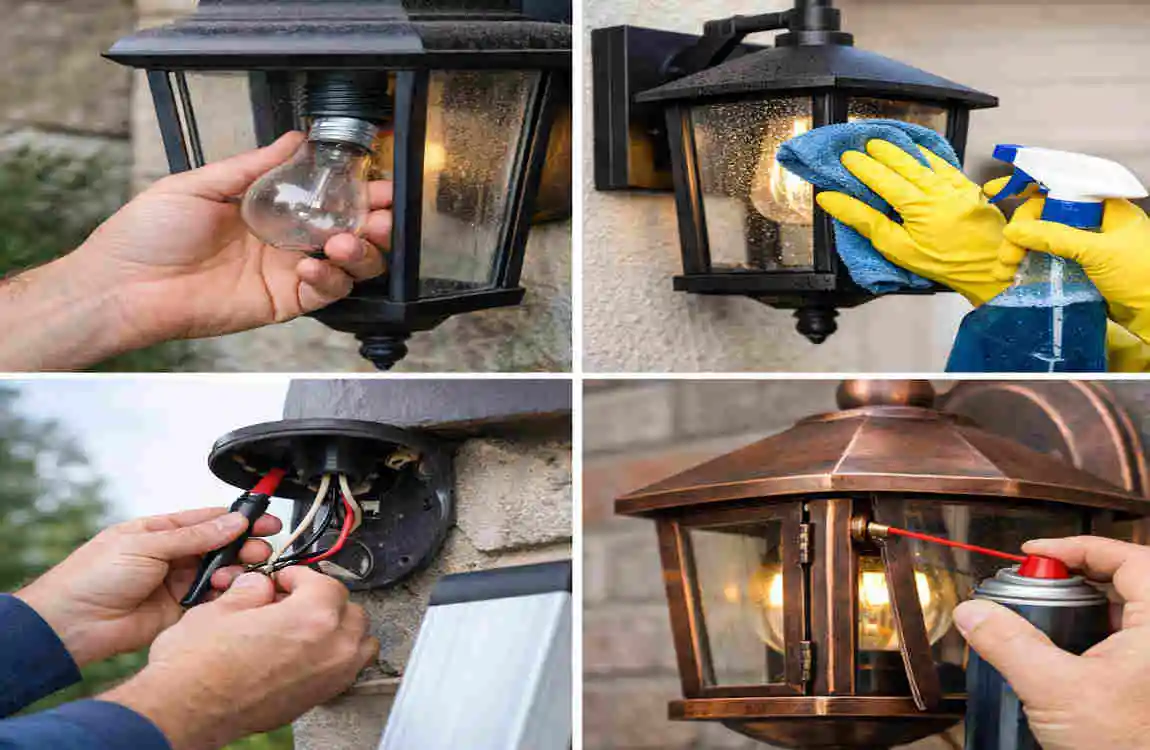
Clean Fixtures Regularly
Outdoor lights collect dust, insects, and dirt over time. Cleaning them helps keep them bright and looking their best.
A quick wipe now and then can make a big difference.
Check Bulbs and Connections
If a light stops working, check the bulb first. Also inspect the fixture for visible damage or loose parts.
Regular checks help you catch small issues early.
Trim Nearby Plants
Trees and shrubs can block light if they grow too close. Keep plants trimmed so they do not cover fixtures or cast unwanted shadows.
Inspect After Severe Weather
Storms, heavy rain, and strong winds can affect outdoor fixtures. After bad weather, take a quick look and make sure everything is still secure.
Frequently Asked Questions
What is the best way to light your house exterior?
A balanced mix of entry, pathway, landscape, and security lighting is usually the best approach. Focus on the areas that matter most instead of trying to light everything equally.
What colour light is best for outside a house?
Warm white lighting is often the most popular choice for residential exteriors because it feels welcoming and comfortable.
How bright should exterior house lights be?
It depends on the area. Entrances and pathways need enough brightness for safety, while decorative areas can use softer light.
Should exterior house lights be warm or cool?
Warm light is usually better for homes because it feels softer. Cool light can be useful where stronger visibility is needed.
Are LED lights good for exterior house lighting?
Yes. LED lights are efficient, long-lasting, and available in many styles for outdoor use.
Are solar lights good for lighting a house exterior?
Yes, especially for pathways, gardens, and decorative areas that get plenty of sunlight.
How can I make my house exterior look better at night?
Highlight the front entrance, landscaping, and architectural details with layered lighting rather than bright, even lighting throughout.
How can I light my house exterior cheaply?
Use LED bulbs, solar pathway lights, motion-sensor fixtures, and simple string lights. Focus on the most useful areas first.
| Exterior Lighting Idea | Best For | Main Benefit |
|---|---|---|
| Wall Lights | Entry doors and walls | Adds brightness and style |
| Pathway Lights | Walkways and driveways | Improves safety at night |
| Spotlights | Trees and architectural features | Highlights attractive details |
| String Lights | Patios and porches | Creates a cozy atmosphere |
| Step Lights | Stairs and steps | Helps prevent trips and falls |
| Motion Sensor Lights | Garages and entrances | Provides light when needed |
