

Power cuts can happen anywhere, and even a short outage can be stressful. Your fridge stops cooling, the lights go out, and internet access may disappear. That is why many UK homeowners keep a generator as a backup power source.
If you are learning how to use a generator to power your house in the UK, the most important thing to remember is safety first. A generator can help you keep essential appliances running, but only if you use it the right way. Used improperly, it can pose serious risks, such as carbon monoxide poisoning, fire, or electrical damage.
What Is a Home Generator?
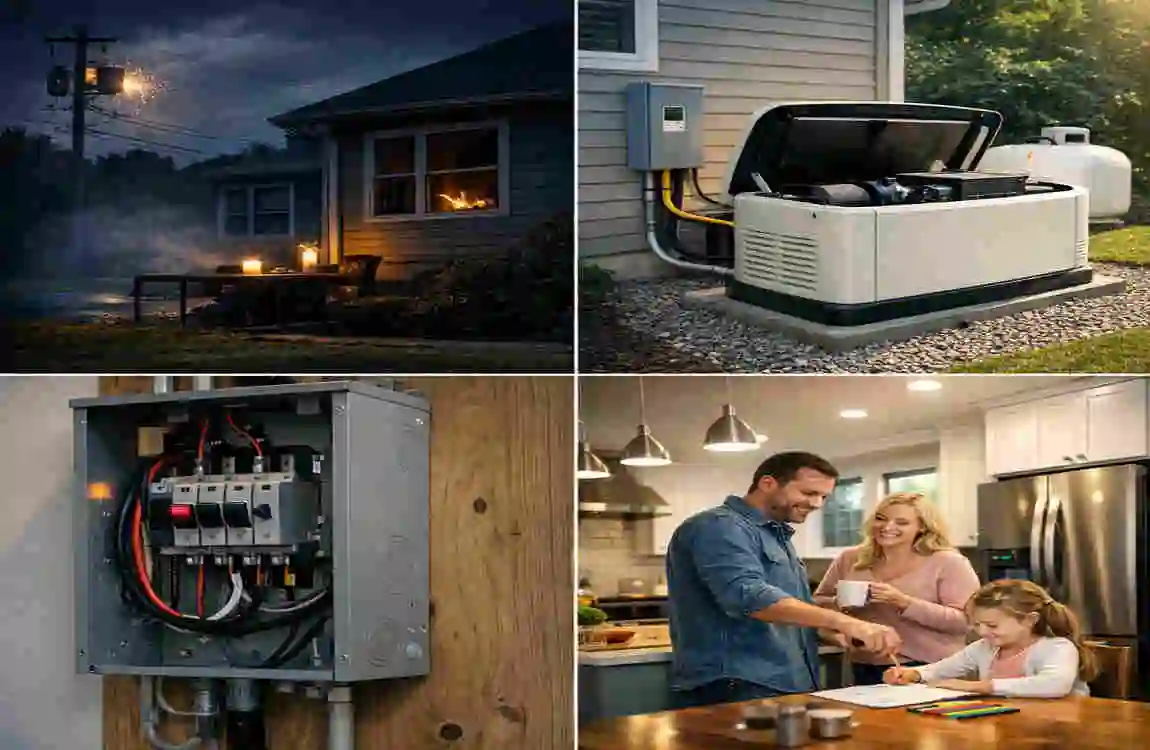
A home generator makes electricity when the mains supply is unavailable. It usually runs on petrol, diesel, or gas. The engine generates power, which is then used by appliances like lights, a fridge, a boiler fan, or a Wi-Fi router.
There are two main types:
- Portable generators: Good for short-term backup and essential items
- Standby generators: Installed permanently and can power more of the home automatically
Which Generator Is Best for Home Use?
Here is a simple comparison:
Generator TypeBest ForMain AdvantageMain Limitation
Portable Basic backup power Lower cost Needs manual setup
Inverter Sensitive electronics Quieter and cleaner power Usually more expensive
Standby Whole-home backup Automatic operation Higher installation cost
For most households, a portable or inverter generator is enough for essential power. If you want automatic backup for the whole property, a standby unit is the better choice.
How to Use a Generator Safely
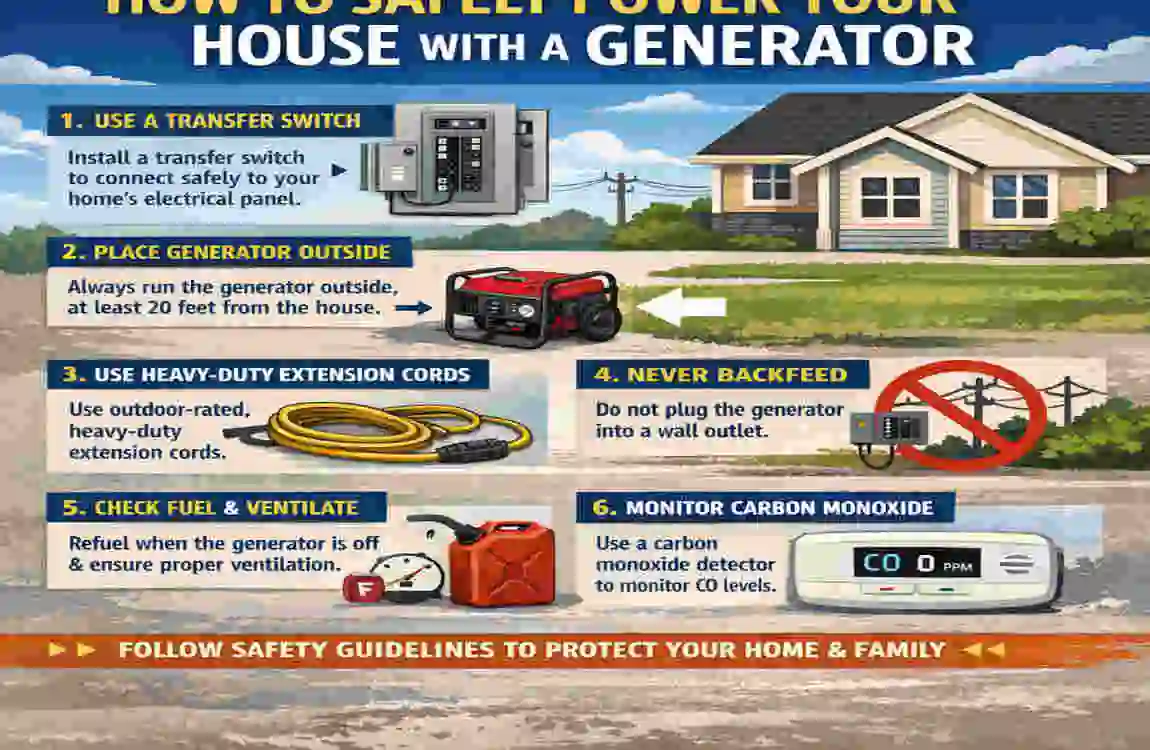
If you want to know how to use a generator to power your house in the UK, follow these simple steps:
- Place it outside. Always keep the generator outdoors in a dry, open space.
- Keep it away from doors and windows. This helps prevent dangerous carbon monoxide from entering the home.
- Use proper extension leads or a transfer switch. Heavy-duty outdoor leads are fine for a few appliances. For a safer home connection, use a transfer switch installed by a qualified electrician.
- Start the generator correctly. Read the manual and let it warm up before plugging in appliances.
- Power only essential items. Focus on the fridge, lights, heating controls, and phone chargers.
- Watch the load. Do not overload the generator. Check the wattage of each item before plugging it in.
- Refuel carefully. Turn it off and let it cool before adding fuel.
Key Safety Tips
Generator safety is simple when you follow the basics:
- Never use a generator indoors.
- Do not run it in a garage, even with the door open.
- Use a carbon monoxide detector in your home.
- Keep it dry and protected from rain.
- Do not overload it
- Store fuel safely
- Check cables for damage before use.
These steps are especially important in the UK, where homes are often close together, and ventilation can be limited.
Common Mistakes to Avoid
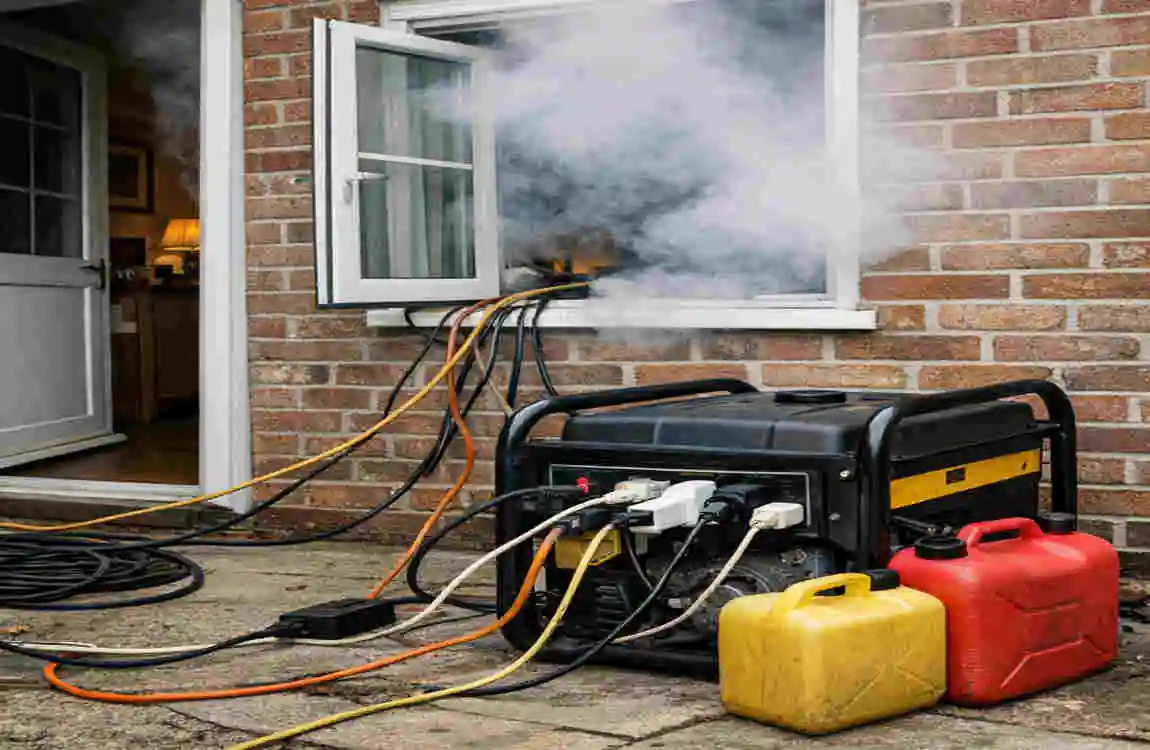
Many homeowners make the same errors during a power cut. Avoid these:
- Running the generator inside the house
- Using thin or damaged extension cords
- Trying to power too many appliances
- Refueling while the generator is hot
- Ignoring maintenance checks
Maintenance Matters
A generator should be ready before an emergency happens. Check the oil, clean the air filter, and run the unit now and then to keep it in good condition. If it uses fuel, store it properly and replace old fuel as needed.
FAQ
Can I connect a generator directly to my house?
Not safely. A transfer switch is the safer option because it helps prevent backfeeding.
Is it legal to use a generator at home in the UK?
Yes, it is legal, as long as you follow electrical safety rules and proper installation standards.
What size generator do I need?
For basic home backup, many households use a generator in the 3,000-7,500-watt range.
Can I use a generator in the rain?
No. Keep it dry and use a suitable covered outdoor area if needed, while still keeping ventilation open.
What is the biggest danger?
The biggest danger is carbon monoxide poisoning from using the generator too close to the home or indoors.
| Step | How to Safely Power Your House with a Generator |
|---|---|
| Calculate Power Needs | Add up the wattage of all appliances/devices you want to power; choose a generator that produces more amps than needed |
| Position Generator Outside | Place generator at least 20 feet from doors, windows, and vents; keep it dry and on a dry surface under an open canopy |
| Install a Transfer Switch | Have an electrician install a power transfer switch (per National Electrical Code) to connect generator to house wiring safely |
| Avoid Backfeeding | Never plug generator into a wall outlet; this “backfeeding” risks electrocution for utility workers and neighbors |
| Use Proper Cords | Plug appliances directly into generator or use heavy-duty, outdoor-rated extension cords rated equal to/beyond appliance load |
| Refuel Safely | Turn generator off and let it cool before refueling; store fuel in approved safety cans outside living areas |
| Prevent CO Poisoning | Install carbon monoxide alarms on every home level; never use generator inside homes/garages/basements |
| Avoid Overloads | Stagger operating times for equipment to prevent generator overload; read instructions to avoid overheating |
