

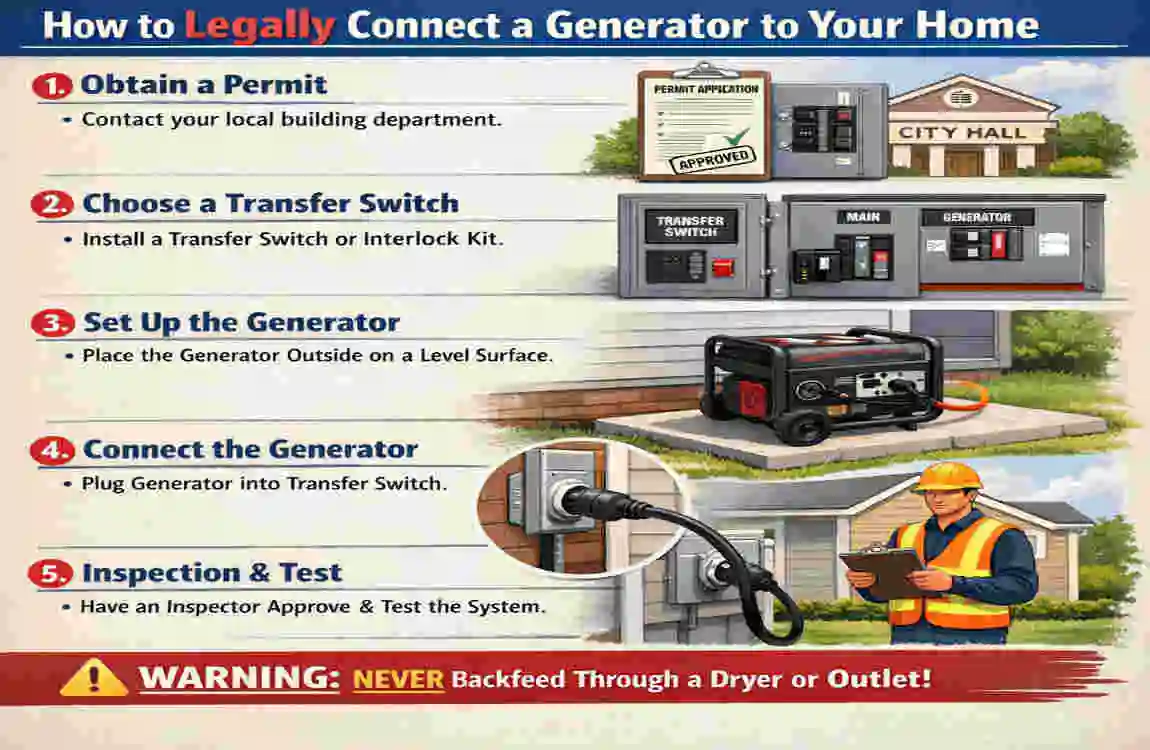
If you lose power in the middle of a storm, the first thing you may think is, “Is it legal to connect a generator to your house?” The short answer is yes, it can be legal—but only when you use the proper, code-approved method. That usually means a transfer switch, an interlock kit, or a professionally installed standby generator system.
Why Legality Matters for Generator Connections
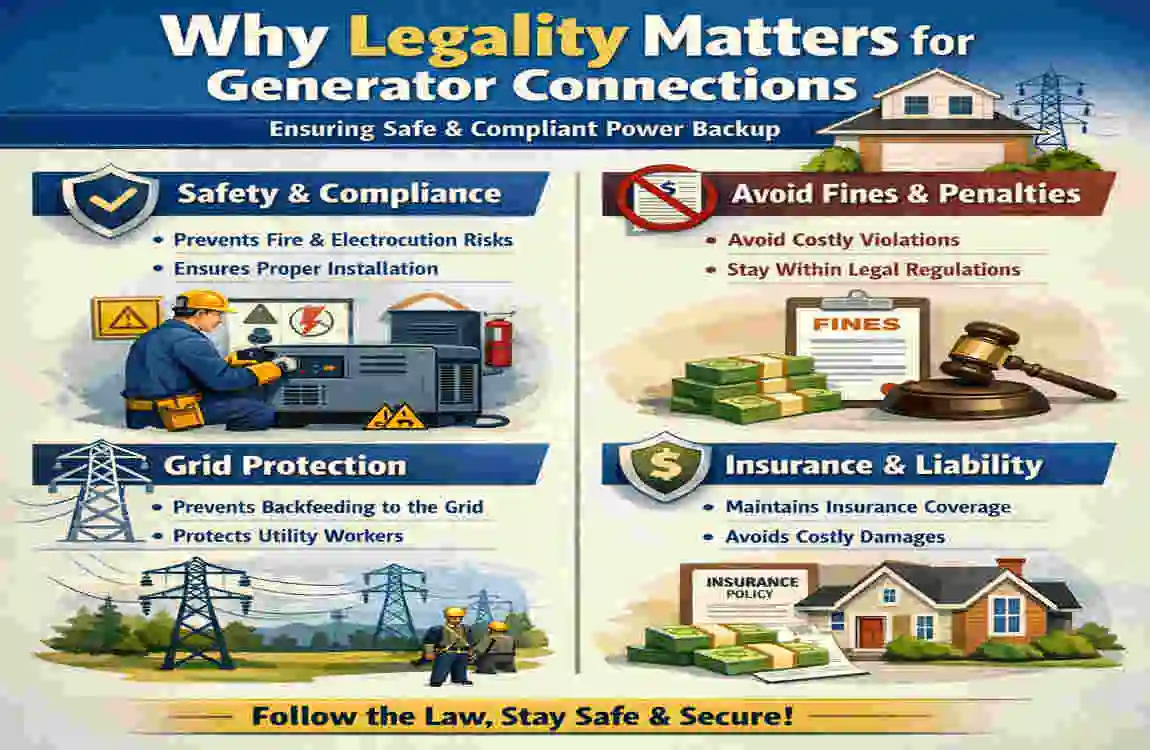
A generator is useful, but it is still a powerful electrical source. Once it is connected to a home, it becomes part of your electrical system. That means safety rules matter a lot.
Backfeeding is the biggest danger.
Backfeeding happens when electricity from your generator flows backwards into the utility grid. This can happen if a generator is plugged into a home carelessly, especially through a wall outlet or with an incorrect cord setup.
This is not just a technical problem. It is a serious safety issue.
Utility workers often assume power lines are dead during an outage. If your generator is backfeeding electricity into those lines, a worker may get shocked or killed. That is one of the main reasons illegal generator hookup methods are taken so seriously.
Backfeeding can also damage your home. If the generator is connected the wrong way, it can overload circuits, burn wiring, or destroy appliances. In the worst cases, it can start a fire.
Insurance and legal problems can follow.
Many homeowners think the risk ends with safety, but it does not. If a fire or shock accident happens because of an unpermitted or unsafe generator installation, your insurance company may investigate. If they find that the setup was illegal or did not comply with the code, they may reduce or deny a claim.
That can turn a power outage solution into a costly headache.
There may also be local fines. In some areas, unpermitted electrical work can result in penalties ranging from a few hundred dollars to several thousand dollars. Even if the fine is not huge, the repair costs and legal trouble can add up fast.
Codes exist for a good reason.
In the U.S., the National Electrical Code (NEC) sets the basic safety standard for generator connections. NEC Article 702 covers optional standby systems, which include many home backup power setups. Local building departments often add their own rules on top of the NEC.
That means “legal” does not just mean “it works.” It means the installation complies with proper electrical rules, is inspected if required, and is built to keep your family and your neighbourhood safe.
When you follow the code, you get more than compliance. You get reliability, better performance, and peace of mind.
The real cost of doing it wrong
A lot of people look at generator hookup as a weekend project. But one mistake can be expensive. A failed installation may lead to:
- damaged appliances
- burned wiring
- insurance disputes
- inspection failures
- utility hazards
- fines for unpermitted work
That is why a legal generator installation is not just about following the law. It is also about protecting your home, your wallet, and the people around you.
Types of Generators and Connection Methods
Not every generator connects to a home in the same way. The legal method depends on the type of generator you own and how much of your house you want to power.
Portable generators
Portable generators are the most common choice for homeowners who want backup power without a huge upfront cost. They are usually small enough to move and store, and to run only when needed.
The legal ways to connect a portable generator to your house are usually:
- a manual transfer switch
- An interlock kit with a proper inlet box
- a professionally designed backup circuit setup
These methods keep generator power separated from utility power. That is the key idea. The generator should never be able to power the utility line.
Portable generators are popular because they are more affordable. Many basic setups cost a few hundred dollars to a couple of thousand dollars, depending on the size of the home and the wiring work needed.
The downside is convenience. You may need to start the generator by hand, move cords, and switch power sources manually. That is fine for many families, but it is not as smooth as a full standby system.
Inverter generators
Inverter generators are usually quieter and more fuel-efficient than traditional portable units. They are a good fit if you want to run a few key devices rather than the whole house.
Many inverter generators are used with extension cords or power strips, or are connected directly to appliances. In many cases, they do not require a house wiring hookup.
That means they can be simpler from a legal standpoint. If you are only powering a refrigerator, a phone charger, a fan, or a few lights, an inverter generator may be enough.
Still, you need to be careful. Even if you are not wiring it into the home, you should never run it indoors or in a garage. Exhaust fumes are dangerous and can become deadly in minutes.
Standby or whole-home generators
Standby generators are the most automatic option. These units are usually installed outside the home and connected through an automatic transfer switch (ATS).
When the utility power fails, the ATS detects the outage and switches the house over to generator power. When utility service returns, it switches back. You do not have to plug in cords or manually flip major breakers.
This is the cleanest and most seamless legal generator hookup method for whole-home use. It can power many or all of your circuits, including larger items such as air conditioners, well pumps, and electric heat, depending on the size.
The tradeoff is cost. Standby systems can be expensive, especially when you factor in equipment, gas or propane hookup, permits, and professional installation. But they are also the most convenient and often the most code-friendly solution for long-term backup power.
Generator types at a glance
Generator Type, Legal Connection Method, Pros, Cons, Permit Needed?
Portable Manual transfer switch or interlock kit. Affordable, flexible, easy to store. Manual setup, less convenience. Sometimes, especially if wiring is added
Inverter: Usually, no house wiring; appliance cords only. Quiet, fuel-efficient, simple for small loads. Limited power output. No, if not connected to home wiring
Standby / Whole-Home Automatic transfer switch + subpanel Automatic, powerful, seamless Higher cost, more installation work Yes, usually electrical and gas permits
This table gives you the big picture. If you want the safest and most dependable solution, a transfer switch or ATS is the most common legal answer.
Permits and Legal Requirements
One of the biggest questions homeowners ask is whether they can install a generator without paperwork. The answer depends on the type of system. For many permanent installations, permits are required.
What permits may be needed?
A home generator permit can involve one or more of the following:
- electrical permit for wiring and transfer equipment
- mechanical or gas permit if the generator uses natural gas or propane
- building permit if a concrete pad, enclosure, or structural work is involved
- inspection approval before the system can be used
If the setup is simple and does not connect to home wiring, you may not need a permit. But once you add a transfer switch, hardwired panel work, or fuel-line work, permits are often required.
That is why the phrase “permits needed to legally connect a generator to your house” is such an important one. The answer isn’t always the same everywhere, but permanent systems usually require approval.
How the permit process usually works
The process is usually straightforward if you know what to prepare.
Check local rules first
Start with your local building department or electrical authority. Ask what they require for generator installs. Local rules may cover things like:
- setback distance from doors and windows
- noise limits
- fuel line rules
- disconnect requirements
- inspection timing
In some places, the generator must be placed several feet away from openings to reduce the risk of exhaust entering the building. In dense urban areas, there may also be tighter spacing or noise restrictions.
Prepare your documents
You may be asked to submit:
- a site plan showing where the generator will sit
- a load calculation for your house
- equipment specifications
- the installer’s license information
- a contract or scope of work
This paperwork helps the permit office verify that your system is sized correctly and installed safely.
Submit the permit request
Once the documents are ready, the contractor or homeowner can submit the application. Some cities still use paper forms, but many now use online systems.
Permit fees vary widely. Electrical permits may be relatively inexpensive, while more complete applications with gas or structural work may cost more.
Schedule inspections
After the installation is complete, an inspector may check the wiring, transfer switch, grounding, fuel connections, and placement. If the system passes, you are cleared to use it.
If something fails inspection, it usually has to be fixed before the system can be turned on.
Why DIY work can get tricky fast
Many people are handy around the house. That is great for painting, shelves, and basic maintenance. But a generator connection is different.
Once you work inside a main panel, connect a transfer switch, or handle fuel lines, you are dealing with systems that affect the whole home. That is where licensing often matters.
Professional electricians understand local code, load sizing, grounding, disconnect rules, and inspection requirements. They also know how to avoid unsafe wiring mistakes that may not be obvious at first glance.
DIY work may seem cheaper at the start. But if it leads to a failed inspection or an unsafe condition, the real cost can be much higher.
Regional rules can vary a lot.
Some regions are strict. Others are more flexible. In some cities, a homeowner may need detailed drawings and multiple inspections. In rural areas, the process may be simpler.
If you live in an area with dense housing, severe weather, or strong code enforcement, do not assume the rules are loose. Always check first.
The safest rule is simple: if the generator is permanently connected to your house, expect a permit.
Safety Standards and Codes You Should Know
Legal generator installations are built on safety standards. If you understand the basics, it is much easier to avoid mistakes.
NEC rules are the foundation
In the U.S., the National Electrical Code is the main rulebook. It explains how backup systems should be wired, grounded, protected, and isolated from the utility grid.
For home backup systems, the NEC focuses on preventing dangerous power overlap. That means your generator must never energise the utility lines when the grid is down. A transfer switch or interlock kit helps make that happen.
The NEC also supports proper sizing and grounding. These details may sound small, but they are critical. A system that is too small can fail during use. A system that is grounded incorrectly can become dangerous during a fault.
Load sizing matters more than most people think.
A generator should match the load you actually plan to run. Bigger is not always better, but too small is a problem.
If you try to power too many devices at once, the generator may trip, stall, or wear out faster. That is why many installers use an 80% load rule for safe operation. In simple terms, you should not run a generator at full capacity all the time.
A proper load calculation helps you choose the right size. It also helps you decide whether you need:
- whole-home backup
- selected essential circuits only
- a portable system for short outages
Exhaust and carbon monoxide risks are serious.
A generator produces power but also emits exhaust fumes. That includes carbon monoxide, which is invisible and deadly.
Never run a generator indoors, in a garage, or too close to doors, windows, vents, or open soffits. Even with the door open, a garage is not a safe place to run one.
A good installation includes safe placement, proper ventilation, and, in many cases, carbon monoxide detectors inside the home.
Common myths to ignore
A lot of generator trouble starts with bad advice. Here are a few myths that are worth ignoring:
- “Just plug it into a wall outlet.”
- This is dangerous and may cause backfeeding.
- “If it powers the house, it must be legal.”
- Not true. It must also be installed in accordance with the code.
- “A heavy extension cord solves everything.”
- Not if the generator is connected to the home panel improperly.
- “Permits are only for new homes.”
- False. Many backup power systems need permits in existing homes, too.
When in doubt, follow the code and ask a licensed electrician. That is the simplest way to keep your generator-to-house connection legal.
Step-by-Step Legal Installation Guide
If you want a safe and legal setup, it helps to think in steps. A good installation is planned, permitted, tested, and inspected.
Assess your power needs
Start with the basics. Ask yourself what you really need during an outage.
Do you want to keep only essentials running, or do you want the whole house powered?
Common priority items include:
- refrigerator and freezer
- lights
- Wi-Fi and phone charging
- sump pump or well pump
- medical equipment
- furnace fan
- a few outlets
If you only want a few circuits, a portable generator with a transfer switch may be enough. If you want automatic whole-home power, a standby system may be a better option.
A load calculator can help you estimate your total wattage. This step matters because it guides the rest of the project.
Choose the right generator and transfer equipment
Once you know your load, choose the equipment that fits it.
For many homes, the decision comes down to this:
- portable generator + manual transfer switch
- portable generator + interlock kit
- standby generator + ATS
If you want low cost and flexibility, a portable setup is attractive. If you want convenience and automation, a standby generator is a better option.
Well-known brands like Generac and Kohler are common in the standby space. Still, the brand matters less than the overall design, sizing, and installation quality.
Hire a licensed electrician when required
This is the step many homeowners should not skip.
A licensed electrician can:
- wire the transfer equipment
- connect the inlet box or ATS
- confirm grounding and bonding
- Check load calculations
- Verify breaker sizing
- prepare for inspection
If gas piping is involved, a licensed gas fitter or plumber may also be needed.
Trying to save money by skipping pro help can backfire quickly. A bad connection is usually more expensive to fix than a proper install would have been in the first place.
Get your permits and schedule inspections
Do not wait until the last minute. Permits should usually be approved before the work begins.
The typical sequence is:
- apply for permits
- wait for approval
- Complete the installation
- schedule inspection
- correct anything that fails
- Receive approval to operate
This process may feel slow, but it protects you. It also makes it easier to sell your home later, since buyers often want proof that electrical work was done properly.
Test the system before an outage happens
This is the step many people forget.
Do not wait until a storm is already hitting your area. Test the generator in calm weather. Make sure the transfer switch works, the load is balanced, and the generator can handle the circuits you chose.
A test run lets you catch small problems before they become emergency problems.
It also gives you a chance to learn the system. If your family knows how the switch works, everyone will be calmer when the power goes out for real.
A simple installation checklist
Here is a quick checklist you can use before a legal install:
- Confirm your power needs
- Choose the right generator type
- Check local permit rules
- Hire licensed help if needed
- install transfer equipment or ATS
- arrange inspection
- test the system under load
A good generator setup should feel safe and simple. If it feels confusing, that is usually a sign that the planning stage needs more attention.
Costs, Maintenance, and Incentives
A legal generator setup is an investment. The final cost depends on the generator size, wiring work, fuel setup, and local permit fees.
Typical cost ranges
ItemCost Range
Transfer Switch $400–$1,200
Pro Install $2,000–$5,000
Permits $100–$500
Standby Generator System $5,000–$15,000+
Full Whole-Home Install $8,000–$20,000+
These are broad ranges, but they give you a realistic starting point.
A portable generator with a transfer switch is usually the lower-cost path. A standby generator with automatic switching, gas line work, and inspection is more expensive, but it also offers much more convenience.
Maintenance keeps the system ready.
A generator should not sit forgotten after installation. It needs regular attention.
Basic maintenance usually includes:
- oil changes
- filter replacement
- battery checks
- weekly or monthly exercise runs
- fuel checks
- transfer switch testing
- annual professional service
If you want the system to work during an emergency, treat it like essential equipment, not a spare tool in the garage.
Incentives may lower your cost.
Some energy programs offer rebates or incentives for efficient backup systems or home resilience upgrades. These programs change often, so it is smart to check your local utility and energy office.
You may also find value in choosing a model that uses fuel efficiently or one that supports cleaner operation. Even without a rebate, better fuel efficiency can save money over time.
The biggest point is this: the cheapest generator is not always the best choice. A system that is legal, inspected, and well-maintained usually costs less in the long run than a bargain setup that causes problems later.
Common Mistakes and How to Avoid Them
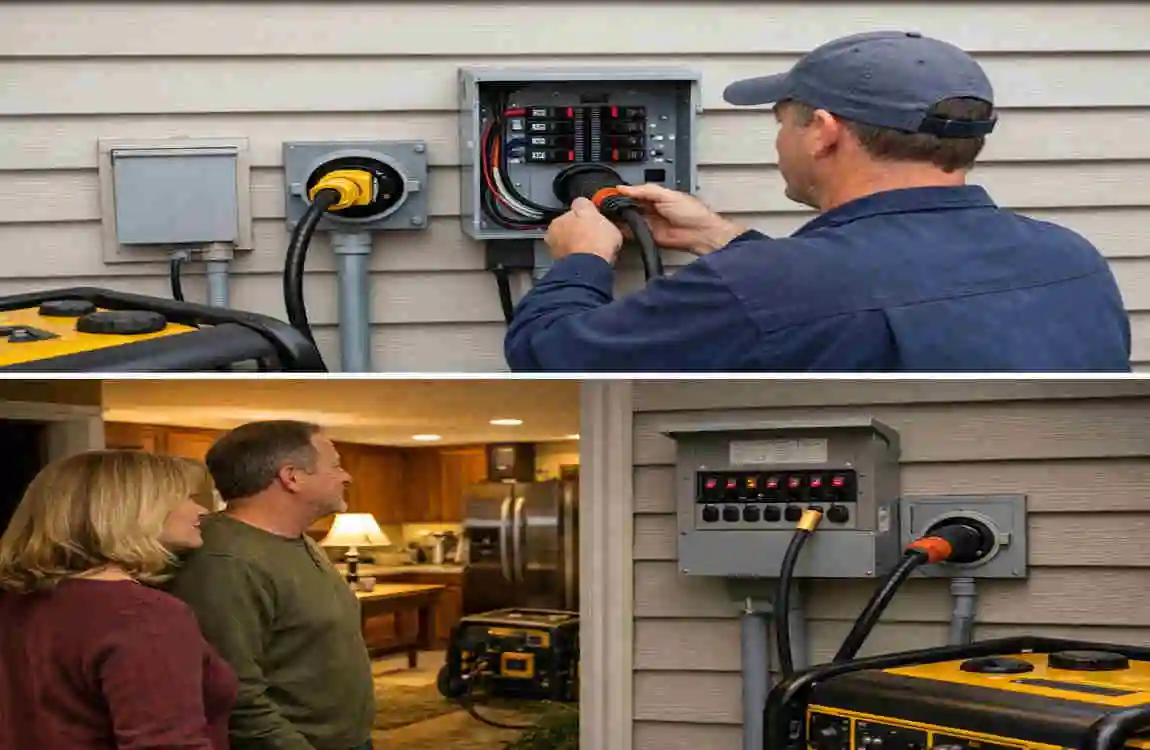
Many generator problems are avoidable. The same mistakes keep showing up, and most of them come from trying to cut corners.
Backfeeding the house
This is the most dangerous mistake of all. Plugging a generator into a wall outlet or using the wrong cord setup can send power where it shouldn’t.
How to avoid it: use a transfer switch, interlock kit, or approved backup system.
Choosing the wrong size generator
A generator that is too small will struggle under load. One that is oversized may cost more than you need to spend.
How to avoid it: do a load calculation first and think about which circuits matter most.
Ignoring carbon monoxide risk
Running a generator too close to the luxury home is a serious safety issue. Exhaust can drift into open windows, vents, or doors.
How to avoid it: place the generator outdoors, away from openings, and use CO detectors inside.
Skipping permits
Even if the installation seems simple, local rules may still require approval.
How to avoid it: check with the building department before work starts.
Using unlicensed help for complex work
Some jobs are fine for a skilled homeowner. But panel work, fuel connections, and whole-home systems often need a licensed professional.
How to avoid it: hire an electrician for the parts that affect the main electrical system.
If you want your generator’s house connection to stay legal, the safest mindset is simple: do it once, do it right, and do it to code.
FAQs
Is it legal to connect a generator to your house?
Yes, it is legal when you use the correct method, such as a transfer switch, interlock kit, or properly installed standby system. It is usually illegal or unsafe to connect it in a way that could backfeed the utility grid.
Is it legal to connect a portable generator to your house panel?
Usually yes, but only through the proper equipment. A portable generator can be connected to a home panel with a manual transfer switch or interlock kit. That setup must comply with local electrical regulations.
Do I need a permit to connect a generator to my home?
For many permanent or hardwired setups, yes. Electrical permits are common, and gas or plumbing permits may also be required. Simple plug-in use with extension cords may not require a permit, but any panel connection usually does.
Can I install a generator myself?
Sometimes, but it depends on the system and your local rules. Many homeowners can handle basic use of a portable generator. But installing a legal generator, a transfer switch, panel work, or a gas connection often requires a licensed professional.
What is the safest legal way to connect a portable generator?
For most homes, the safest option is a manual transfer switch or an interlock kit installed by a qualified electrician. That keeps generator power separate from utility power and helps prevent backfeeding dangers.
