

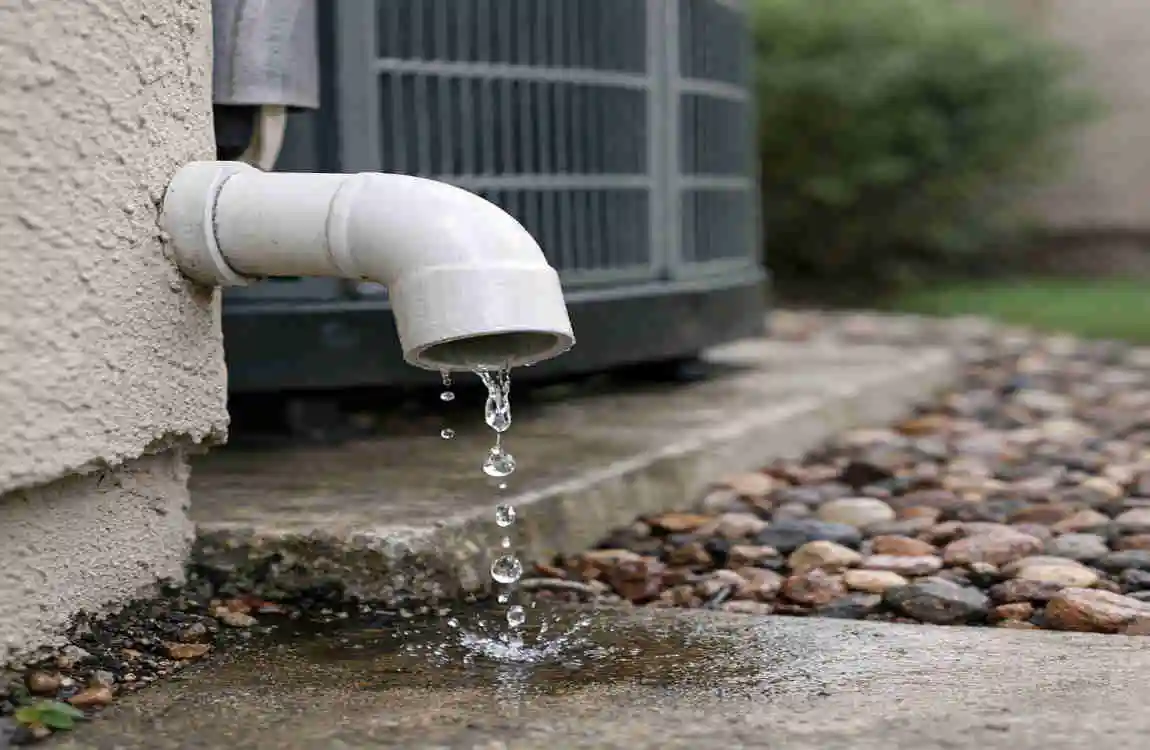
If you are asking whether my exterior AC drain pipe should be dripping water, the short answer is yes; often it should. In many homes, a little water coming from the outside drain pipe is normal.
That water is usually condensation. Your AC pulls moisture out of the indoor air as it cools your home, and that moisture needs somewhere to go. The drain pipe gives it a safe exit point.
Should My Exterior AC Drain Pipe Be Dripping Water?
Direct Answer
Yes, water dripping from an exterior AC drain pipe is often normal.
When your air conditioner runs, it removes heat and moisture from the air inside your home. That moisture collects inside the system and drains out through the pipe.
What Happens Inside an Air Conditioner?
Here is the simple version of what happens:
- Warm indoor air passes over the evaporator coil
- Moisture in the air turns into water
- That water drips into a condensate drain pan
- The water moves out through the drain pipe
So when you see water outside, you are often just seeing the system doing its job.
Why Does the Pipe Release Water Outside?
The pipe releases water outside because that is where the condensate is supposed to go. It keeps the water away from walls, ceilings, and floors.
You may notice more dripping when:
- The weather is hot
- The air is humid
- The AC has been running for a long time
That is usually not a problem. It simply means the unit is removing more moisture from the air.
How an Exterior AC Drain Pipe Works
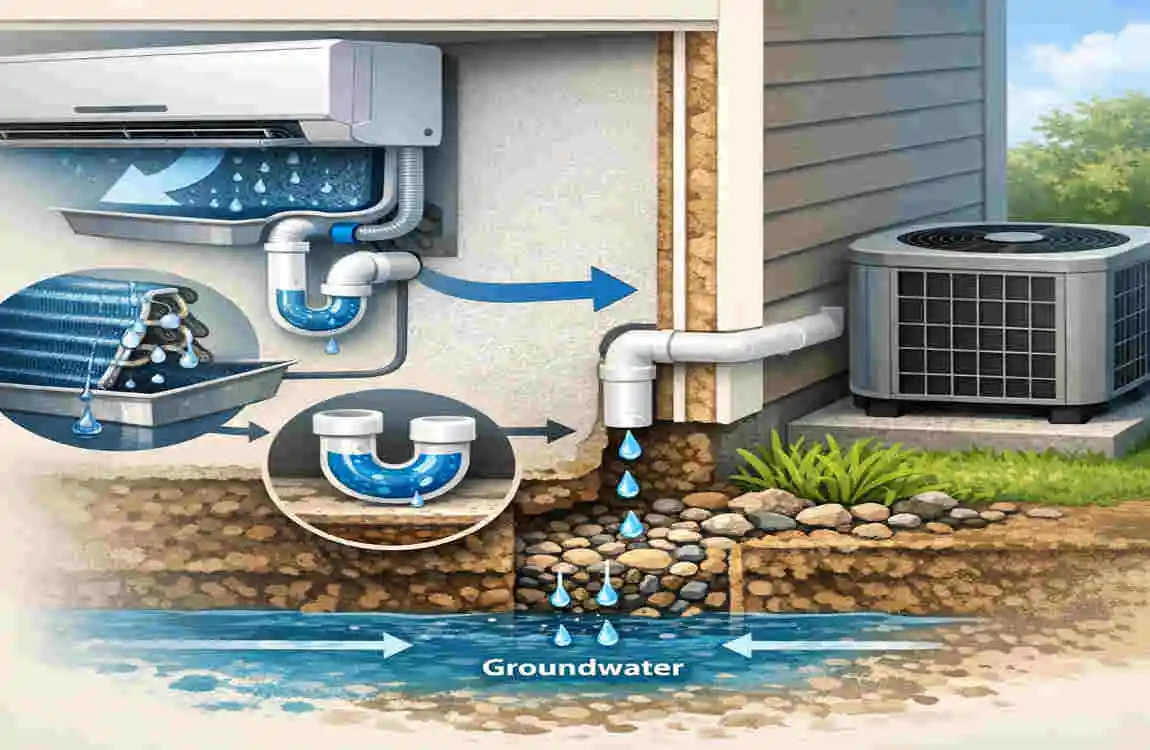
Main Parts of an AC Drainage System
Most air conditioners use a basic drainage setup with a few key parts:
- Evaporator coil
- Condensate drain pan
- Primary drain line
- Exterior drain outlet
- Secondary or emergency drain system
Each part has a job. The coil creates condensation, the pan catches it, and the pipe carries it outside.
How Water Moves Through the System
Gravity does most of the work. Once the water enters the drain line, it flows downward and exits at the drain outlet outside your home.
This is a simple system, but it only works well when the line stays clear.
How Much Water Should Come From an AC Drain Pipe?
There is no exact normal amount of water for every home. Some systems drip a little. Others produce more, especially in humid weather.
Water output can depend on:
- Outdoor temperature
- Indoor humidity
- How long the AC runs
- The size of your system
- How well your home is insulated
So if your AC is dripping more on muggy summer days, that can still be completely normal.
When AC Drain Pipe Dripping Is Normal
Common Situations Where Dripping Is Expected
You should usually expect some dripping when:
- The AC is actively running
- The weather is humid
- The system has been cooling for several hours
- Water is clear and odourless
- The drain outlet is in the proper outside location
Signs of Normal AC Drainage
A normal drain pipe usually shows these signs:
- Clear water
- Water coming from the correct outlet
- No indoor leaks
- No strange smells
- AC cooling normally
If all of that looks fine, the dripping is probably normal operation.
Why Hot and Humid Weather Produces More Water
Warm air holds more moisture than cool air. That means when your AC cools the air, it pulls out more water and sends it through the drain pipe.
This is why the pipe may drip more in summer than in spring or fall. It is also why homes in humid climates often see more condensate.
When Dripping Water May Indicate an AC Problem
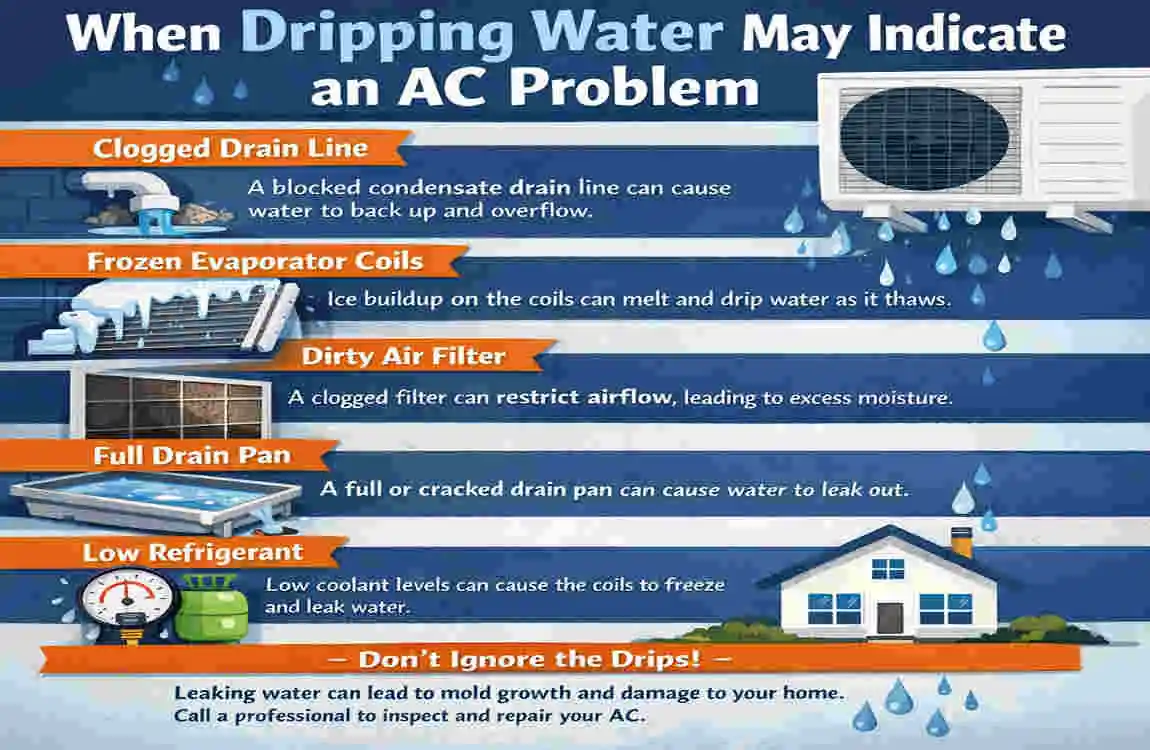
Dripping That Looks Unusual
While some dripping is normal, you should pay attention if the water:
- Appears indoors
- Drips from the wrong place
- Comes with a bad smell
- Causes water to pool near the unit
- Happens along with poor cooling
Those signs may point to a drainage problem.
Common AC Drain Pipe Problems
Clogged Condensate Drain Line
This is one of the most common issues. Dirt, dust, algae, and debris can build up inside the line and slow or stop water flow.
When that happens, water may back up into the system and overflow.
Cracked or Damaged Drain Pipe
If the pipe has a crack or loose connection, water can escape before it reaches the outlet. You may see dripping in the wrong place or water stains nearby.
Blocked or Overflowing Drain Pan
If the drain pan fills up and cannot empty, it may overflow. That can lead to ceiling stains, wall damage, or indoor leaks.
Frozen AC Coil
Sometimes a coil freezes because of poor airflow or another system issue. When the ice melts, you may see unusual water drainage or sudden leakage.
What to Do If Your Exterior AC Drain Pipe Is Not Dripping
No Water Does Not Always Mean a Problem
If your outside drain pipe isn’t dripping, don’t panic. It may simply mean the AC isn’t producing much condensate right now.
That can happen when:
- The air is dry
- The AC has not been running long
- The system is cycling less often
- The drainage setup is different from what you expected
Things Homeowners Can Safely Check
You can look for a few simple signs:
- Is the AC cooling properly?
- Is there water leaking indoors?
- Is the drain outlet blocked?
- Is there standing water around the unit?
- Do you notice odd smells or noises?
These checks can help you spot an obvious issue without opening the system yourself.
When to Avoid DIY Repairs
Do not try to fix the system yourself if you notice:
- Electrical problems
- Refrigerant issues
- Frozen coils
- Repeated clogs
- Hard-to-reach drain lines
- Indoor leaks that keep returning
If the problem looks serious, a qualified HVAC professional is the safer choice.
How to Prevent AC Drain Pipe Problems
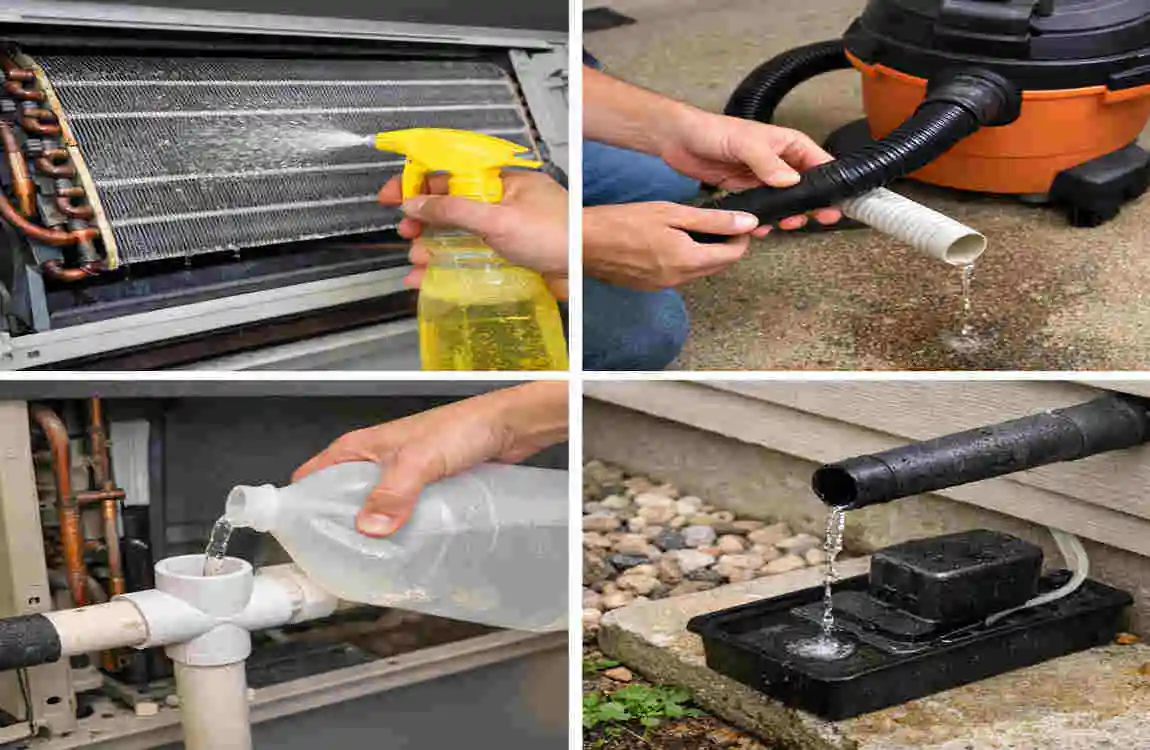
Simple Maintenance Tips
A little care can prevent many drain issues. Try these basic steps:
- Keep the exterior drain outlet clear
- Clean or replace the air filter regularly
- Watch for indoor leaks
- Schedule routine AC maintenance
- Fix repeated clogs instead of ignoring them
Why Preventive Maintenance Matters
Preventive maintenance helps in several ways:
- It reduces the risk of water damage
- It keeps the system running more efficiently
- It can catch drainage problems early
- It may help the AC last longer
If you want fewer surprises, regular maintenance is one of the best habits you can build.
A Simple Way to Think About It
Your AC drain pipe is small, but it protects your home from hidden moisture. If it stops working properly, the damage can become expensive quickly. That is why small checks matter.
Situation: Is It Usually Normal? What It May Mean
Clear water dripping outside while AC runs Yes Normal condensate drainage
More dripping on humid days Yes Increased moisture removal
No water at all during dry weather Often yes Low condensation
Water leaking No Possible clog or overflow indoors
Bad smell from drain area No Possible blockage or mould
Pooling water near the unit No Drainage problem
Frequently Asked Questions About AC Drain Pipe Dripping
Is it normal for my exterior AC drain pipe to drip water?
Yes. In most cases, visible water dripping from the exterior drain pipe is normal when the AC is running.
Should water be coming out of my AC drain pipe outside?
Yes. The pipe is designed to carry condensate away from the system and out of your home.
How much water should come out of an AC condensate drain?
There is no exact amount. It depends on humidity, temperature, AC runtime, and system size.
Why is my AC drain pipe dripping a lot of water?
Heavy dripping can happen on hot, humid days or when the unit runs for long periods. That can still be normal.
Why is my AC drain pipe not dripping water?
It may mean the air is dry, the AC has not run much, or the system uses a different drainage setup.
How do I know if my AC drain pipe is clogged?
Signs include indoor leaks, standing water, strange smells, or water not draining properly.
Can a clogged AC drain line cause water damage?
Yes. A blocked line can make water back up and overflow into your home.
Should I call an HVAC professional if water is leaking inside?
Yes. Indoor leaks usually mean something needs proper inspection.
| Question | Short Answer |
|---|---|
| Should an AC drain pipe drip water outside? | Yes. It is normal for an AC drain pipe to release water outside when the unit is cooling. |
| Why does water drip? | The AC removes moisture from indoor air, creating condensation that flows through the drain pipe. |
| Where should it drain? | Usually to an outdoor area, drain, or another approved drainage point. |
| How much water is normal? | The amount varies with humidity, temperature, and AC usage. |
| When is it a problem? | If water stops draining, backs up indoors, leaks from unexpected places, or the pipe stays completely dry during heavy AC use. |
