

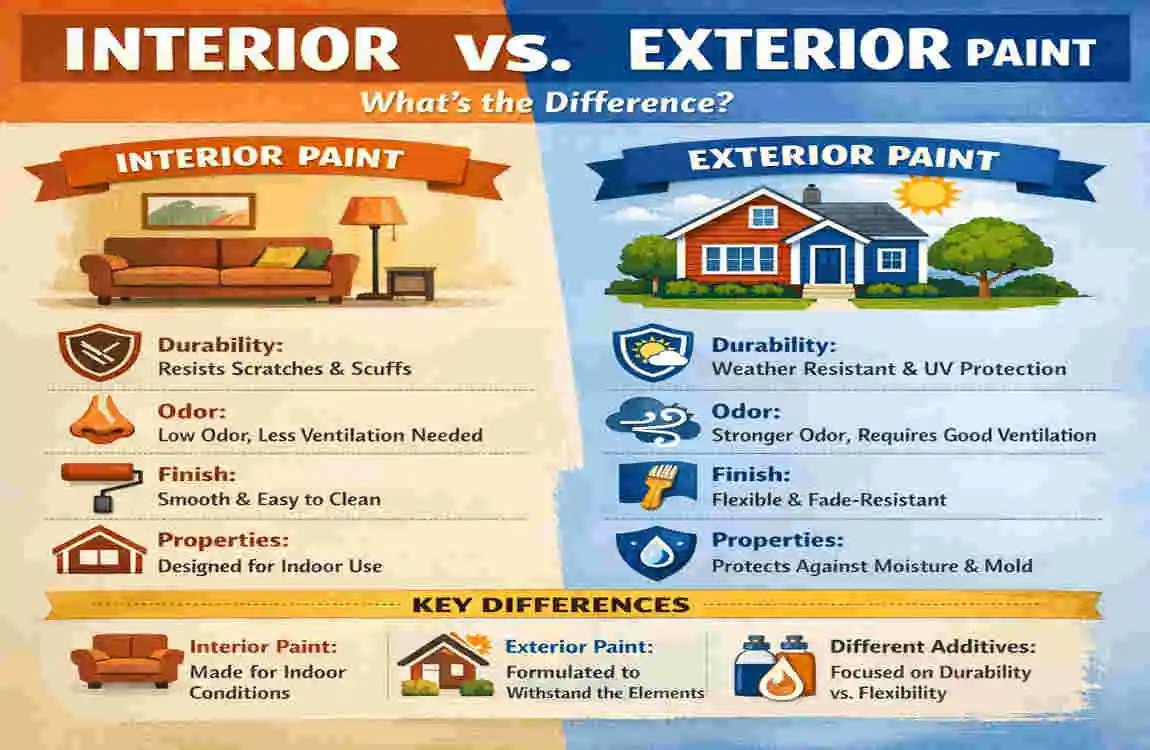
That is why the question of whether you can use interior paint on exterior surfaces comes up so often. The short answer is usually no. Interior paint and exterior paint are made for very different conditions, and each one performs best in its own setting.
What Is Interior Paint?
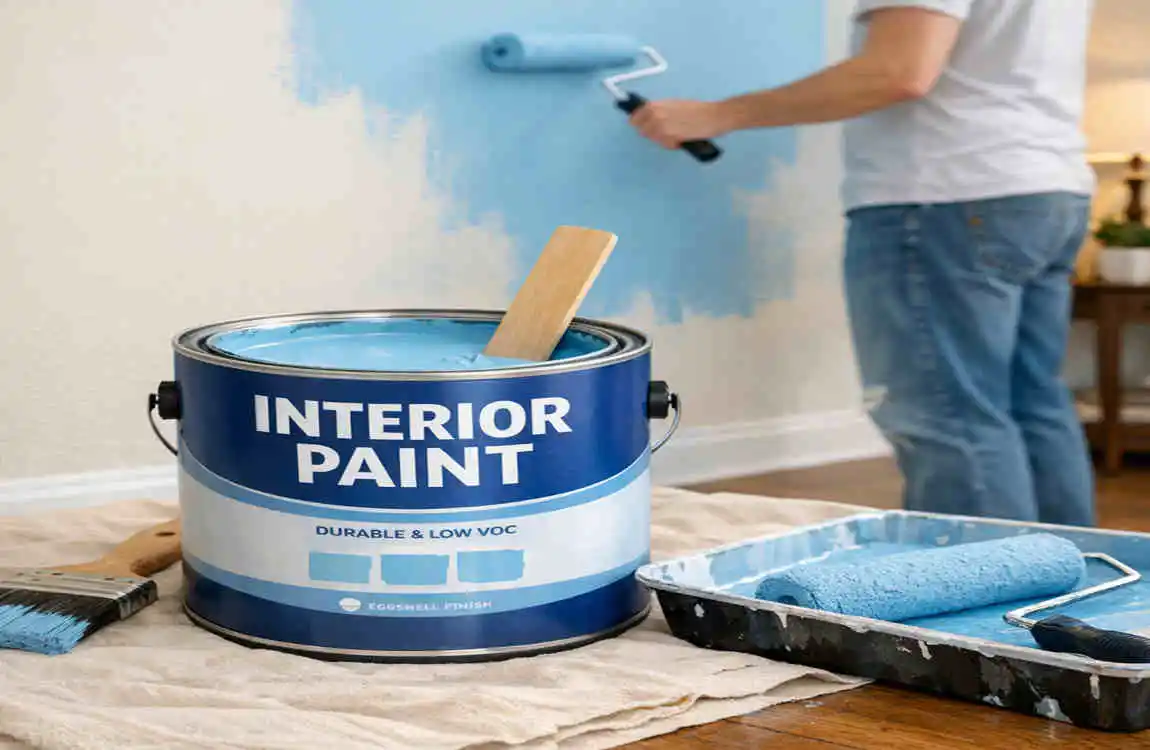
Interior paint is made for surfaces inside your home. It is designed to look good, apply smoothly, and hold up well under normal indoor use.
Main Features of Interior Paint
Interior paint is usually focused more on appearance and indoor durability than on weather resistance. It often has a smoother finish and comes in many colours and sheens.
It is also designed to be easier to live with indoors. That means lower odour options, easier cleanup, and finishes that work well in rooms where people spend time every day.
Where Should Interior Paint Be Used?
Interior paint works best on surfaces such as:
- Bedrooms
- Living rooms
- Kitchens
- Hallways
- Ceilings
- Interior doors and trim
These spaces are protected from weather, so the paint does not need the same level of outdoor protection.
Benefits of Interior Paint
Interior paint is popular because it offers:
- Low-odour options
- Many colour and finish choices
- Easy application
- Good performance on indoor surfaces
If you are painting inside, interior paint is usually the better and safer choice.
What Is Exterior Paint?
Exterior paint is designed for outdoor use. It has to survive much harsher conditions than paint used inside the house.
Main Features of Exterior Paint
Exterior paint is formulated to handle moisture, sunlight, heat, cold, and changing weather. These conditions can damage weaker paint very quickly.
This type of paint also needs to stay flexible. Why? Because outdoor surfaces expand and contract as temperatures change. If the paint is too rigid, it may crack or peel.
Where Is Exterior Paint Used?
Exterior paint is best for:
- Exterior walls
- Siding
- Outdoor trim
- Fascia
- Some exterior doors
- Other approved outdoor structures
Always check the label, because not every exterior product is meant for every surface.
Benefits of Exterior Paint
Exterior paint gives you:
- Better weather resistance
- Stronger durability
- Moisture protection
- More resistance to fading and cracking
If the surface will face weather, exterior paint is the right choice.
Can You Use Interior Paint on Exterior Surfaces?
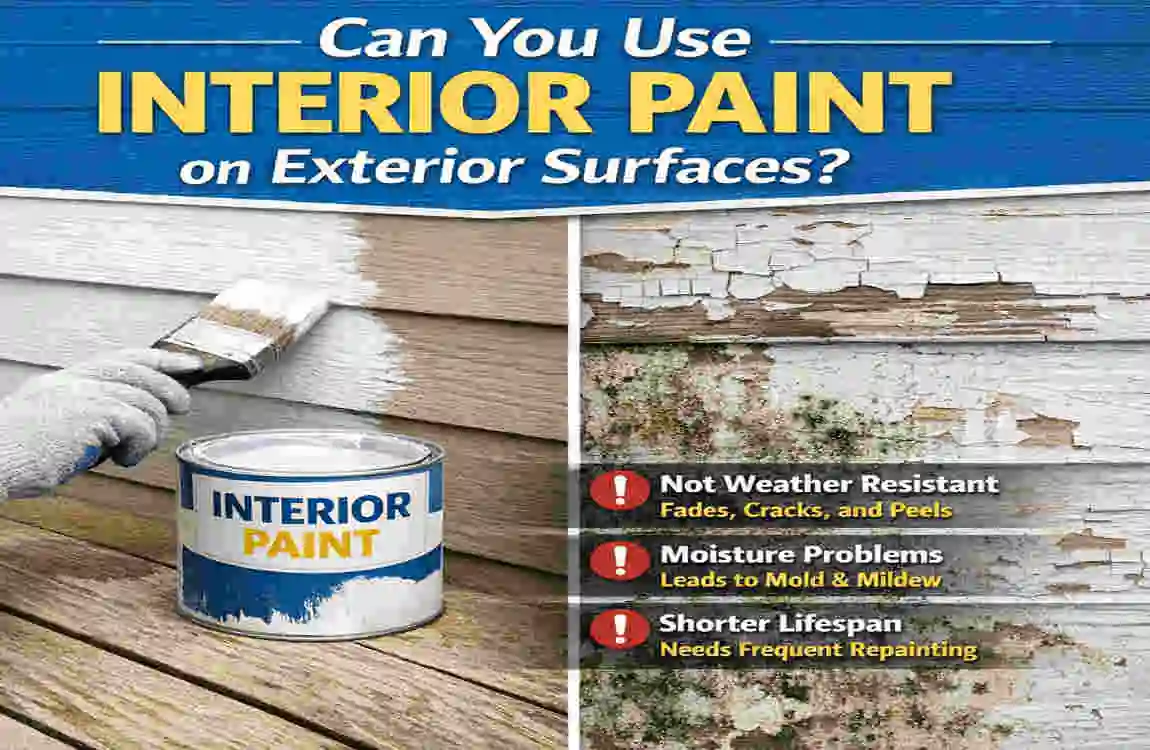
Short answer: Generally, no.
This is one of the most important things to understand. Interior paint is not usually made for outdoor exposure.
Why Interior Paint Is Not Recommended Outdoors
Outside, paint faces rain, sun, humidity, and big temperature swings. Interior paint is not normally built to handle those conditions for long.
That means it may:
- Fade faster in sunlight
- Crack when temperatures change
- Peel when exposed to moisture
- Break down much sooner than exterior paint
Using interior paint outside can also create extra work later. You may have to strip, prep, and repaint sooner than you planned.
What Happens If You Use Interior Paint Outside?
Problem | Why It Happens
Peeling Poor resistance to outdoor exposure
Fading UV and sunlight damage
Cracking Temperature and moisture changes
Moisture damage Interior formulas are not designed for outdoor use
Shorter lifespan Less protection from weather
So if you are still asking whether you can use interior paint on exterior surfaces, the practical answer is that it usually causes more problems than it solves.
Are There Any Exceptions?
Sometimes a product may be made for special uses, but you should never guess.
Always check the label, the manufacturer’s instructions, and the intended use. If a product isn’t clearly made for exterior use, don’t assume it will perform well outside.
Interior vs Exterior Paint: Key Differences
The two paint types may look similar in the can, but they are built very differently.
FeatureInterior PaintExterior Paint
Main purpose Indoor appearance and easy use Outdoor protection and durability
Weather resistance Low High
UV resistance Limited Strong
Moisture resistance Moderate Higher
Flexibility Less needed Very important
Odor/VOC concerns Often lower Can be higher depending on product
Finish options Many Many
Surface compatibility Indoor walls, trim, ceilings Siding, trim, masonry, outdoor surfaces
Expected performance Best indoors Best outdoors
Which Paint Should You Choose?
The rule is simple:
- Use interior paint for indoor surfaces
- Use exterior paint for outdoor surfaces
- Match the paint to the environment, not just the colour
That one habit can save you time, money, and frustration.
Tips for Choosing and Applying the Right Paint
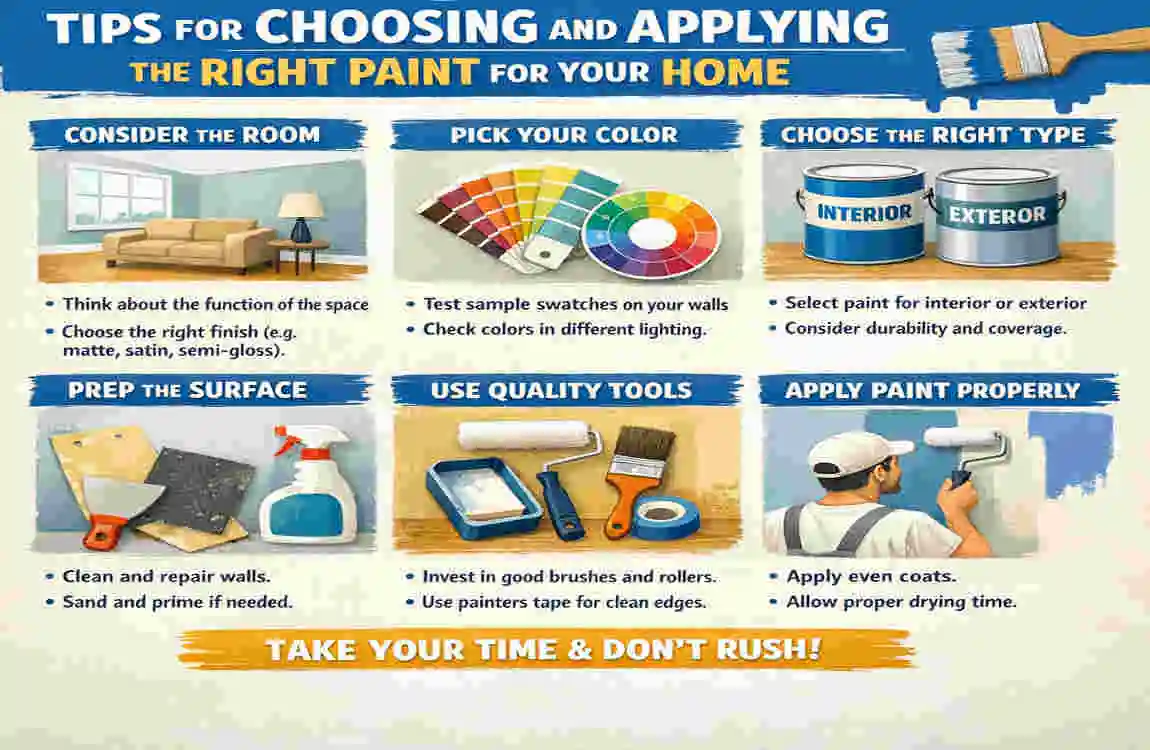
Check the Paint Label
Start with the label. It should clearly say whether the product is for interior or exterior use.
Don’t rely on the colour name or the finish alone. The intended use matters most.
Prepare the Surface
Good paint starts with good prep.
Before painting, you should:
- Clean dirt and dust
- Remove loose or peeling paint
- Repair cracks or damage
- Use primer when needed
A well-prepared surface helps the paint stick better and last longer.
Consider the Surface Material
Different surfaces may need different products.
For example:
- Wood may need sealing or priming
- Masonry may need a compatible exterior product
- Metal may need rust protection
- Drywall usually uses interior products
- Siding often needs a strong exterior formula
Always make sure the primer and paint are compatible.
Think About Weather Conditions
Exterior painting depends heavily on the weather.
Avoid painting when it is:
- Too cold
- Too hot
- Rainy
- Very humid
- In direct, harsh sun
You also need enough time to dry and cure. Rushing this step can hurt the finish.
Avoid Mixing Products Incorrectly
Do not assume all primers and paints work together.
An interior primer and an exterior topcoat may not always match. The best approach is to follow the manufacturer’s system and instructions.
FAQs About Interior and Exterior Paint
Can you use interior paint on exterior surfaces?
Generally, no. Interior paint is usually not made to handle outdoor weather, UV exposure, and moisture.
What happens if interior paint is used outside?
It may peel, fade, crack, or wear out faster because it is not designed for outdoor conditions.
Is exterior paint safe to use inside?
Sometimes, but only if the product label says it is appropriate and you can provide proper ventilation. Always check the instructions first.
Can interior and exterior paint be mixed?
Usually, no. Mixing them is not recommended unless the manufacturer specifically allows it.
How long does exterior paint typically last?
That depends on the product, surface prep, climate, and upkeep. There is no single answer for every home.
Do you need primer before exterior paint?
Often, yes. Primer can help with adhesion, coverage, and surface protection, especially on bare or repaired surfaces.
What is the main difference between interior and exterior paint?
The main difference is simple: exterior paint is built for outdoor exposure, while interior paint is designed for indoor conditions.
| Feature | Interior Paint | Exterior Paint |
|---|---|---|
| Main Use | Walls, ceilings, and rooms | Exterior walls, doors, and trim |
| Durability | Designed for indoor wear | Built to handle weather |
| Weather Resistance | Low | High |
| Finish | Smooth and decorative | Durable and protective |
| Moisture Protection | Moderate | Strong |
| Best For | Bedrooms, kitchens, living rooms | Siding, fences, exterior walls |
| Key Benefit | Easy cleaning and attractive appearance | Protection from sun, rain, and temperature changes |
