

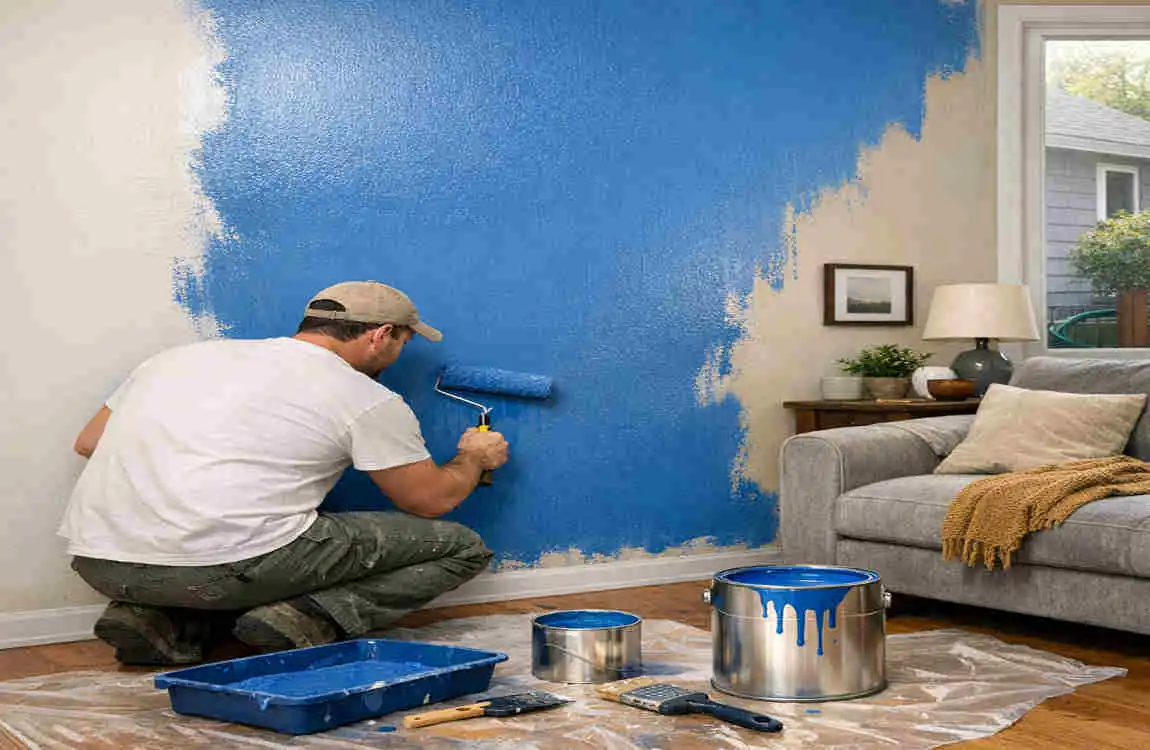
Exterior paint is made for outdoor conditions, not indoor living spaces. It is built to handle rain, sun, wind, and changing temperatures. Interior walls need something different: lower odour, safer indoor air, easier cleaning, and a finish that looks good inside the home.
Let’s break it down simply so you can choose the right paint with confidence.
Can You Use Exterior Paint on the Interior?
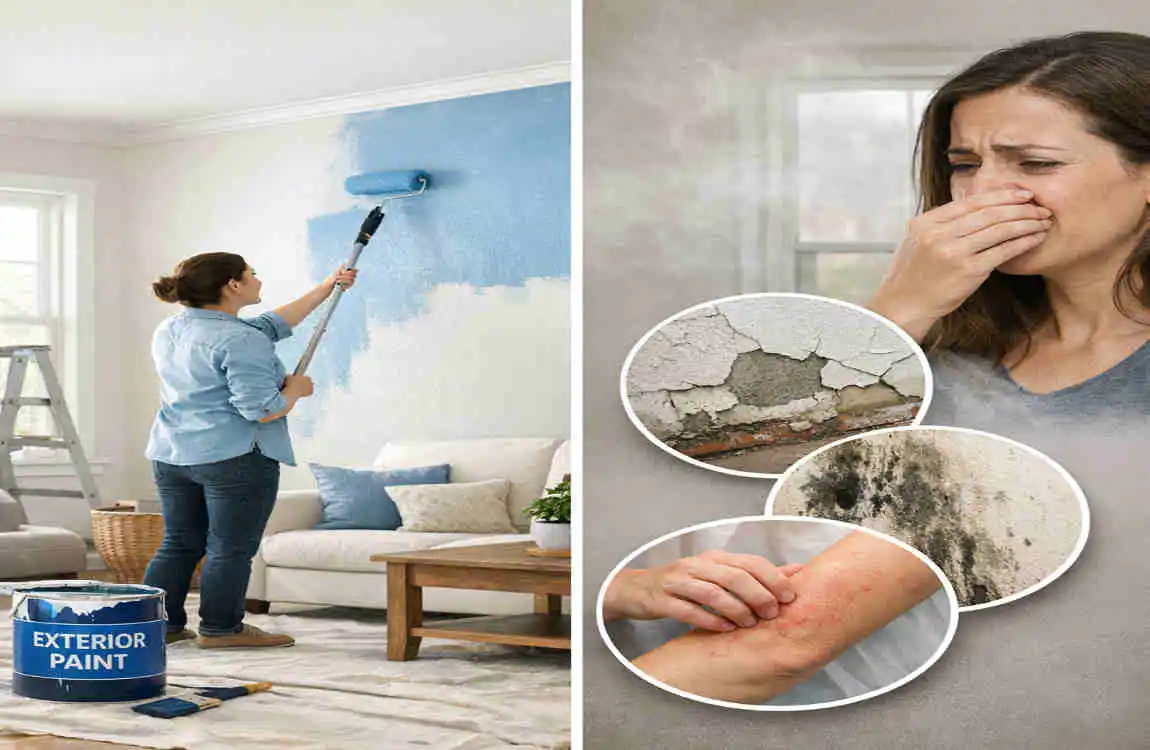
The direct answer
Yes, sometimes, but it is usually not the best choice.
Most exterior paints are made for outdoor surfaces. They can work on walls in some rare situations, but that does not mean they are ideal for normal indoor rooms. If you are painting a bedroom, living room, hallway, or home office, interior paint is usually the better option.
Why people ask this question
Some homeowners think exterior paint might be stronger or more durable. Others want extra moisture resistance for a bathroom, basement, or garage. That sounds practical, but indoor walls need a different kind of formula.
What works outside does not always work well inside. Indoor spaces need comfort, cleaner air, and a finish that suits regular daily use.
Read the label first.
This is the most important step. Always check the product label and manufacturer instructions. If the paint is not approved for indoor use, do not assume it is safe or suitable just because it is paint.
What Is the Difference Between Interior and Exterior Paint?
Interior paint
Interior paint is made for spaces like:
- Bedrooms
- Living rooms
- Dining rooms
- Hallways
- Home offices
It is usually designed to have lower odour, better indoor air quality performance, and an easy-to-clean finish. Many interior paints also come in finishes that work well for busy family spaces.
Exterior paint
Exterior paint is designed to withstand outdoor conditions. It can handle:
- Rain
- Sunlight
- Humidity
- Temperature changes
- Expansion and contraction of surfaces
To do that, it often includes stronger additives that help protect against weather damage. That is useful outside, but not always ideal inside the home.
Key differences
FeatureInterior PaintExterior Paint
Main purpose Indoor surfaces Outdoor surfaces
Weather resistance Limited High
Odor/VOCs Often lower May be higher
Flexibility Designed for stable indoor conditions Handles expansion and contraction.
Best use Interior walls and ceilings Exterior walls and surfaces
Why Should You Avoid Exterior Paint on Interior Walls?
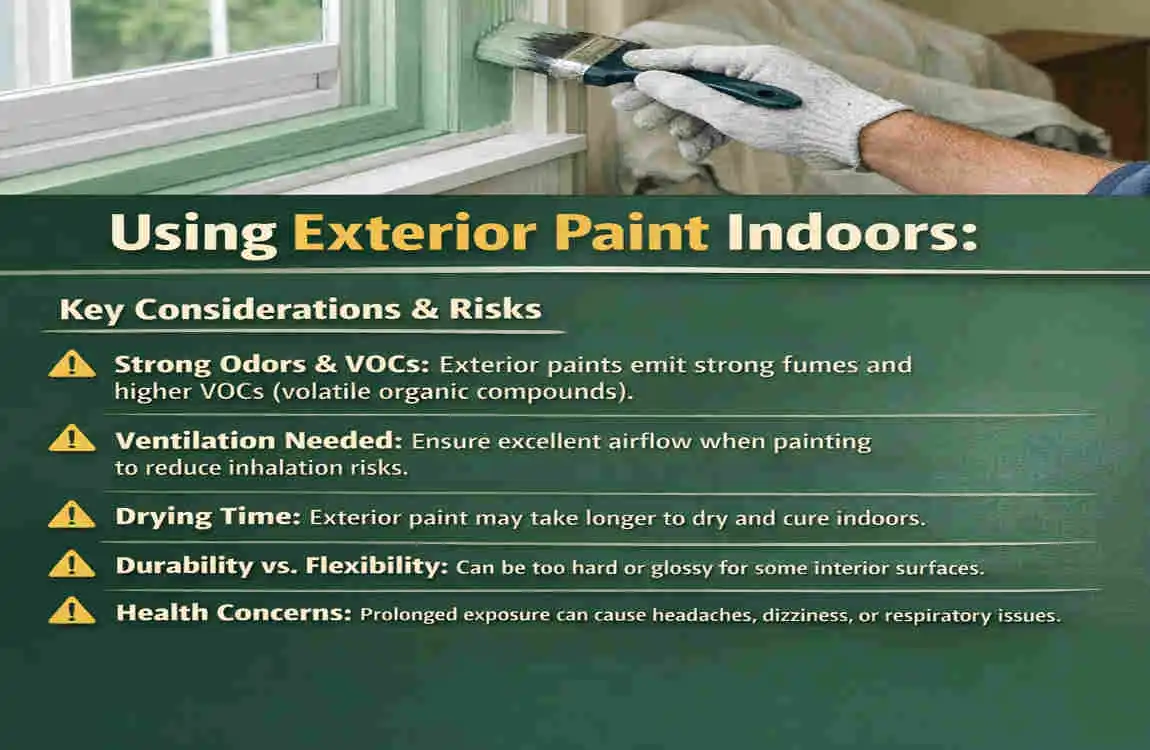
Strong odour and ventilation issues
Some exterior paints can have a stronger smell than interior products. That can make the room unpleasant to stay in, especially if it has poor airflow.
If you are painting inside your home, comfort matters. You do not want fumes hanging around longer than needed.
Indoor air quality concerns
Paint used indoors should support a healthy living space. That is why many interior paints are made with indoor air quality in mind.
Exterior paint is not always designed for that same purpose. Even after it dries, it may not be the best match for an enclosed room where people spend hours every day.
Finish and appearance
Exterior paint may not give you the look you want inside. Some versions are made to be tough rather than refined. That means the surface could feel too flat, too thick, or simply not polished enough for a living room or bedroom wall.
Inside the house, appearance matters as much as durability.
Drying and curing can be tricky.
Indoor temperature and airflow affect how paint dries. Exterior paint may react differently indoors than it does outdoors. If the room is too humid or has little ventilation, drying can take longer, and the finish may not look right.
Maintenance is not the same as durability.
It is easy to think, “If exterior paint holds up outside, it should be better inside.” But that is not always true.
Interior paint is made for easy cleaning, comfortable use, and stable indoor conditions. Exterior paint is made for weather exposure. Those are different jobs.
Are There Situations Where Exterior Paint Can Be Used Indoors?
Sometimes, yes
There are a few cases where a product may be suitable for both interior and exterior use. But this depends on the specific paint formula and whether the manufacturer says it is okay.
Do not rely on the word “exterior” alone. Product labels matter more than the name on the can.
Unusual spaces
Some people consider exterior paint for areas like:
- Garages
- Workshops
- Utility rooms
- Semi-enclosed spaces
These spaces may not feel like a normal living room or bedroom. Even then, you should still check ventilation and product instructions carefully.
Leftover paint warning
Many homeowners want to use leftover exterior paint indoors so nothing goes to waste. That can seem smart, but it is not always safe or practical.
Before using leftover paint, ask:
- Is it approved for interior use?
- Does it have a strong odour or VOCs?
- Is it suitable for this room’s moisture level?
If the answer is unclear, choose a proper interior product instead.
What Should You Use Instead of Exterior Paint?
Choose interior paint for regular rooms.
For normal walls, use a paint made for indoor spaces. This is the safest and most practical choice for:
- Bedrooms
- Living rooms
- Dining rooms
- Hallways
- Home offices
These areas need a paint that looks good, feels comfortable, and performs well in everyday use.
Use special interior paint for moisture-prone spaces.
For bathrooms, kitchens, laundry rooms, and utility spaces, choose an interior paint formulated for higher moisture and frequent cleaning.
These paints are often better than exterior paints because they are designed for indoor conditions yet tough enough for steam, splashes, and frequent wiping.
Pick the right finish.
Different finishes give different results:
- Eggshell: Soft look, good for living spaces
- Satin: Easy to clean, useful in busy rooms
- Semi-gloss: Good for trim, kitchens, and bathrooms
A durable interior finish often gives you the strength you want without bringing in the downsides of exterior paint.
How to Choose the Right Paint for Interior Walls

Check the label carefully.
The can should clearly say “interior” or “interior/exterior” if it is suitable for both. If it only says exterior, do not guess.
Think about the room.
Ask yourself what the room needs:
- Low odour for bedrooms
- Washability for hallways
- Moisture resistance for bathrooms
- Stain resistance for kitchens
The best paint depends on where it will be used.
Consider air and moisture.
Rooms with poor ventilation or high humidity need special attention. A bathroom or basement may need a stronger interior product, but that still does not automatically mean exterior paint is the answer.
Prepare the wall first.
Good paint starts with good preparation. Clean the surface, fix cracks, and remove loose paint before you begin. Even the best paint will not look right on a poorly prepared wall.
Test a small area
If you are changing from an old coating or painting over an unusual surface, test a small section first. That helps you see how the paint looks and dries before you commit to the whole wall.
FAQ
Can you use exterior paint on the interior?
Usually, no. Only use it indoors if the manufacturer says it is safe and suitable for interior use.
What happens if you use exterior paint inside?
It may have a stronger smell, a less suitable finish, or indoor air concerns. It may also dry and perform differently than expected.
Is exterior paint stronger than interior paint?
Not in the way most people think. Exterior paint is made for weather resistance, while interior paint is made for indoor durability and appearance.
Can exterior paint be used in a garage?
Sometimes, but only if the product is approved for that use. Always check the label and ventilation needs.
Can you mix interior and exterior paint?
It is usually better not to mix them unless the manufacturer specifically allows it.
Is exterior paint safe to use indoors after it dries?
Do not assume so. Dry paint is not always the same as approved indoor paint. Check the label first.
What is the best paint for interior walls?
A quality interior paint is usually the best choice. Pick the finish based on the room, traffic, and cleaning needs.
| Factor | Exterior Paint on Interior Walls |
|---|---|
| Is it recommended? | Generally, no |
| Durability | Very durable, but often unnecessary indoors |
| Odor & VOCs | May have stronger fumes; check the product label |
| Finish | Can work, but may not give the ideal interior appearance |
| Cleaning | Usually easy to clean and moisture-resistant |
| Best Use | Exterior surfaces exposed to weather |
| Better Choice | Use paint specifically labeled for interior walls |
