

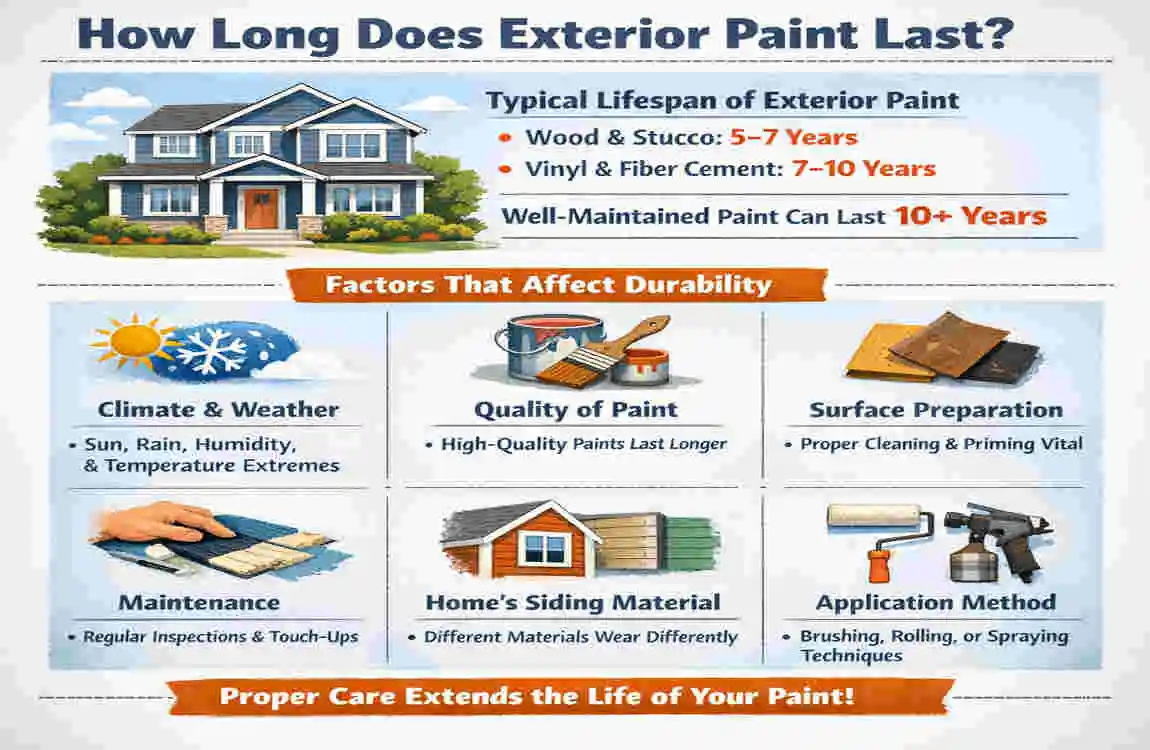
If you are asking how long exterior paint lasts, the short answer is usually 5 to 10 years for many homes. In some cases, it can last longer. In others, it may start to fail sooner.
The lifespan depends on several things. Climate, surface type, paint quality, and prep work all play a big role. A well-painted home in a mild climate may stay in good shape for years. A house in strong sun, heavy rain, or constant moisture may need repainting much sooner.
Different surfaces also age differently. Wood, stucco, brick, concrete, and siding each respond to paint differently. That is why no single answer fits every home.
Proper application matters too. If you clean, prime, and paint the surface correctly, the finish usually lasts longer and looks better.
Factors That Affect Exterior Paint Lifespan
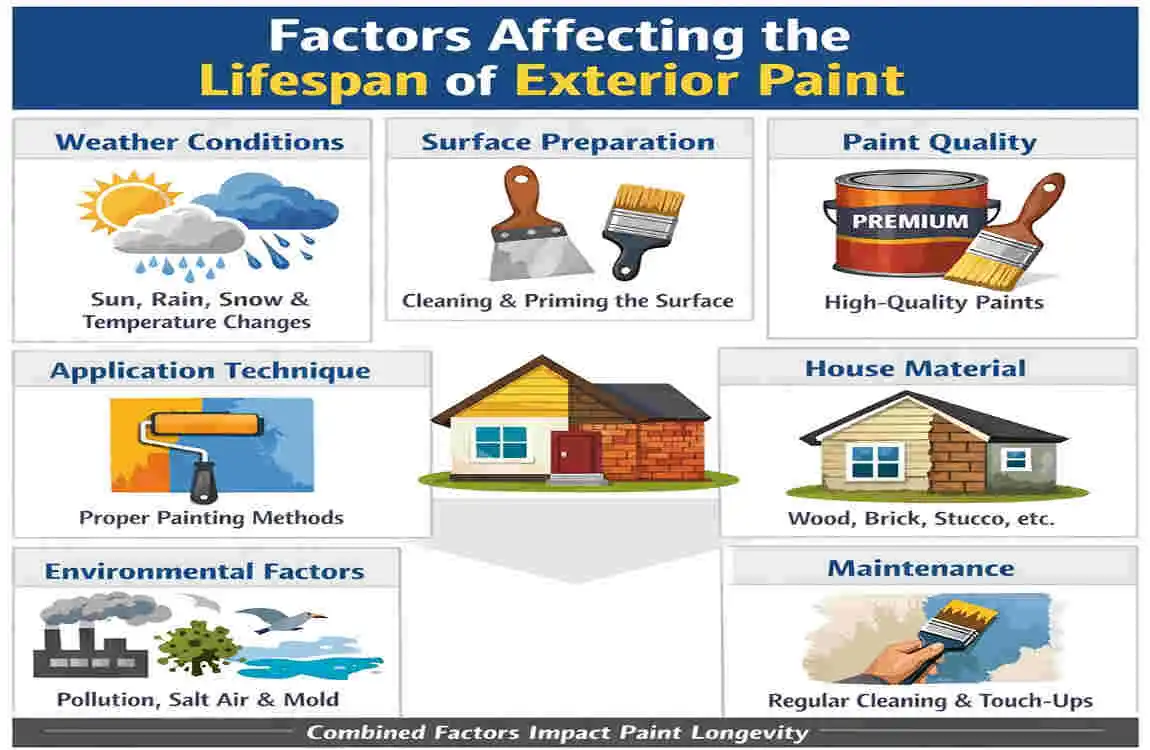
Climate and Weather
Weather has a huge effect on paint life. Sunlight can fade color and weaken paint over time. UV rays are especially hard on darker colors and south-facing walls.
Rain and humidity can also cause problems. If moisture gets behind the paint, it may peel, blister, or crack. In cold climates, snow and freezing temperatures can add more stress.
Homes in areas with big seasonal changes often wear out faster. Heat expands materials. Cold contracts them. That movement can slowly break down the paint film.
Paint Quality
Not all paint is the same. Premium exterior paint usually lasts longer than budget paint because it has better binders, pigments, and weather protection.
Cheap paint may save money at first, but it can fade, crack, or peel faster. For longer-lasting results, choose paint made specifically for outdoor use.
Surface Preparation
Good prep work is one of the biggest factors in how long paint lasts. The surface should be clean, dry, scraped, sanded, and primed when needed.
If old paint is loose or the surface is dirty, the new paint may not stick well. That can lead to early peeling and cracking. A strong finish starts before the first coat.
Application and Maintenance
How you apply the paint also matters. Most projects need the right number of coats and the right drying time between them.
A professional painter may get better results because they know how to handle weather, tools, and surface issues. But even with DIY work, regular care helps a lot.
Simple cleaning, yearly inspections, and quick repairs can add years to your paint’s life.
How Long Exterior Paint Lasts on Different Surfaces
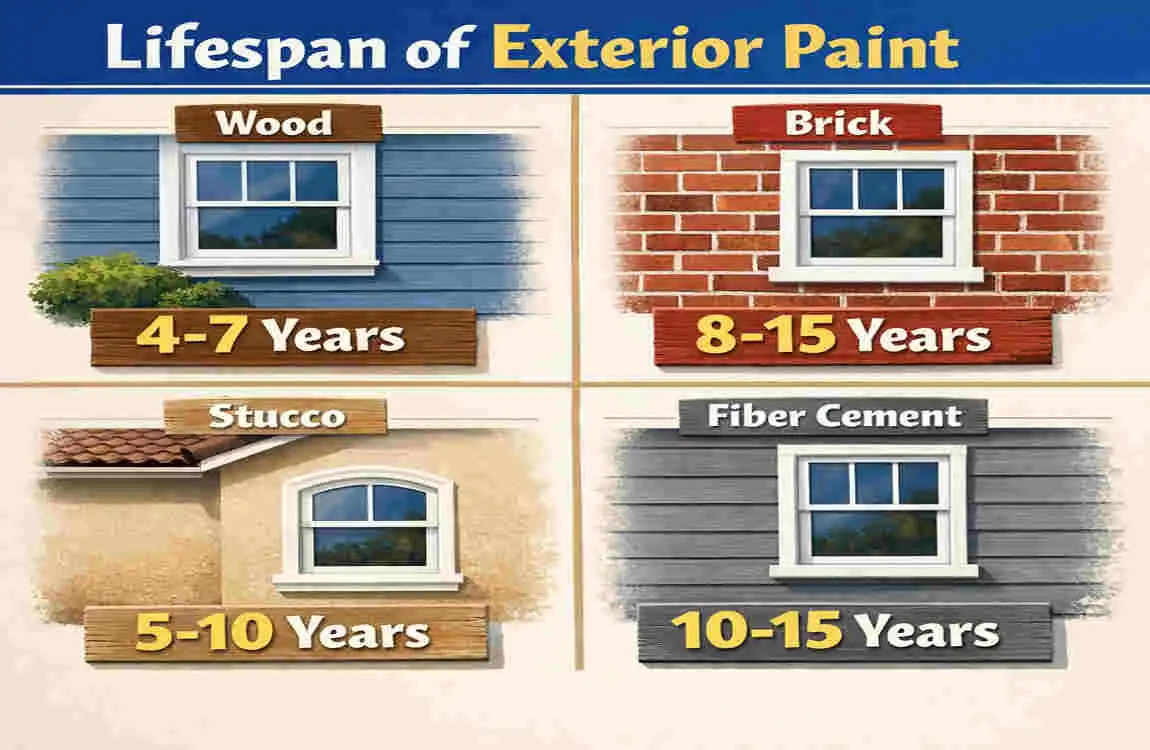
Different materials hold paint differently. Here is a simple guide.
Exterior Surface Typical Paint Lifespan Common Problems
Wood siding 5–10 years Peeling, cracking, fading
Stucco 5–10+ years Cracking, fading
Fiber-cement siding 10+ years Fading, chalking
Metal siding 5–10 years Rust, fading
Concrete 5–10 years Chipping, moisture damage
Brick Varies Fading, peeling
Wood Siding
Wood looks beautiful, but it needs care. It expands and contracts with weather, so paint may wear faster if the wood is exposed to moisture.
If wood siding is not sealed well, paint can peel sooner. Regular inspection is important here.
Stucco
Stucco often holds paint well, especially when properly sealed. It can last a long time, but small cracks may allow water in.
If you don’t repair those cracks early, the paint may break down faster.
Fiber-Cement Siding
This is one of the more durable surfaces for paint. It usually performs well and may hold paint longer than wood or metal.
Still, fading and chalking can happen over time, especially in sunny areas.
Metal Siding
Metal can last a long time, but rust is the big concern. If the protective coating is damaged, the paint can fail more quickly.
Good prep and rust control are very important on metal surfaces.
Concrete and Brick
These surfaces can be tricky because they are porous. They may absorb moisture, which can lead to peeling if the paint system is not right.
Brick and concrete often need the right primer and moisture control before painting.
Signs Your Exterior Paint Needs to Be Replaced
Visible Paint Damage
The clearest sign is obvious wear. Look for:
- Peeling or flaking
- Cracking
- Blistering
- Chalking
- Fading or uneven color
If you see only a small area, a touch-up may be enough. If the damage is spreading across many walls, a full repaint may be the better choice.
Moisture and Surface Problems
Some paint issues come from deeper problems. Watch for mold, mildew, water stains, rust, or soft wood.
These signs often mean moisture is getting into the surface. If that is happening, repainting alone may not solve the problem until you fix the source of moisture.
How to Make Exterior Paint Last Longer
To make your paint last, focus on the basics. Good prep and steady maintenance make a big difference.
Simple ways to extend paint life:
- Clean the surface before painting
- Use high-quality exterior paint
- Choose the right primer
- Paint in mild weather
- Repair cracks and damaged spots quickly
- Check caulking around windows and doors
- Inspect painted areas every year
- Fix moisture problems early
Yearly Maintenance Matters
You do not need to repaint every time you see a small issue. A little yearly care can help you avoid a much bigger project later.
For example, if a small crack appears in trim or caulking, fix it early. If dirt builds up, wash the area gently. These simple steps help protect the finish.
When Is the Best Time to Repaint a House Exterior?
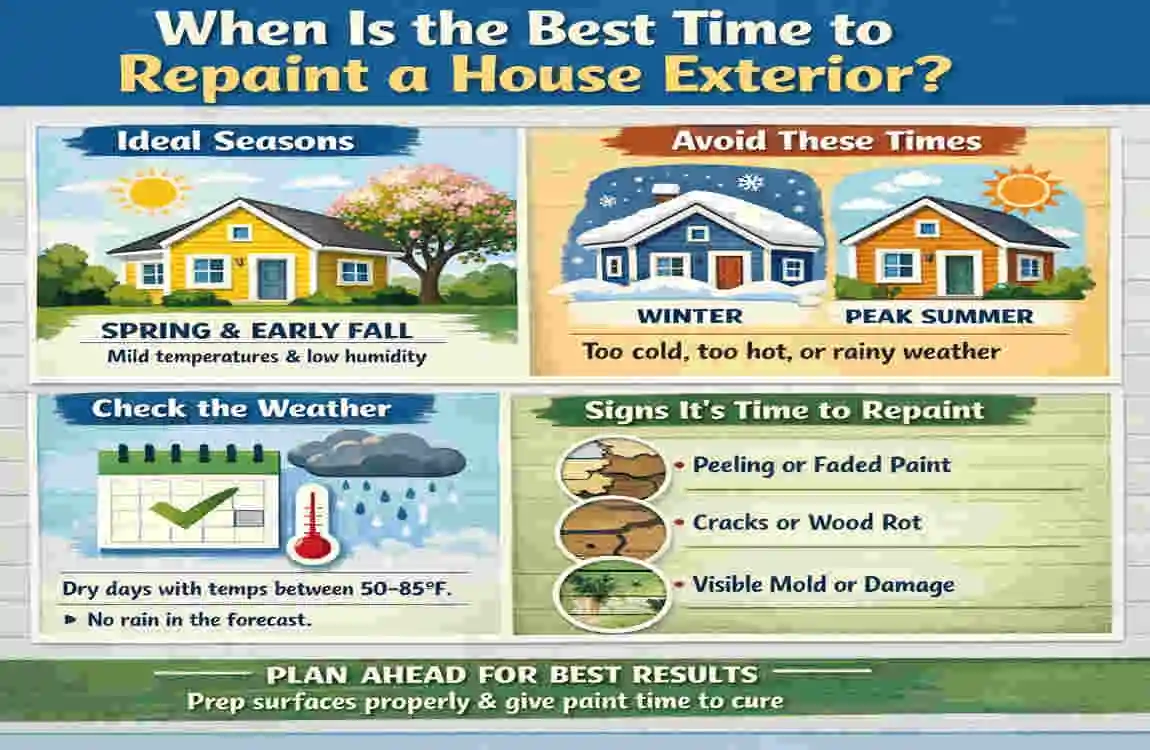
Choosing the Right Season
Timing matters more than many people think. Exterior paint needs the right temperature and moisture level to cure properly.
Very hot weather can dry paint too fast. Cold weather can slow drying and affect adhesion. Rain or high humidity can also create problems.
Always follow the paint manufacturer’s instructions. They usually give the best temperature and weather range for application.
Repainting vs. Touch-Ups
Not every problem requires a full repaint. Small touch-ups can work if the damage is limited to one area.
But if the paint is fading, peeling, or cracking all over the house, repainting is usually the smarter long-term choice.
A good rule is this: touch up small issues, repaint when the damage is widespread.
FAQs About How Long Exterior Paint Lasts
How long does exterior paint last on average?
Most exterior paint lasts about 5 to 10 years, but the exact lifespan depends on the surface, weather, paint quality, and preparation.
How often should you repaint the outside of a house?
There is no fixed schedule for every home. Some houses need repainting sooner, while others can go longer if they are well maintained.
Does exterior paint last longer in the shade?
Yes, shaded areas often fade more slowly because they get less direct sunlight. But shade can also keep moisture around longer, so it is not always a perfect advantage.
What type of exterior paint lasts the longest?
High-quality exterior paints made for your specific surface usually last the longest. The right product matters more than just choosing the most expensive can.
Can you paint over old exterior paint?
Yes, in many cases. But the old paint must still be in good condition. If it is peeling, cracking, or loose, you may need more prep first.
What causes exterior paint to peel quickly?
Common causes include moisture, poor preparation, wrong primer, bad weather during painting, and incompatible old coatings.
How can I make my exterior paint last 10 years?
Use quality materials, prep the surface properly, paint in the right weather, and keep up with yearly maintenance. These steps give your paint the best chance to last.
| Exterior Paint Type | Average Lifespan | Best Feature | When to Repaint |
|---|---|---|---|
| Acrylic/Latex Paint | 5–10 years | Flexible and weather-resistant | Fading, peeling, or cracking |
| Oil-Based Paint | 5–8 years | Durable, smooth finish | Chalking or cracking appears |
| Wood Siding Paint | 5–10 years | Protects against moisture | Peeling or exposed wood |
| Brick/Masonry Paint | 8–15 years | Strong weather protection | Fading or surface damage |
| Stucco Paint | 7–10 years | Helps resist moisture | Cracks or discoloration |
| Metal Surface Paint | 5–10 years | Helps prevent rust | Rust, peeling, or fading |
| High-Quality Exterior Paint | 10–15 years | Longer-lasting protection | Visible wear or fading |
