

![What Temperature to Paint Exterior of House? ]]](https://blueshinehome.co.uk/wp-content/uploads/2026/09/bc1e46ad-bc7b-4381-8._imresizer-ezgif.com-jpg-to-webp-converter.webp "What Temperature to Paint Exterior of House? A Simple Guide")
Painting the exterior of your home can make it look fresh, clean, and well-cared-for. But if you paint at the wrong time, the finish may not last.
That is why temperature matters so much. Paint needs the right balance of warmth, dryness, and calm weather to stick properly and dry the way it should.
What Temperature to Paint Exterior of House?
Why Temperature Matters
Temperature affects how paint behaves from the moment it touches the wall. If it is too cold, paint may dry too slowly and struggle to bond. If it is too hot, the paint may dry too quickly, leaving marks or uneven coverage.
That means painting is not just about choosing a colour. It is also about choosing the right weather.
Air Temperature, Surface Temperature, and Nighttime Temperature
Many people check only the air temperature, but that is not enough. The surface temperature can be very different from that of the surrounding air.
For example, a wall in direct sunlight can feel much hotter than the forecast suggests. On the other hand, a shaded wall may stay much cooler. Nighttime temperature also matters because paint needs time to cure after you finish applying it.
Quick Answer for Homeowners
For many exterior paints, a moderate temperature range is best. In simple terms, you want weather that is warm enough to dry but not so hot that the paint dries too quickly.
Always check the label on the paint can. Different products have different rules, and those instructions matter more than general advice.
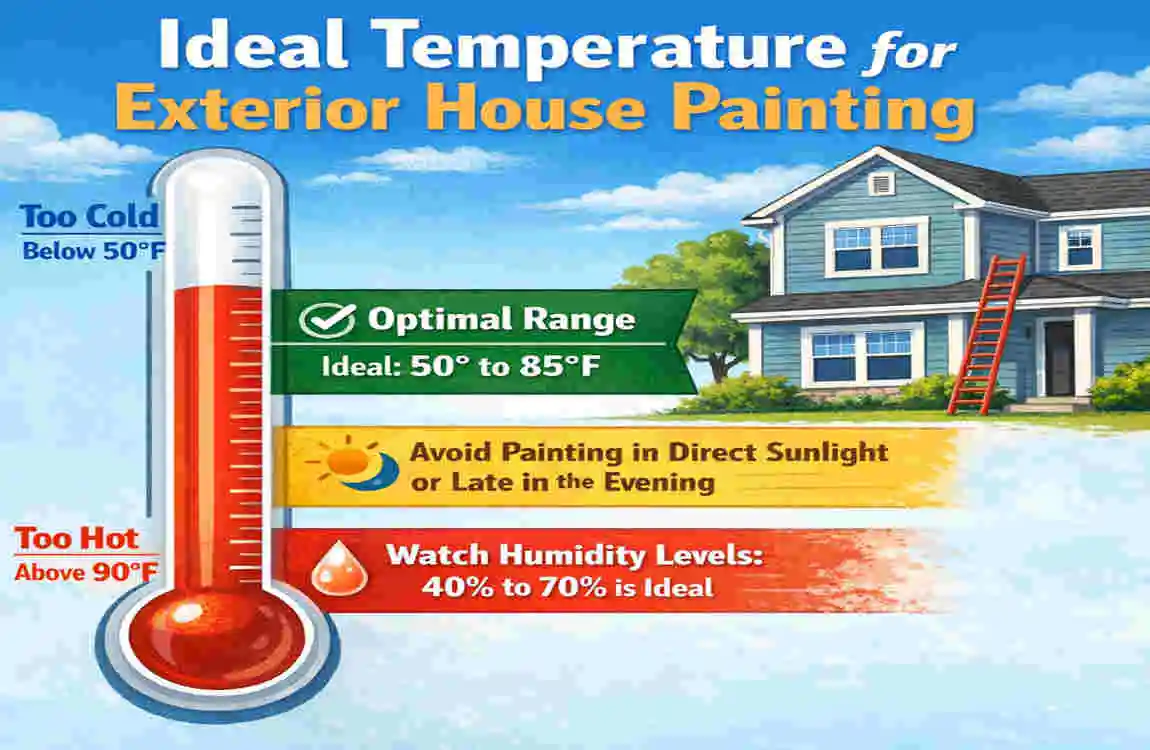
Ideal Temperature Range for Exterior House Painting
Recommended Temperature for Most Exterior Paints
Most exterior paints do best in mild conditions. That usually means a comfortable temperature, with little risk of sudden changes.
This kind of weather helps paint spread smoothly, stick well, and dry at a steady pace. That steady drying is one of the biggest reasons painted surfaces look more even and last longer.
Minimum Temperature for Exterior Painting
Painting in cold weather can cause several problems. The paint may take much longer to dry, and it may not bond well to the surface.
Cold temperatures can also lead to:
- Poor adhesion
- Cracking
- Peeling
- Weak coverage
Some paints are made for cooler conditions, but you still need to check the product label carefully.
Maximum Temperature for Exterior Painting
Too much heat can be just as troublesome as cold. When the weather is very hot, paint may dry too fast before it has time to level out.
This can leave:
- Brush marks
- Streaks
- Uneven finish
- Blistering
Hot weather can also make it harder to work comfortably, especially on large exterior walls.
Why Surface Temperature Matters
A wall can be much hotter than the air around it. This often happens with siding, stucco, brick, or wood that sits in direct sunlight.
If the wall is too hot, the paint can flash-dry. That means it dries so fast that it does not settle properly. To avoid this, try painting shaded areas first or working when the surface is cooler.
How Weather Conditions Affect Exterior Paint
Humidity and Painting
Humidity is the amount of moisture in the air. When humidity is high, paint can dry more slowly.
That is not always a bad thing, but too much moisture in the air can make the finish less reliable. The best results usually come when the air is fairly dry and comfortable.
Rain and Exterior Painting
Rain is one of the biggest risks for any exterior paint job. The surface must be dry before you begin, and it should stay dry long enough after painting for the coating to set.
If rain hits the fresh paint too soon, it can cause streaking, marks, or damage to the finish.
Wind and Dust
Wind can also create problems. Strong wind may blow dust, dirt, or leaves onto wet paint. It can also make the surface dry too unevenly.
A calm day is usually better than a windy one.
Sunlight and Direct Heat
Direct sunlight can speed up drying in ways that are not always helpful. Some painters like to follow the shade around the house, working on sides that don’t get full sun.
This can help the paint go on more evenly and reduce the chance of visible lap marks.
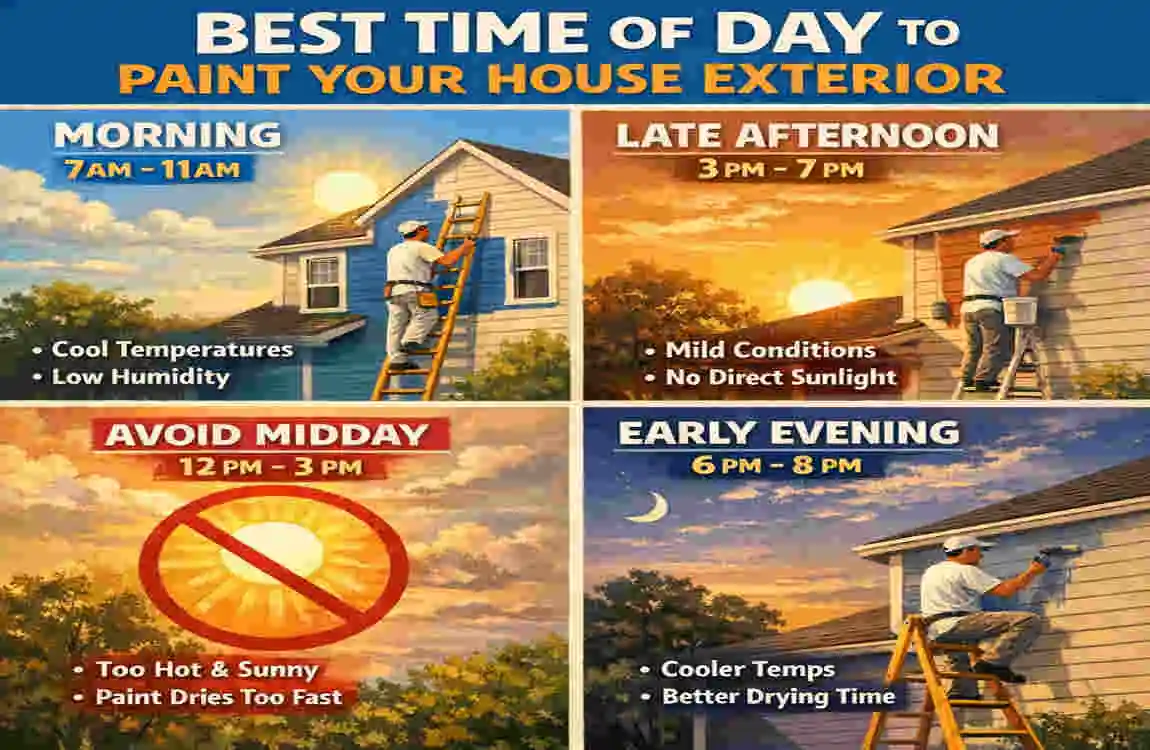
Best Time of Day to Paint Your House Exterior
Morning Painting Conditions
Morning can be a good time to start, but only after dew has dried from the surface. If the wall is still damp from overnight moisture, wait a little longer.
Painting over damp siding can cause adhesion problems later.
Afternoon Painting Conditions
Afternoon often brings higher temperatures and stronger sunlight. That can be useful in mild weather, but in hot climates it may become too intense.
If you paint in the afternoon, check the surface temperature first. The wall may be hotter than you expect.
Evening and Overnight Temperatures
Nighttime temperature is easy to ignore, but it matters a lot. Even if the day is warm and pleasant, a cold night can slow curing or cause problems before the paint is fully set.
You want enough time after painting for the surface to dry before temperatures drop too much.
Seasonal Considerations
Different seasons bring different painting conditions:
- Spring often offers mild weather and moderate humidity.
- Summer can be too hot in many areas.
- Fall is often one of the best seasons for exterior painting.
- Winter is usually too cold unless you use a product made for low temperatures.
If you are planning exterior work, the best season to paint a house is often spring or fall in many climates.
What Happens If You Paint at the Wrong Temperature?
Poor Paint Adhesion
If paint does not stick well, it can peel or flake later. This usually happens when the surface is too cold, too damp, or not properly prepared.
Uneven Finish
Improper temperatures can cause the paint to dry unevenly. That can leave the surface looking uneven or blotchy.
Slow Drying
Cold or humid conditions can slow drying. That means dust, bugs, and other debris may settle into the paint before it sets.
Cracking and Peeling
If the paint layer does not bond properly or dry at the right rate, it may crack later. Peeling can follow, which means more repair work and more cost.
Blistering
Blistering happens when bubbles form under the paint film. Heat, moisture, and poor timing can all contribute to this problem.
Color Inconsistency
Temperature changes can also affect how the paint looks once it dries. The finish may appear slightly different from one area to another.
Higher Maintenance Costs
When paint fails early, you often need to repaint sooner. That means more labour, more materials, and more frustration.
Simple Ways to Avoid Problems
The best way to avoid these issues is to plan. Check the weather, prepare the surface properly, and paint only when conditions are stable enough.
Tips for Painting Your House Exterior Successfully
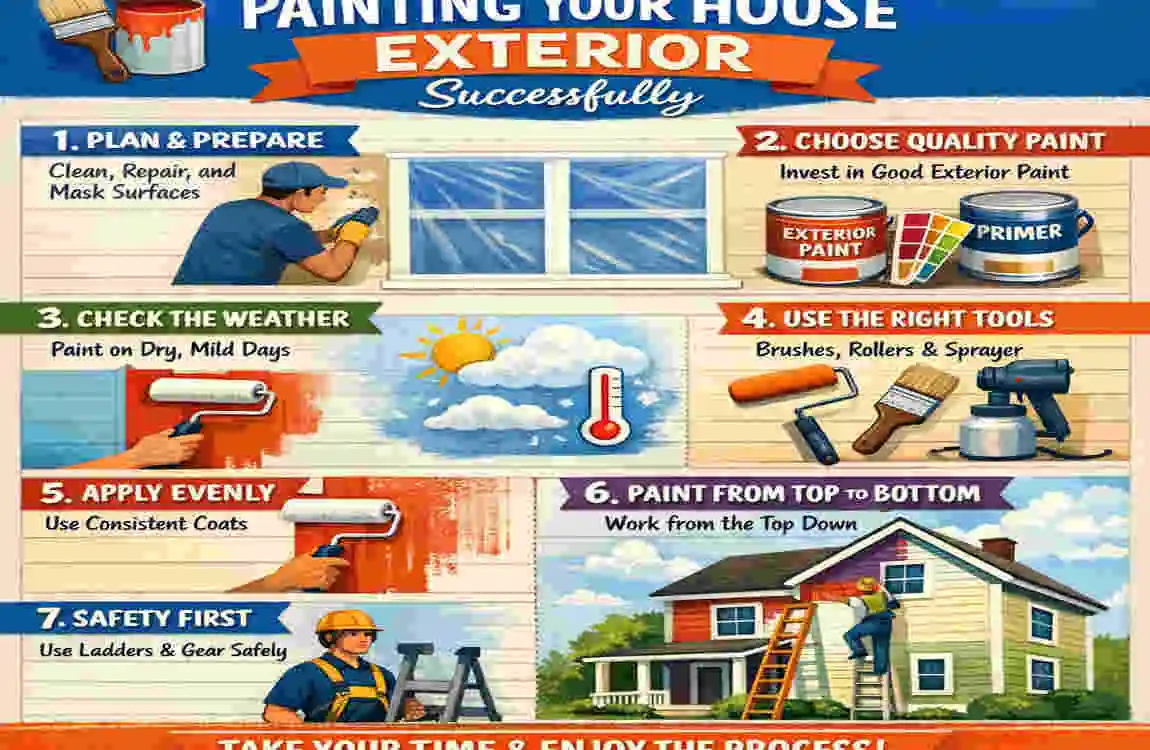
Check the Weather Forecast
Do not look only at today’s temperature. Check the full forecast for the painting period.
Pay attention to:
- Temperature highs and lows
- Rain chance
- Humidity
- Wind speed
This helps you avoid surprises after the job has already started.
Read the Paint Manufacturer’s Instructions
Different paint types can have different limits. Latex, acrylic, oil-based, and speciality paints may all behave differently in cold or hot weather.
The label gives you the most reliable guidance. Always follow it.
Prepare the Exterior Surface
Good preparation matters just as much as temperature. Before painting, clean the surface, remove loose paint, sand rough areas, and prime where needed.
A clean and dry surface gives the paint a better chance to bond well.
Test the Surface Before Painting
If you are unsure, check the wall by touch or with a surface thermometer. The surface should not feel wet, icy, or extremely hot.
You can also test a small area first to see how the paint behaves.
Allow Enough Drying and Curing Time
Drying and curing are not the same thing. Dry to the touch means the paint no longer feels wet. Fully cured means the paint has hardened all the way through.
Protect the surface from rain, dust, and temperature swings while it cures.
FAQ: What Temperature to Paint Exterior of House?
What is the best temperature to paint a house exterior?
The best temperature is usually a moderate, mild range where paint can dry steadily. Always check the paint label for exact guidance.
Can you paint a house exterior when it is 50°F?
Sometimes, yes, but only if the paint is rated for that temperature and the nighttime temperature will stay within safe limits as well. Always check the product instructions.
Is 90°F too hot to paint a house exterior?
It can be. High heat may cause the paint to dry too quickly, especially on walls in direct sunlight.
Can you paint outside when it is 40°F?
Usually that is too cold for many standard paints. Some speciality products are designed for colder conditions, but you should confirm this before starting.
How long should exterior paint dry before rain?
It depends on the paint type, humidity, temperature, and surface condition. More time is always safer if rain is expected.
What is the best season to paint a house exterior?
For many homeowners, spring and fall are the most comfortable and reliable seasons because the weather is often milder.
Should I paint my house exterior in direct sunlight?
It is better to avoid strong direct sun when possible. The surface can get too hot, causing the paint to dry too fast.
How can I tell if my exterior surface is too hot to paint?
Touch the wall carefully or use a surface thermometer. If it feels very hot, it may be better to wait for a cooler time.
What should I do if the temperature changes after painting?
If cold, rain, or strong heat moves in after painting, try to protect the surface as much as possible. Use coverings only if they will not touch the wet paint.
| Temperature Condition | Recommended? | Why |
|---|---|---|
| Below 40°F (4°C) | Avoid | Paint may not cure properly |
| 40–50°F (4–10°C) | Check label | Some paints allow cool-weather application |
| 50–85°F (10–29°C) | Ideal | Best conditions for most exterior paints |
| Above 85°F (29°C) | Caution | Paint can dry too quickly |
| Above 95°F (35°C) | Avoid | Can cause poor adhesion and uneven finish |
| Rain or high humidity | Avoid | Moisture can interfere with drying and curing |
