

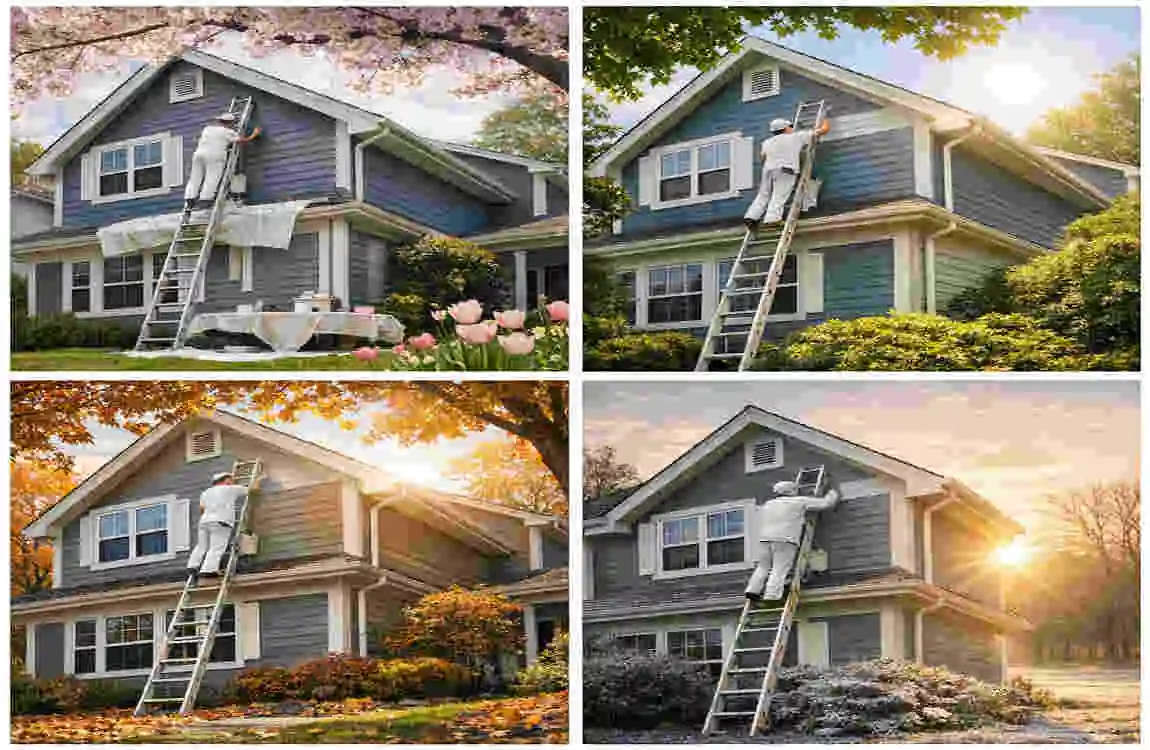
Painting your home’s exterior is not just about looks. It also helps protect your house from the sun, rain, and wind, as well as from long-term damage. But timing matters a lot.
If you choose the wrong season or weather conditions, the paint may not adhere well, dry properly, or last as long as it should. That is why knowing when to paint a house’s exterior is so important.
When to Paint Exterior of House: Signs It Is Time
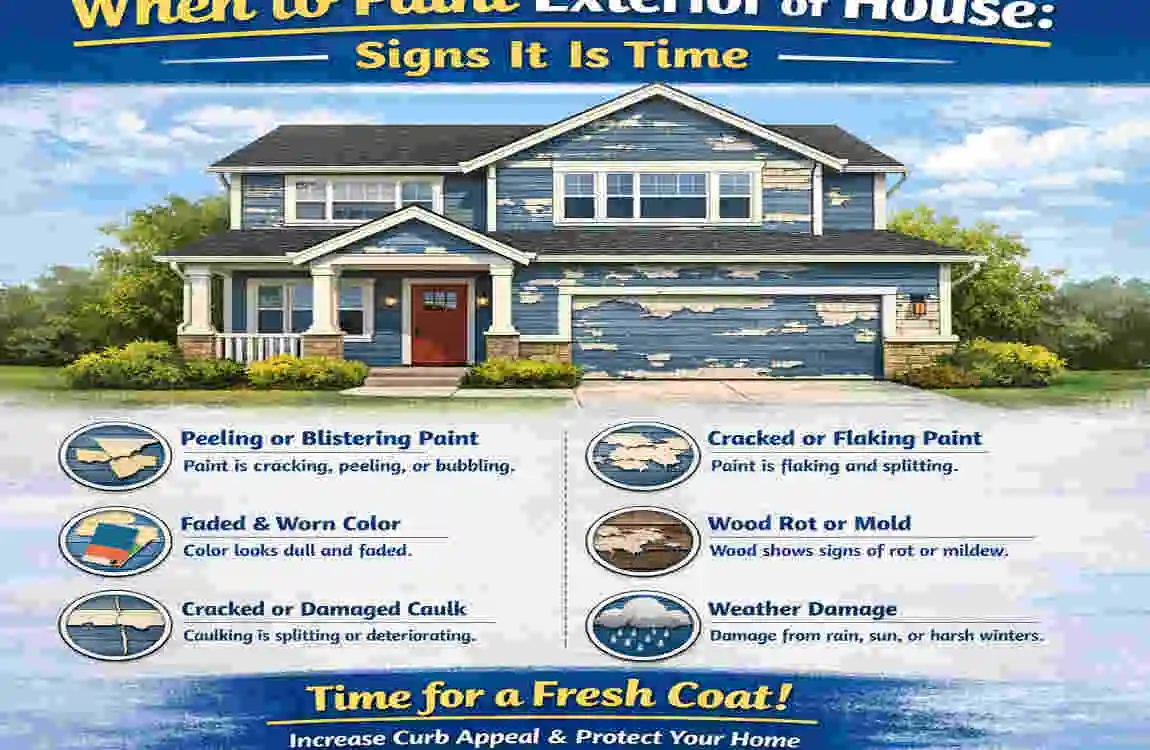
Sometimes the best time to paint is not based on the season alone. It also depends on the condition of your home. If the paint is wearing out, your house may be telling you it needs attention.
Fading or Peeling Paint
If your exterior paint looks dull, faded, or starts peeling, it is probably past its best stage. Sunlight can slowly break down paint color, especially on walls that get strong afternoon sun.
Peeling is even more serious. It means the paint is no longer gripping the surface well, which can let moisture in.
Cracked, Chipped, or Bubbling Surfaces
Cracks, chips, and bubbles are clear signs that the paint layer is failing. These issues often occur when paint ages, is exposed to harsh weather, or is applied under poor conditions.
If you ignore them, the damage can spread. What begins as a small problem can turn into a bigger repair job later.
Exposed Wood and Water Damage
If bare wood is showing, your house needs paint soon. Wood left uncovered can absorb moisture and start to rot. That can lead to costly repairs.
Water stains or swollen areas are also warning signs. These usually mean the protective layer has already been weakened.
Mold, Mildew, and Stubborn Stains
Dark spots, mold, or mildew on the outside walls can make your house look dirty and worn out. If cleaning does not solve the problem, repainting may be the better answer.
Fresh paint can improve the look of your home and help protect the surface from more buildup.
What Is the Best Season to Paint Your House Exterior?
The best season depends on your climate, but in general, mild and dry weather works best. You want temperatures that are stable and not too extreme.
Why Spring Is a Popular Choice
Spring is one of the most common times for exterior painting. The weather is often mild, and the air is usually not too hot or too cold.
That makes it easier for paint to dry evenly. It also gives you a good chance to finish the job before summer heat arrives.
Benefits of Painting During Summer
Summer can also be a good time, especially early in the season. Long daylight hours give you more time to work, and dry weather is often more common.
Still, you need to be careful. Very hot days can cause paint to dry too fast, which may affect the finish.
Can You Paint During Fall?
Yes, fall can be a great season too. In many areas, the weather stays cool and dry, which helps paint cure properly.
The only risk is waiting too late. As temperatures drop, the paint may not set well, especially at night.
Why Winter Is Usually Difficult
Winter is usually the hardest season for exterior painting. Cold temperatures can stop paint from drying correctly.
Moisture, frost, and snow also make the surface less stable. In most cases, winter is not the best time unless you live in a warm climate.
Season Pros Cons Best Use
Spring: Mild weather, stable drying; Rain can still be common; Great for most homes.
Summer: Long daylight, dry conditions. Heat can dry paint too fast. Best in early summer.
Fall Cool air, low humidity Limited time before winter Excellent in many regions
Winter Rarely ideal Cold, damp, poor drying Usually avoid
Best Weather Conditions for Exterior House Painting
Even if the season looks good, the weather on painting day matters as much. A good forecast can make a big difference in the final result.
Ideal Temperature Range
Most exterior paints work best in moderate temperatures. A common safe range is around 50°F to 85°F. This gives the paint enough time to settle and dry without trouble.
If it is too cold, the paint may not cure well. If it is too hot, it may dry too quickly, leaving marks or uneven patches.
Why Humidity Matters
Humidity is the amount of moisture in the air. When the air is too humid, paint takes longer to dry. That can lead to sticky surfaces or a rough finish.
Low to moderate humidity is usually best. It helps the paint dry smoothly and lowers the chance of bubbling or streaking.
Avoiding Rain and Moisture
Rain is one of the biggest problems for exterior painting. If rain falls too soon after painting, it can wash away the finish or leave visible damage.
Even if it does not rain during the job, wet air and heavy morning dew can still cause issues. Always check the forecast before you begin.
The Importance of Dry Surfaces
A clean but damp wall is still not ready for paint. The surface must be fully dry before you start.
Moisture trapped under paint can cause peeling later. That is why dry weather and dry walls are so important.
How Often Should You Paint the Exterior of a House?
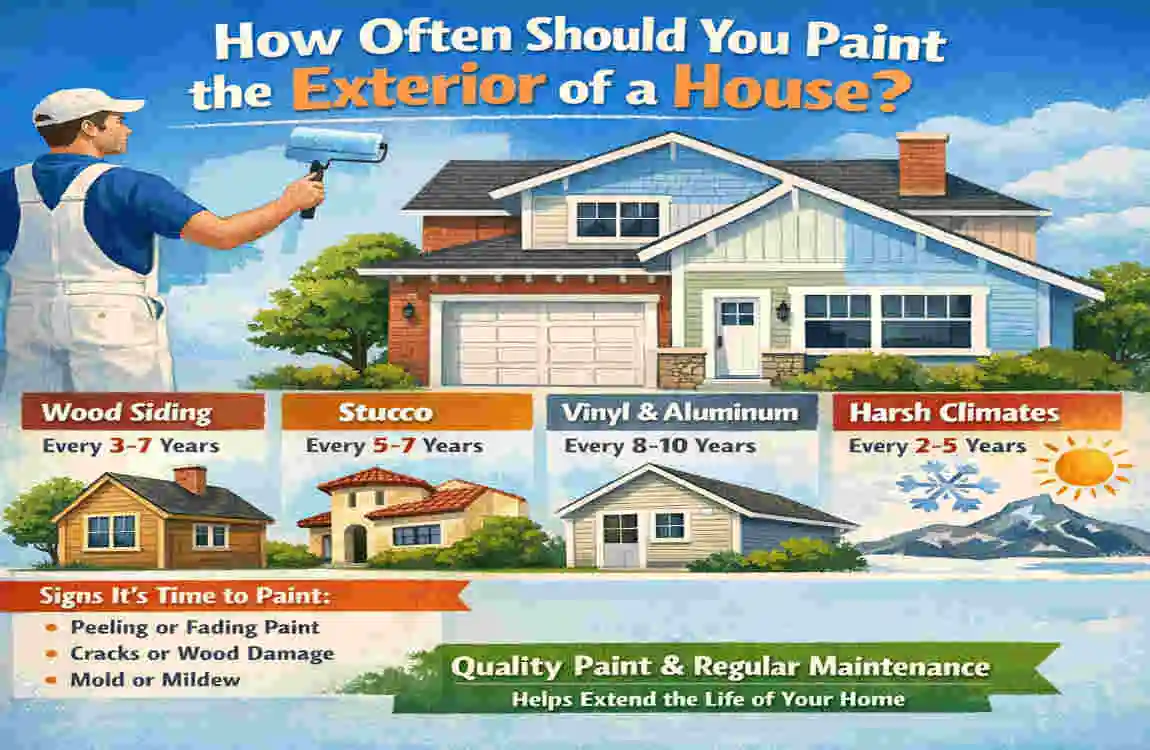
There is no single answer for every home. The timeline depends on the material, weather, and the amount of wear the house gets.
Factors That Affect Paint Lifespan
Several things can make paint last longer or wear out sooner:
- Strong sunlight
- Heavy rain
- Humidity
- Poor surface preparation
- Low-quality paint
- Lack of maintenance
If your home faces harsh conditions, you may need to repaint sooner.
Wood, Stucco, Brick, and Other Surfaces
Different materials have different needs.
- Wood usually needs painting more often because it absorbs moisture.
- Stucco may last a bit longer, but cracks should be checked often.
- Brick can last a long time if properly painted and maintained.
- Fiber cement and metal often hold paint well, but still need regular care.
Climate and Sun Exposure
Homes in hot, sunny areas often need repainting more often because UV rays break down paint faster. Homes in wet or windy areas may also wear down sooner.
If one side of your house gets more sun, that side may fade faster than the others.
How to Prepare Before Painting Your House Exterior
Good preparation is just as important as the paint itself. If you skip prep work, even high-quality paint may not last long.
Clean the Exterior Surface
Start by washing away dirt, dust, mildew, and loose debris. A clean surface helps the paint stick better.
If there are stains or mold spots, remove them first. Painting over dirty walls can trap problems under the new coat.
Repair Cracks and Damage
Check the walls, trim, and corners for cracks or holes. Fill them before painting so the finish looks smooth and even.
This step also helps protect the home from water getting inside.
Scrape Loose Paint
Old paint that is peeling or flaking should be removed. New paint will not hold well on a weak base.
Scraping the loose areas gives the new coat a solid surface to grab onto.
Apply Primer When Needed
Primer is helpful when you are painting bare wood, making a big color change, or covering stains. It helps the paint look better and last longer.
If you are unsure, primer is often worth the extra effort.
Common Mistakes to Avoid When Painting Outside
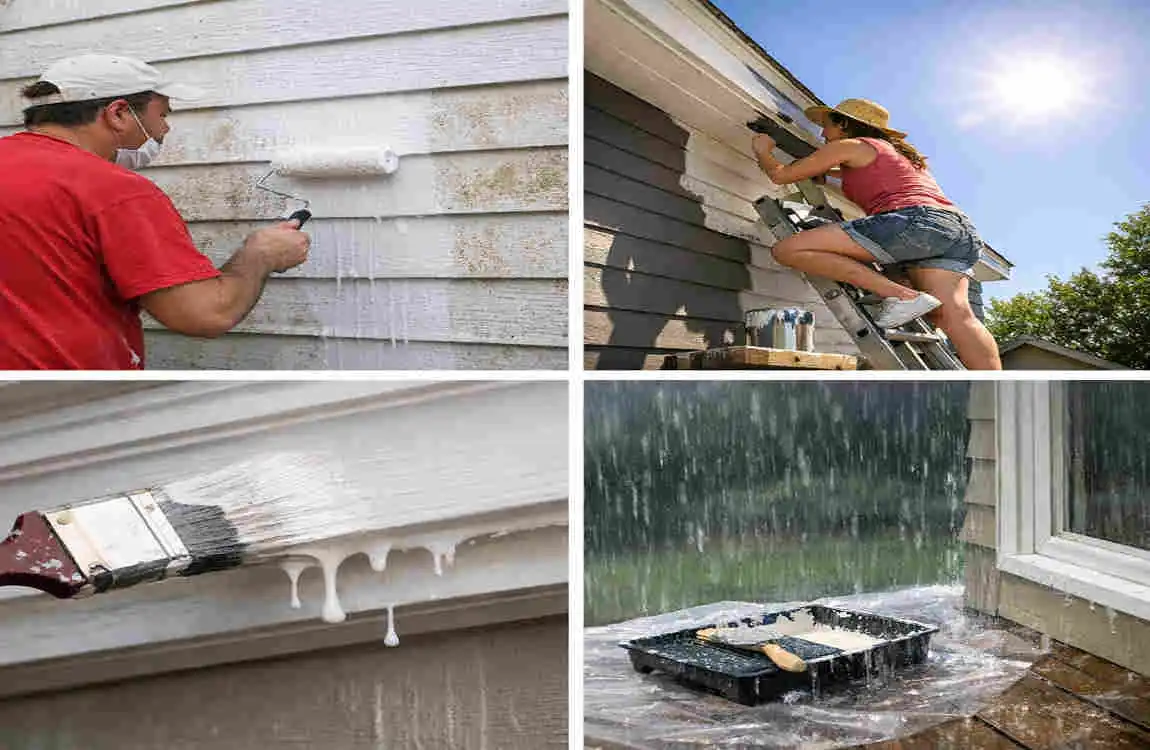
Many paint jobs go wrong because of simple mistakes. If you want better results, try to avoid these common problems.
Painting in Extreme Heat or Cold
Very hot or very cold weather can ruin the finish. Paint may dry too fast, too slow, or not properly at all.
Try to work on a mild day instead of rushing into poor weather.
Ignoring Weather Forecasts
A clear morning does not always mean a clear day. Sudden rain or rising humidity can affect the job.
Always check the forecast before you begin, and leave enough time for the paint to dry.
Painting Over Damp Surfaces
This is a very common mistake. Even if a wall looks dry, it may still retain moisture.
Painting over damp surfaces often leads to peeling, bubbling, and shorter paint life.
Using Poor-Quality Paint or Tools
Cheap paint may save money at first, but it often needs replacing sooner. The same goes for low-quality brushes and rollers.
Better tools usually give a smoother finish and help the paint last longer.
Frequently Asked Questions
What is the best month to paint the exterior of a house?
The best month depends on your local climate, but many homeowners choose late spring or early fall because the weather is usually mild and dry.
What temperature is too cold to paint outside?
In most cases, temperatures below 50°F can be too cold for many exterior paints. Always check the paint label for the exact range.
Can you paint the exterior of a house in hot weather?
Yes, but very hot weather is not ideal. Paint may dry too quickly and leave marks, so early morning or cooler days work better.
How do I know when to paint the exterior of a house?
Look for fading, peeling, cracks, bubbling, exposed wood, or mildew. These are strong signs that it is time to repaint.
How often should an exterior house be painted?
Most homes need repainting every 5 to 10 years, but this depends on the surface, weather, and paint quality.
Can rain ruin freshly painted exterior walls?
Yes, rain can damage fresh paint if it has not dried fully. That is why dry weather is so important.
| Factor | Best Time | Why It Matters |
|---|---|---|
| Season | Spring or early fall | Offers mild, stable weather |
| Temperature | 50°F–85°F | Helps paint dry properly |
| Humidity | Low to moderate | Prevents slow drying and peeling |
| Rain | Dry forecast for 24–48 hours | Protects fresh paint |
| Sunlight | Morning or indirect sunlight | Avoids overly fast drying |
| Surface Condition | Clean and dry exterior | Improves paint adhesion |
