

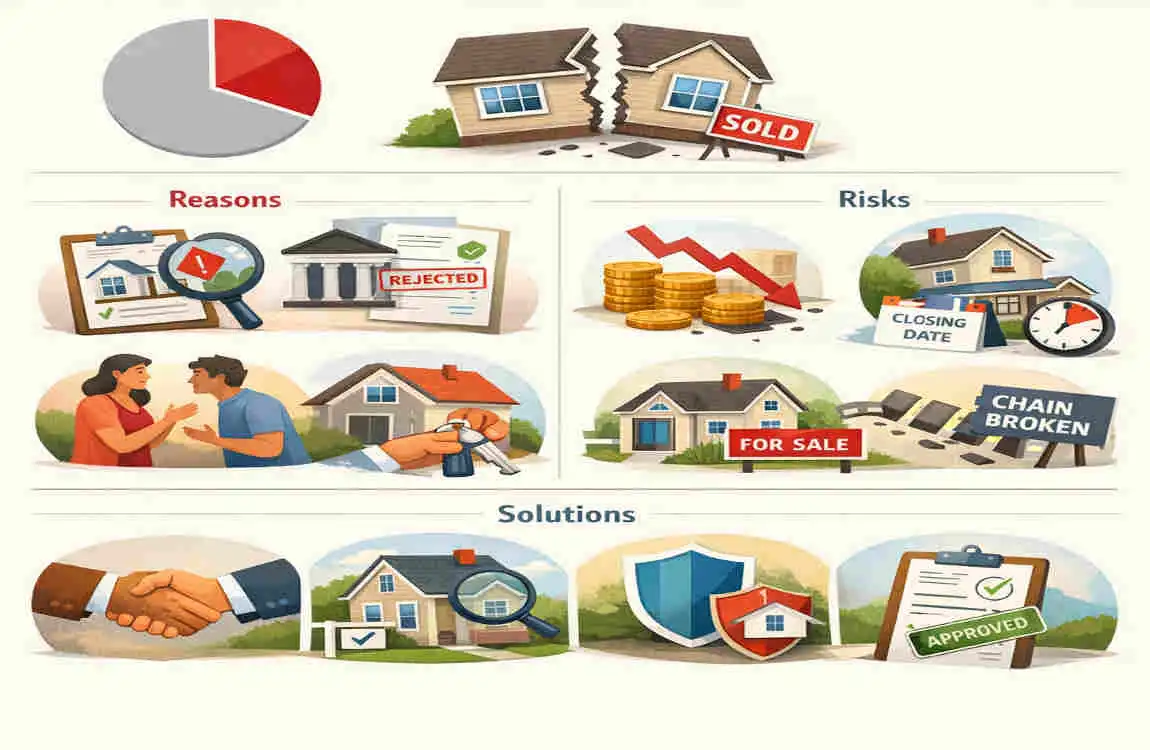
Buying or selling a home is a big step. It takes time, money, and a lot of planning. But even when both sides agree, the deal does not always reach closing.
That is why many people ask, what percentage of house sales fall through? The truth is, the rate changes by market, location, lending rules, and buyer confidence. Some deals fail because of mortgage problems. Others fall apart after inspections, appraisals, or personal changes.
What Percentage of House Sales Fall Through?
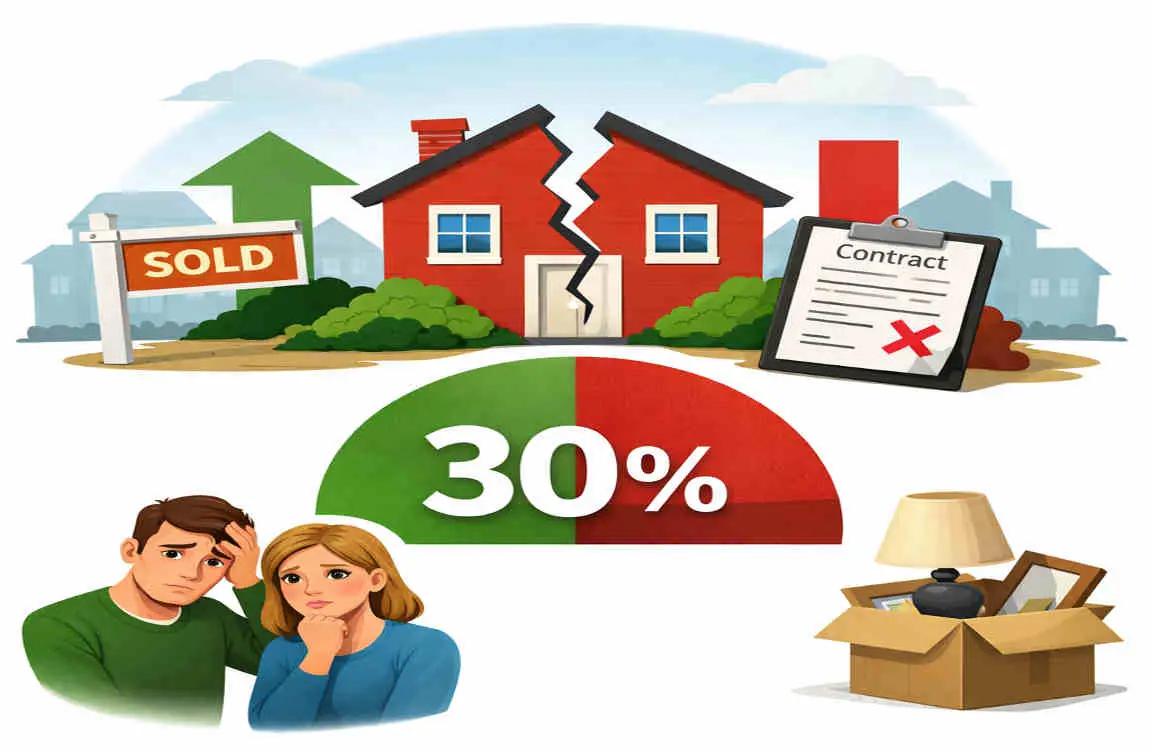
Average Percentage of Failed Home Sales
There is no single fixed number that fits every market. The percentage of luxury house sales that fall through can shift depending on local demand, interest rates, and economic conditions.
In a strong market, deals may close more smoothly. In a weaker market or during periods of financial pressure, more sales may fall through before completion. So instead of focusing only on a single figure, it helps to understand why fall-throughs occur.
When Do Most House Sales Fall Through?
Most failed sales happen at a few key stages:
- After the offer is accepted
- During mortgage approval
- After the home inspection
- Before final closing
This is usually the point where problems become visible. The buyer may find issues with the home, or the lender may decide the loan is too risky.
Factors That Influence Fall-Through Rates
Several things can raise or lower the chance of a deal failing:
- Competitive housing markets
- Rising mortgage rates
- Strict lending rules
- Property condition
- Buyer confidence
When buyers feel uncertain, they are more likely to walk away. When lenders become stricter, approvals also become harder.
Common Reasons Why House Sales Fall Through
Buyer Cannot Secure Mortgage Approval
This is one of the biggest reasons a sale fails. A buyer may look ready on paper, but the lender may still reject the loan.
Common problems include:
- Low credit scores
- High debt levels
- Income changes
- Employment issues
What helps: Buyers should get mortgage pre-approval early and avoid major financial changes while the sale proceeds.
Home Inspection Reveals Major Problems
A home inspection can uncover serious issues that were not obvious at first.
These may include:
- Structural damage
- Roof problems
- Plumbing issues
- Electrical concerns
- Foundation defects
When this happens, the buyer may ask for repairs, try to renegotiate the price, or cancel the deal.
Property Appraisal Comes in Too Low
Lenders want to know the home is worth the agreed price. If the appraisal is lower than expected, financing can become a problem.
Possible solutions include:
- Renegotiating the price
- Challenging the appraisal
- Increasing the buyer’s down payment
Buyer Changes Their Mind
Sometimes the buyer decides not to continue. This can happen if they find another property, worry about money, or feel unsure about the move.
A home purchase is emotional as well as financial. If the buyer loses confidence, the deal may stop.
Seller Decides Not to Continue
Sellers can also back out in some cases. Common reasons include:
- A better offer appears
- Moving plans change
- Personal circumstances shift
- Timing no longer works
This can be frustrating for buyers, but it does happen.
Title or Legal Issues
Sometimes the problem is not the home itself, but the paperwork.
Issues may include:
- Ownership disputes
- Unpaid property taxes
- Liens on the property
- Incorrect legal documents
A proper title search helps reduce this risk.
Risks of a House Sale Falling Through
Financial Losses
When a sale fails, both sides may lose money. Costs can include inspection fees, appraisal fees, legal work, and marketing expenses.
Even if the home sells later, the first failed deal can still be expensive.
Delayed Moving Plans
A failed sale can affect your next move. You may need to delay buying another home, reschedule a relocation, or change family plans.
That can create a lot of pressure.
Emotional Stress
A collapsed deal often feels disappointing. You may have already imagined life in the new home or planned your next step.
That disappointment can be hard to deal with.
Market Changes
The longer a deal takes, the more the market can shift. Interest rates may rise, demand may slow, or prices may change.
That can affect both the seller and the buyer.
How to Prevent a House Sale From Falling Through
For Sellers
Prepare the Home Before Listing
Fix obvious problems before putting the home on the market. Clean it, repair small issues, and improve curb appeal.
A well-kept home creates more confidence.
Set a Realistic Asking Price
Overpricing can scare away serious buyers. A fair price based on market research usually works better.
Choose Reliable Buyers
Check whether buyers are truly prepared. Look at their mortgage pre-approval and work with experienced agents when possible.
For Buyers
Get Mortgage Approval Early
This helps you understand your budget and reduces the risk of last-minute financing issues.
Do Proper Research
Learn about the property, the neighbourhood, and the condition of the home. Do not skip inspections.
Avoid Major Financial Changes
Do not take out new loans, change jobs, or make large purchases while your home purchase is in progress.
Quick Prevention Checklist
- Price the modern home correctly
- Keep communication clear
- Complete inspections early
- Prepare documents in advance
- Avoid last-minute changes
What Happens When a House Sale Falls Through?
Before Exchange or Contract Signing
In many places, either side may still be able to walk away before contracts are fully signed. Some costs may still be lost, but legal consequences are often limited at this stage.
After Signing the Contract
Once a contract is signed, things become more serious. There may be penalties, deposit issues, or legal consequences depending on the agreement.
Relisting the Property
If the sale fails, the seller can relist the home. It helps first to understand why the deal failed, then make any needed improvements before finding another buyer.
How Real Estate Professionals Help Prevent Failed Sales
Role of Real Estate Agents
Agents help with pricing, buyer screening, communication, and negotiation. They also help keep the process moving smoothly.
Role of Mortgage Professionals
Mortgage experts guide buyers through loan approval and help reduce financing risks.
Role of Home Inspectors and Appraisers
Inspectors and appraisers help reveal problems early. That protects both the buyer and the lender from costly surprises.
House Sale Fall-Through Statistics and Market Trends
The answer to what percentage of house sales fall through changes over time because the market changes.
How Market Conditions Affect Failed Sales
- In a seller’s market, deals may move faster, but buyers can still back out.
- In a buyer’s market, there may be more negotiation and more chances for a deal to weaken.
- During periods of high interest rates, financing problems often increase.
Why Fall-Through Rates Change Over Time
Things like mortgage availability, luxury housing inventory, and consumer confidence all affect how often deals collapse. When people feel less secure, they are more likely to hesitate.
Tips for Successfully Completing a Home Sale
- Price the home correctly
- Work with trusted professionals
- Complete inspections early
- Keep communication clear
- Prepare documents in advance
- Avoid last-minute changes
These simple steps can make a big difference.
Frequently Asked Questions
What percentage of house sales fall through?
The exact percentage varies by market conditions, location, and economic factors. There is no single number that fits every area.
What is the biggest reason house sales fall through?
Mortgage approval problems are one of the most common causes.
Can a buyer back out after an offer is accepted?
Yes, depending on the contract terms and local laws, buyers may be able to withdraw under certain conditions.
Can a seller cancel a house sale?
In some cases, yes. But after contracts are signed, there may be penalties or legal issues.
How can sellers prevent a house sale from falling through?
They can price the home realistically, prepare it well, and work with serious buyers.
| Topic | Information |
|---|---|
| Average Percentage of House Sales That Fall Through | Around 10%–20% of home sales may fail before closing, depending on the market, location, and economic conditions. |
| Common Reason #1: Financing Problems | Buyers may fail to get mortgage approval, face income changes, or have poor credit issues. |
| Common Reason #2: Low Home Appraisal | If the property appraises for less than the agreed price, buyers and sellers may not reach a new agreement. |
| Common Reason #3: Home Inspection Issues | Major repairs, structural problems, plumbing, roofing, or electrical issues can cause buyers to cancel. |
| Common Reason #4: Buyer Changes Mind | Some buyers withdraw due to personal situations, changing priorities, or finding another property. |
| Common Reason #5: Title or Legal Issues | Ownership disputes, unpaid taxes, liens, or paperwork errors can delay or stop a sale. |
| Risks for Sellers | Lost time, extra marketing costs, missed opportunities, and restarting the selling process. |
| Risks for Buyers | Lost inspection fees, appraisal costs, moving delays, and difficulty finding another home. |
