

Painting your home’s exterior is not just about picking a nice color. Timing matters a lot. If you paint at the wrong time, the finish may dry too fast, dry too slowly, peel early, or look uneven.
That is why many homeowners ask when the best time to paint a house’s exterior is. The short answer is this: mild, dry, stable weather is usually best. In many places, that means late spring, summer, or early fall.
When Is the Best Time to Paint the Exterior of a House?
The best time to paint your house exterior is usually when the weather is dry, mild, and steady. Paint needs time to stick, settle, and cure properly.
Best Overall Season for Exterior Painting
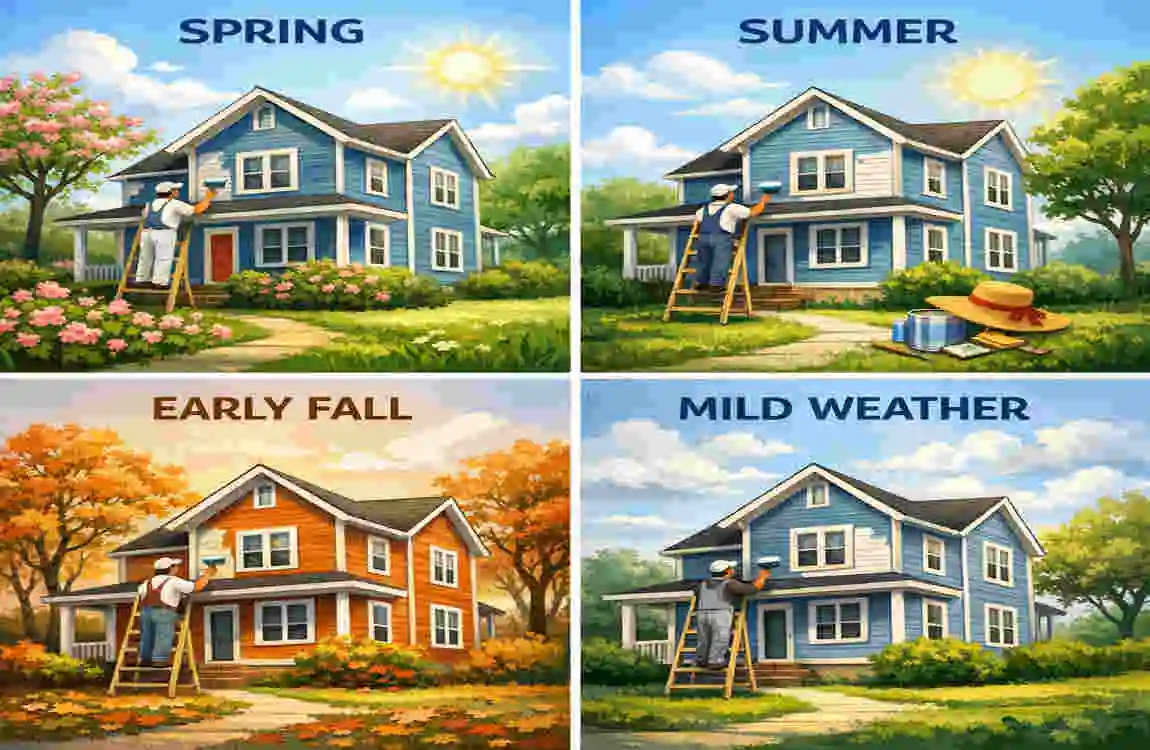
For many homes, late spring, summer, and early fall are the best seasons. These months often bring warmer temperatures and fewer weather surprises.
That matters because paint performs better when the weather stays consistent. If it is too cold, too wet, or too hot, the paint may not bond well.
Why Weather Conditions Matter
Weather affects every part of the job.
- Temperature helps paint dry at the right speed.
- Humidity affects how long it takes to dry.
- Rain can ruin fresh paint.
- Wind can bring dust and debris.
- Direct sunlight can make paint dry too quickly.
- Nighttime temperatures matter just as much as daytime temperatures.
The Best Temperature for Exterior Paint
Most exterior paints work best within the temperature range listed on the product label. That is the safest rule to follow.
In general, extreme heat or cold can cause problems. If the surface is too hot, the paint may flash dry. If it is too cold, it may not cure properly. Always check both daytime and nighttime temperatures before starting.
Best Time to Paint Your House by Season
Each season has its own pros and cons. The right choice depends on your local climate.
Painting Your House in Spring
Spring can be a good time because temperatures often become more moderate after winter.
But spring also brings two common problems: rain and changing temperatures. You may get a warm day followed by a cold night or a wet afternoon. That is why you should only paint when the forecast shows several dry days in a row.
Painting Your House in Summer
Summer often brings warm, dry weather, which is ideal for exterior painting.
Still, very hot days can create trouble. Direct sun can make the surface too hot, and paint may dry before it levels out smoothly. If you paint in summer, try working early in the morning or later in the day, when the surface is cooler.
Painting Your House in Fall
For many homeowners, early fall is one of the best times to paint.
The weather is often mild, the humidity is lower, and the heat is not as intense. The key is to finish before cold nights and seasonal rain arrive. Early fall usually gives the best balance of comfort and paint performance.
Painting Your House in Winter
Winter is usually the hardest season for exterior painting. Cold air, damp surfaces, and short daylight hours can all cause issues.
That said, winter painting may still work in some mild climates or with specialized paints. But in most places, it is not the first choice.
Best Time of Day to Paint a House Exterior
Even on a good day, the time of day matters.
Morning vs. Afternoon Painting
Morning can be a smart choice because the temperature is still rising and the sun is not too strong yet. But do not start too early if the surface is damp with dew.
Afternoon can work too, but very hot walls may dry paint too fast. The best time is usually when the surface is dry, warm, and not overheated.
Avoid Painting in Direct Sunlight
If the sun hits the wall directly, the surface can become too hot. That can cause the paint to dry unevenly.
Whenever possible, follow the shade around the house. This helps the paint dry more naturally and gives a smoother finish.
How Weather Affects Exterior Paint
Weather is one of the biggest factors in whether paint jobs succeed or fail.
Temperature
Paint needs the right temperature to dry and cure well. Too much heat can make it dry too quickly. Too much cold can slow it down or stop it from bonding properly.
Humidity
High humidity slows drying. If the air is too moist, the paint may stay tacky longer than expected. Never paint over a damp surface.
Rain
Rain is a major problem, both before and after painting. If rain is expected soon, wait. Fresh paint needs enough dry time to set before any moisture hits it.
Wind
Wind can blow dirt, leaves, and dust onto wet paint. It can also make working conditions unsafe on ladders or tall walls.
Signs It Is the Right Time to Paint Your House
Here is a simple table to help you judge the conditions.
Condition Is It Good for Painting?
Mild temperatures Yes
Dry exterior surface Yes
Stable weather forecast Yes
Moderate humidity Yes
Heavy rain expected No
Extreme heat No
Freezing temperatures No
Strong winds Usually no
If most of the answers are yes, you probably have a good window for painting.
How to Prepare Your House Before Exterior Painting
Good preparation helps paint last longer and look better.
Inspect the Exterior
Look for peeling paint, cracks, rot, damaged siding, and water stains. Fixing problems early can save you money later.
Clean the Surface
Wash away dirt, mildew, dust, and loose debris. The surface must be fully dry before painting.
Scrape and Sand
Remove loose paint and smooth rough spots. This helps the new paint stick better and look more even.
Prime Where Necessary
Primer helps cover bare spots, repaired areas, and stains. It is not always needed everywhere, but it can make a big difference in problem areas.
Check the Weather Forecast
Do not just check today’s weather. Look at the next few days too. You want a stretch of dry, mild, stable conditions.
Common Mistakes to Avoid
A few simple mistakes can damage the final result.
- Painting right before rain
- Painting on a wet surface
- Ignoring nighttime temperatures
- Painting in strong wind
- Painting during extreme heat
- Skipping surface preparation
- Applying the next coat too soon
- Ignoring the paint label instructions
If you avoid these errors, your paint job has a much better chance of lasting.
How Climate Changes the Best Painting Time
Your location matters a lot.
Hot and Dry Climates
In hot areas, paint can dry too fast. Try painting in the cooler part of the day and work on shaded sides first.
Humid Climates
In humid places, drying takes longer. You may need extra time between coats and more careful weather planning.
Cold Climates
Cold regions often have a shorter painting season. Late spring through early fall may be your safest window.
Rainy Climates
If your area gets frequent rain, watch the forecast closely. You may need to wait for a longer dry stretch before starting.
How Long Does Exterior House Paint Take to Dry?
Drying time depends on the paint, weather, and surface.
Paint usually goes through three stages:
- Surface dry: the top feels dry
- Recoat time: the next coat can be applied
- Fully cured: the paint has hardened completely
Always follow the paint manufacturer’s directions. Temperature, humidity, wind, and surface material can all change drying time.
How Often Should You Paint Your House Exterior?
There is no one-size-fits-all answer. It depends on:
- Climate
- Paint quality
- Surface material
- Sun exposure
- Moisture
- Previous preparation
A home may need repainting sooner if it gets a lot of sun, rain, or shifting weather. Watch for peeling, fading, cracking, or exposed siding.
Choosing the Right Exterior Paint
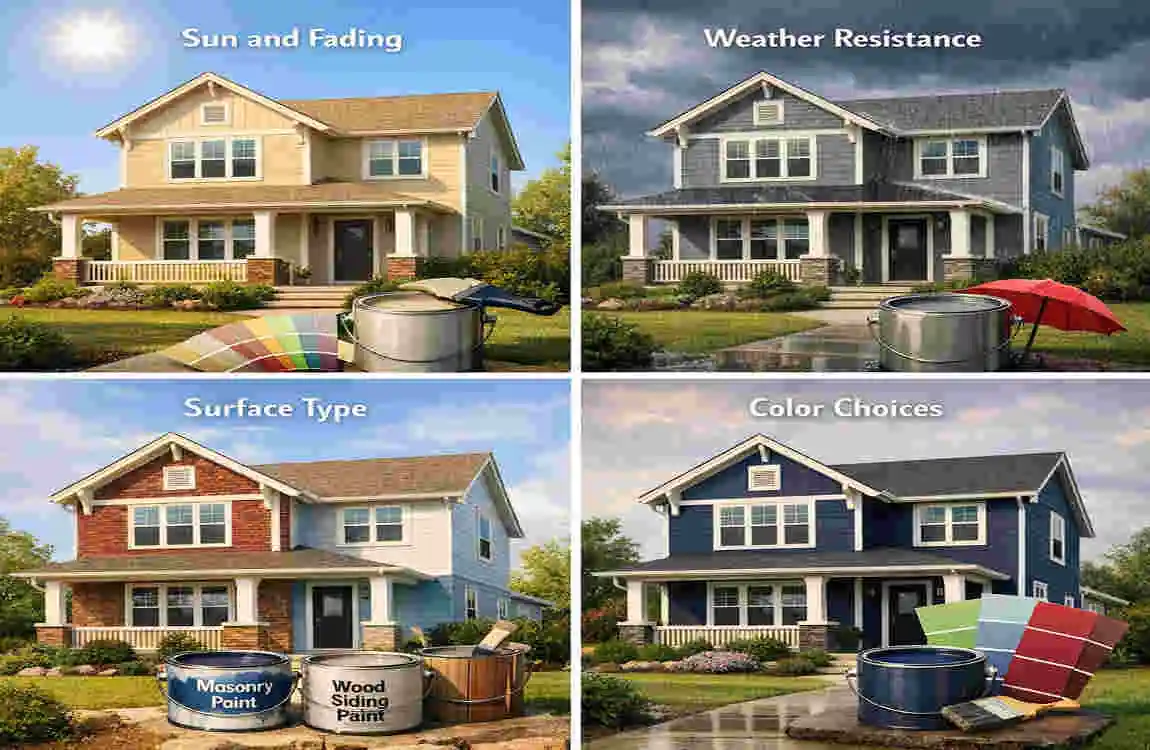
The right paint also affects results.
Consider Your Exterior Material
Different surfaces need different paint types. Wood, vinyl, fiber cement, stucco, and masonry may all need specific products.
Choose Paint for Your Climate
If your home faces lots of rain, moisture resistance matters. If it gets strong sun, UV resistance becomes more important.
Follow Manufacturer Instructions
This is one of the most important steps. The label tells you the correct temperature range, drying time, and application instructions.
Professional vs. DIY Exterior Painting
You can paint yourself in some cases, but not every project is a DIY job.
When DIY Painting Makes Sense
DIY can work if the home paint is smaller, the surface is in good shape, and you have the right tools and time.
When to Hire a Professional
Hire a pro if the home is large, multi-story, damaged, or hard to reach. A professional can also help when the prep work is complex.
Frequently Asked Questions
When is the best time to paint the exterior of a house?
The best time is usually during mild, dry, stable weather, often in late spring, summer, or early fall, depending on your local climate.
Is summer a good time to paint a house exterior?
Yes, summer can work well, but very hot sun can cause paint to dry too quickly.
Is spring a good time to paint the outside of a house?
Yes, but spring weather can change fast, so you need to watch for rain and temperature swings.
Can you paint a house exterior in the fall?
Yes, early fall is often excellent because temperatures are usually moderate and weather is more stable.
What temperature is too cold to paint outside?
It depends on the paint product, so always check the label. Some paints need warmer temperatures than others.
Can you paint a house exterior after rain?
Yes, but only after the surface is completely dry.
What time of day is best for exterior painting?
Usually when the surface is dry, temperatures are comfortable, and direct sunlight is not too strong.
How many days should you wait between coats of exterior paint?
This depends on the paint and weather. Always follow the manufacturer’s recoat time.
| Factor | Best Time / Condition | Why It Matters |
|---|---|---|
| Season | Spring or early fall | Mild temperatures help paint cure properly |
| Temperature | About 50–85°F (10–29°C) | Avoids poor adhesion and uneven drying |
| Weather | Dry, low-humidity days | Prevents moisture from affecting the finish |
| Sunlight | Paint in the shade | Helps prevent paint from drying too quickly |
| Rain | Avoid for at least 24 hours | Gives the paint enough time to set |
| Wind | Light wind | Reduces dust and debris sticking to wet paint |
| Best Time of Day | Late morning to afternoon | Surfaces are usually dry and temperatures are stable |
| Avoid | Extreme heat, cold, rain, or high humidity | These conditions can cause peeling, cracking, or uneven coverage |
