

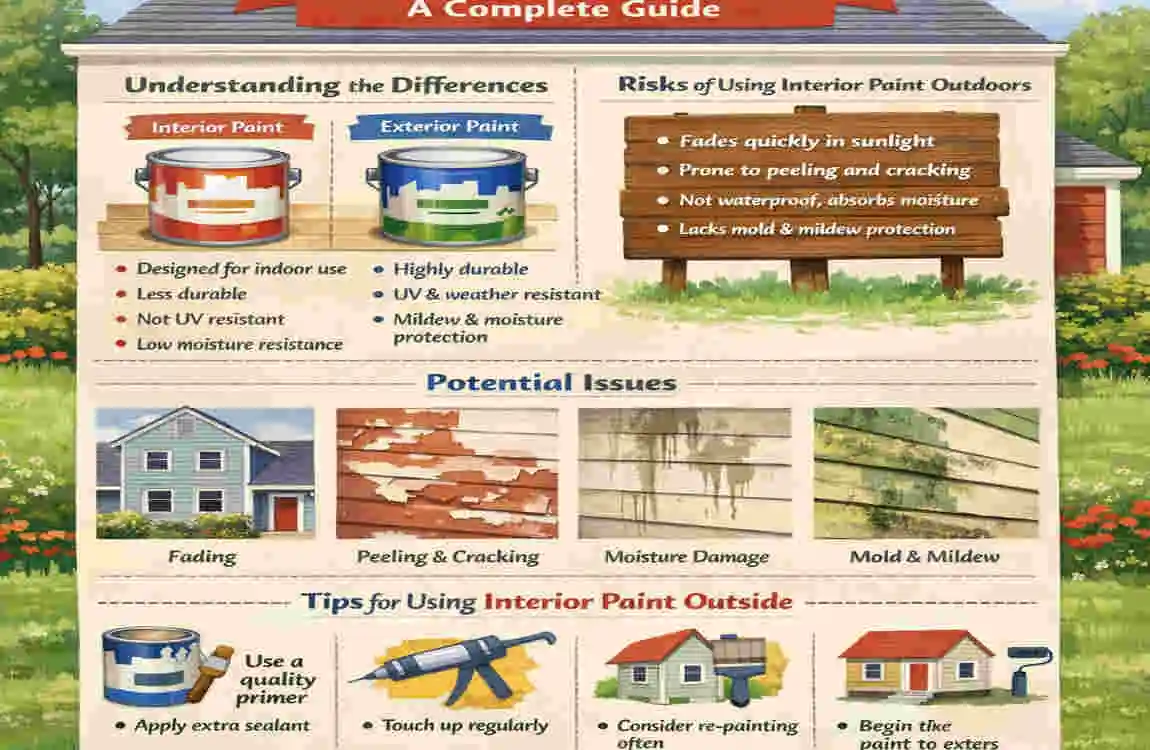
Exterior paint is built for tougher conditions. It is designed to stay flexible, resist moisture, and hold up better over time. That is why choosing the right paint matters so much for both appearance and durability.
Many homeowners ask this question when they have leftover paint from an indoor project. It may seem like a smart way to save money, but using interior paint outside can lead to peeling, fading, and faster wear.
Interior Paint vs Exterior Paint: What Is the Difference?
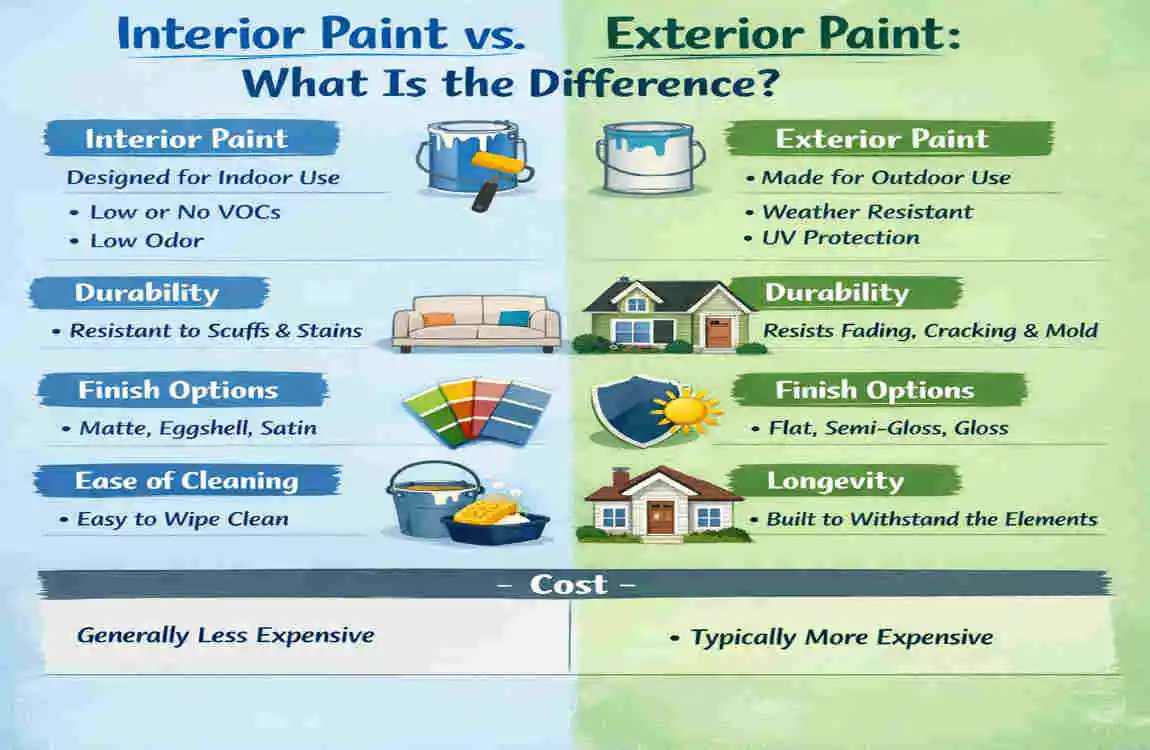
How Interior Paint Is Designed
Interior paint is made for indoor use, where conditions are usually more stable.
It is often designed to:
- Give a smooth, clean finish
- Have low odour
- Handle normal indoor humidity
- Be easy to wipe and clean
But it is not made to survive harsh weather. It doesn’t need the same level of protection as outdoor surfaces.
How Exterior Paint Is Designed
Exterior paint is made for the outdoors. It needs to handle:
- Rain and moisture
- Strong sunlight
- Heat and cold changes
- Expansion and shrinking of surfaces
It also contains special ingredients that help it stay flexible and resist cracking. This is important because outdoor surfaces move more than indoor ones.
Key Differences at a Glance
FeatureInterior PaintExterior Paint
Weather resistance Low High
UV protection Limited Strong
Moisture resistance Basic Better
Flexibility Lower Higher
Durability outdoors Poor Designed for it
Best use Indoor walls and trim Exterior walls, doors, and trim
What Happens If You Use Interior Paint Outside?
Peeling and Cracking
Outdoor surfaces expand and contract with temperature changes. Interior paint is not built to stretch and move as much, so it can lose grip on the surface.
This often leads to peeling, cracking, or flaking.
Fading From Sunlight
Sunlight is another big problem. UV rays can break down paint colour over time.
Interior paint usually fades faster outside because it doesn’t have the same UV protection as exterior paint.
Moisture and Mould Problems
Rain, dew, and humidity can damage interior paint outdoors. Moisture can get under the paint film and cause blistering, bubbling, or mildew growth.
That means the surface may start looking old and damaged much sooner than expected.
Shorter Paint Lifespan
Even if interior paint looks fine at first, it will usually fail much sooner outdoors. You may end up repainting far earlier than if you used a true exterior product.
In simple terms, interior paint outside is a short-term fix at best.
When Can Interior Paint Be Used Outside?
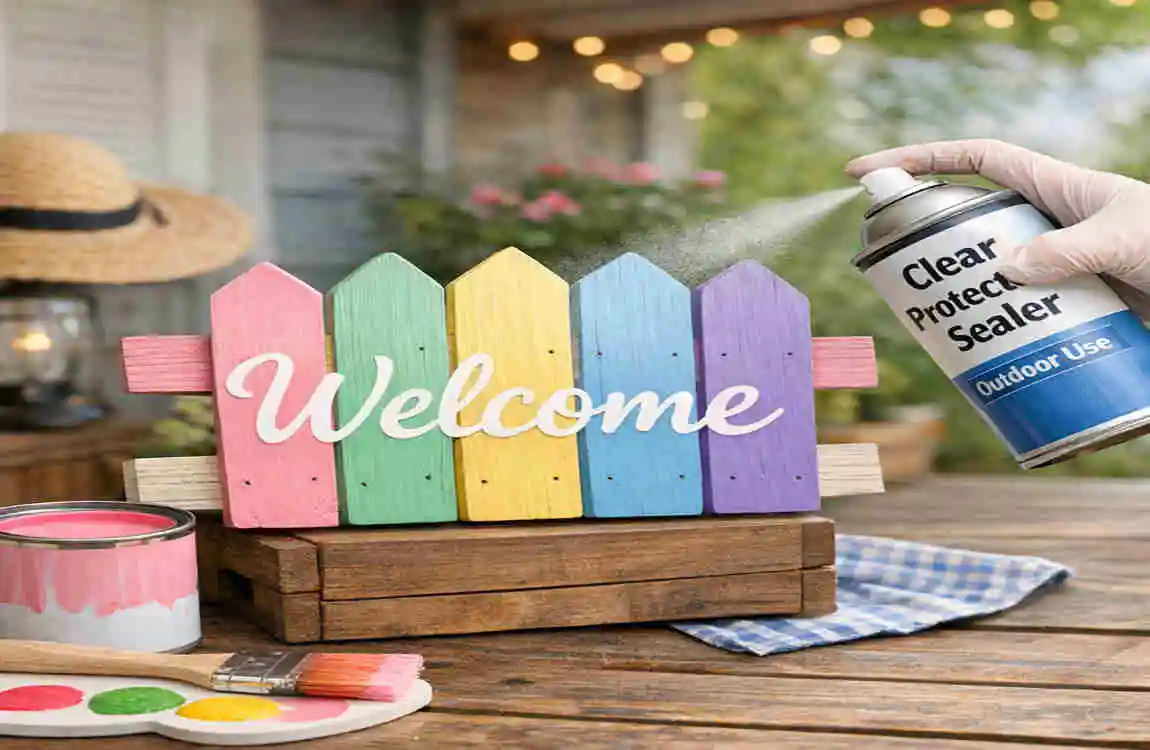
Very Limited Situations
Using interior paint outdoors is not recommended, but there are a few small exceptions.
For example, it may work for:
- A decorative item under a covered area
- A short-term display piece
- A project with very little weather exposure
Even then, protect the item from rain, heat, and direct sun as much as possible.
What Matters Most
Before using any paint outside, think about:
- The type of surface
- How much weather it gets
- How long you want the finish to last
- What the paint label says
Do not assume leftover interior paint can act like exterior paint. It usually cannot.
Can You Mix Interior and Exterior Paint?
Mixing them is usually a bad idea unless the manufacturer says it is okay.
Different formulas may not blend well. That can hurt the finish, the coating’s strength, and the paint’s overall life.
How to Choose the Right Exterior Paint
Choose Paint Based on the Surface
Different surfaces need different products.
Common outdoor surfaces include:
- Wood siding
- Brick
- Concrete
- Stucco
- Metal
- Exterior doors and trim
A paint that works well on wood may not be the best choice for masonry or metal.
Consider Local Weather Conditions
Your climate matters a lot.
If your area has:
- Heavy rain
- High humidity
- Strong sun
- Hot summers
- Cold winters
then you need a paint that can handle those conditions. A good exterior paint should suit your local weather, not just look nice on the shelf.
Select the Right Paint Finish
The finish affects both appearance and maintenance.
- Flat or matte: Hides small flaws well
- Eggshell: Soft look with a slight sheen
- Satin: Popular for outdoor trim and siding
- Semi-gloss: Easier to clean
- Gloss: Shiny and very durable, often used on doors and trim
Check the Paint Label
Always read the label before buying.
Look for:
- Exterior-use wording
- Surface recommendations
- Temperature range for application
- Drying time
- Curing instructions
The label tells you whether the product is right for your project.
How to Paint an Exterior Surface Correctly
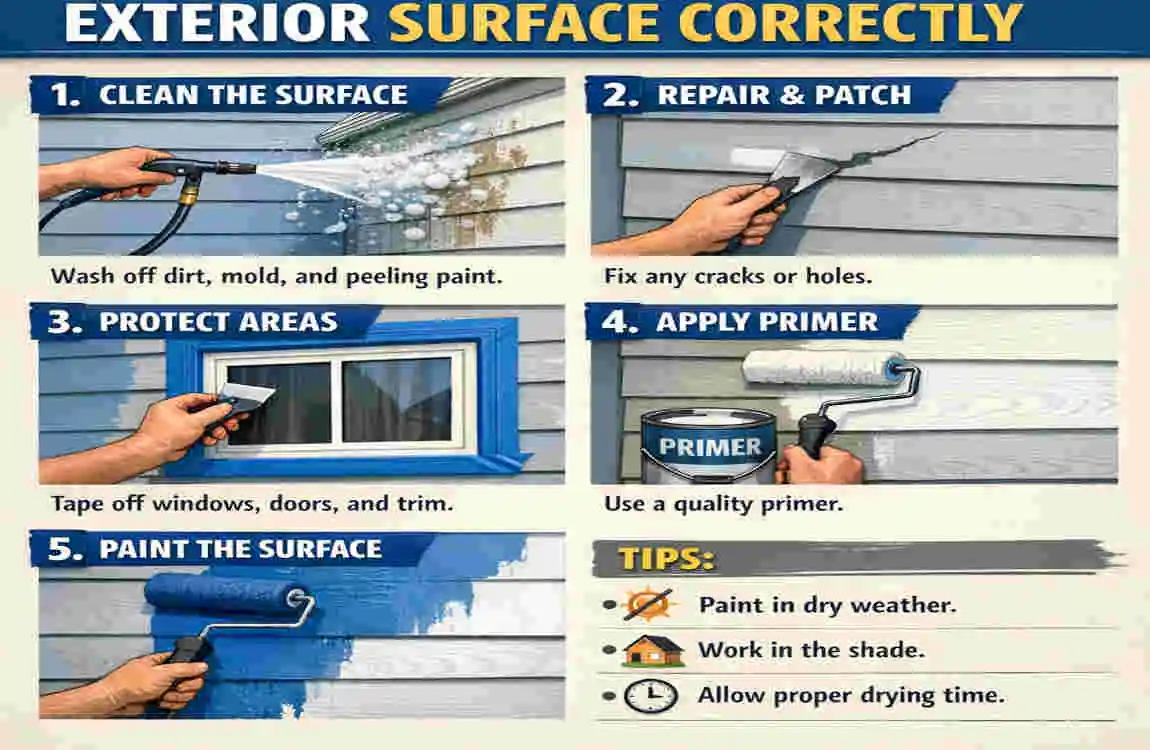
Prepare the Surface
Good prep makes a big difference.
Before painting:
- Clean dirt and dust
- Remove mildew
- Scrape off loose paint
- Fix cracks or damage
- Let wet areas dry fully
A clean surface helps the new paint stick better.
Use the Correct Primer
Primer is important in many exterior projects. It helps paint stick and gives you a more even finish.
It is especially useful for:
- Bare wood
- Masonry
- Metal
- Repaired areas
- Previously painted surfaces with stains or patchy spots
Apply Exterior Paint the Right Way
Use the right tools for the job:
- Brushes for edges and trim
- Rollers for large flat areas
- Sprayers for bigger projects, if you know how to use them well
Also, follow:
- The recommended number of coats
- Recoat times
- Weather conditions listed on the label
Do not paint in rain, extreme heat, or on damp surfaces.
Maintain the Painted Surface
Even exterior paint needs care.
Check the surface regularly for:
- Peeling
- Cracking
- Fading
- Mould or mildew
Catching small problems early can help the paint last longer.
Frequently Asked Questions
Can I use interior paint on the exterior?
Usually no. Interior paint is not made for outdoor weather, so it tends to fail faster than exterior paint.
What happens if I use interior paint outside?
You may see fading, peeling, cracking, moisture damage, and shorter paint life.
Can I use interior latex paint outside?
Not always. Even if it is latex-based, that does not mean it is safe for outdoor use.
Can I use leftover interior paint on an exterior door?
Only if the door is in a protected area and the paint label allows it. In most cases, exterior paint is the better choice.
Can I paint exterior walls with interior paint?
It is not a good idea. Exterior walls need paint designed to withstand weather, sunlight, and moisture.
Is exterior paint stronger than interior paint?
In outdoor conditions, yes. Exterior paint is made to handle harsher conditions, but that does not mean it is always the best choice indoors.
Can I mix interior and exterior paint?
Only if the manufacturer says the products are compatible. Otherwise, do not mix them.
How long will interior paint last outside?
There is no exact answer. It depends on weather exposure, surface type, and paint quality. Still, it usually will not last as long as exterior paint.
| Topic | Short Information |
|---|---|
| Can You Use Interior Paint Outside? | Not recommended. Interior paint is designed for controlled indoor conditions. |
| Weather Resistance | Interior paint generally cannot handle rain, sunlight, humidity, and temperature changes well. |
| Durability | Exterior paint contains additives that provide better resistance to peeling, cracking, and fading. |
| Moisture Protection | Exterior paint is formulated to better resist outdoor moisture and weather exposure. |
| UV Resistance | Exterior paints are designed to withstand sunlight and reduce color fading. |
| What Happens If Used Outside? | It may peel, crack, fade, or deteriorate much faster than exterior paint. |
| Best Paint for Exterior Walls | Choose a quality exterior-rated paint suitable for the specific surface. |
