

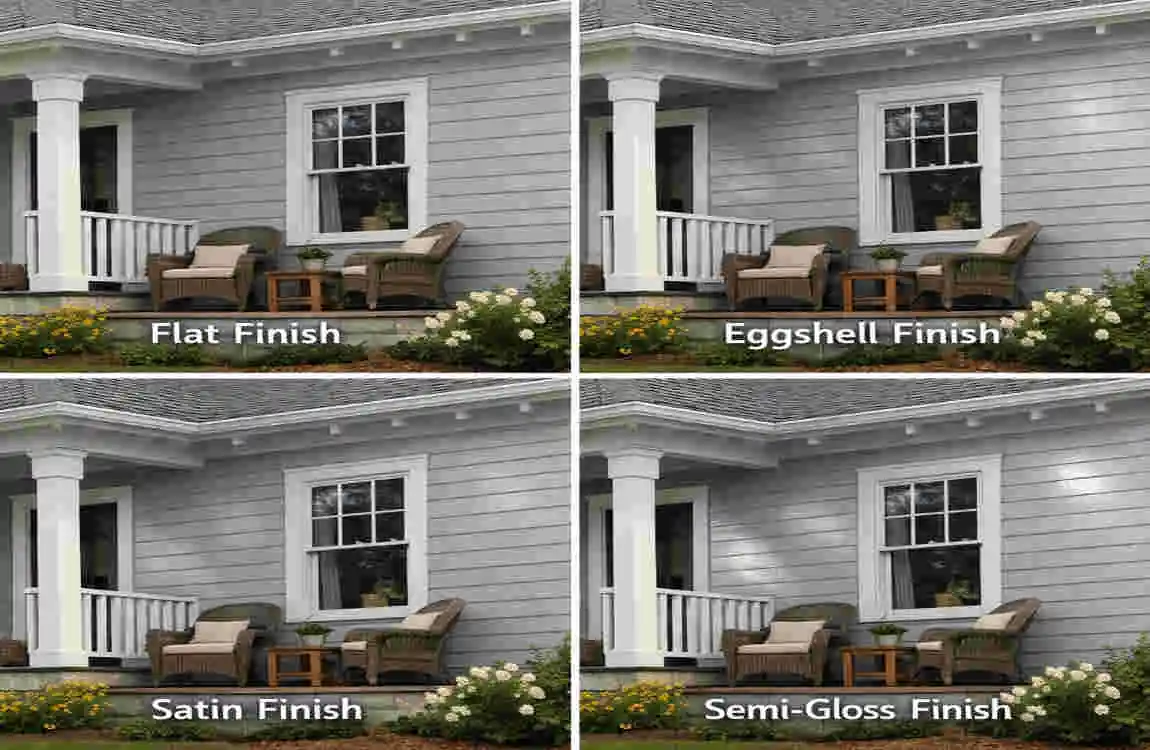
Flat paint is common in some exterior situations, but it is only one of several finish options. Exterior paint also comes in satin, semi-gloss, and gloss finishes, and each one works best in different places.
The sheen matters because outdoor surfaces face sunlight, rain, dust, and temperature changes. A finish that looks great on siding may not be the best choice for trim, doors, or shutters.
What Does Flat Exterior Paint Mean?
Definition of flat paint
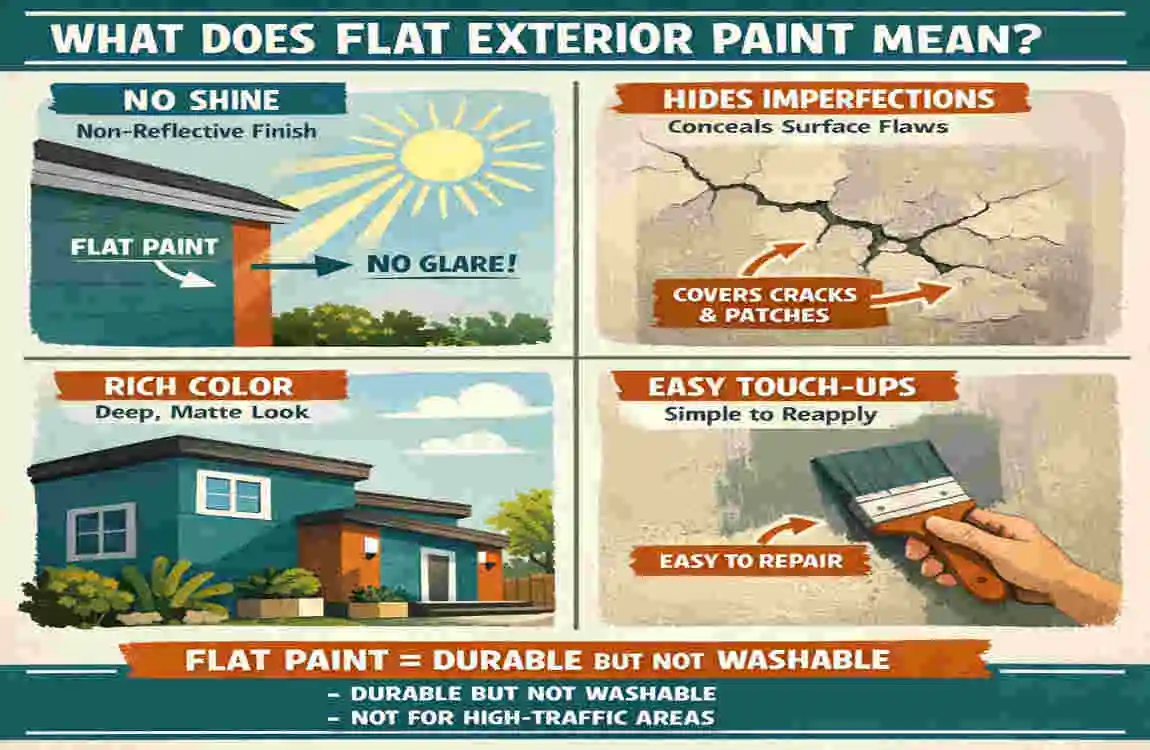
Flat paint, also called matte paint, has very little shine. It reflects almost no light, so it looks soft and smooth.
On exterior walls, it can create a calm, natural look. It doesn’t stand out with shine, which is why many homeowners like it for large wall areas.
Main characteristics of flat paint
Flat paint usually has these qualities:
- Low sheen
- Soft appearance
- Better at hiding small flaws
- Less reflection in bright sunlight
Because of this, it can make rough or uneven surfaces look more even.
Is most exterior paint flat?
Is most exterior paint flat? Not exactly, but flat paint is definitely common.
Many exterior walls use low-sheen finishes, but not every part of a house gets flat paint. Trim, doors, shutters, and other details often use a shinier finish because those areas need more durability and are easier to clean.
So, while flat paint is popular, it is not the only standard choice for exterior painting.
Why Is Flat Paint Popular for Exterior Walls?
It hides surface imperfections.
One of the biggest reasons people choose flat paint is that it hides flaws well.
If your exterior has small cracks, patch marks, or uneven texture, a low-sheen finish can make those issues less noticeable. That is especially helpful on older homes.
It creates a soft, modern look.
Flat paint gives homes a quiet, understated appearance. It does not draw attention to every detail, so the overall look feels smooth and clean.
That is why it works well for modern homes, minimalist designs, and homes that need a simple, elegant finish.
It reduces glare
Bright sunlight can make shiny paint look too reflective. Flat paint helps reduce that glare.
This can be useful in sunny areas where strong light hits the house for much of the day.
It works with different materials.
Flat exterior paint can work on several surfaces when the surface is properly prepared. These may include:
- Siding
- Stucco
- Masonry
- Some wood surfaces
That said, the surface condition and the paint type still matter a lot.
Flat vs. Satin vs. Semi-Gloss Exterior Paint
Flat finish
Flat paint has almost no shine. It looks smooth and soft, and it hides surface flaws well.
It is best for large wall areas where appearance matters more than easy cleaning.
Satin finish
Satin has a little more shine than flat paint. It still looks smooth, but it is easier to clean.
Many homeowners like satin because it balances appearance and durability.
Semi-gloss finish
Semi-gloss has a noticeable shine. It reflects more light and wipes down more easily.
This makes it a strong choice for doors, trim, shutters, and other details that need more protection.
Gloss and high-gloss finishes
Glossy paints have the most shine. They make details stand out and are usually used in smaller areas.
They are not commonly used for whole exterior walls because the shine can be too strong and flaws may show more clearly.
Where Should You Use Flat Exterior Paint?
Exterior walls
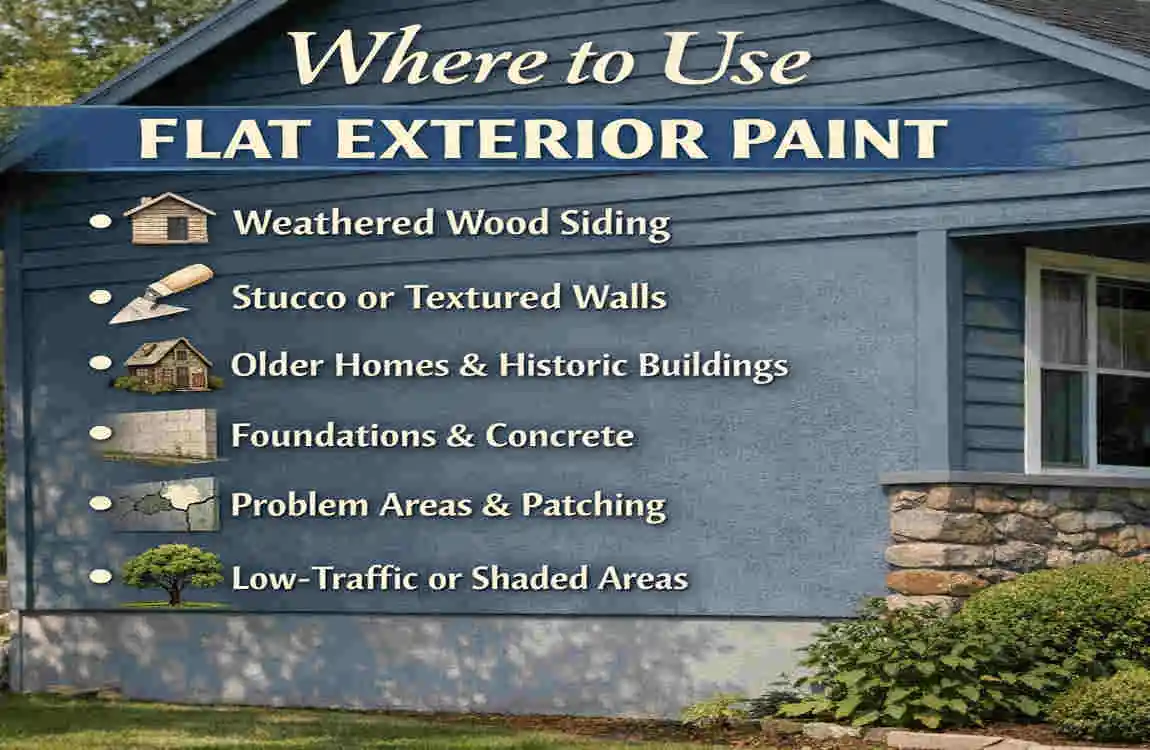
Flat paint works well on large wall areas because it gives a calm, even look. It is especially useful if you want the house to look smooth and simple.
Stucco and textured surfaces
Textured surfaces often look good with flat paint because the low sheen doesn’t fight the texture. Instead, it helps the surface look balanced.
Older exterior surfaces
If your home has minor marks or wear, flat paint can help soften the look of those flaws. This makes it a useful option for older homes.
Places that need more durability
Flat paint is not always the best choice for areas that get touched a lot or cleaned often. For those spots, satin or semi-gloss usually works better.
Pros and Cons of Flat Exterior Paint
Advantages
Flat exterior paint offers several clear benefits:
- Hides small flaws
- Reduces glare
- Looks soft and elegant
- Works well on broad wall areas
- Can suit many home styles
Disadvantages
There are also some drawbacks:
- Harder to clean
- May hold dirt more easily
- Not ideal for high-touch areas
- Needs good surface preparation
How weather affects exterior paint
Weather can change how any paint finish performs.
Sun can cause fading over time. Rain and moisture can affect the surface. Temperature changes can also stress the paint. Dust, humidity, and repeated weather exposure also matter.
That is why choosing the right finish is not just about looks. It is also about how the paint will hold up in your climate.
How to Choose the Right Exterior Paint Finish
Consider the surface
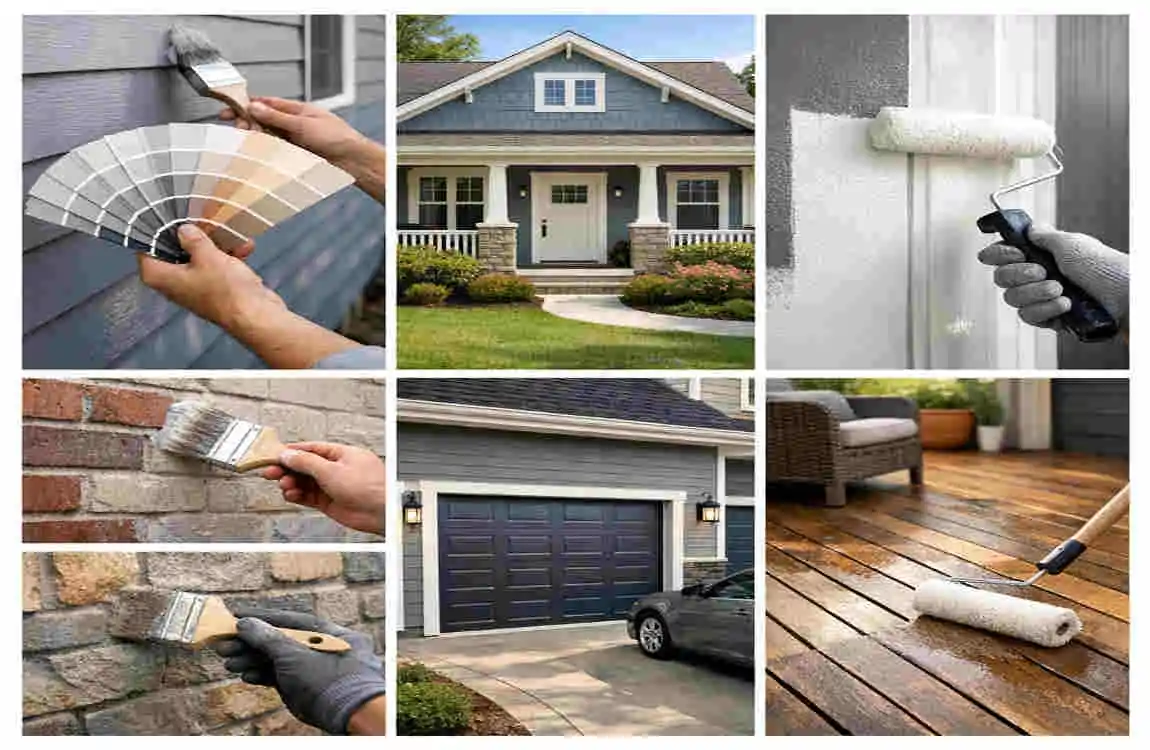
Different surfaces work better with different finishes.
- Wood siding may need a more durable finish
- Stucco often looks good with flat or low-sheen paint
- Brick and masonry may need special exterior products
- Trim and doors usually need a stronger, easier-to-clean finish
Consider your local weather.
If you live in a sunny or rainy area, match the finish to those conditions. A finish that looks great in one climate may not perform the same in another.
Consider maintenance
If you want easy cleaning, a higher-sheen finish is often better. If you care more about hiding flaws, flat paint may be the better option.
Consider your home’s style.
Your home’s style matters too. Traditional, modern, farmhouse, and historic homes may each look best with a different finish.
Simple tips for choosing
- Check the paint label and surface guide
- Test samples before painting the whole house
- Prepare the surface well
- Use exterior-rated paint only
Frequently Asked Questions About Exterior Paint
Is most exterior paint flat?
No, not all exterior paint is flat. Flat is common for some exterior walls, but many homes also use satin or semi-gloss finishes on trim, doors, and other details.
Is flat paint good for exterior walls?
Yes, it can be a good choice for exterior walls, especially if you want to hide imperfections and reduce shine.
Is flat or satin better for exterior paint?
Neither is always better. Flat looks softer and hides flaws better. Satin is easier to clean and usually lasts well on more exposed areas.
Can you use flat paint on exterior trim?
You can, but trim often does better with a more durable finish like satin or semi-gloss because it is touched more often.
Does flat exterior paint fade faster?
Not always. Fade resistance depends more on the paint quality, sun exposure, and surface preparation than on sheen alone.
Is matte the same as flat exterior paint?
Yes, most of the time the words are used similarly. Both describe a low-shine finish.
What exterior paint finish is easiest to clean?
Higher-sheen finishes like satin and semi-gloss are usually easier to clean than flat paint.
Can flat exterior paint be washed?
Yes, but gently. Always follow the paint maker’s instructions to avoid damaging the surface.
| Topic | Quick Information |
|---|---|
| Is exterior paint usually flat? | No. Exterior paints are commonly available in flat, satin, and semi-gloss finishes. |
| Flat exterior paint | Has very little shine and helps hide minor surface imperfections. |
| Satin exterior paint | Offers a soft sheen and is easier to clean than flat paint. |
| Semi-gloss exterior paint | More reflective and durable, often used for doors, trim, and shutters. |
| Best for exterior walls | Flat or satin, depending on the surface and desired appearance. |
| Best for trim | Satin or semi-gloss is often preferred for better durability. |
| Weather resistance | Depends more on the paint formulation and quality than simply the finish. |
