

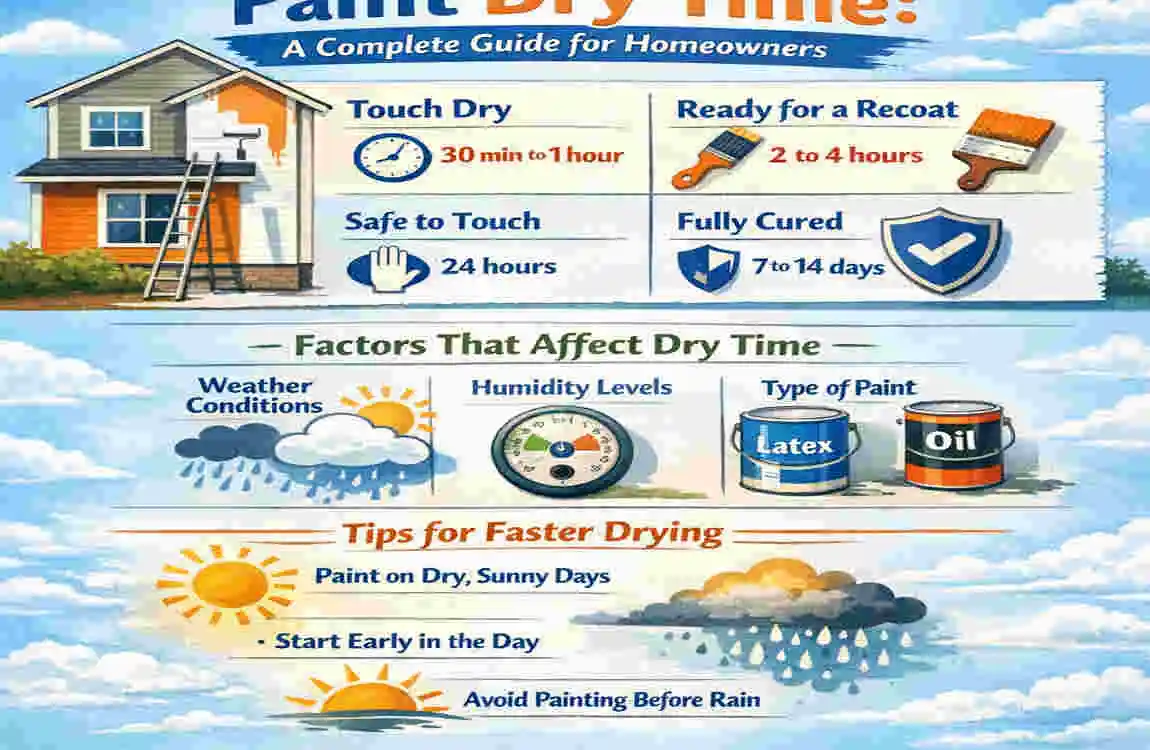
If you are planning to paint the outside of your house, one of the first questions you may ask is how long exterior paint takes to dry. That is a smart question because exterior painting depends heavily on timing, weather, and surface conditions.
The drying time also varies with the paint type, temperature, humidity, sunlight, wind, and the thickness of the paint application. So, if you want a smooth finish, it helps to know what to expect before you start.
How Long Does It Take for Exterior Paint to Dry?
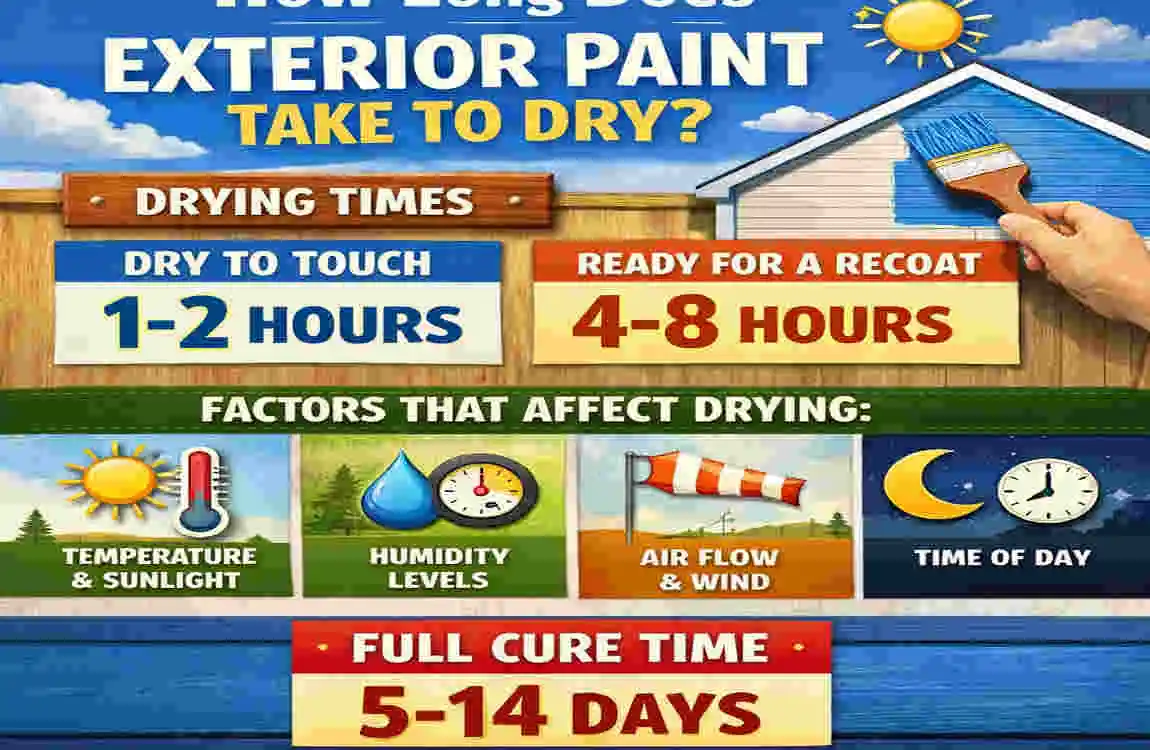
Typical Exterior Paint Drying Times
For most homes, exterior paint dries in stages.
- Touch-dry: The surface feels dry, but the paint is not fully hardened.
- Recoat time: The paint is ready for another coat.
- Full cure: The paint has fully hardened and reached its final strength.
Simple Dry-Time Table
Paint TypeTouch DryRecoatFull Cure
Latex/Acrylic About 1–2 hours About 4–6 hours Several days
Oil-Based Several hours About 24 hours Several days or longer
These are general time frames only. Always follow the manufacturer’s instructions, because different brands and products may dry at different speeds.
Drying vs. Curing
This is where many homeowners get confused.
Drying means the paint surface no longer feels wet.
Curing means the paint has fully hardened and become durable.
A wall can look dry long before it is cured. That is why you should not rush to clean, touch, or add the next coat too early.
Factors That Affect Exterior Paint Drying Time
Temperature
Temperature has a big effect on drying. Most exterior paints dry best in mild weather, not extreme heat or cold.
If it is too cold, the paint may not dry properly. If it is too hot, the outside surface can dry too fast while the inside is still soft.
Humidity and Moisture
High humidity slows drying because moisture stays in the air. When the air is already damp, the water in the paint cannot evaporate as quickly.
Painting on a damp surface can also cause poor adhesion. That may lead to peeling, bubbling, or a rough finish later.
Sun and Wind
Sunlight can help paint dry faster, but too much direct sun can create problems. The surface may dry unevenly or too quickly.
Wind can also help by moving moisture away. But very strong wind can blow dust and debris onto fresh paint, which may spoil the finish.
Paint Thickness and Surface Condition
Thicker coats take longer to dry than thin, even coats. That is why it is better to apply paint carefully rather than trying to finish in one heavy layer.
The surface itself matters too. Rough, porous, or unclean surfaces can change how the paint dries. If the wall was previously painted, that old layer can also affect the new coat.
How Different Exterior Paint Types Dry
Acrylic and Latex Paint
Acrylic and latex paints are very common for homes. They dry faster than oil-based paints and are often easier for homeowners to work with.
They are a good choice when you want a quicker project and a strong everyday finish. Because they dry faster, they can be easier to manage in changing weather.
Oil-Based Paint
Oil-based paint usually takes longer to dry and cure. It is less common for many modern homes, but it may still be used in some situations.
It can offer a durable finish, but the longer drying time means you need more patience between coats and before exposure to weather.
Primer and Paint Combinations
Primer is the base coat that helps paint stick better. It also affects the total project time.
If the primer is still damp, the top coat may not spread properly. So even if the paint is the main focus, the primer stage matters as much.
How to Tell If Exterior Paint Is Dry Enough
Look and Feel
A painted surface may look finished, but you should still check it carefully. If it feels sticky or tacky, it needs more time.
A fully dry surface usually looks even and smooth. The colour should also appear consistent across the area.
Careful Touch Test
If needed, do a gentle touch test in a hidden spot. Do this lightly so you do not damage the finish.
If the paint feels soft or leaves a mark, wait longer. Dry to the touch is not the same as fully cured.
When Is It Safe to Apply a Second Coat?
You should apply the second coat only after the first one reaches the right recoat time. This is usually a few hours for latex or acrylic paint, but longer for oil-based products.
If you paint too soon, the finish may become uneven or weak.
Common Mistakes to Avoid
- Painting over damp surfaces
- Adding another coat too quickly
- Painting right before rain
- Ignoring the product label
- Using thick coats to save time
These mistakes can lead to peeling, streaking, or poor durability.
Tips for Getting Exterior Paint to Dry Properly
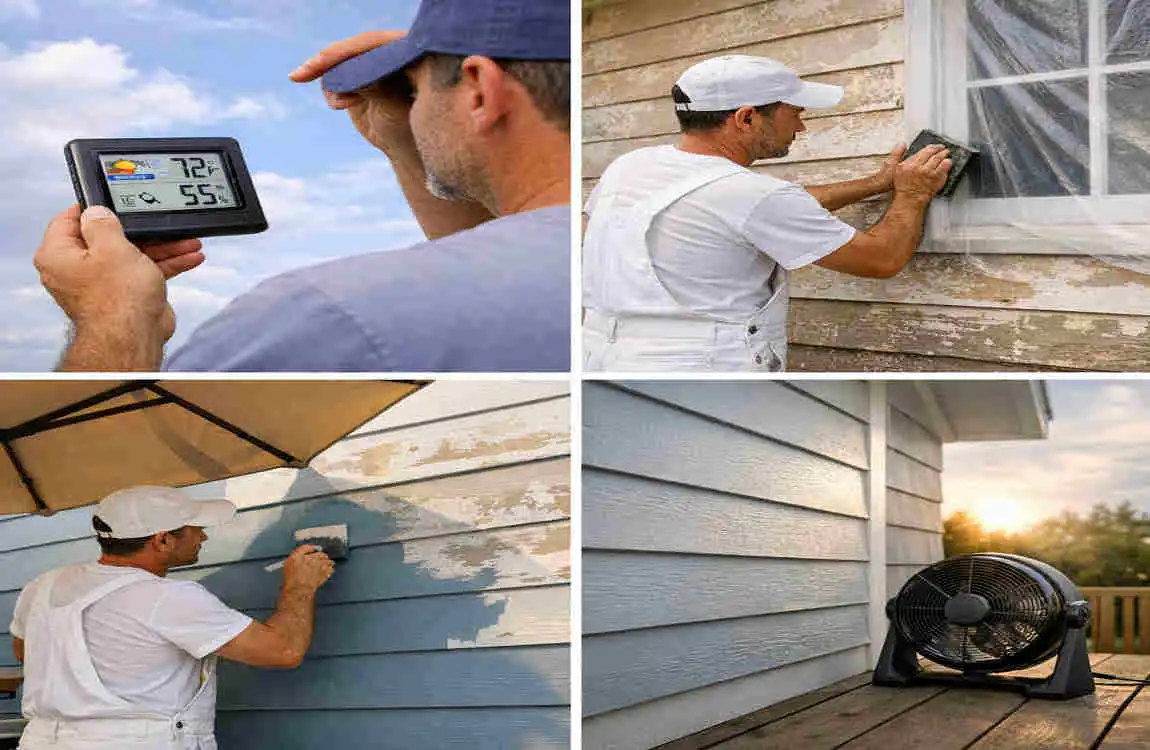
Choose the Right Weather Window
Before painting, check the forecast. You want a period with mild temperatures, low humidity, and no rain expected soon.
This gives the paint the best chance of drying evenly and staying protected.
Clean and Dry the Surface First
The surface should be clean, dry, and free of dust or loose material. Dirt and moisture can slow the process and affect the bond.
Apply Thin, Even Coats
Thin coats dry better than thick ones. They also create a smoother, more professional-looking finish.
Follow Product Instructions
Every paint product has its own recommended conditions. Some paints are made for cooler weather, while others are designed for faster drying.
Follow the label closely so you know the correct exterior paint drying time for your project.
Protect Fresh Paint
Fresh paint should be protected from rain, heavy moisture, dirt, and debris. Even if the surface feels dry, it may still be vulnerable underneath.
Quick Best Practices
- Paint in mild weather
- Use thin coats
- Wait the proper recoat time
- Protect the wall from rain
- Let the paint cure fully before heavy wear
When Should You Paint Your House Exterior?
The best time is usually during moderate weather. Spring and early fall are often good choices in many places because temperatures are more balanced.
Very cold weather, very hot weather, and high humidity can all create problems. So the best season is the one that gives you stable conditions.
FAQ: Exterior Paint Drying Time
How long does it take for exterior paint to dry?
It depends on the paint type and weather conditions, but many exterior paints dry within a few hours. Full curing takes much longer.
Can exterior paint dry in one hour?
Yes, some paints may feel dry that quickly in good conditions. But that does not mean they are fully cured.
How long should I wait between coats of exterior paint?
Usually a few hours for latex or acrylic paint and about a day for oil-based paint: always check the label.
Can you paint outside if it is humid?
You can, but humidity slows drying and may affect the finish. It is better to paint when the air is drier.
What happens if it rains after exterior paint is applied?
Rain can damage fresh paint, create streaks, or wash away part of the finish. That is why weather planning matters so much.
Does exterior paint dry faster in the sun or in the shade?
Sun can speed up drying, but too much direct sun may cause uneven results. Shade can be safer in some situations.
How long does exterior paint take to cure fully?
Most exterior paints take several days to cure fully. Some oil-based paints may take even longer.
Can I paint my house exterior in cold weather?
It is possible with some products, but many paints do not perform well in cold conditions. Always check the temperature range on the paint label.
| Factor | Typical Dry Time | What Homeowners Should Know |
|---|---|---|
| Touch Dry | 1–2 hours | Surface feels dry but may still be soft underneath. |
| Recoat Time | 4–8 hours | Wait for the manufacturer’s recommended time before applying another coat. |
| Full Cure | Several days | Paint gradually reaches its maximum hardness and durability. |
| Warm, Dry Weather | Faster | Good airflow and moderate temperatures can speed drying. |
| High Humidity | Slower | Moist air can significantly extend drying time. |
