

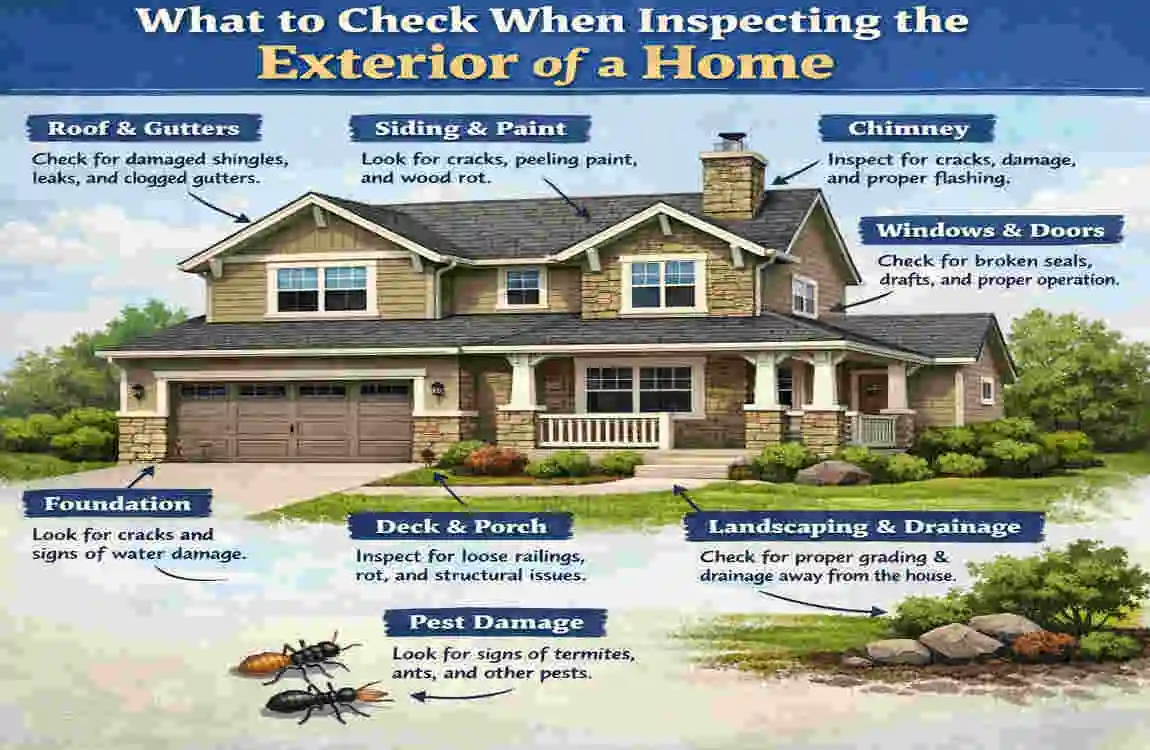
When inspecting the exterior of a home, you are really looking at the first layer of protection the house has against weather, water, pests, and long-term damage. A home may look fine from afar, but small problems outside can lead to expensive repairs later.
That is why a careful exterior check matters. It can help you spot roof issues, foundation cracks, siding damage, drainage problems, and other warning signs before they become bigger trouble. If you are buying a home, this step can also help you understand the property’s actual condition.
Why Exterior Home Inspection Matters
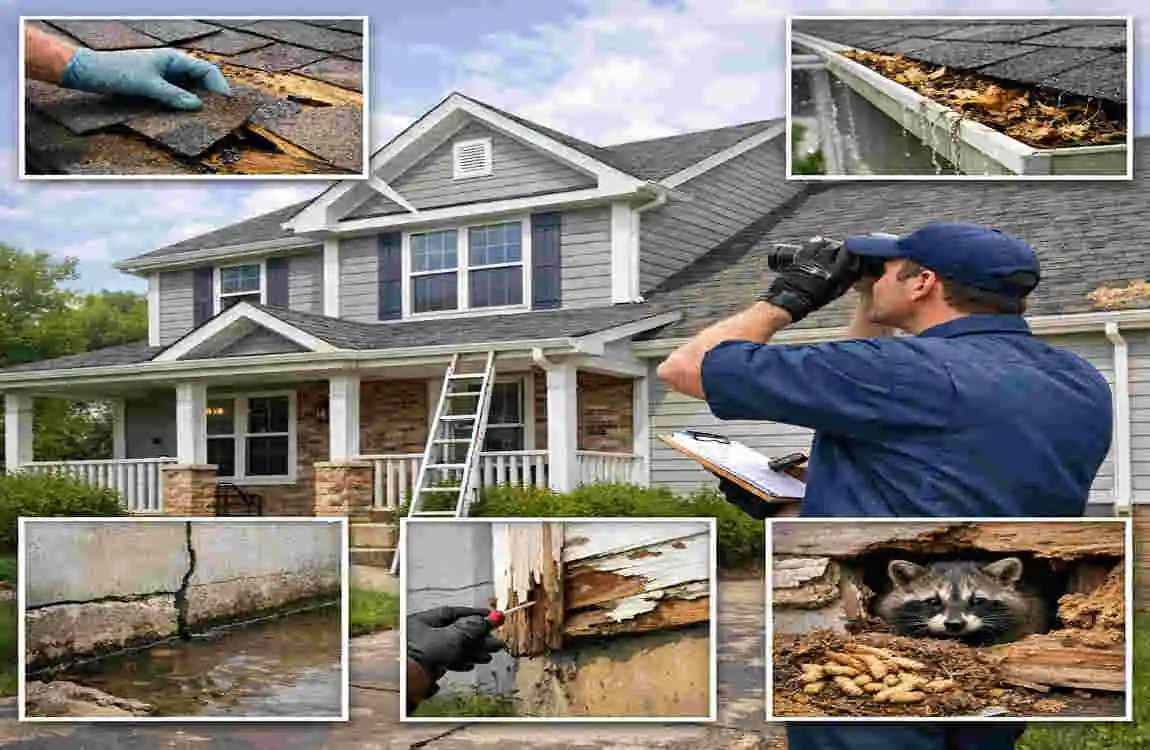
The outside protects the inside.
The exterior of the house works like a shield. It keeps out rain, wind, sun, dirt, and pests. If that shield is damaged, the problems often show up inside the home later.
A small crack in siding, a blocked gutter, or a weak spot in the roof may not seem serious at first. But over time, these issues can lead to water damage, mould, rot, and structural concerns.
It can save you money.
Exterior problems are often easier to fix early. If you catch them before they spread, you may avoid much larger repair bills.
For buyers, this is especially important. A home may look attractive during a showing, but the outside can reveal hidden maintenance issues.
It helps you spot safety concerns.
Some exterior problems are more than cosmetic. Loose railings, damaged steps, sinking driveways, and cracked foundations can create real safety risks.
That is why, when inspecting the exterior of a home, you should consider both appearance and function.
Check the Roof and Gutters
Inspect the roof closely.
The roof is one of the most important areas to check. Look for missing shingles, cracked shingles, curling edges, or damaged patches.
Also pay attention to any sagging or uneven areas. These may signal ageing, water damage, or structural problems.
Examine gutters and downspouts.
Gutters and downspouts help move water away from the house. If they are cracked, clogged, loose, or rusted, water may spill in the wrong places.
Make sure downspouts direct water away from the foundation. If you see stains, erosion, or pooling water below them, that is a sign of a drainage issue.
Why roof inspection matters
Roof problems can lead to much bigger issues than many people expect. A small leak can reach insulation, ceilings, walls, and even structural framing.
That is why the roof deserves close attention. It is one of the first places where damage can start.
Inspect Exterior Walls, Siding, and Paint
Check siding and cladding.
Walk around the house and look at the siding carefully. You want to check for cracks, holes, warping, rot, or loose panels.
If the home has brick or stone, check the mortar joints too. Crumbling or missing mortar may point to age or moisture problems.
Look for paint and moisture damage.
Peeling, bubbling, or flaking paint is often a warning sign. It may mean the material underneath has moisture damage.
Discolouration is also important. Dark spots or faded patches can suggest that water has been entering the exterior for some time.
Check for structural cracks.
Not all cracks are serious, but some should not be ignored. Small surface cracks may just be cosmetic. Larger cracks, wide gaps, or cracks that grow over time may need expert review.
If you see unusual cracking, it is smart to get a professional opinion.
Examine Windows, Doors, and Other Openings
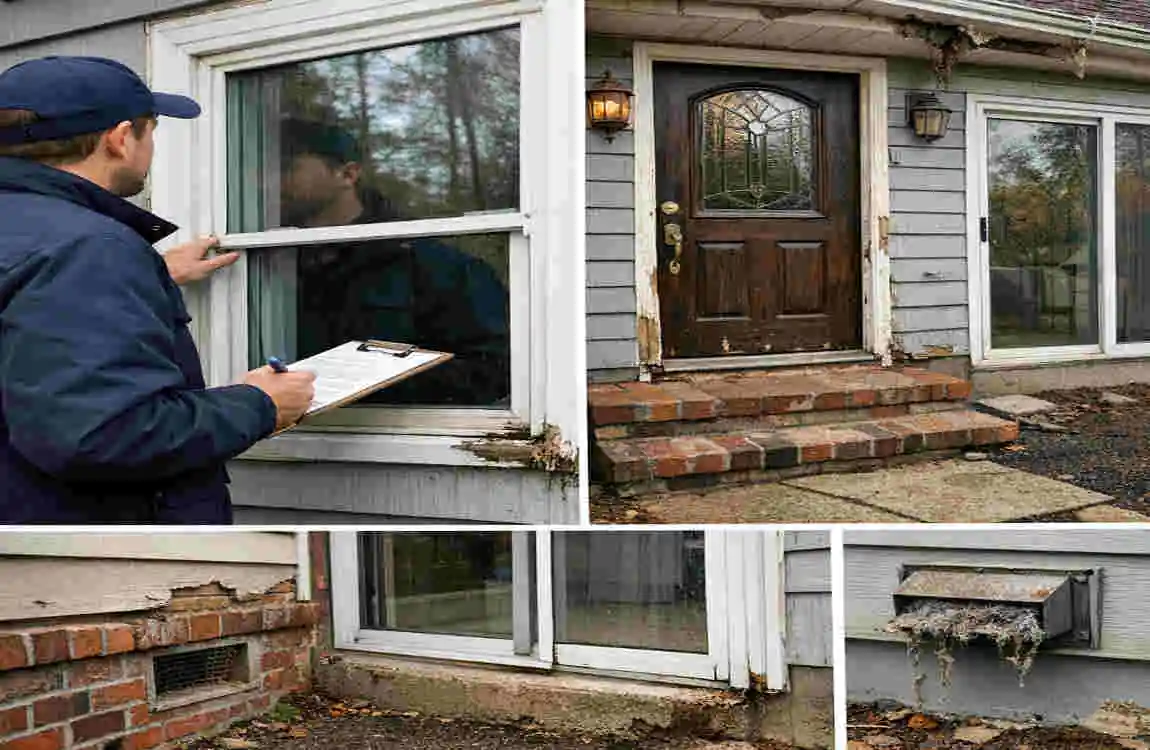
Inspect windows
Windows should be checked for cracked glass, damaged frames, or soft wood around the edges. Look closely at the caulking too.
If the seal is broken or the caulking is worn out, water may get in around the window. That can lead to rot and drafts.
Inspect exterior doors
Doors should close smoothly and seal tightly. Check for damaged frames, rotting thresholds, and worn weatherstripping.
If a door feels loose or does not shut properly, it may point to shifting, swelling, or water damage.
Check other openings
Look at vents, utility openings, pipe entries, and any spot where something passes through the wall. These areas should be sealed well.
Poor sealing can let in water, pests, and air leaks.
Check the Foundation, Drainage, and Yard
Inspect the foundation
The foundation is one of the most important parts of the home to review. Look for cracks, staining, gaps, or visible movement.
Pay close attention to horizontal cracks or widening cracks, since these can be more serious than small vertical surface lines.
Evaluate drainage
Water should flow away from the house, not toward it. The ground should slope away from the foundation whenever possible.
If you see standing water, soft soil, or overflow near the base of the home, drainage may need improvement.
Inspect landscaping
Trees and large roots can affect the home if they are too close. Branches can also damage the roof during storms.
Make sure plants are not blocking vents or holding too much moisture against the exterior walls.
Inspect Driveways, Walkways, Decks, and Other Exterior Features
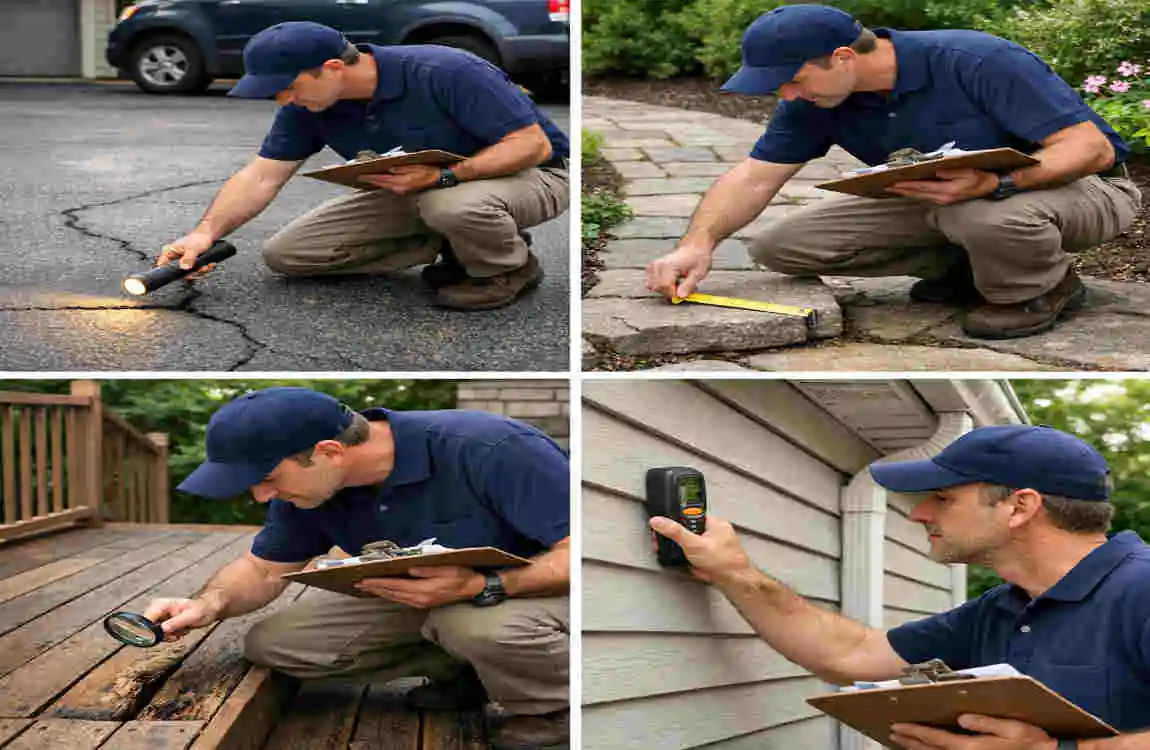
Driveways and walkways
Check for cracks, sinking spots, uneven surfaces, or water buildup. These can become trip hazards and may also indicate settling.
A driveway that slopes the wrong way can send water toward the house instead of away from it.
Decks and porches
Decks and porches need close inspection because they are often exposed to weather year-round. Look at the boards, stairs, railings, posts, and support areas.
Watch for soft wood, rusted fasteners, loose railings, or movement in the structure. These are all signs of wear or damage.
Fences and other structures
Do not forget fences, sheds, retaining walls, and exterior stairs. These can also show age, leaning, rust, or rot.
Even if they are not part of the main house, they still affect the property’s condition and safety.
When to Hire a Professional
Some issues need expert help.
A homeowner can spot many problems during a visual walkthrough. But some concerns need a trained eye.
Roof problems, foundation movement, structural cracks, and major water damage are not always easy to judge without experience.
Why a professional inspector helps
A professional home inspector can examine the home’s condition more closely and explain which issues are minor and which require action.
If you are buying a house, this is especially useful. It can help you make a smarter decision before closing.
Document what you see.
Take notes and photos of any visible damage. This gives you a record of what you found and helps you compare issues later.
FAQ
What should I look for when inspecting the exterior of a home?
Check the roof, gutters, siding, windows, doors, foundation, drainage, landscaping, decks, and other outdoor structures.
What are the biggest exterior problems to look for?
Some of the biggest issues include roof damage, foundation cracks, drainage problems, wood rot, damaged siding, and structural wear.
Should I inspect the exterior before buying a house?
Yes. A careful exterior inspection can reveal repair costs and maintenance issues before you make a purchase.
How often should a home’s exterior be inspected?
A basic exterior check should be part of regular home maintenance. A more detailed inspection is a good idea when buying or selling a home.
Can exterior damage cause problems inside the house?
Yes. Water intrusion, poor drainage, and roof leaks can lead to interior damage, mould, and other expensive issues.
Do I need a professional home inspector?
For a home purchase, yes. A professional inspector can spot issues that may not be obvious during a simple walkthrough.
| Exterior Area | What to Check | Warning Signs |
|---|---|---|
| Roof | Shingles, flashing, gutters, and visible damage | Missing shingles, leaks, sagging |
| Walls & Siding | Cracks, rot, peeling paint, or loose siding | Large cracks, moisture damage |
| Foundation | Visible cracks and uneven areas | Wide cracks, shifting, water intrusion |
| Windows & Doors | Frames, seals, glass, and operation | Rot, broken seals, gaps |
| Gutters & Downspouts | Blockages, damage, and drainage direction | Overflow marks, leaks, poor drainage |
| Driveway & Walkways | Cracks, uneven surfaces, and trip hazards | Major cracks or sinking |
| Landscaping | Trees, soil grading, and plants near the house | Roots near foundation, standing water |
