

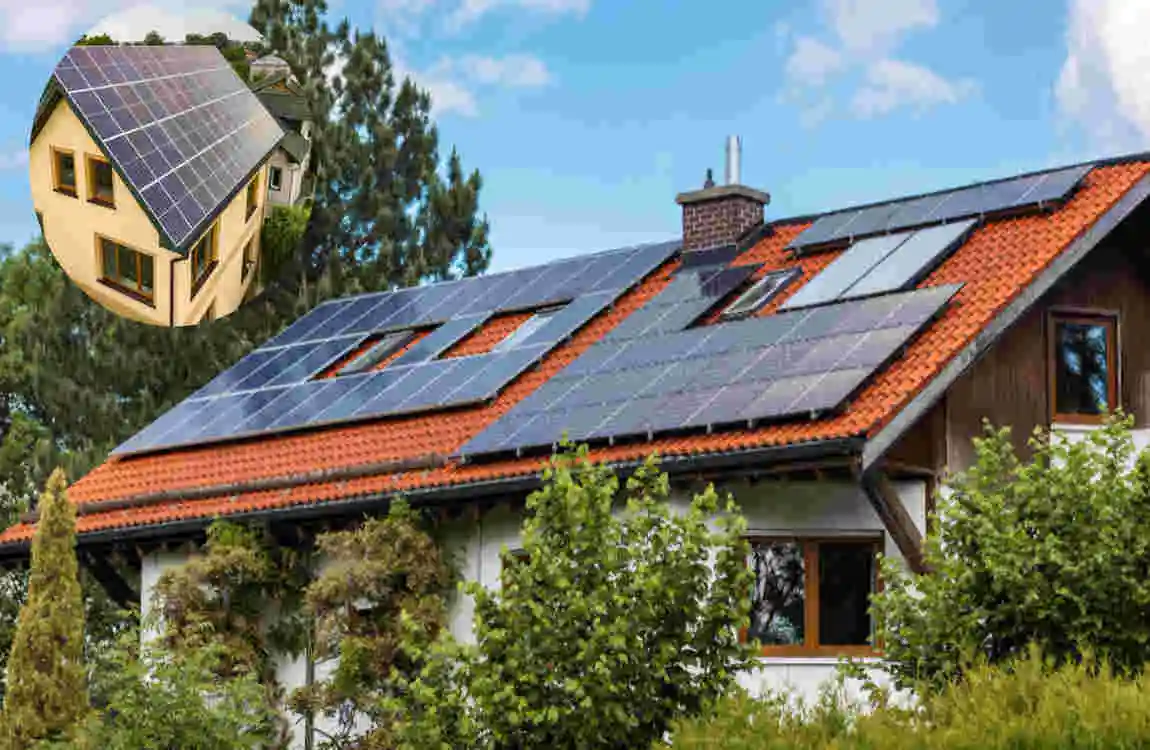
Have you noticed how many rooftops in your neighborhood are suddenly shimmering with glass panels? The growing popularity of solar energy across the United Kingdom is impossible to ignore. As energy bills continue to climb and environmental awareness grows, more homeowners are looking straight up at the sun for a solution.
You might be looking at your own roof right now and wondering about the ultimate goal: total energy independence. You want to know: can I run my house on solar power only in the UK? It is a brilliant question, and you are certainly not alone in asking it.
Going completely off the grid sounds like a dream. However, relying entirely on the sun in a country famous for its rainy days requires careful planning. Whether a home can rely entirely on solar power depends on several key factors. You have to consider your available roof size, the addition of battery storage, your family’s daily energy usage, and, of course, the unpredictable British weather.
Can I Run My House on Solar Power Only in the UK?
If you want to cut ties with your energy provider completely, you need to understand the realities of solar energy. Let us look at what is actually possible.
The Simple Answer
So, is it possible? The short answer is yes, absolutely. You technically can power your entire home using only solar energy. However, the realistic answer is a bit more complicated.
Running a house completely off-grid requires a highly customized, robust system. It works best during the long, bright days of summer when the sun is out for 16 hours. During this time, your panels will easily capture more energy than you can use. But to make this work year-round, you have to capture enough of that summer energy to survive the darker winter months, which is where things get tricky.
What Determines Success?
To truly succeed in running your home entirely on solar power, four main puzzle pieces must fit together perfectly.
First, consider your household electricity usage. Do you run the tumble dryer every day, or are you highly energy-conscious? A home that uses very little power is much easier to run entirely on solar.
Second is your solar panel capacity. You need enough panels to cover your roof and generate massive amounts of electricity. If you have a small roof, you simply might not have the physical space to catch enough sunlight.
Third, and perhaps most importantly, is battery storage. Without a place to store the power you make, your house will go dark the second the sun goes down.
Finally, you must account for seasonal sunlight. The UK experiences dramatic shifts in daylight from summer to winter. Your system must be strong enough to handle those short, gloomy December days.
How Solar Panels Power a Home
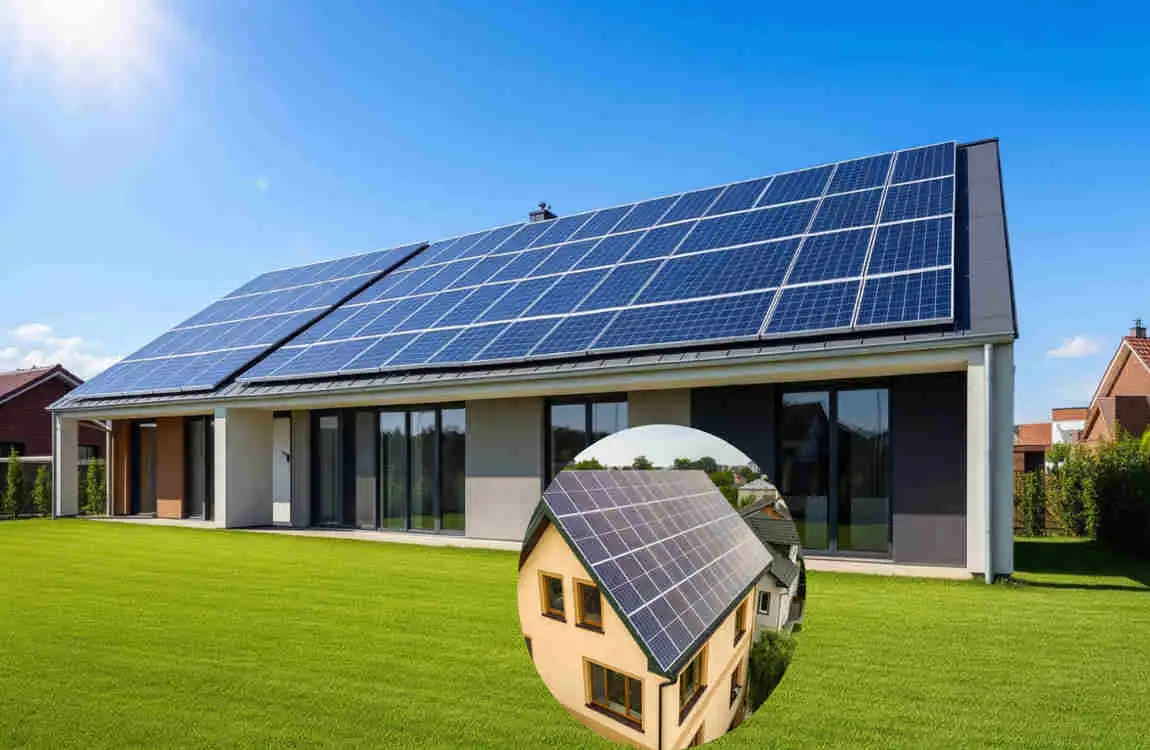
Before you invest your hard-earned money, it helps to understand the basic mechanics. Do not worry; you do not need an engineering degree to grasp how this works. Let us keep it simple.
How Solar Panels Generate Electricity
Solar panels are made of special materials that react to daylight. When sunlight hits the surface of your roof panels, it excites tiny particles called electrons.
This reaction creates a steady flow of electricity. We call this direct current (DC) electricity. However, your home appliances use alternating current (AC) electricity. To fix this, the system sends the power through a small box called an inverter. The inverter magically changes the DC power into AC power, making it perfectly safe for your television, fridge, and lights.
What Happens During the Day
Imagine a bright Tuesday afternoon. The sun is beaming down, and your panels are working overtime. They are generating more electricity than your house is currently using.
Your house will automatically use the solar electricity first. It powers your running appliances for free. If there is leftover power, the system does not just throw it away. It sends that extra electricity straight into your solar battery to save for later. If your battery gets full, the system sends the remaining energy back to the national grid, and your energy company might even pay you for it!
Using Electricity at Night
The sun goes down, and your solar panels go to sleep. They do not produce any electricity in the dark.
If you do not have a battery, your house will seamlessly switch back to using electricity from the national grid. You will pay normal rates for the power you use at night. But if you want to run your house on solar power only, you need a different strategy.
The Role of Solar Batteries
This is where the magic of solar batteries comes into play. A solar battery acts like a giant bucket, holding all that extra daylight energy you gathered during the afternoon.
When you turn on your oven or television at night, your house pulls electricity directly out of your battery instead of buying it from the grid. To run a home purely on solar, a high-capacity battery is an absolute requirement. It bridges the gap between sunset and sunrise.
How Many Solar Panels Does a UK Home Need?
Now we are getting to the practical side of things. If you are serious about solar, you need to know how much equipment to put on your roof.
Average UK Household Energy Consumption
Every family is different, but we can look at averages to get a good idea. A typical three-bedroom home in the UK uses roughly 8 to 10 kilowatt-hours (kWh) of electricity every single day.
If you have a large family, an electric vehicle charging in the driveway, and electric heating, your usage will be much higher. To figure out your exact needs, simply grab your latest energy bill. Look for your “annual electricity usage.” This number is your baseline for building the perfect solar system.
Typical Solar System Sizes
Solar systems are measured in kilowatts (kW). This measurement tells you how much power the panels can produce in ideal conditions.
Most residential homes in the UK install a system sized between 3 kW and 6 kW. A standard 4 kW system usually features around 10 to 12 individual panels. If your goal is total independence from the grid, you will likely need a much larger system to ensure you capture enough power during the darker months.
Roof Space Requirements
You cannot just cram an endless number of panels onto your house. You have to work with the physical space you actually have.
An average solar panel measures about 1.7 meters by 1 meter. Therefore, a standard 10-panel system requires roughly 17 to 20 square meters of clear, unshaded roof space. Your roof also needs to face south, southeast, or southwest for the absolute best results.
Sample Calculation Table
To help you visualize your needs, here is a simple breakdown based on different household sizes.
Home SizeDaily UsageSuggested SystemEstimated Panels
Small 6–8 kWh 3–4 kW 8–10
Medium 9–12 kWh 5–6 kW 12–16
Large 15–20 kWh 7–10 kW 18–25
Note: Panel estimates assume modern, high-efficiency panels.
Can Solar Panels Power Your Home All Year?
The UK is famous for many things, but year-round tropical sunshine is not one of them. Let us talk openly about how the changing seasons impact your solar goals.
Summer Performance
Summer is the golden season for solar power. From May to August, the days are beautifully long. The sun rises early and sets very late.
During these months, your system will likely generate far more power than you can use. Your batteries will be full by lunchtime. Running your home entirely on solar power during a UK summer is incredibly easy and highly achievable for most homes.
Winter Challenges
Winter is the true test of your solar system. In December and January, the days are painfully short, and the sun sits very low in the sky.
Your solar panels will still work, but they will produce a fraction of their summer output. This is why going completely off-grid in the UK is so challenging. You might find that your panels cannot catch enough light to run the heating, the lights, and the appliances during a short winter day.
Cloudy Weather in the UK
Do not panic if you see gray skies. A very common myth is that solar panels stop working when it gets cloudy.
Modern solar panels are incredibly clever. They do not need direct, blinding sunlight to function. They work on daylight. While a thick, cloudy day will drop their efficiency, they will still quietly generate electricity to power your home.
Importance of Battery Storage
Because of the winter dip and cloudy days, we must return to the hero of our story: the battery.
If you want to survive the winter without tapping into the national grid, you need immense battery storage. Some advanced setups even include seasonal storage or backup generators, though these are rare and expensive. For most people, the battery ensures that every single drop of winter daylight is saved and used efficiently.
Benefits of Running a House on Solar Power
Why go through all this effort? Because the rewards of capturing your own energy are spectacular.
Lower electricity bills: The moment your system turns on, your energy bills plummet. Every unit of electricity you make is a unit you do not have to buy from the grid. Over the years, this translates into thousands of pounds remaining safely in your bank account.
Reduced carbon emissions: When you use solar power, you stop relying on fossil fuels like coal and gas. You are pulling clean, green energy right out of the sky. This significantly lowers your household’s carbon footprint and helps protect our planet for future generations.
Energy independence: There is an incredible feeling of freedom that comes with making your own power. You no longer have to worry about power cuts in your neighborhood. Your house becomes a self-sustaining fortress.
Protection against rising energy prices: We have all watched energy prices jump unpredictably. It is stressful. When you run your house on solar power, you lock in your energy costs. You completely shield your family from sudden market spikes and greedy energy company price hikes.
Increased property value: Homebuyers love solar panels. They view them as an instant money-saver. Adding a modern solar and battery system makes your home highly desirable and directly increases its resale value on the housing market.
Limitations You Should Know
We always want to give you the full, honest picture. Solar power is amazing, but you must be aware of the hurdles before jumping in.
High installation costs: Buying panels, an inverter, scaffolding, and paying for professional installation requires a significant upfront investment. While the system pays for itself over time, you do have to write a large check to get the project started.
Battery expense: Batteries are the most expensive part of a solar setup. To run your house mostly on solar, you need a large, premium battery. Furthermore, unlike panels that last 25 years, batteries usually need replacing every 10 to 15 years.
Limited winter production: As we discussed, you simply cannot beat nature. Even the best panels struggle to power a busy house fully during the darkest weeks of a UK winter. You may still need to draw a tiny bit of power from the grid during December and January.
Roof suitability: Not every house is a good candidate. If your roof faces directly north, is heavily shaded by massive oak trees, or has a complicated, broken layout, solar panels might not work efficiently for you.
Maintenance considerations: Solar systems are generally low maintenance, but they are not entirely zero maintenance. You should have them checked professionally every few years, and you might need to gently clean the panels occasionally if you live near heavy traffic or lots of birds.
Tips to Maximize Solar Efficiency
If you want to squeeze every last drop of power out of your system, you have to be strategic. Here are the best ways to maximize your home’s energy.
Install high-efficiency panels. Do not just buy the cheapest panels available. Spend a little more on premium, high-efficiency panels. They are specifically designed to perform much better in the low-light, cloudy conditions we frequently see in the UK.
Add battery storage. We cannot stress this enough. If you do not have a battery, you are letting your precious evening energy go to waste. A battery is the ultimate key to maximizing your daily solar usage.
Improve home insulation Before you generate energy, make sure you are not losing it! Draft-proof your doors, add thick loft insulation, and upgrade your windows. A well-insulated home requires much less energy to stay warm.
Use energy-efficient appliances. Swap out your old, energy-hungry appliances. Use LED lightbulbs throughout the house. Buy an A-rated washing machine and fridge. When your house needs less power, your solar panels can easily cover the demand.
Monitor electricity usage. Most modern solar systems come with a smart app. Use it! Watch when your panels produce the most power. Shift your heavy chores, like running the dishwasher or doing the laundry, to the middle of the bright afternoon.
Frequently Asked Questions (FAQ)
Can I run my house on solar power only in the UK?
Yes, but most homes need a battery storage system and may still require grid electricity during winter. Completely disconnecting from the grid is rare, but you can offset the vast majority of your annual usage.
How many solar panels are needed for a UK house?
Most homes need between 10 and 20 solar panels, depending on electricity consumption. A typical 3-bedroom home usually requires around 12 panels to make a meaningful impact.
Do solar panels work on cloudy days in the UK?
Yes. They still generate electricity, although output is lower than on sunny days. Modern panels are designed to work effectively with ambient daylight, not just direct sunshine.
Can solar panels power a house at night?
No. Solar panels do not produce electricity at night, so stored battery power or grid electricity is needed. Once the sun sets, the system stops generating new power.
Is battery storage necessary?
A battery is highly recommended if you want to rely on solar power for most of your household energy needs. Without it, you will be forced to buy expensive grid electricity every single evening.
| Topic | Information |
|---|---|
| Can solar panels power a whole house? | Yes, but it depends on your home’s energy use, roof size, and sunlight availability. |
| Works year-round? | Yes, although solar panels generate less electricity during winter than in summer. |
| Average UK system size | Typically 3–5 kW for an average household. |
| Battery storage needed? | Recommended to store excess daytime energy for use at night or during cloudy weather. |
| Grid connection | Most UK homes remain connected to the National Grid for backup power. |
| Can you go completely off-grid? | Possible, but it requires a much larger solar system and battery bank, making it expensive. |
| Average annual savings | Around £400–£800+ per year, depending on system size and electricity usage. |
| Best roof direction | South-facing roofs provide the highest energy output, though east- and west-facing roofs also perform well. |
| Main benefits | Lower electricity bills, reduced carbon emissions, and greater energy independence. |
| Best for | Homeowners with good roof space, high daytime electricity use, and plans to stay in the property long term. |
