

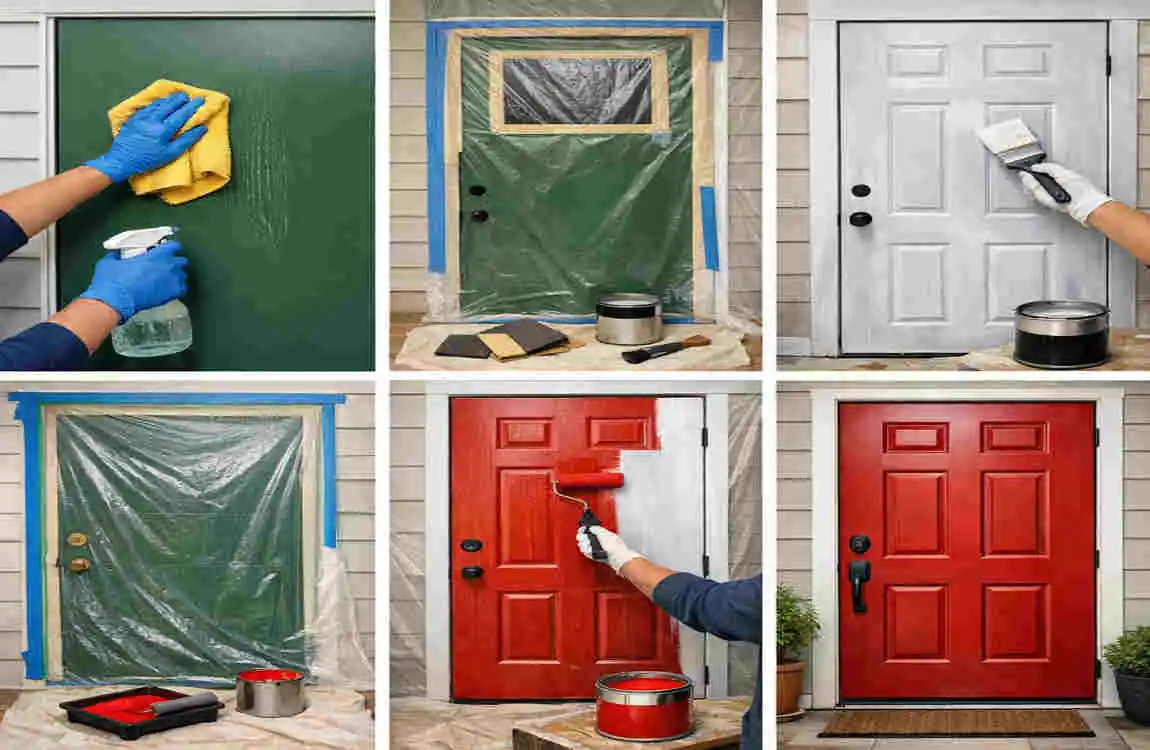
A metal exterior door works hard every day. It faces sun, rain, dust, heat, and constant use. Over time, the finish can fade, peel, or develop rust spots. That is why learning how to paint an exterior metal door is so useful.
A fresh coat of paint does more than improve appearance. It also helps protect the metal from moisture and wear. With the right prep work, primer, and paint, you can make the door look clean, sharp, and long-lasting.
Why Paint an Exterior Metal Door?
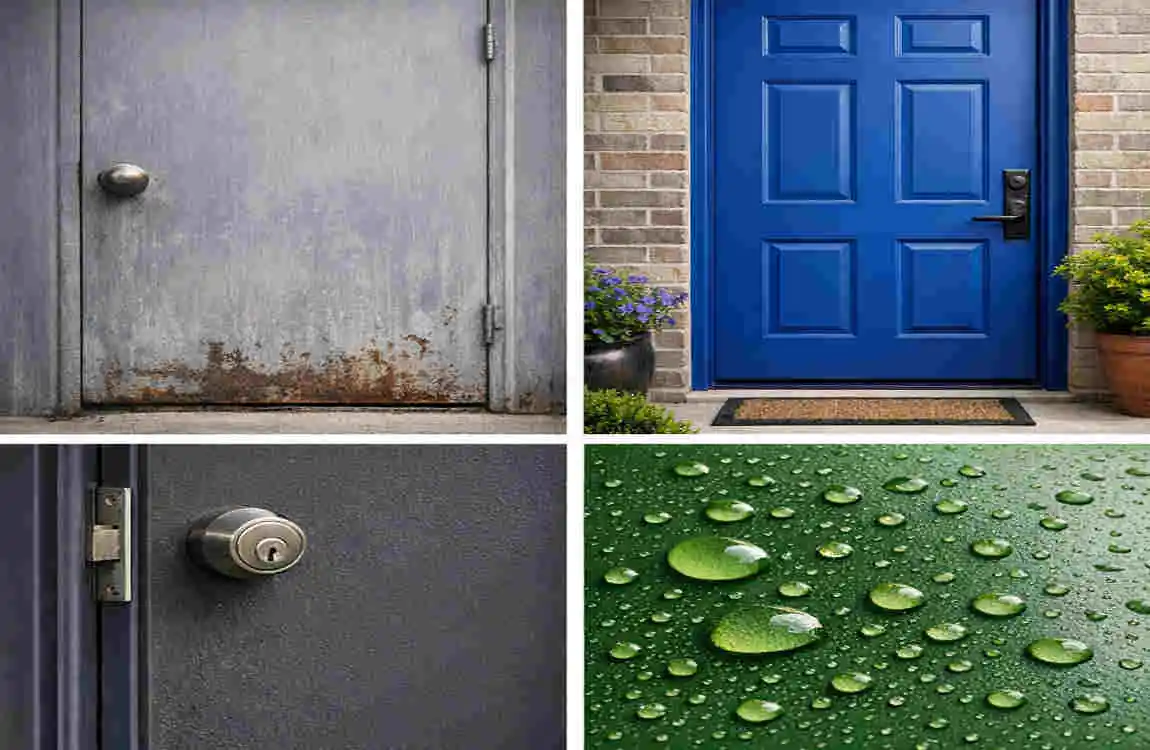
Painting a metal door is one of the easiest ways to improve the look of your home’s exterior. It is a small project, but it can make a big difference.
Benefits of Painting a Metal Door
A new paint job can refresh an outdated entrance and give the home a more polished look. If the old colour feels dull or worn, a fresh finish can completely change the entryway’s mood.
It also helps protect the surface from rust and moisture. Metal doors can last a long time, but only if the finish stays in good shape. Paint acts like a shield.
Another benefit is curb appeal. When your front door looks clean and well-cared-for, the whole home feels more inviting.
And of course, painting gives you freedom. You can choose a classic colour, a bold shade, or something soft and modern.
When Should You Repaint?
You should think about repainting if you notice:
- Peeling or cracked paint
- Rust spots
- A faded or chalky finish
- Scratches and weather damage
If the door still looks smooth and solid, you may only need touch-ups. But if the finish is failing, a full repaint is usually the better choice.
Gather the Right Tools and Materials
Before you start, gather everything you need. This makes the job smoother and helps avoid delays.
Essential Supplies
Here is a simple list of the most useful items:
- Exterior metal-compatible paint
- Metal primer
- Paintbrushes and rollers
- Sandpaper or a sanding sponge
- Cleaning solution and cloths
- Painter’s tape
- Drop cloth
- Protective gloves and eyewear
You may also want a small scraper, a bucket of water, and a screwdriver if you plan to remove hardware.
Choosing the Right Paint
Not every paint works well on a metal exterior door. You want a product designed for exterior metal surfaces, since it must withstand weather and regular use.
You will often choose between water-based and oil-based paint. Water-based paint is easier to clean up and usually dries faster. Oil-based paint may offer a harder finish, but it can take longer to dry.
Finish also matters. Satin and semi-gloss are common choices because they look nice and are easier to wipe clean. A flat finish is usually not the best choice for a front door because it can wear faster.
Prepare the Metal Door for Painting
Preparation is where a good paint job begins. If you skip this step, the paint may not stick well or may peel too soon.
Clean the Door
Start by removing dirt, grease, dust, and old residue. A clean surface helps primer and paint bond properly.
Use a mild cleaning solution and a cloth or sponge. Wipe the whole door carefully, including edges and panel lines. Then let it dry completely before moving on.
Do not rush this part. Even a little moisture or dust can affect the final finish.
Remove Loose Paint and Rust
If you see peeling paint, scrape it off gently. Use sandpaper or a sanding sponge to smooth rough areas.
Rust needs special attention. If you paint over rust without treating it first, the problem can keep spreading under the new paint. Remove loose rust and smooth the surface as much as possible.
This step is one of the most important parts of painting an exterior metal door because it helps the new finish last longer.
Protect Hardware and Surrounding Areas
If possible, remove handles, locks, and other hardware before painting. That gives you cleaner edges and a neater finish.
If you cannot remove everything, cover the hardware carefully with painter’s tape. Also protect nearby walls, trim, flooring, and any glass panels.
A little masking now saves a lot of cleanup later.
Apply Primer Before Painting
Primer is one of the biggest reasons a paint job looks good and lasts well. It should not be skipped, especially on metal.
Why Metal Doors Need Primer
Primer helps the paint stick better. It creates a more even surface and can help cover small marks, stains, or repairs.
It also adds a layer of protection between the bare metal and the paint. That matters because metal can rust when exposed to moisture.
Without primer, paint may peel sooner or look uneven. So if you want a lasting result, this step is worth the time.
How to Apply Primer
Apply the primer in a thin, even coat. Do not overload the brush or roller, because thick primer can leave heavy marks or buildup around panels and edges.
Follow the drying time listed on the product. Different primers dry at different speeds, and painting too early can cause problems.
If the primed surface feels rough after drying, lightly sand it before painting. That helps create a smoother final result.
How to Paint an Exterior Metal Door
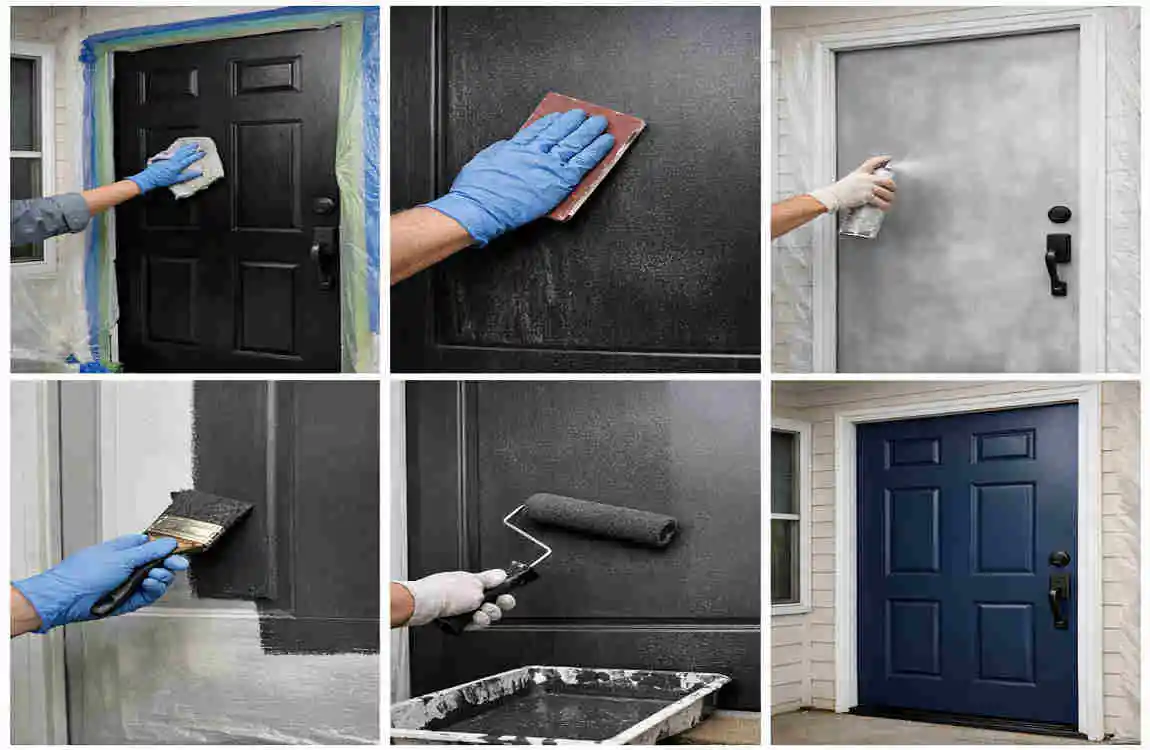
Now comes the part you probably waited for. Once the door is clean, dry, and primed, you can paint it with much better results.
Choose the Right Painting Method
You can paint the door with a brush, roller, or sprayer.
A brush works well for corners, edges, and detailed areas. A roller is good for the larger flat sections. A sprayer can give a smooth, professional finish, but it takes more setup and skill.
For many homeowners, a brush and small roller are the easiest combination.
Paint the Door in Thin Coats
The best way to paint a metal door is to use thin, even coats. Thick coats may drip, run, or dry unevenly.
Start with the edges and recessed areas. Then move to the larger flat sections. Work carefully and follow a steady pattern so the finish stays smooth.
Let the first coat dry fully before applying the second. In many cases, two thin coats look much better than one heavy coat.
Pay Attention to Door Edges and Details
Door edges matter more than many people think. They are often the first places to show wear, so paint them carefully.
Also take your time around hinges, trim, and decorative panels. These small areas can make the difference between a rushed job and a polished one.
If paint starts to build up near the hardware or along the edges, wipe away the excess before it dries.
Painting order checklist
- Paint the edges first
- Cover recessed panels
- Move to the flat centre areas
- Check for drips or thin spots
- Allow proper drying between coats
Drying, Reinstalling, and Maintaining the Finish
Once the paint is on, the job is not quite done. Drying and care matter just as much as painting.
Allow Proper Drying Time
Always follow the manufacturer’s drying and recoating instructions. Paint may feel dry on the surface before it is fully cured.
During this time, keep the door protected from rain, dust, and heavy handling. If possible, avoid closing it tightly too soon if it may stick to the frame.
Patience here helps protect the finish.
Reinstall Hardware
After the paint has dried properly, reinstall the handles, locks, and other hardware.
Do this carefully so you do not scratch the fresh paint. Check that the door opens and closes smoothly once everything is back in place.
Long-Term Maintenance
A painted metal door can stay beautiful for years if you care for it properly.
To maintain the finish:
- Clean the surface regularly
- Touch up scratches early
- Fix small rust spots quickly
- Avoid harsh cleaning products
Gentle cleaning is usually enough. A soft cloth and mild soap can remove most dirt without damaging the paint.
Common Mistakes and Expert Tips
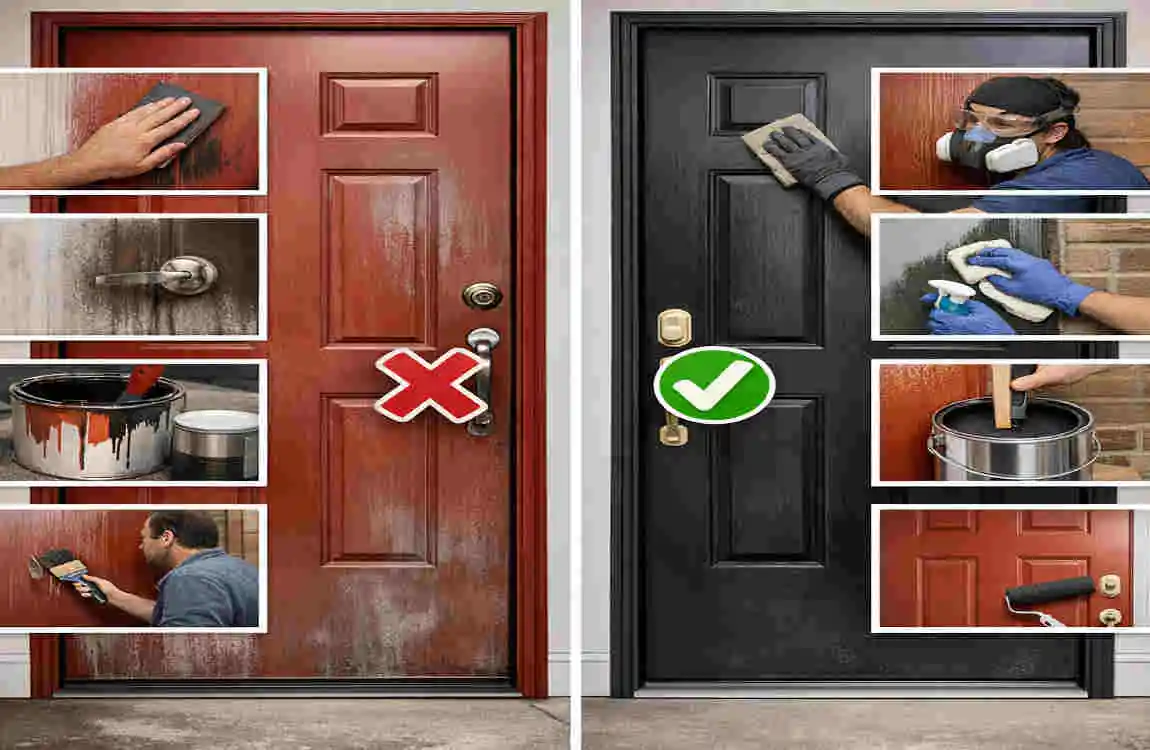
Even a simple project can go wrong if important steps are skipped. Knowing the most common mistakes can save time and frustration.
Mistakes to Avoid
Here are the most common problems people run into:
- Painting over dirt or rust
- Skipping primer
- Using thick coats
- Painting in bad weather
- Closing the door too soon
- Using interior paint on an exterior door
Each of these can lead to poor adhesion, peeling, or a rough finish.
Expert Tips for a Better Finish
A few small habits can make a big difference:
- Check the weather before you start
- Work in a shaded, well-ventilated area
- Use quality exterior products
- Sand lightly between coats when needed
- Take extra care around corners and panels
If you want a cleaner result, slow down. Careful work almost always looks better than rushed work.
FAQ: Painting an Exterior Metal Door
Can you paint an exterior metal door without removing it?
Yes, in many cases you can paint it while it stays in place. Just make sure the area is well protected, and the hardware is taped or removed when possible.
Do you need to prime a metal door before painting?
Primer is usually recommended. It helps the paint stick better and gives the finish more protection, especially on bare metal or rusty spots.
What type of paint is best for an exterior metal door?
Use a quality exterior paint made for metal surfaces. That helps the door withstand weather and daily use.
How many coats of paint should a metal door have?
Most metal doors look best with two thin coats, but always follow the product instructions.
How long should exterior metal door paint dry?
Drying time depends on the paint, temperature, and humidity. Always check the label and give it enough time to cure properly.
Can you paint a rusty metal exterior door?
Yes, but the rust must be removed or treated first. Do not paint over loose rust and expect it to last.
| Step | What to Do | Helpful Tip |
|---|---|---|
| Clean | Wash away dirt, grease, and dust. | Let the door dry completely. |
| Remove Old Paint | Scrape loose or peeling paint. | Sand rough areas smooth. |
| Sand | Lightly sand the entire surface. | This helps new paint stick properly. |
| Prime | Apply a quality metal primer. | Use rust-inhibiting primer where needed. |
| Paint | Apply exterior-grade metal paint. | Use thin, even coats instead of one thick coat. |
| Dry & Recoat | Allow each coat to dry as directed. | Avoid closing the door until the paint has cured enough. |
