

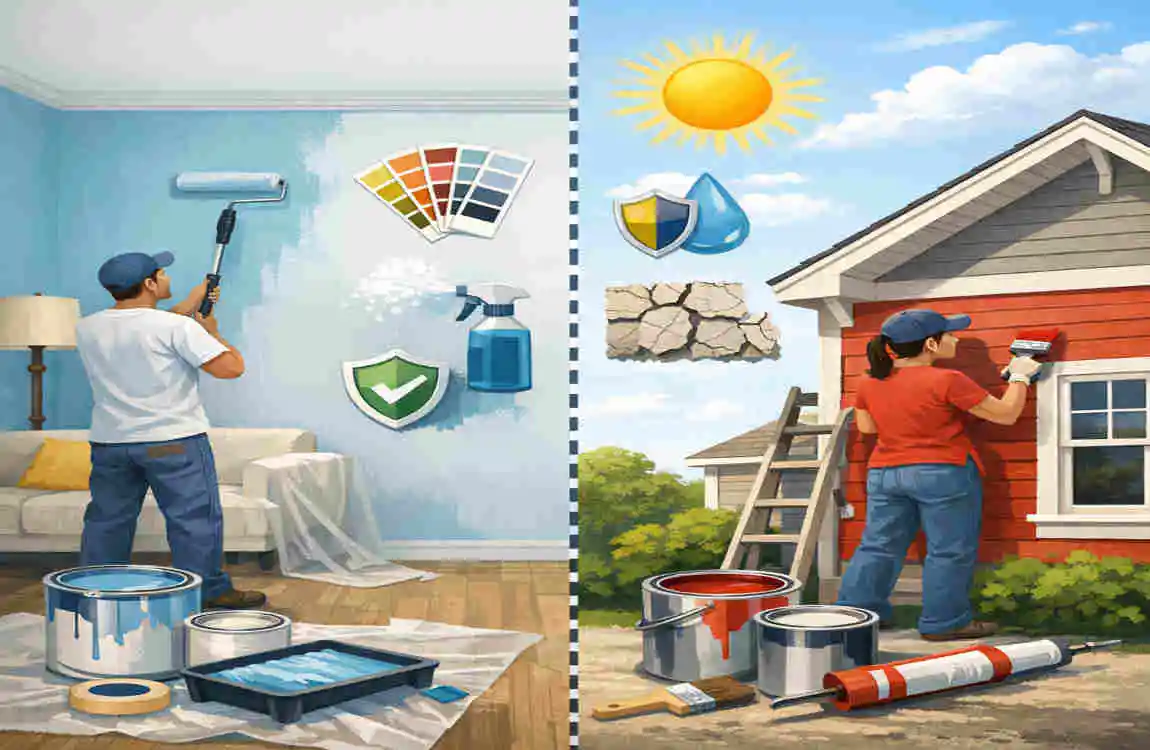
If you are trying to figure out the difference between interior and exterior paint, the simplest answer is this: each is made for a different environment. Interior paint is designed for indoor spaces, where comfort, clean air, and easy cleaning matter most. Exterior paint is designed for outdoor conditions, where it must withstand sun, rain, wind, and temperature fluctuations.
What’s the Difference Between Interior and Exterior Paint?

Interior and exterior paint may look similar in the can, but they are not made the same way.
Interior paint
Interior paint is made for walls and surfaces inside your home. It is usually designed to have lower odour, fewer harsh fumes, and an easier-to-clean finish.
Exterior paint
Exterior paint is made for outdoor surfaces. It has stronger ingredients that help it withstand sunlight, moisture, heat, cold, and changing weather.
Why the difference matters
If you use the wrong type, the paint may fail early. Interior paint used on exterior surfaces can peel, crack, or fade quickly. Exterior paint used indoors may produce stronger odours and may not be the best choice for enclosed spaces.
How Interior Paint Is Designed for Indoor Spaces
Interior paint is made to work well in homes where people live, sleep, cook, and relax.
Low-odour and low-VOC formulas
Many interior paints are made with low-odour, low-VOC formulas. VOCs are chemicals that can affect indoor air quality. Since people spend so much time indoors, these paints are designed to be more comfortable and safer for living spaces.
Easy cleaning and attractive finishes
Interior paint is also made for day-to-day use. Walls in homes often need wiping, dusting, and occasional scrubbing. That is why many interior paints are washable.
Common interior finishes include:
- Matte: smooth look, hides wall flaws
- Eggshell: soft sheen, good for living rooms
- Satin: easy to clean, good for busy rooms
- Semi-gloss: more shine, good for trim and bathrooms
Common interior paint applications
Interior paint is commonly used on:
- Bedrooms
- Living rooms
- Kitchens
- Bathrooms
- Hallways
- Ceilings
For indoor use, the goal is usually comfort, appearance, and easy upkeep.
How Exterior Paint Handles Outdoor Conditions
Exterior paint is built to survive much harsher conditions than indoor paint.
Protection against weather
Outside, paint has to withstand rain, snow, humidity, sunlight, and fluctuating temperatures. Exterior paint is formulated to be more flexible and durable, so it can expand and contract without breaking down too quickly.
UV and moisture resistance
Sunlight can fade colour over time. Moisture can damage wood, siding, and other surfaces. Exterior paint helps protect the surface underneath by creating a stronger barrier against these elements.
Common exterior applications
Exterior paint is usually used on:
- Siding
- Wood trim
- Exterior doors
- Porches
- Masonry
- Outside walls
Its job is not just to make the home look good. It also helps shield the surface from long-term damage.
Interior vs. Exterior Paint: Key Differences Compared
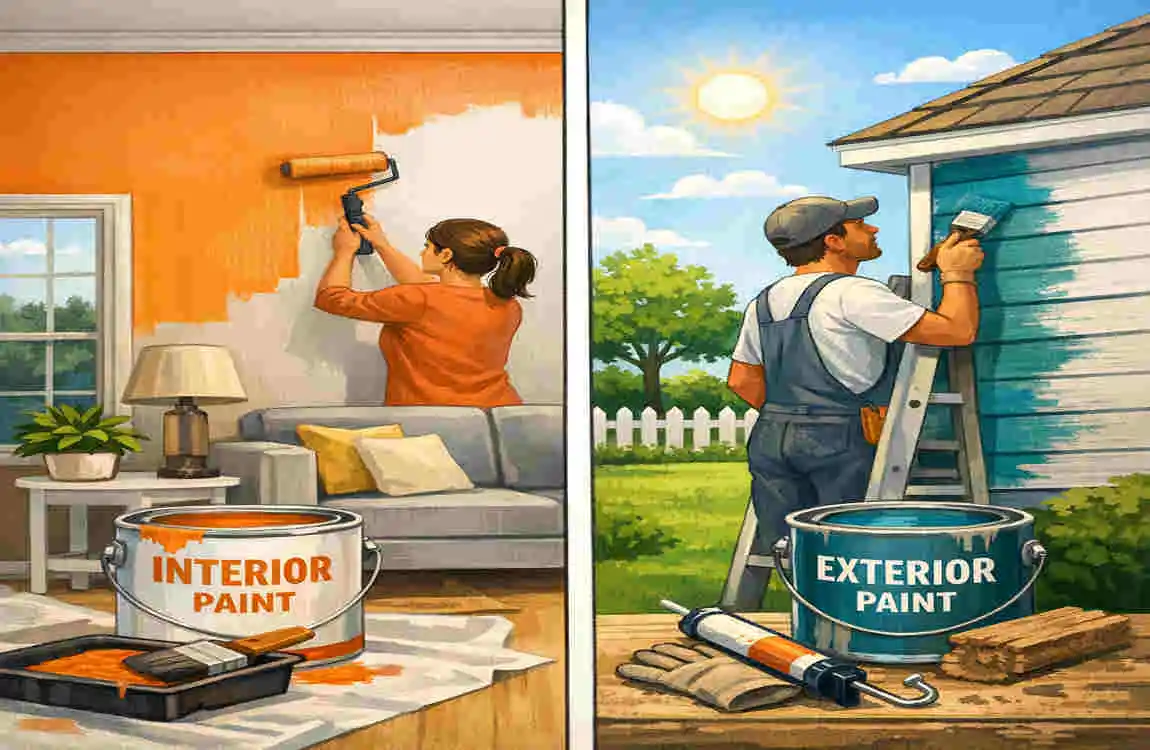
Here is a simple side-by-side view of the main differences.
Feature Interior Paint Exterior Paint
Main purpose Indoor decoration and protection Outdoor protection and appearance
Weather resistance Low High
UV resistance Limited Stronger
Flexibility Moderate Higher
Odour considerations Important Less critical
Durability Designed for indoor wear Designed for outdoor exposure
Typical surfaces Drywall, plaster, interior wood Siding, masonry, exterior wood
Simple way to think about it
Interior paint focuses on comfort and clean living. Exterior paint focuses on weather protection and long-term strength. That is the biggest difference.
Can You Use Interior Paint Outside or Exterior Paint Inside?
This is one of the most common questions homeowners ask.
Using interior paint outdoors
It is usually not a good idea to use interior paint on the exterior. Why? Because it is not made for weather exposure. It can crack, peel, fade, or wear out fast when exposed to sun and rain.
Using exterior paint indoors
Exterior paint may seem strong, but it is not always the right choice for use inside the home. It can have stronger odours, and it is not always designed with indoor air quality in mind.
Is paint interchangeable?
The safest rule is simple:
- Use interior paint indoors
- Use exterior paint outdoors
- Only switch if the manufacturer specifically says it is okay
That rule helps protect both your surfaces and your space.
How to Choose the Right Paint for Your Project
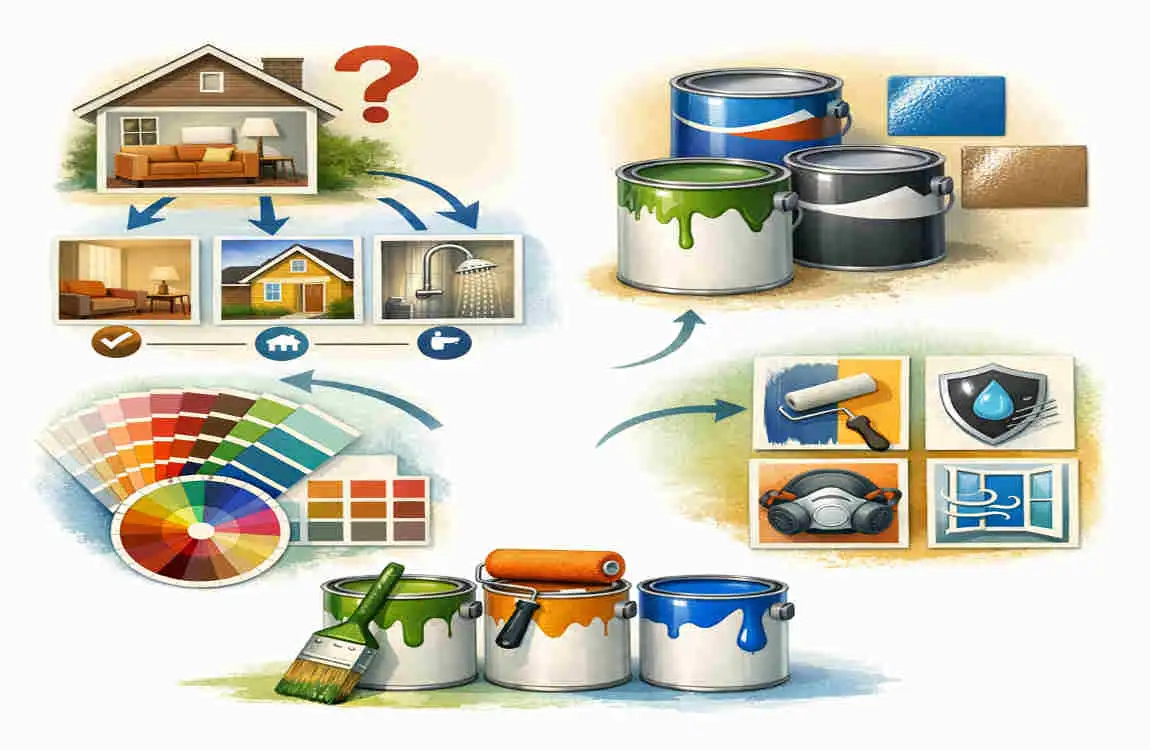
Choosing paint becomes much easier when you look at the surface, location, and finish.
Consider the surface
Different surfaces need different paint types. Think about:
- Drywall
- Wood
- Brick
- Concrete
- Metal
- Previously painted surfaces
Consider location and exposure.
Ask yourself where the paint will go. Is it in a busy hallway? A damp bathroom? A sunny exterior wall? The environment matters a lot.
Choose the right finish.
The finish affects both looks and performance.
- Matte: best for hiding flaws
- Eggshell: soft and balanced
- Satin: durable and easy to clean
- Semi-gloss: good for moisture and trim
- Gloss: shiny and highly washable
Check the paint label.
Always read the label before buying. It should tell you:
- Intended use
- Surface compatibility
- Drying time
- Coverage
- Preparation steps
This small step can save you time and money later.
FAQ: Interior and Exterior Paint Questions
What’s the difference between interior and exterior paint?
Interior paint is designed for indoor use and prioritises comfort, clean air, and easy cleaning. Exterior paint is designed for outdoor use and built to withstand weather, sunlight, and moisture.
Can I use interior paint on an exterior wall?
It is generally not recommended. Interior paint does not hold up well against rain, sun, and temperature changes.
Can exterior paint be used inside a house?
Sometimes, but only if the product label allows it. In many cases, exterior paint is not ideal for enclosed spaces due to outdoor-to-indoor odour and indoor air concerns.
Is exterior paint more durable than interior paint?
Yes, but in a different way. Exterior paint is designed for weather resistance, while interior paint is designed for indoor use and cleaning.
Which paint is better for bathrooms?
A moisture-resistant interior paint is usually the better choice for bathrooms.
Does exterior paint fade faster than interior paint?
Exterior paint is exposed to UV rays, so fading can happen over time. Interior paint is protected from direct sunlight, so it usually lasts longer.
How do I know which paint to buy?
Look at the surface, location, exposure, finish, and label instructions. Those five things will point you in the right direction.
| Feature | Interior Paint | Exterior Paint |
|---|---|---|
| Main Use | Walls, ceilings, bedrooms, kitchens | Siding, doors, trim, outdoor walls |
| Durability | Designed for indoor wear and cleaning | Built to withstand harsh weather |
| Weather Resistance | Low | High |
| UV Protection | Limited | Strong UV resistance |
| Moisture Resistance | Moderate | High |
| Finish Options | Matte, eggshell, satin, semi-gloss | Satin, semi-gloss, gloss |
| Best Benefit | Easy cleaning and attractive finish | Long-lasting protection and color retention |
| Can You Substitute? | Not recommended outdoors | Not ideal for most indoor spaces |
