

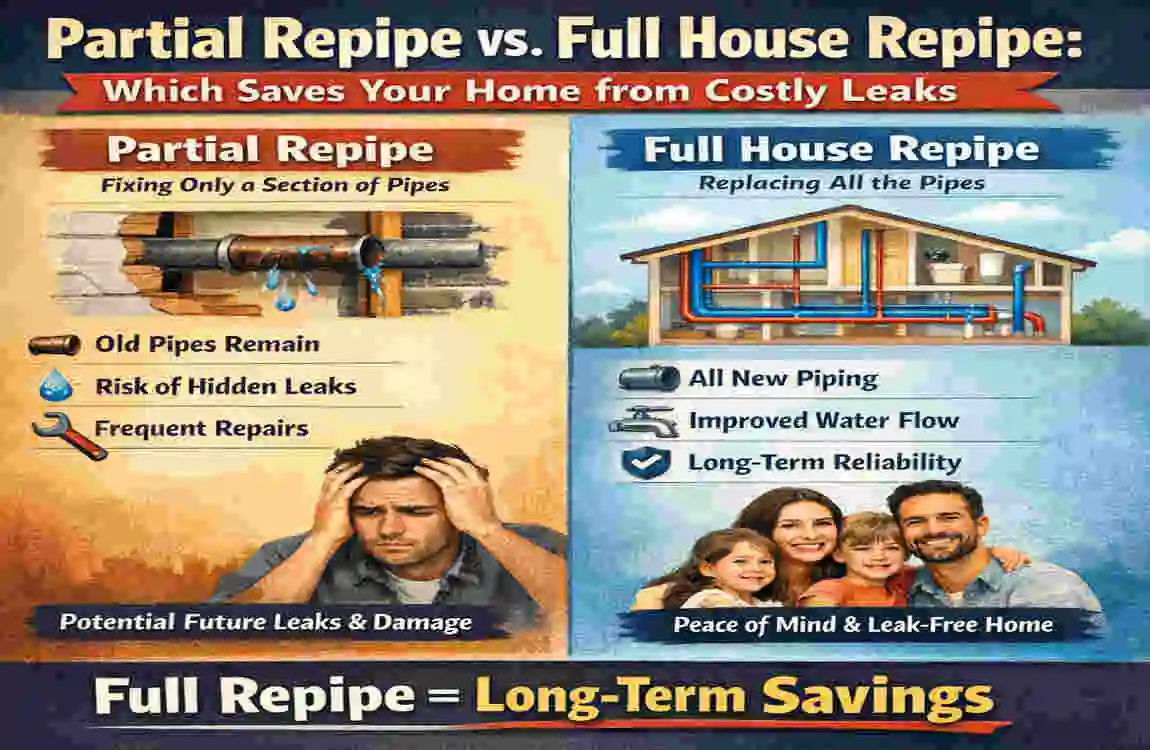
Imagine waking up to the sound of water dripping—only to discover a major pipe leak flooding your kitchen. For many homeowners, this nightmare becomes a reality, especially in older homes with aging plumbing systems. With pipes corroding and small leaks snowballing into costly disasters, the question arises: Should you opt for a partial repipe or a full house repipe?
The decision is not as simple as it seems. Both options have their pros and cons, and choosing the right one can save you from future headaches, thousands of dollars in repairs, and even water damage to your home.
| Feature | Partial Repipe | Full House Repipe |
|---|---|---|
| Cost | $1,500–$5,000 (per section) | $5,000–$16,000 (whole home) |
| Scope | Affected pipes only | All pipes (street to fixtures) |
| Duration | 1–3 days | 3–7 days |
| Lifespan | 10–20 years | 50+ years |
| Best For | Quick fixes, tight budgets | Long-term leak prevention |
| Disruption | Low (one area) | Higher (full access needed) |
What Is Partial Repipe and When Should You Choose It?
A partial repipe involves replacing only the damaged or problematic sections of your plumbing system rather than replacing the entire network of pipes. This targeted approach is often chosen when specific areas, such as a bathroom or kitchen, experience leaks or corrosion. At the same time, the rest of the system remains intact.
Pros and Cons of Partial Repipe
Here’s a quick look at the advantages and disadvantages of a partial repipe:
Pros:
- Cost-Effective: Replacing only the affected pipes is significantly cheaper than a full overhaul.
- Faster: A partial repipe can often be completed in a day or two.
- Less Disruption: Only specific areas of your home are affected, minimizing inconvenience.
Cons:
- Temporary Fix: If other sections of your pipes are aging as well, you may face additional issues down the road.
- Inconsistent Materials: Mixing old and new pipes can result in uneven water pressure or flow.
- Future Repairs: You may need to revisit plumbing issues repeatedly as other sections fail.
Ideal Scenarios for Partial Repipe
A partial repipe is a practical option in the following situations:
- Minor Leaks or Corrosion: If only a small section of your plumbing is damaged, replacing just that area can resolve the issue.
- Budget Constraints: Homeowners with limited funds may choose a partial repipe as a temporary solution.
- Short-Term Living: If you plan to move or rent out the property, a partial fix may suffice.
- Single-Room Problems: Issues isolated to one bathroom, kitchen, or laundry room are often best addressed with a partial repipe.
Room Partial Repipe Cost
Bathroom $500–$1,500
Kitchen $800–$2,000
Laundry Room $600–$1,800
Understanding Full House Repipe: The Complete Overhaul
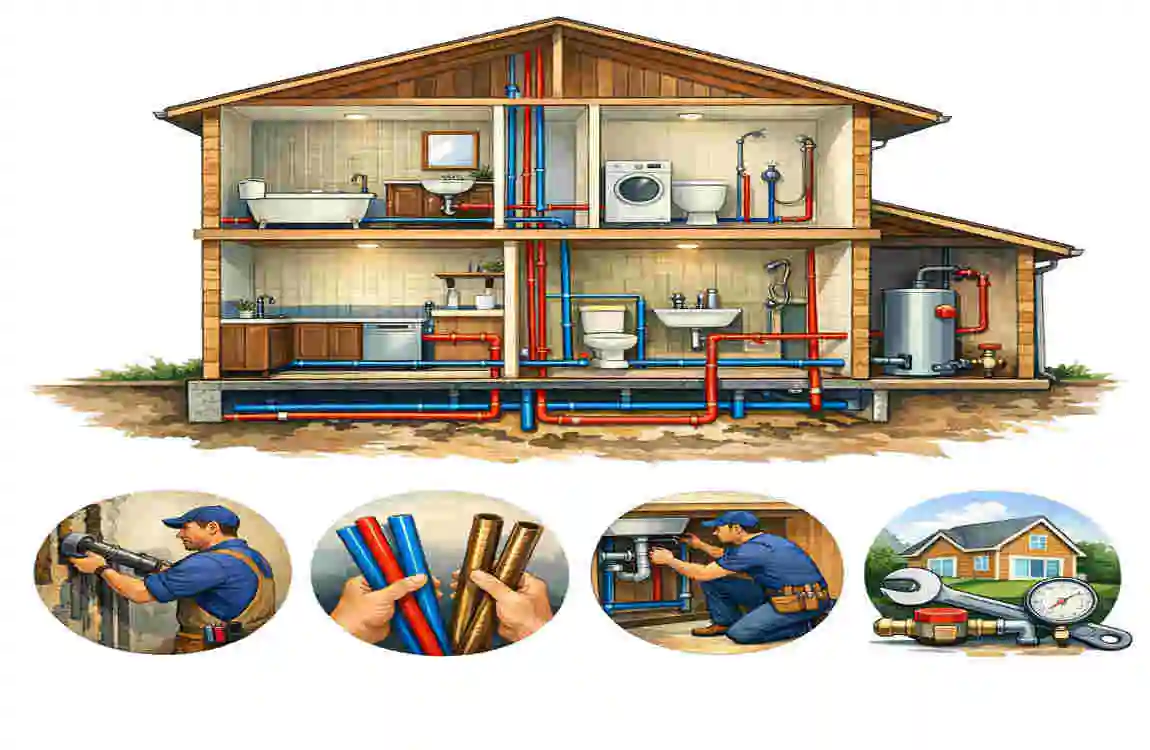
A full house repipe involves replacing all the plumbing pipes in your home, from the main water line to every faucet, fixture, and appliance. This comprehensive solution is ideal for older homes or those with widespread plumbing issues.
Advantages of Full House Repipe Over Partial
- Prevents Widespread Failures: By replacing all pipes, you eliminate the risk of recurring leaks throughout the system.
- Modern Materials: New pipes, such as PEX or copper, offer greater durability and performance than outdated galvanized steel or polybutylene.
- Insurance Benefits: Many home insurance policies favor homes with updated plumbing, potentially lowering your premiums.
- Higher Resale Value: A full repipe can increase your home’s value and attract buyers looking for a worry-free investment.
Drawbacks and How to Mitigate Them
While a full house repipe has numerous benefits, it also has its challenges:
Costs: This option is more expensive upfront, with costs ranging from $5,000 to $16,000 depending on the size and location of your home.
Disruption: A full repipe can take several days to weeks, requiring you to temporarily vacate certain areas of your home.
Mitigation Tips:
- Opt for a phased installation if budget or time is a concern.
- Schedule the work during a vacation or a slow period in your household.
Partial Repipe vs. Full House Repipe: Head-to-Head Comparison
To help you decide, here’s a side-by-side comparison of partial and full house repipes:
AspectPartial RepipeFull House Repipe
Cost $1,500–$5,000 $5,000–$16,000
Lifespan 10–20 years 50+ years
Disruption Minimal Moderate to high
Best For Quick fixes, long-term savings
Material Choices: Matches existing pipes. Full system upgrade
Pros and Cons Recap
- Partial Repipe: Cost-effective and fast, but may not address underlying issues.
- Full House Repipe: Higher upfront cost but offers peace of mind and long-term savings.
Cost Breakdown: Partial Repipe vs. Full House Repipe Expenses
The cost of repiping depends on several factors, such as the size of your home, the materials used, and labor rates in your area.
Factors Affecting Costs
- Materials:
- PEX Pipes: Affordable and flexible, costing $0.50–$2 per linear foot.
- Copper Pipes: More durable but expensive, costing $2–$4 per linear foot.
- Labor: Professional installation fees vary by location, with rates ranging from $50 to $150 per hour.
- Permits: Some municipalities require permits for repiping, adding $100–$500 to the total cost.
Expense Type: Partial Repipe, Full House Repipe
Materials $500–$1,500 $2,000–$6,000
Labor (avg.) $1,000–$3,000 $3,000–$10,000
Permits/Hidden Costs $100–$500 $500–$1,000
Long-Term Savings: Does Full House Repipe Pay Off?
While a full house repipe requires a significant upfront investment, it offers substantial long-term savings.
- Reduced Repair Costs: Eliminates recurring repair bills for leaks and corrosion.
- Energy Efficiency: Modern materials like PEX improve water flow, reducing energy use for heating water.
- Increased Resale Value: Homes with updated plumbing systems can sell 15% faster and at higher prices than homes with aging pipes.
How to Decide: Expert Tips for Partial Repipe vs. Full House Repipe
Making the right decision depends on your unique circumstances. Here’s a step-by-step checklist to guide you:
- Inspect Your Home: Look for signs of leaks, corrosion, and water discoloration.
- Consider Home Age: Homes over 30 years old may benefit more from a full repipe.
- Evaluate Water Quality: Poor water quality can accelerate pipe deterioration, making a full repipe more practical.
- Assess Your Budget: If funds are limited, start with a partial repipe in the most critical areas.
Top Signs Your Home Needs a Partial Repipe vs. a Full House Repipe
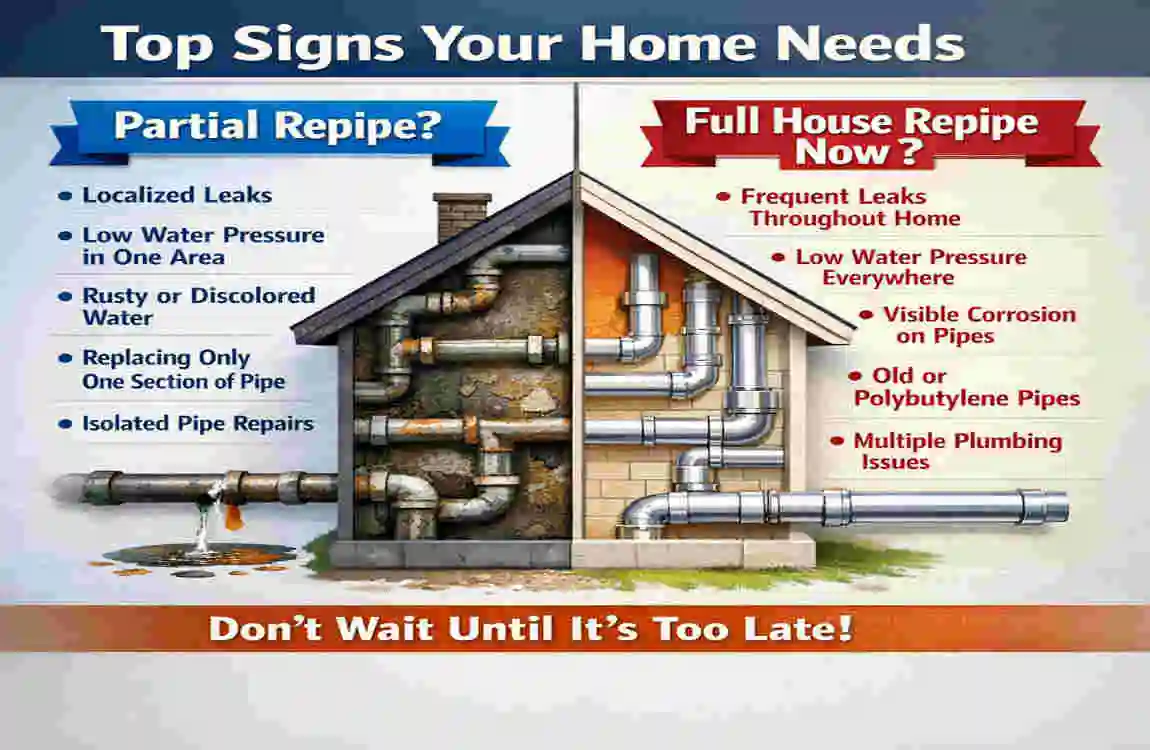
Here are some warning signs that indicate it’s time to consider repiping:
- Discolored Water: Indicates rust or corrosion in the pipes.
- Low Water Pressure: Could signal blockages or leaks.
- Recurring Leaks: Suggests widespread pipe damage.
- Age of Pipes: Pipes over 30 years old are more prone to failure.
Frequently Asked Questions (FAQ)
What is the average cost of a partial repipe vs. a full house repipe in
Partial repipe costs range from $1,500 to $5,000, while full house repipe costs average $5,000 to $16,000.
How long does a full house repipe take?
A full house repipe typically takes 3–7 days, depending on the size of your home.
Can I mix old and new pipes during a partial repipe?
Yes, but it may lead to minor inconsistencies in water pressure and flow.
