

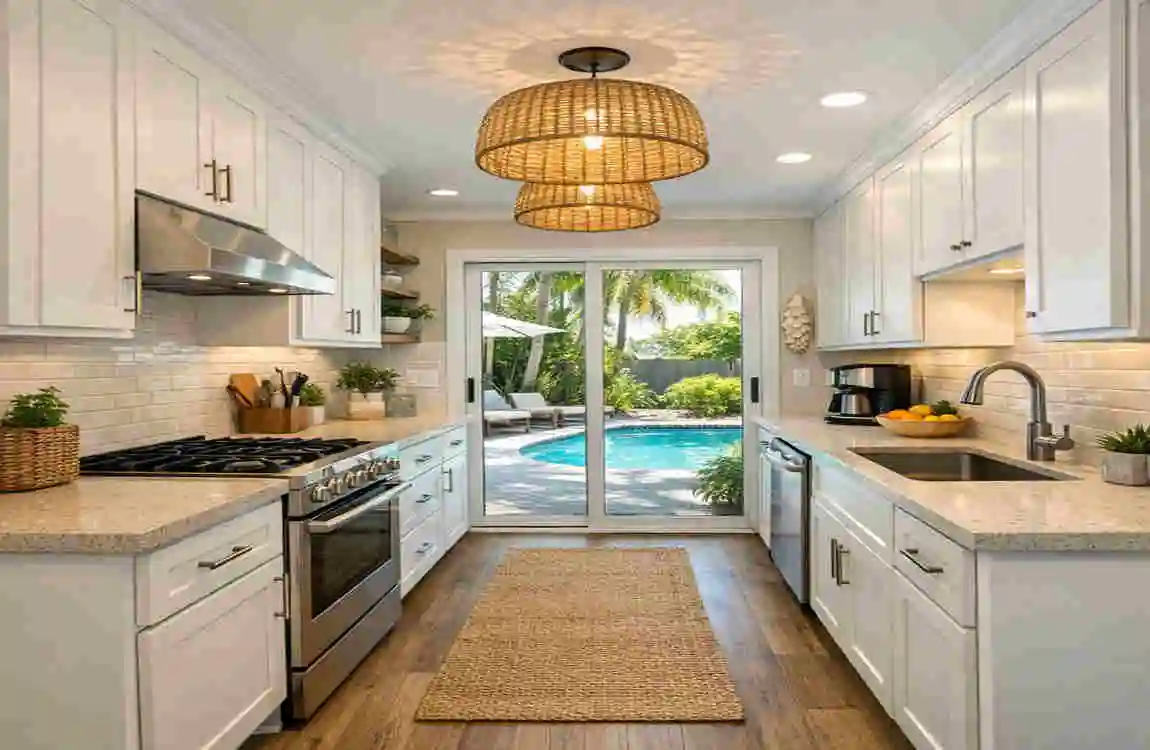
Have you ever walked into a stunning coastal condo in Florida and immediately noticed how perfectly every square inch of space is utilized? If you own a home in the Sunshine State, you already know that space can sometimes come at a Premium. From breezy beachfront bungalows to compact high-rise apartments overlooking the Miami skyline, Florida’s housing trends are increasingly leaning toward smart, efficient layouts.
As more people flock to our beautiful state, homeowners are constantly seeking innovative ways to maximize their living spaces. You want your home to feel open, inviting, and practical. But what happens when your kitchen feels a little too tight? This is exactly where the brilliance of a galley kitchen in Florida comes into play.
If you aren’t familiar with the term, a galley kitchen is a narrow space featuring two parallel walls of countertops and cabinets, with a central walkway running right down the middle. Modeled after the ultra-efficient cooking areas found on naval ships and trains, these layouts are designed to put everything you need within an arm’s reach. They eliminate the need for excessive walking while cooking, making your culinary experience incredibly streamlined.
| Feature | Description | Florida-Specific Adaptation |
|---|---|---|
| Layout | Two parallel runs (4-6 ft wide), work triangle (sink-stove-fridge) for streamlined workflow. | Narrow designs suit tight lots in Miami/Orlando; adds hurricane vents. |
| Cabinets | Upper/lower along walls; pull-outs maximize depth. | Moisture-resistant thermofoil or light woods to combat humidity. |
| Appliances | Counter-depth fridge, slim oven; no bulky islands. | Energy-efficient models cut AC costs in hot weather. |
| Counters | Quartz or laminate; 2-3 ft deep for prep. | Coastal blues/whites reflect light, pair with ocean views. |
| Storage | Vertical shelving, toe-kick drawers. | Open shelves for post-storm quick access; mirrors expand space illusion. |
| Lighting | Under-cabinet LEDs, windows at ends. | Skylights or impact glass for bright, storm-proof natural light. |
The Fascinating History of Galley Kitchens
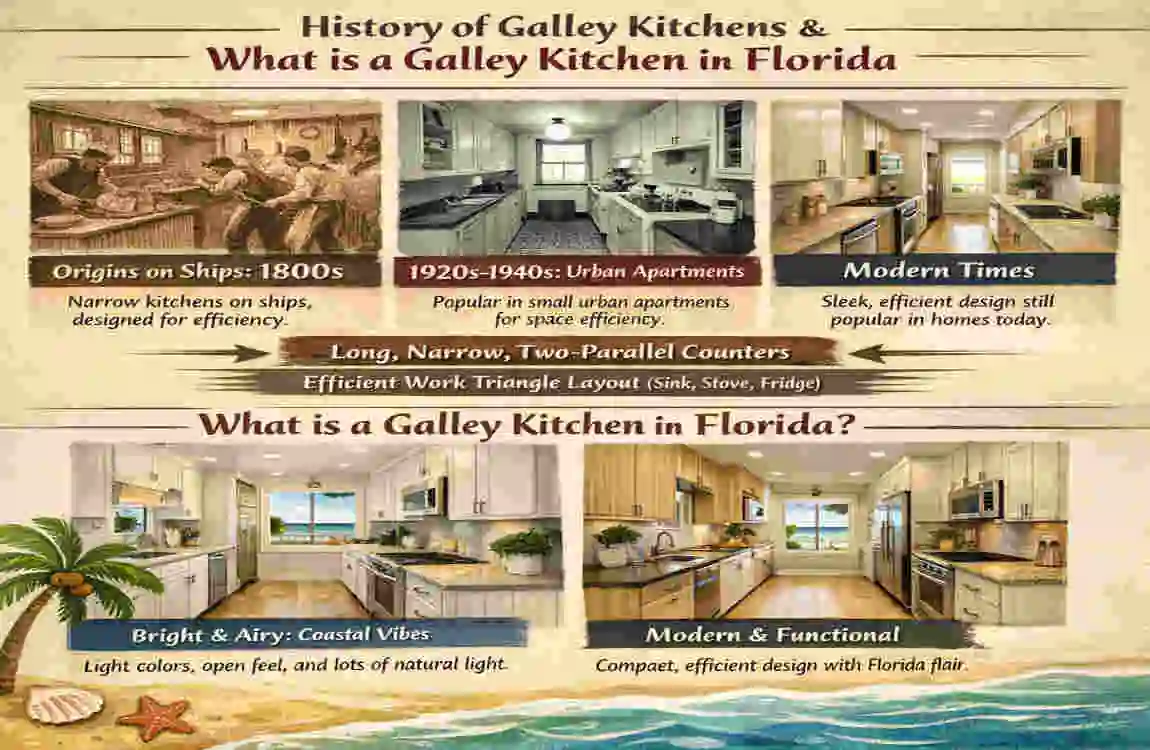
To truly appreciate the genius of a galley kitchen, we need to take a quick step back in time. You might be surprised to learn that your narrow home kitchen shares its DNA with massive naval ships and cross-country locomotives.
The word “galley” originally referred to the ship’s cooking area. On a vessel navigating the unpredictable ocean, space is incredibly limited. Naval architects had to design a cooking environment where chefs could safely and efficiently prepare meals for hundreds of sailors without taking up valuable cargo or sleeping space. The solution was a narrow, parallel layout. Everything from the stove to the storage was securely locked down, and the chef had to pivot on one foot to reach the sink, the prep station, or the fire.
This brilliant, space-saving blueprint eventually made its way onto railway dining cars, where trains required the same level of extreme efficiency. But how did it get into your home?
The evolution of the galley layout in United States residential architecture really took off right after World War II. As soldiers returned home and the American population boomed, there was a massive demand for affordable, rapidly built housing. Architects needed a kitchen design that was inexpensive to build, required minimal plumbing lines, and fit perfectly into smaller homes.
Why Galley Kitchens Thrive in Florida Homes
Are galley kitchens really that popular in Florida today? The answer is a resounding yes. Let’s take a virtual tour across the state to understand why this layout is thriving.
If you head down to Miami, you will find thousands of towering high-rise condos. In these urban environments, real estate lot sizes dictate that developers build up rather than out. A galley kitchen is the absolute perfect solution for a condo because it requires less square footage than a massive, sprawling open-concept kitchen. The same goes for the charming, historic bungalows in cities like Orlando and St. Petersburg. These older homes don’t have the vast floor plans required for giant kitchen islands, making the galley layout an absolute lifesaver for homeowners wanting modern functionality in a vintage space.
Beyond just square footage, our tropical climate offers unique perks for galley kitchen owners. Let’s talk about ventilation. In humid areas, trapping cooking heat and moisture in a large, cavernous room can make your AC unit work overtime. A galley kitchen, especially one with a window at the far end, creates a natural wind tunnel. This allows you to vent out smoke, steam, and heat incredibly quickly.
Furthermore, let’s address a reality of Florida living: storms. After a heavy storm or a power outage, cleanup is a breeze in a galley kitchen. You don’t have a massive footprint to scrub down. The space’s compactness means you can wipe down your counters, check your slim appliances, and mop your floor in half the time it takes in a larger room.
The numbers speak for themselves. While hypothetical, industry trends suggest that nearly 30% of all recent Florida kitchen remodels prioritize space-saving, high-efficiency designs over sprawling layouts. When you compare a galley kitchen to an L-shaped alternative, the galley often provides more continuous countertop space and double the upper cabinet storage, simply because it utilizes two full walls instead of just one and a half.
If you are dealing with a tight floor plan and want to maximize your home’s potential, [Check Out Our Kitchen Remodeling Services] to see how we can transform your space.
The Anatomy of a Galley Kitchen
Now that we know why they are so popular, let’s break down exactly what makes a galley kitchen tick. What is the anatomy of this incredibly efficient space?
At its core, the layout is defined by two parallel walls. These walls face each other to form a central corridor. For the best flow, the ideal width of this central walkway is between 4 and 6 feet. If it is any narrower, you will feel cramped and won’t be able to open your oven or dishwasher doors easily. If it is any wider, you lose the efficiency of simply turning around to reach the opposite counter, defeating the design’s purpose.
The absolute magic of the galley kitchen lies in the work triangle. This is the invisible line connecting your sink, your stove, and your refrigerator. In a galley setup, this triangle is usually organized as an equilateral masterpiece. You might have the sink and dishwasher on one side, with the stove and fridge perfectly centered on the opposite wall. This means you can wash vegetables, turn around, and toss them directly into the frying pan with zero wasted steps.
Key elements of this layout include:
- Upper and Lower Cabinets: Because floor space is limited, galleys rely heavily on maximizing wall space. You will typically see cabinets stretching all the way to the ceiling.
- Slim Appliances: Standard bulky fridges can clog walkways. Galley kitchens thrive on counter-depth or slim-profile appliances that sit flush with the cabinetry.
Florida-Specific Adaptations
When we design these spaces in Florida, we have to consider our environment. A true Florida galley kitchen often includes hurricane-rated impact windows at the end of the corridor to let in gorgeous natural light without compromising safety. Additionally, we rely heavily on moisture-resistant materials in the cabinets to prevent warping from our legendary summer humidity.
Top Design Trends Florida Galley Kitchens
Design is always evolving, and as we look at 2026, the trends for a galley kitchen in Florida are incredibly exciting. Homeowners are moving away from dark, heavy woods and instead embracing a light, airy, and highly functional aesthetic that perfectly complements the coastal lifestyle.
If you want your kitchen to feel larger than it is, lighting and color are your best friends. Here are the top trends dominating Florida remodels right now:
Light and Breezy Cabinetry
Say goodbye to dark mahogany! In 2026, it is all about bright, reflective surfaces. We are seeing a huge surge in crisp white, soft seafoam green, and pale sandy-colored cabinets. These light shades bounce natural light back and forth between the parallel walls, tricking the eye into believing the narrow corridor is much wider than it actually is.
Coastal Blue Quartz Countertops
Florida homeowners want durability without sacrificing style. Quartz continues to reign supreme because it is non-porous and highly resistant to stains and humidity. The latest trend involves quartz with subtle coastal blue veining. It brings a touch of the ocean right into your home, serving as a stunning focal point against white cabinets.
Open Shelving with Tropical Accents
While upper cabinets are great for storage, having two solid walls of heavy wooden boxes can sometimes make a galley feel like a tunnel. To combat this, modern designs are incorporating open shelving on at least one side. Homeowners are styling these floating shelves with tropical accents—think small potted palms, woven seagrass baskets, and beautifully stacked vibrant dishware.
Smart and Hidden Technology
Efficiency is the name of the game. In 2026, smart tech is seamlessly integrated into small spaces. We are seeing brilliant under-cabinet LED lighting systems that you can control from your phone, illuminating your countertops without taking up ceiling space. Additionally, voice-activated slim refrigerators and hidden microwave drawers are keeping the central walkway clear of bulky obstructions.
Space-Saving Hacks for Florida Galley Kitchens
When you are working with a narrow footprint, every single inch matters. You have to get creative with how you store your goods, prep your food, and navigate the room.
To help you get the most out of your kitchen, we’ve put together a table of the ultimate space-saving hacks, complete with specific tips for Florida living.
Space-Saving Hack: Primary Benefit, Florida-Specific Tip
Pull-out Pantries maximize narrow depth by using vertical pull-out racks instead of deep shelves. Use humidity-resistant bamboo or sealed wire racks to prevent tropical moisture from building up on your dry goods.
Vertical Storage takes advantage of unused wall space, often extending up to 9-foot ceilings. Excellent for post-hurricane organization; keep heavy emergency supplies low and lightweight items up high.
Compact appliances free up valuable countertop space and keep the walkway wide open. Choose high-efficiency, Energy Star models to help lower your AC bills during the sweltering summer months.
Mirrored Backsplashes expand the visual illusion of the room, making it feel twice as wide. Position mirrors to perfectly reflect ocean, lake, or pool views from an adjacent window.
Pros and Cons: Galley vs. Open Concept
You might be debating whether to keep your galley layout or tear down a wall for an open concept. Here is a quick breakdown to help you decide:
- Pros of a Galley: Significantly cheaper to remodel, highly efficient for serious cooks, hides dirty dishes from the living room, and leaves more square footage for your main living areas.
- Cons of a Galley: Can feel isolated from guests during parties, difficult for multiple people to cook at once, and lacks the space for an eat-in island.
If you are ready to implement these space-saving hacks, [Contact Us for a Custom Cabinetry Consultation] today!
Popular Galley Kitchen Materials for Florida
Choosing the right materials for your remodel is absolutely crucial. Because Florida has a unique climate that fluctuates between intense heat and heavy moisture, you cannot just pick any material off the shelf. You need products that are built to last.
Cabinetry: Thermofoil Over Solid Wood
While solid wood is beautiful, it has a nasty habit of expanding and contracting with humidity, which can cause cabinet doors to warp over time. For a galley kitchen in Florida, we highly recommend thermofoil cabinets. Thermofoil is a durable vinyl material heated and molded onto medium-density fiberboard (MDF). It creates a smooth, seamless, non-porous surface that completely seals out humidity. Plus, it wipes clean incredibly easily!
Flooring: Porcelain Tile Over Luxury Vinyl
You want a floor that can withstand wet bathing suits tracking in from the pool, accidental spills, and the test of time. While luxury vinyl plank (LVP) is popular, porcelain tile is the ultimate champion for Florida homes. Porcelain is fired at a much higher temperature than standard ceramic, making it virtually waterproof and incredibly scratch-resistant. To make a narrow galley appear longer, lay rectangular porcelain tiles vertically down the length of the kitchen.
Backsplashes: Glass Subway Tile
To combat the “tunnel effect” of a narrow kitchen, you need surfaces that bounce light. A classic subway tile is great, but upgrading to a glass subway tile is a game-changer. The glass’s translucency captures both natural sunlight and your under-cabinet lighting, creating a shimmering, spacious effect that perfectly complements a coastal aesthetic.
When it comes to budgeting, thermofoil cabinets and porcelain tile offer an incredible balance of luxury aesthetics at an accessible price point, giving you an upscale look without breaking the bank.
Real Florida Home Examples
Sometimes, the best way to envision the potential of your own home is to see what others have accomplished. Let’s look at two incredible real-life transformations right here in Florida.
The Palm Beach Condo Redo
Picture a cramped, dark 1980s condo kitchen in Palm Beach. The original layout featured bulky oak cabinets that completely choked the 4-foot walkway, making it impossible to open the dishwasher without hitting the opposite counter.
The Transformation: The homeowners decided to keep the galley footprint but completely modernized it. They ripped out the dark oak and installed sleek, white, flat-panel thermofoil cabinets that stretched to the 9-foot ceiling. By swapping their standard fridge for a counter-depth model, they instantly widened their walkway by nearly 6 inches. The Result: By taking the cabinets to the ceiling and utilizing clever pull-out pantry shelves, they achieved a massive +20% increase in usable storage space while making the room feel twice as bright and airy.
The Tampa Historic Bungalow
In Tampa, a young couple purchased a 1920s bungalow. The kitchen was a classic, narrow galley, but it felt isolated and entirely cut off from the beautiful backyard.
The Transformation: Rather than destroying the historic layout, they optimized it. They replaced the solid back door with a full-glass hurricane-rated door, immediately flooding the parallel walls with sunlight. They removed the upper cabinets on the left side. They replaced them with floating open shelving to display their colorful glassware. The Result: The kitchen transformed from a dark, utilitarian cooking corridor into a vibrant, welcoming space that bridged the gap between the indoor living area and the outdoor patio.
Cost to Remodel a Galley Kitchen in Florida
Let’s talk numbers. How much should you expect to invest to achieve the kitchen of your dreams? Because galley kitchens are smaller than open-concept kitchens, they are generally much more affordable to remodel.
For a standard galley kitchen in Florida, you can expect remodeling costs to range from $15,000 to $40,000, depending heavily on the luxury level of your finishes.
Here is a general breakdown of where your budget goes:
- Cabinets & Hardware: Roughly 40% of the budget. Custom ceiling-height cabinets will push you toward the higher end of the range.
- Appliances: About 25%. Opting for high-end, counter-depth, or smart appliances will increase this slice of the pie.
- Countertops & Installation: Around 15%. Quartz is pricier than laminate but offers superior durability.
- Labor, Flooring, & Electrical: The remaining 20%.
Florida-Specific Factors: When budgeting, do not forget to account for local building permits and potential upgrades to meet hurricane code requirements. If your galley kitchen features a window at the end, replacing it with an impact-rated window will add to your initial cost but save you money on insurance in the long run.
The best news? The Return on Investment (ROI) for a kitchen remodel in the highly competitive Florida real estate market is excellent. Homeowners typically see a 60% to 70% recoup of their investment when it comes time to sell!
DIY vs. Professional Remodeling Tips
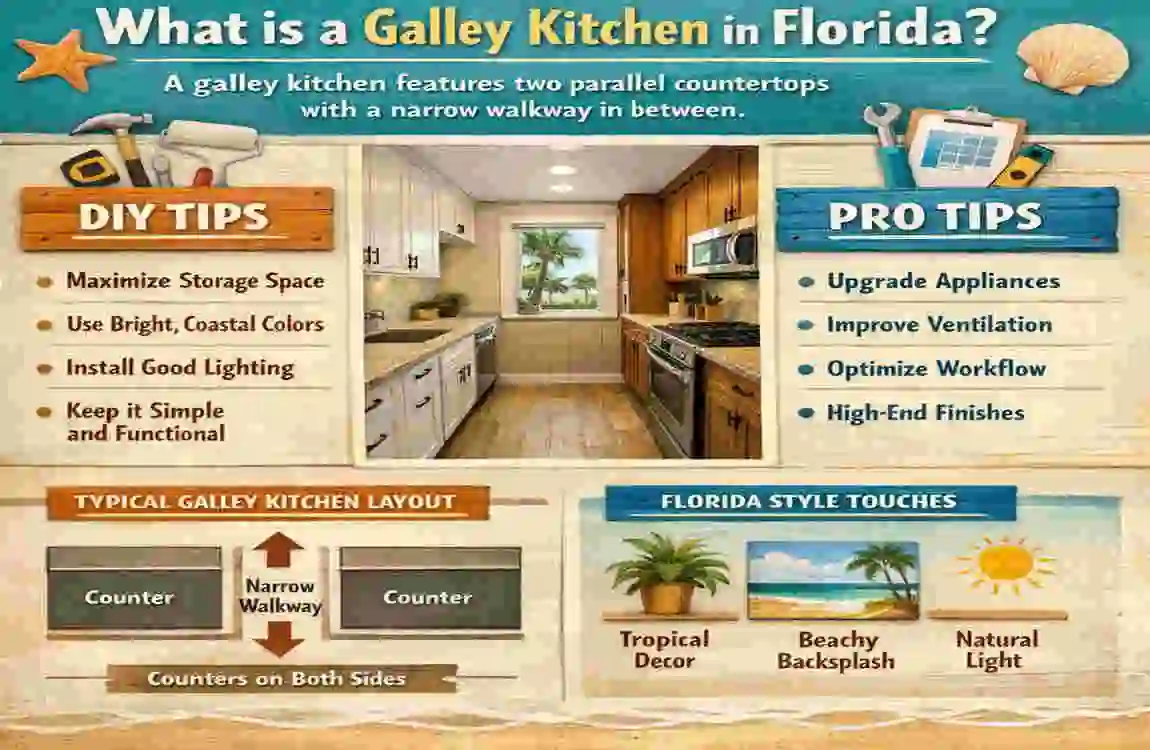
With home improvement shows dominating television, it is tempting to want to grab a sledgehammer and tackle your galley kitchen on your own. However, it is vital to know which tasks are safe for a DIY weekend warrior and which require a professional touch.
What You Can DIY
If you are on a tight budget, there are plenty of highly effective DIY updates you can do yourself.
- Paint Updates: Slapping a fresh coat of light, coastal-inspired paint on your walls can instantly brighten the narrow space.
- Hardware Swaps: Replacing old, tarnished drawer pulls with modern brushed nickel or matte black hardware is incredibly easy and surprisingly impactful.
- Peel-and-Stick Backsplash: For a temporary or budget-friendly update, peel-and-stick glass-look tiles can give you a weekend refresh.
When to Call the Pros
When it comes to the heavy lifting, professional help is non-negotiable. If you plan to alter plumbing lines, upgrade electrical panels for smart appliances, or knock down a non-load-bearing wall to widen your walkway, you need a licensed contractor.
Florida building codes are extremely strict, particularly regarding hurricane safety and moisture mitigation. A professional will pull the proper permits, ensure your electrical work is up to code, and install cabinetry securely enough to withstand years of heavy use.
Frequently Asked Questions (FAQ)
What is a galley kitchen in Florida? A galley kitchen is a long, narrow cooking space with two parallel walls of cabinetry and countertops, and a single central walkway. In Florida, they are highly popular in compact spaces like high-rise condos and historic bungalows due to their exceptional space efficiency and natural ventilation.
What is the best width for a galley kitchen? The ideal width for the central walkway in a galley kitchen is between 4 and 6 feet. This provides enough room to easily open appliance doors (like your oven or dishwasher) without bumping into the opposite counter, while still keeping the workspace tight and efficient.
What are the top galley kitchen trends for 2026? The biggest trend for 2026 is a minimalist, airy coastal aesthetic. This includes using light cabinetry (like crisp whites and seafoam greens), coastal blue quartz countertops, floating open shelving, and smart, hidden appliances to keep the narrow space feeling as large as possible.
How much does it cost to remodel a galley kitchen in Miami or Orlando? While costs vary based on material choices, a standard galley kitchen remodel in Florida typically ranges from $15,000 to $40,000. This is generally more affordable than a large open-concept kitchen because there is less square footage to cover.
