

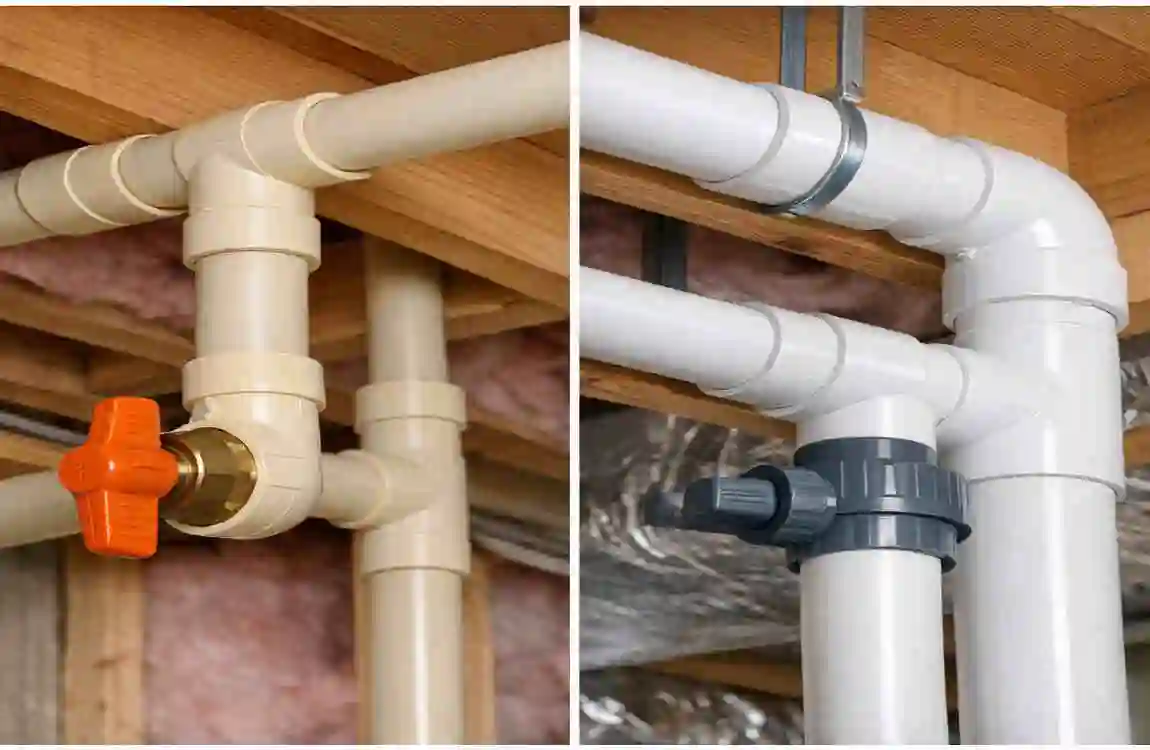
Have you ever woken up to the sound of dripping water echoing through your hallway? Or have you faced a shockingly high water bill due to an unseen leak behind your walls? These are common homeowner nightmares. Often, these expensive disasters stem from a single, preventable mistake: using the wrong pipe materials during a build or renovation. Choosing the right plumbing materials can literally save you thousands of dollars in repair costs and structural water damage over the lifespan of your home.
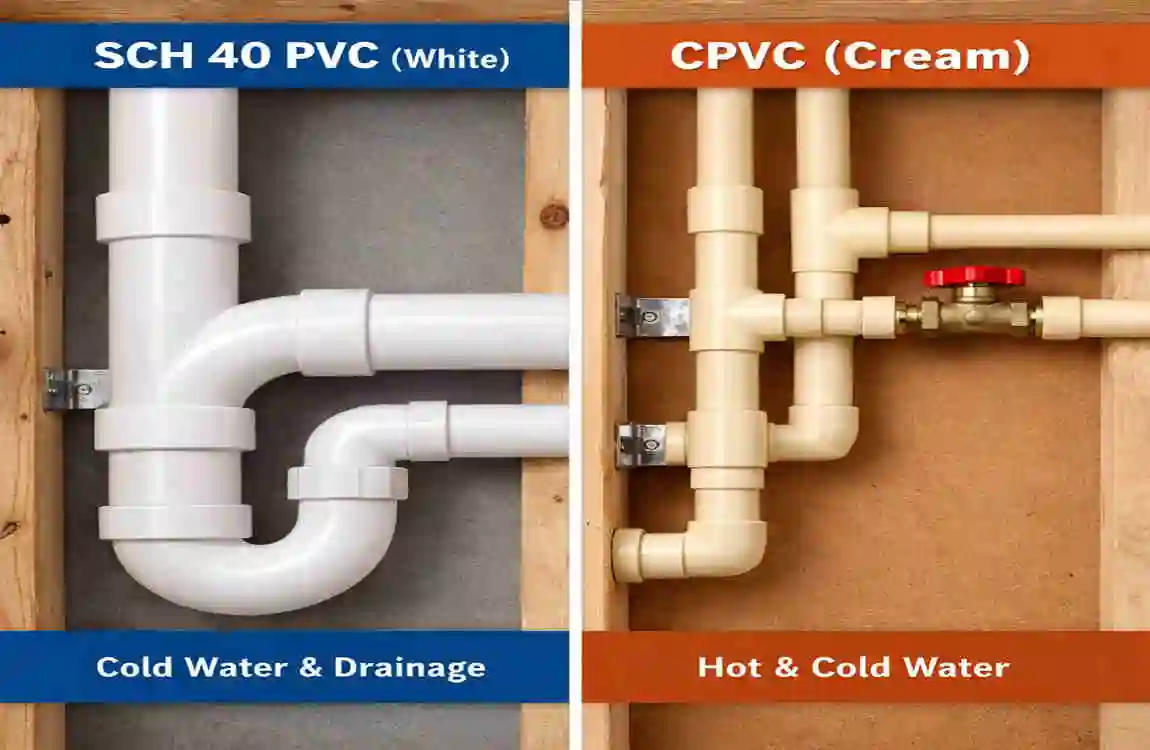
If you are currently building a house or planning a major renovation, you are probably asking yourself a critical question: What type of PVC is used for house plumbing? We want to answer that right up front for you. For the vast majority of residential homes, plumbers primarily rely on Schedule 40 PVC for cold-water lines and drainage, while using CPVC for its incredible versatility in handling both hot and cold water supplies.
The plumbing industry has largely moved away from heavy, expensive metals, bringing us to the great CPVC vs Schedule 40 debate. Each of these heavy-hitting plastics plays a specific role in your home’s ecosystem. Schedule 40 PVC is celebrated worldwide for its unbeatable affordability, making it the top choice for drainage systems and cold-water main lines. On the flip side, CPVC is the undisputed champion of temperature resistance, capable of handling scorching hot water up to 200°F without warping, melting, or degrading.
What is PVC and Why Use It for House Plumbing?
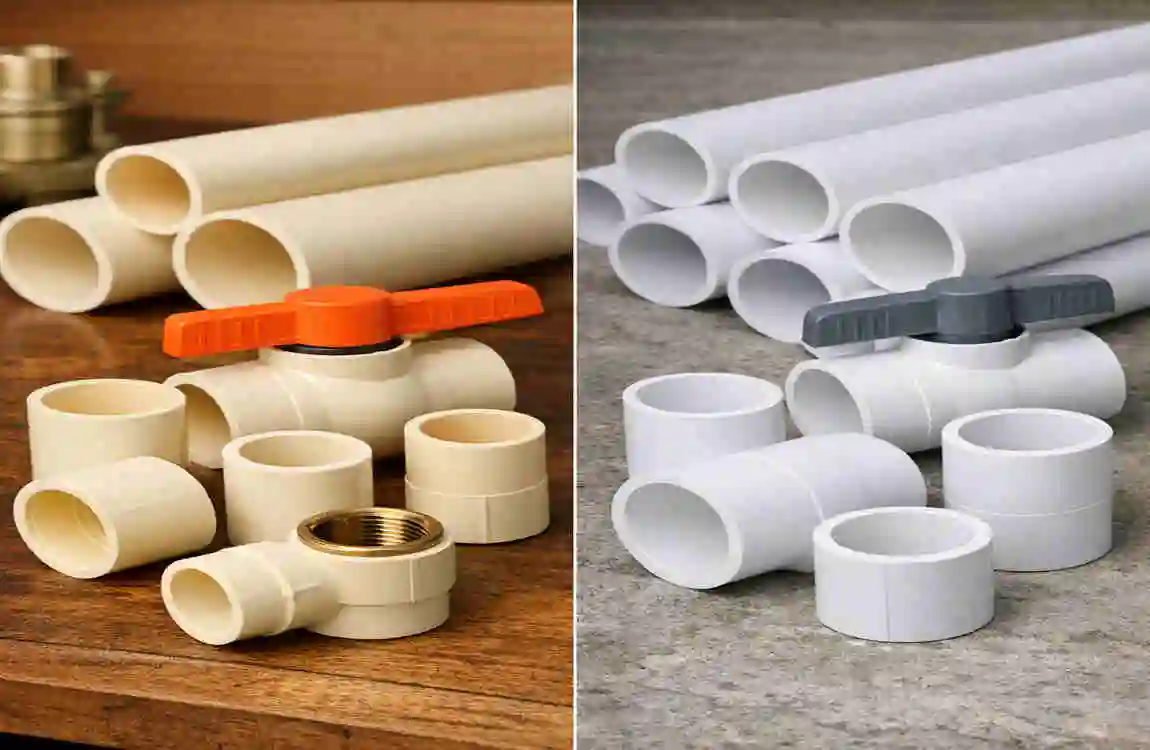
To truly understand what type of PVC is used for house plumbing, we first need to look at what this wonder material actually is. PVC stands for polyvinyl chloride. In the simplest terms, it is a highly rigid, incredibly durable plastic polymer that has completely revolutionized modern construction and plumbing.
Before PVC hit the market, plumbers had to wrestle with heavy cast iron, expensive copper, or galvanized steel pipes that were prone to rusting. Today, PVC is the absolute dominant force in residential plumbing. Why? It offers unparalleled corrosion resistance, has a remarkably low production cost, and is unbelievably easy to install compared to traditional metal pipes.
Understanding Pipe Schedules
When you shop for residential PVC pipe, you will often hear the word “Schedule” used. But what does it actually mean?
In the plumbing world, a pipe’s “schedule” refers to its wall thickness. The thicker the pipe wall, the higher the schedule number, and the greater the internal water pressure the pipe can safely withstand.
- Schedule 40: This is the universal standard for residential homes. It features a wall thickness that perfectly balances durability, pressure capacity, and internal flow rate.
- Schedule 10: You might see this on shelves, but avoid it for pressurized water. It has a much thinner wall and is strictly meant for low-pressure DWV (Drain, Waste, and Vent) applications where gravity does the work.
- Schedule 80: This features a very thick wall and is typically reserved for commercial or industrial applications where extreme pressures are present.
Why Houses Worldwide Rely on PVC
The relevance of PVC in modern housing cannot be overstated. Today, PVC pipes are utilized in more than 70% of homes across the United States and globally for water supply lines, underground drains, and rooftop vents.
For homeowners in regions like, where hard water is a massive daily challenge, PVC is a lifesaver. Hard water contains high levels of dissolved calcium and magnesium. When these minerals flow through metal pipes, they stick to the inner walls, eventually clogging the pipes entirely through a process called scaling. PVC, however, features an incredibly smooth, frictionless plastic interior. Minerals slide right through without grabbing hold, keeping your water pressure strong for decades.
The benefits of using the best PVC for home plumbing are staggering. First, it is phenomenally lightweight, weighing roughly 1/6 that of traditional copper piping. This makes it easy for DIYers to carry and maneuver. Second, it boasts an impressive lifespan. When properly installed and shielded from direct sunlight, a quality PVC plumbing system can easily last 50 to 70 years without needing replacement.
Types of PVC Pipes for Residential Plumbing
When you walk down the plumbing aisle of your local hardware store, the sea of white, cream, and gray pipes can feel overwhelming. Let’s divide these complex ideas into understandable segments. Here is a detailed overview of the main types of PVC pipes used in residential houses today.
Schedule 40 PVC: The Cold Water Standard
If you are asking what type of PVC is used for house plumbing for basic, everyday cold-water needs, Schedule 40 PVC is your answer. It features the thinnest common wall thickness that is still rated to safely hold pressurized water. It is the absolute go-to material for bringing the cold water main into your house, running irrigation lines for your garden sprinklers, and managing drainage from your sinks and toilets. You will easily recognize it by its bright white color.
Schedule 80 PVC: The High-Pressure Specialist
Schedule 80 PVC is the beefier, stronger older brother of Schedule 40. It is manufactured with a much thicker outer wall, allowing it to withstand significantly higher water pressures. Because the outside diameter remains the same as Schedule 40 (so they can use the same size fittings), the thicker wall actually reduces the internal flow space. It is usually dark gray. While rarely needed inside a standard residential home, it is sometimes used for main supply lines coming from deep, high-pressure city pumps.
CPVC: The Hot Water Upgrade
Standard PVC has a fatal flaw: it melts when exposed to hot water. Enter CPVC (Chlorinated Polyvinyl Chloride). Manufacturers take standard PVC and put it through a specialized chlorination reaction. This brilliant chemical tweak fundamentally changes the plastic, giving it the superpower of extreme heat resistance. CPVC can handle both hot and cold water with ease, making it the preferred plastic for lines running from your water heater. It usually features a distinct cream or yellowish color to distinguish it from standard white PVC.
Other Variations: DWV and uPVC
To round out your knowledge, you might encounter DWV (Drain, Waste, Vent) pipes, which are thin-walled PVC pipes designed solely to carry gravity-fed waste and sewer gases away from your home. You will also see uPVC (Unplasticized PVC), a rigid, environmentally friendly material often used internationally for non-pressure drainage and window frames.
Quick Comparison Table
To make your house plumbing PVC guide as simple as possible, here is a quick comparison of the sizes, pressure limits, and average costs for standard 1/2-inch to 2-inch residential pipes.
Pipe TypeMax Temp Tolerance Pressure Rating (1/2″ pipe)Best House Use Average Cost/ft
Schedule 40 PVC 140°F 600 PSI Cold water supply, gravity drainage $0.50
CPVC 200°F 400 PSI (at high heat) Hot and cold interior water lines $1.00
Schedule 80 PVC 140°F 850 PSI High-pressure main supply lines $1.20
CPVC vs Schedule 40: Head-to-Head Comparison
We have arrived at the core showdown for the fundamental question: what type of PVC is used for house plumbing? If you are choosing materials for your home, understanding the specific differences between CPVC and Schedule 40 is crucial. Let’s put these two titans of the plumbing world head-to-head in four major categories.
Temperature Tolerance
This is where the battle is usually decided. Standard Schedule 40 PVC has a maximum safe operating temperature of roughly 140°F. If you push water hotter than that through a standard white PVC pipe, the plastic will begin to soften, warp, and eventually burst at the joints. CPVC, on the other hand, wins this category by a landslide. Thanks to its added chlorine content, CPVC boasts a safe operating temperature of up to 200°F. This makes it essential for connecting to your geyser or water heater, where temperatures frequently exceed standard PVC limits.
Durability and Chemical Resistance
Both materials are incredibly durable, but they shine in different ways. CPVC is slightly more flexible and offers superior chemical resistance, making it more resistant to the chlorine commonly added to municipal water supplies. Schedule 40 PVC is slightly more rigid and brittle, but it is also physically stronger against outside blunt force. If you accidentally bump a Schedule 40 pipe with a shovel in the yard, it is less likely to crack than CPVC. Schedule 40 is also lighter and generally considered easier for DIYers to handle for outdoor cold water projects.
Cost Analysis
If you are plumbing a massive house, budget matters. Here, Schedule 40 PVC takes the crown. Because the manufacturing process is simpler, Schedule 40 is roughly 40% to 50% cheaper than CPVC. If you are running hundreds of feet of pipe for a yard sprinkler system or a cold-water main line, using Schedule 40 will save you hundreds of dollars. CPVC is considered a Premium upgrade and commands a higher price tag to match its thermal performance.
Installation Differences
Both of these pipes use a highly effective “glue-joint” method. Plumbers do not thread these pipes; instead, they use chemical solvents to literally melt the plastic pieces together, forming a permanent, watertight weld. While the process is similar, the chemicals are different. CPVC strictly requires a special yellow CPVC-rated cement and heavily relies on a purple primer to soften the dense plastic before gluing. Schedule 40 uses standard clear or blue PVC cement. While primer is recommended, some fast-acting standard cements can safely skip it for non-pressurized drainage.
The Pros and Cons Breakdown
Schedule 40 Pros:
- Highly affordable and budget-friendly.
- Widely available at every hardware store.
- Excellent internal flow rates for high water volume.
- Thicker walls resist physical impact.
Schedule 40 Cons:
- Cannot handle hot water (melts at 140°F).
- Not certified for interior hot-water potable systems.
CPVC Pros:
- Incredibly versatile; handles both hot and cold lines.
- Safe for temperatures up to 200°F.
- NSF-certified to carry clean, potable drinking water safely.
- Better resistance to municipal water chemicals.
CPVC Cons:
- Significantly higher price point per foot.
- Requires specific, more expensive solvent cements.
The Real-World Verdict: You do not have to pick just one! Smart plumbers use a hybrid approach. Use affordable Schedule 40 PVC for your cold-water mains, yard irrigation, and all your sinks and drainage lines. Then, spend the extra money on CPVC specifically for your showers, bathtubs, and the lines exiting your water heater.
When to Choose Schedule 40 PVC for Your Home
Now that you know the technical specs, let’s talk about practical application. When is Schedule 40 the ideal, absolute best PVC for home plumbing?
Schedule 40 is your workhorse for anything that does not involve heat. It is perfect for routing the cold municipal water supply from the street into your home. It is the gold standard for underground landscape irrigation systems. Furthermore, if you are doing a budget bathroom renovation, Schedule 40 is exactly what you want to use for the waste lines carrying water away from your sink basin, shower pan, and toilet flange.
Step-by-Step Sizing and Code Compliance
When planning a Schedule 40 installation, sizing is critical. A common mistake DIYers make is running pipes that are too small, resulting in poor water pressure.
- For Main Lines: Always use at least 3/4-inch or 1-inch Schedule 40 PVC for the main trunk line entering your home to ensure adequate volume.
- For Branch Lines: Once inside the home, you can branch off to individual sinks and toilets using smaller 1/2-inch pipes.
- Check the Codes: Always verify that your pressure ratings meet local building codes. In the US, your work must comply with the IPC (International Plumbing Code) or UPC (Uniform Plumbing Code), which strictly mandate Schedule 40 (not Schedule 10) for pressurized cold water.
When CPVC is the Best PVC for House Plumbing
If Schedule 40 is the workhorse, CPVC is the specialized thoroughbred. So, when does CPVC take center stage in the house plumbing PVC guide?
CPVC is an absolute must-have if you are installing hot-water recirculation loops, connecting standard gas or electric water heaters, or piping a radiant-heating boiler system. Because it comfortably handles 200°F, it provides a massive margin of safety for your home’s hot water delivery.
Advantages Over PEX and Copper
You might be asking, “Why not just use flexible PEX tubing or traditional copper for hot water?”
While copper is excellent, it is incredibly expensive, requires dangerous blowtorches to solder, and is highly susceptible to pinhole leaks caused by acidic water over time. PEX is popular, but it has vulnerabilities, too. PEX is notoriously attractive to rodents; mice and rats have been known to chew straight through flexible PEX tubing, causing catastrophic wall floods.
CPVC solves both of these issues. It is completely rodent-proof because of its hard plastic exterior. It doesn’t require open flames to install, eliminating fire risks during home renovations. Most importantly, while it can freeze, CPVC has slightly more give than rigid metal, making it less likely to suffer the immediate, explosive freezing bursts that destroy copper pipes in winter.
Energy Efficiency and Savings Case Study
Let’s talk about your wallet. Did CPVC actually lower your monthly gas or electric bill?
Plastic is a natural insulator, whereas metal is a conductor. When hot water travels through a copper pipe, the metal rapidly absorbs the heat. It radiates it into the cold air inside your walls. By the time the water reaches your showerhead, it has lost significant temperature.
In a recent residential case study, upgrading an older home from uninsulated metal pipes to a modern CPVC plumbing system saved nearly 30% on water-heating energy costs. The CPVC trapped heat inside the pipe, allowing the homeowner to turn down the thermostat on their water heater while still enjoying a piping-hot shower.
Installation Guide: DIY vs Professional for House Plumbing
Whether you are a weekend warrior tackling a leaking sink or a homeowner hiring a crew, understanding the installation process is vital. Working with PVC is famously DIY-friendly, but doing it correctly requires precision.
The Essential Plumbing Toolkit
If you are going to take the DIY route, you need the right tools. Do not try to cut PVC with a kitchen knife or a dull hacksaw. You will need:
- A Ratcheting Pipe Cutter: This tool cleanly slices through the plastic, leaving a perfectly flat edge without plastic burrs.
- Deburring Tool: To smooth the inside lip of the pipe after cutting, ensuring unrestricted water flow.
- PVC/CPVC Primer (Purple): A chemical cleaner that strips the glossy factory finish off the plastic and softens it.
- Solvent Cement (Glue): Remember, use clear/blue for Schedule 40, and the heavy-duty yellow cement specifically formulated for CPVC.
Step-by-Step Chemical Welding
To guarantee a leak-proof joint, follow these professional steps:
- Measure and Cut: Cut your pipe precisely. A pipe that is too short won’t fully seat in the fitting, resulting in a weak joint.
- Dry-Fit Everything: Before opening the glue, assemble your pipes and fittings dry. Make sure the angles are perfect. Draw a line with a marker across the pipe and the fitting so you know exactly how to align them later.
- Apply Primer: Swab the purple primer on the outside of the pipe and the inside of the fitting. Wait 10 seconds for the plastic to soften.
- Apply Cement and Twist: Apply the cement over the primed areas. Push the pipe into the fitting firmly, then give it a quarter-turn. This twist is the secret to a perfect seal; it smears the cement evenly, eliminating tiny air bubbles that cause leaks. Hold it tightly for 30 seconds so it doesn’t push back out.
When to Call a Pro (and Local Codes)
While gluing a sprinkler pipe in the yard is a great DIY project, you must tread carefully when working with residential interior plumbing. Local building codes dictate what you can and cannot do.
For example, in many modern developments and under strict municipal codes in Western cities, any modifications to pressurized potable (drinking) water lines must be performed or inspected by a licensed plumber. Doing this yourself could void your homeowner’s insurance if a leak floods your living room.
When hiring professionals, what should you expect to pay? For an average home repiping project using PVC or CPVC, labor and materials typically range from $500 to $ 2,000, depending on the square footage and the number of bathrooms being serviced.
Maintenance and Common Mistakes to Avoid
One of the greatest joys of utilizing the best PVC for home plumbing is that it is remarkably low-maintenance. However, “low maintenance” does not mean “no maintenance.” To ensure your pipes last their promised 50+ years, keep these tips in mind.
Keeping Your Pipes Clear
We highly recommend that you flush your plumbing system annually. This involves opening all the taps in your house for a few minutes to flush out any microscopic sediment or grit that may have bypassed your filters.
Furthermore, you must inspect your pipes for UV exposure. Standard PVC and CPVC absolutely hate direct, prolonged sunlight. Ultraviolet rays from the sun cause the plastic to undergo chemical breakdown, turning it brittle, chalky, and prone to shattering. If you have PVC pipes running along the exterior of your house, you must paint them with a high-quality, water-based latex paint to shield them from the sun’s UV rays.
Rookie Mistakes to Skip
If you are doing repairs, avoid these catastrophic common errors:
- Mixing Pipe Types: Do not try to glue a CPVC pipe directly into a Schedule 40 PVC fitting using standard glue. The plastics have different exterior diameters and different chemical makeups. They will eventually blow apart under pressure. If you must transition between the two, use specialized threaded mechanical adapter fittings.
- Over-tightening Threads: When screwing a plastic-threaded PVC male adapter into a female fitting, do not use a huge wrench and crank it down like it is made of solid steel. Plastic threads are prone to cracking under high torque. Wrap the threads with Teflon plumbing tape and hand-tighten, plus just one quarter-turn with a wrench.
- Patching Leaks with Glue: If a glued joint is leaking, you cannot just smear more glue on the outside of it to fix it. PVC cement works by chemically melting the plastic together. Once it is cured, it is done. You must cut out the leaking section entirely and rebuild it with new pipe and couplings.
Cost Comparison and Where to Buy
Budgeting for your plumbing project requires up-to-date pricing. Looking at the market in 2026, the price gap between our two contenders remains steady.
- Schedule 40 PVC: Continues to be the budget champion. You can expect to pay roughly Rs. 100 to Rs. 200 per meter (or about $0.50 per foot globally).
- CPVC: Reflecting its advanced manufacturing and heat-resistant properties, CPVC will cost you around Rs. 250 to Rs. 400 per meter (or roughly $1.00 to $1.20 per foot globally).
If you are sourcing materials locally for your build, skip the unbranded roadside plastics. Always buy from reputable, certified dealers to ensure your pipes meet internal pressure standards. Trusted local supply hubs like Master Tiles and Alpha consistently stock authentic, high-grade Schedule 40 and CPVC materials, along with the correct, specialized solvent cements required for the job.
Frequently Asked Questions (FAQ)
What type of PVC is used for house plumbing? For standard residential homes, plumbers use a combination of two materials. Schedule 40 PVC is used for cold-water supply lines and household drainage. At the same time, CPVC is used for all hot-water applications.
CPVC vs Schedule 40: Which is better? Neither is inherently “better”; they serve different purposes. CPVC is more versatile because it can safely handle hot water up to 200°F. Schedule 40 is better for budgets, as it is nearly half the price but is limited to cold-water use.
Is Schedule 10 PVC safe for homes? No, Schedule 10 PVC is not safe for pressurized home water lines. It features a very thin wall designed only for gravity-fed drain, waste, and vent (DWV) applications. For pressurized water, you must use Schedule 40.
What is the best PVC for house plumbing? Given the hard underground water, Schedule 40 PVC is excellent for cold mains as it resists mineral scaling. For hot-water geysers, authentic CPVC from reputable dealers like Master Tiles is the best choice for withstanding the heat and local water chemistry.
Can I connect CPVC directly to standard PVC? You should never chemically glue CPVC to standard PVC, as they require different solvent cements and have different thermal expansion rates. To connect them safely, you must use a threaded mechanical adapter fitting with Teflon tape.
How long will a residential PVC pipe last? When installed correctly indoors and kept away from direct ultraviolet (UV) sunlight, both Schedule 40 PVC and CPVC residential plumbing pipes are engineered to last 50 to 70 years easily.
