

Are you wondering what type of roofing is best for your house, especially when you have to face the scorching, relentless summers we experience here in Pakistan? If you live in a city like Lahore, you already know the struggle. By the time June rolls around, the sun beats down on your home like a furnace.
Your air conditioners end up working overtime, your electricity bills skyrocket, and the inside of your home feels like an oven. Then, when you think you need a break from the heat, the monsoon season arrives. Suddenly, you are dealing with heavy, pounding rain, and you find yourself constantly checking the ceiling for dreaded water leaks.
You are not alone in this battle. Homeowners all across the country face these same challenges year after year. The secret to winning this battle lies right above your head. Your roof is your home’s first line of defense against Mother Nature. Choosing the right material can completely transform your living experience.
By the end of this article, you will know exactly what type of roofing is best for your specific needs, budget, and style. We will break down everything in simple terms, skipping the confusing construction jargon. Plus, we will show you how picking the right materials can realistically lead to a 20% to 30% reduction in your daily energy bills.
Why Choose the Right Roofing for Your Home?

Figuring out what type of roofing is best is not just about picking a color that looks nice from the street. It is a critical financial and structural decision. Your roof does a lot of heavy lifting every single day.
First, we have to consider our local climate. Pakistan experiences extreme weather shifts. We have intense heatwaves, high humidity levels, and aggressive monsoon rains. If you choose a weak material, the sun will bake it until it cracks, and the rain will wash it away. Especially after the severe heatwaves we saw throughout 2025, shifting to smarter, heat-resistant options in 2026 is no longer just a luxury; it is a basic necessity.
Second, we need to talk about your budget. Building or renovating a house is incredibly expensive. Most homeowners are looking for excellent materials that cost less than PKR 500 per square foot. You want to find that sweet spot where you pay a fair price upfront while avoiding massive repair bills down the road.
Finally, you want a roof that lasts. Nobody wants to replace their roof every five years. You want a lifespan of 20, 30, or even 50 years. To make things easy to understand, we have broken down the most important factors you must consider into a simple chart.
Key Roofing Criteria for Your Home
Criterion: Why It Matters to You: Ideal Specifications for Houses
Durability: Your roof must withstand aggressive monsoons and heavy winds without leaking. Look for a lifespan of 30 to 50 years.
Affordability: You want to keep your installation and long-term maintenance costs as low as possible. Aim for under PKR 400 per square foot.
Heat Resistance: A cool roof reduces your need to run the AC constantly, saving you serious money. Needs a high sun-bouncing ability (Solar Reflectance Index).
Aesthetics: Your roof makes up a large part of your home’s exterior look and curb appeal. Choose materials with versatile colors and styles to match modern Pakistani homes.
When you keep these criteria in mind, deciding what type of roofing is best becomes a much simpler puzzle to solve.
Roofing Material Comparison Overview
Before we jump into the deep details of each material, let us take a quick bird’s-eye view of your top options. We want to give you a handy cheat sheet so you can compare the heavy hitters side-by-side.
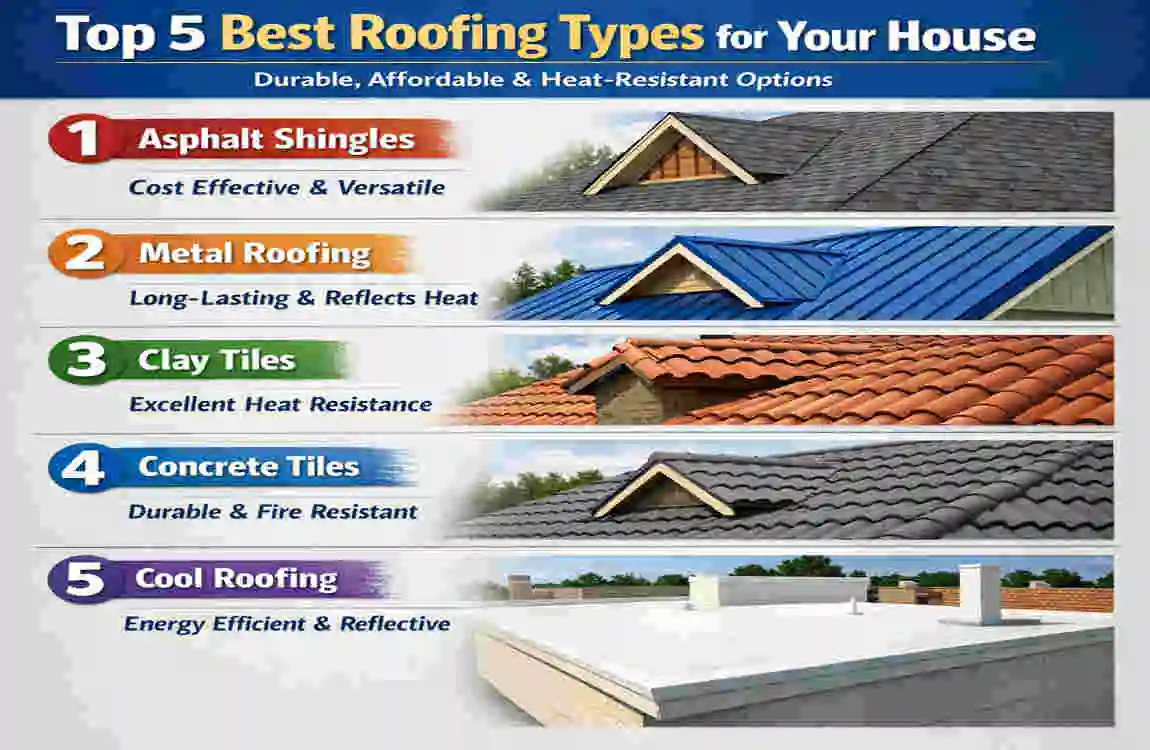
Our top five contenders are Metal, Clay Tiles, Concrete Tiles, Asphalt Shingles, and Cool Roof Coatings. Each of these options brings something unique to the table. Some are absolute champions at fighting off the sun, while others are incredibly kind to your wallet.
Take a quick look at this comparison table. It will help you see the bigger picture and build a curiosity about which option is the perfect match for your specific house.
Quick Roofing Comparison Chart
Roofing TypeDurability (Years)Estimated Cost (PKR/sq ft)Heat ResistanceBest Suited For
Metal 40 – 70 300 – 450 Excellent Modern, energy-efficient homes
Clay Tiles 50+ 250 – 400 Very Good Traditional, classic architectures
Concrete Tiles 40 – 60 200 – 350 Good Strong, budget-conscious builds
Asphalt Shingles 20 – 40 150 – 300 Moderate Quick, lightweight installations
Cool Roof Coatings 10 – 20 100 – 200 Superior Upgrading and retrofitting older roofs
Now that you have seen the overall landscape, let us grab a magnifying glass and look closely at each of these fantastic options.
Metal Roofing: The Ultimate Durable Choice
When people ask us, “What type of roofing is best for absolute longevity?” we almost always point them toward metal roofing. Do not let the word “metal” fool you into thinking of rusty old tin shacks. Today’s modern metal roofs are stunning, highly engineered masterpieces.
What Makes Metal Roofing Best?
The secret superpower of a metal roof is its ability to deal with the sun. Materials like galvanized steel or durable aluminum act like giant mirrors on top of your house. Instead of soaking up the sun’s scorching rays, a metal roof bounces that solar energy right back into the sky.
This high reflectivity is a game-changer for homes in hot climates. By simply reflecting sunlight, a high-quality metal roof can actually reduce indoor attic temperatures by up to 15°C. When your attic is cooler, your living room stays cooler, and your air conditioner doesn’t have to fight a losing battle all afternoon.
Furthermore, modern metal roofs come coated with special rust-proof paints and protective layers. They look sleek, clean, and incredibly modern, making them a favorite for newly built urban homes.
Pros and Cons of Metal Roofs
Like any building material, metal has its shining moments and a few drawbacks. Here is what you need to know:
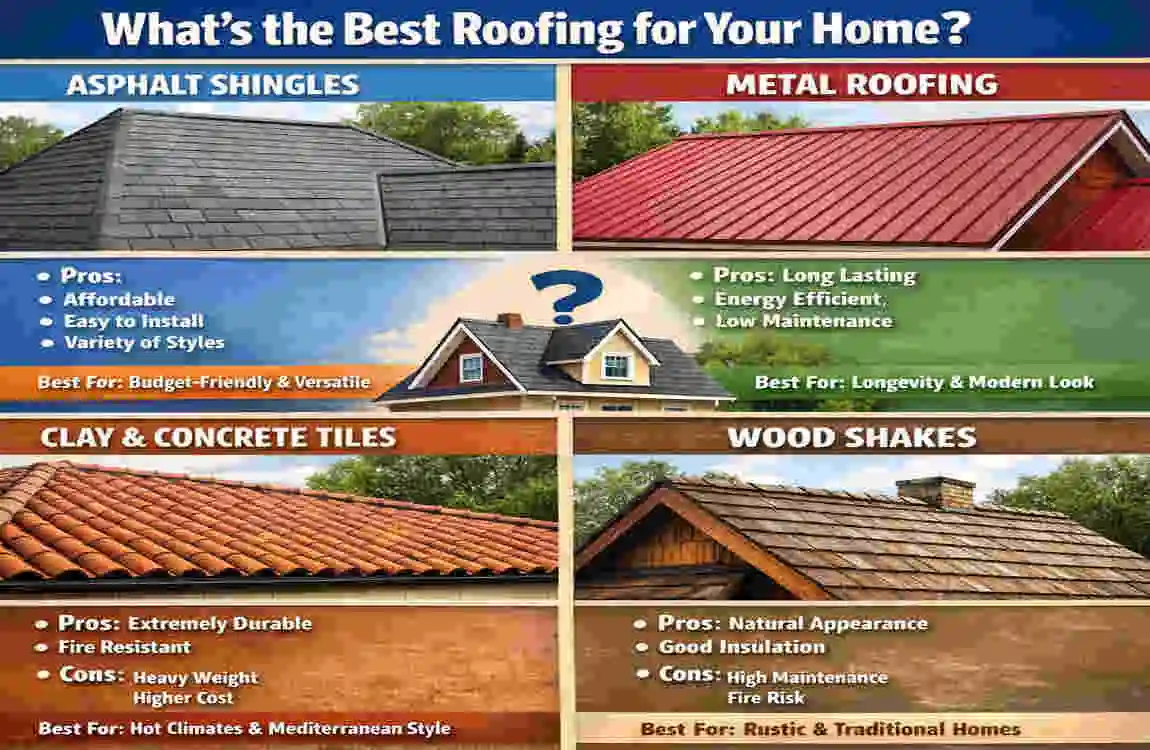
- Pros:
- Completely Fireproof: Metal will not catch fire, keeping your family exceptionally safe.
- Extremely Low Maintenance: Once it is installed properly, you rarely have to touch it.
- Eco-Friendly: Metal roofs are almost always made from recycled materials, and they are 100% recyclable if you ever replace them.
- Cons:
- Higher Upfront Cost: You will pay more on day one compared to other materials.
- Rain Noise: Some people find the sound of heavy monsoon rain hitting metal to be a bit loud. However, proper roof insulation easily fixes this issue.
Cost and Installation in Pakistan
So, how much will this ultimate shield cost you? Generally, you can expect to pay around PKR 350 to PKR 450 per square foot for a fully installed metal roof in Pakistan.
While that might seem like a decent chunk of money upfront, you have to look at the long game. Most high-quality metal roofs come with a staggering 40-year warranty. Because metal roofing is becoming so popular, you can now easily find excellent local suppliers and skilled installation crews right here in Lahore and other major cities.
A Real-Home Case Study
Let us look at a real-world example to show you how this works in practice. Last year, a family living in a beautiful modern bungalow in DHA Lahore decided they were tired of their outrageous summer electricity bills.
They tore off their old, heat-absorbing roof and installed a sleek, light-colored aluminum roof. The results were immediate. During the July heatwave, their home stayed noticeably cooler. By the end of the summer, they had saved a massive 25% on their monthly cooling bills. The roof started paying for itself immediately.
Is Metal Right for Your House?
So, is metal the final answer to what type of roofing is best? Yes, absolutely, if your budget allows for the initial investment. For urban homeowners who want a sleek look, zero-maintenance headaches, and massive energy savings over the next half-century, metal roofing is unmatched.
Clay Tiles: Timeless Heat-Resistant Beauty
If you love the classic, charming look of older architecture, then clay tiles will immediately capture your heart. But clay tiles offer far more than just a pretty face; they are an ancient, proven technology for beating the heat.
Why Clay Tiles Excel in Hot Climates
Have you ever wondered why so many traditional homes in Punjab feature beautiful, curved clay roofs? It is all because of a natural phenomenon called “thermal mass.”
Think of thermal mass like a giant sponge, but instead of soaking up water, it soaks up heat. Throughout a blazing hot day, clay tiles slowly absorb the sun’s heat. Because the clay is so thick and dense, it takes a very long time for that heat actually to pass through the tile and enter your home.
By the time the heat finally travels through the clay, the sun has gone down, and the cool night air has arrived. The tiles then release that trapped heat back outside into the cooler night sky, keeping the inside of your home comfortable all day long. It is nature’s perfect air conditioning system.
Pros and Cons of Clay Tiles
Clay tiles are beautiful and effective, but they require some special considerations before you buy them.
- Pros:
- Incredible Lifespan: A well-maintained clay tile roof can easily last 75 years or more. It is truly a multi-generational investment.
- Stunning Aesthetics: Whether you choose the curvy, elegant Spanish style or a sleek, modern flat design, clay tiles instantly elevate your home’s curb appeal.
- Air Circulation: The natural curve of the tiles allows air to flow freely underneath them, providing an extra layer of cooling insulation.
- Cons:
- Very Fragile: You cannot easily walk on a clay tile roof; the tiles can crack under heavy footsteps.
- Extremely Heavy: Clay is incredibly heavy. Your home’s wooden or steel structural supports must be built extra-strong to hold the weight safely.
Affordability and Sourcing Locally
One of the best things about choosing clay in Pakistan is how easy it is to find high-quality, locally made materials. You do not have to pay expensive import taxes.
You can source brilliant clay tiles directly from factories in cities like Gujranwala. Because they are made locally, the price is quite reasonable. You can expect to spend roughly PKR 250 to PKR 400 per square foot, depending on the exact style and glaze you choose.
A Before and After Transformation
Imagine a slightly aging, 20-year-old villa in Gulberg, Lahore. The original flat concrete roof looks dull, stained, and boring.
Now, picture that same home after a renovation. The owners add a sloped roof structure and cover it in warm, terracotta-colored Spanish clay tiles. Suddenly, the house transforms. It goes from looking like a standard, forgettable building to a luxurious, Mediterranean-inspired estate. Not only does it look wildly expensive, but the villa’s upper floors also instantly cool down during the day.
Best Match for Traditional Houses
If you are building a home with classic arches, rich wooden doors, and traditional brickwork, clay is undoubtedly your top pick. When you want to combine breathtaking aesthetics with proven, long-lasting durability, clay tiles are a magnificent choice.
Concrete Tiles: Budget-Friendly Durability
What if you absolutely love the luxurious look of clay tiles, but your budget is holding you back? Do not worry; the construction industry has a brilliant alternative for you: Concrete tiles.
The Affordable Powerhouse
Concrete tiles are the heavyweight champions of budget roofing. They are made from a very simple mixture of water, sand, and tough cement. Manufacturers pour this mixture into molds to create tiles that perfectly mimic the shape and texture of expensive clay, slate, or even wood.
Because the ingredients are so cheap and abundant, concrete tiles cost significantly less to produce than baked clay. However, do not let the low price trick you into thinking they are weak. Concrete tiles boast incredibly high impact resistance. Whether you are dealing with large hailstones, flying branches during a storm, or heavy monsoon downpours, concrete stands up to them all.
Pros and Cons of Concrete Tiles
Concrete is practical, tough, and affordable. Let us look at the specific advantages and the few trade-offs you have to accept.
- Pros:
- Long-Lasting: Even though they are cheap, a good concrete roof will easily give you a solid 50-year life.
- Mold and Rot Resistant: Unlike wood, concrete will never rot, and it easily resists mold growth during our humid monsoon seasons.
- Highly Versatile: They can be painted and molded to match almost any architectural style you can dream up.
- Cons:
- Slightly Less Premium: Up close, a trained eye can tell it is concrete and not natural clay. It lacks that slight, natural color variation that makes clay so special.
- Heavy Weight: Just like clay, concrete is very heavy. Your home’s underlying structure must be heavily reinforced to safely carry the load.
Installation Tips for Pakistani Homes
Concrete tiles hit that perfect financial sweet spot for many families. On average, you will spend around PKR 200 to PKR 350 per square foot for materials and installation.
Because concrete tiles are slightly more uniform than clay tiles, installing them is a relatively straightforward process. While we always recommend hiring professional roofers to ensure everything is perfectly watertight, a highly skilled DIY enthusiast working alongside a local contractor can complete the job quickly and efficiently.
Incredible Performance in Monsoons
If you remember the intense local floods and aggressive rains of 2025, you know how punishing the weather can be.
During local stress tests and real-world observations, homes equipped with properly installed, interlocking concrete tiles survived the storms beautifully. Because the tiles overlap so tightly and are incredibly heavy, the ferocious winds could not lift them. The rain washed right over them, leaving the homes completely dry inside.
Why It Is a Top Contender
If you find yourself asking, “What type of roofing is best ?” when you are on a very strict, tight budget, concrete tiles are your answer. They give you the expensive look of clay and the tough durability of stone, all without draining your bank account.
Asphalt Shingles: Versatile and Quick
Sometimes, you do not have months to plan a massive roofing project. Sometimes you need a brand-new roof installed as fast as humanly possible. Enter asphalt shingles: the most popular, versatile, and quick-to-install roofing material in the modern world.
Modern Appeal on a Budget
Asphalt shingles are flexible sheets made from a strong fiberglass base. This base is then heavily coated in waterproof asphalt and topped off with tiny, colorful mineral granules.
These small granules do two very important jobs. First, they give the roof its beautiful color. Second, they protect the waterproof asphalt underneath from the harsh, damaging ultraviolet (UV) rays of the sun. Asphalt shingles are specifically designed for sloped roofs, making water run right off them effortlessly. They give any house a very neat, tailored, and distinctly modern American-style appearance.
Pros and Cons of Asphalt Shingles
Asphalt is famous for a reason, but it does have a distinct weakness in extreme climates like ours.
- Pros:
- Extremely Lightweight: Unlike heavy clay or concrete, asphalt shingles are very light. You do not need expensive, heavy-duty wooden supports to hold them up.
- Lightning-Fast Installation: A professional crew can completely roof an average-sized house in just two or three days.
- Endless Colors: You can find asphalt shingles in literally any color you want, from deep charcoal black to vibrant forest green.
- Cons:
- Shorter Lifespan in Heat: This is the big drawback. In Pakistan’s intense summer heat, the asphalt can dry out and curl over time. You will likely need to replace them after 20 to 25 years.
A Friendly Cost Breakdown
One of the biggest reasons homeowners love asphalt is its price. It is incredibly friendly to your wallet. You can expect to pay around PKR 150 to PKR 300 per square foot.
Most of the high-quality asphalt shingles available in Pakistan today are imported from large manufacturing hubs in China or the Middle East. Because they are so thin and easy to pack, shipping costs remain low, keeping the final price very affordable for you.
Important Lahore-Specific Advice
If you decide that asphalt shingles are the answer to what type of roofing is best for your home, we have one crucial piece of advice for living in Lahore or similar hot cities.
You absolutely must pair your shingles with a high-quality, synthetic underlayment. Do not just nail the shingles directly to the bare wood. A good underlayment acts as a vital barrier against our extreme humidity. It helps prevent the aggressive summer heat from prematurely warping the shingles. This small extra step will add years to your roof’s lifespan.
Cool Roof Coatings: Innovative Retrofit Solution
What if your roof is already built? What if you have a perfectly good, flat concrete roof that absorbs way too much heat? You do not need to tear the whole house down and start over. You need a Cool Roof Coating.
Revolutionary Heat Blockers
Cool roof coatings are thick, highly engineered paints. But do not confuse them with the regular paint you put on your living room walls. These are “elastomeric” coatings, meaning they are stretchy and rubbery.
These brilliant white coatings are specifically formulated to act as powerful heat blockers. When you roll this thick liquid onto your existing roof, it dries into a seamless, waterproof, rubbery membrane. The bright white surface is so reflective that it literally bounces up to 80% of the sun’s harsh UV rays back into the atmosphere.
Pros and Cons of Roof Coatings
If you are looking for an immediate fix rather than a complete replacement, this is your best bet.
- Pros:
- The Absolute Cheapest Upgrade: This is by far the most budget-friendly way to significantly cool down your home.
- Extends Your Roof’s Life: The rubbery coating seals tiny cracks and protects your underlying concrete from sun damage, adding years to its lifespan.
- Super Fast: It is applied just like thick paint, meaning the job is done in a matter of hours.
- Cons:
- Requires Reapplication: The coating will eventually dull from exposure to the sun. You will need to clean the roof and apply a fresh coat roughly every 7 to 10 years.
DIY vs. Pro Application
The cost for a cool roof coating is wonderfully low, sitting right around PKR 100 to PKR 200 per square foot.
Because it applies like paint, many adventurous homeowners treat this as a weekend DIY project. Armed with a few heavy-duty paint rollers and a few buckets of coating, you can easily tackle this yourself. However, if you have a very large, older Lahore house with many existing cracks and bumps, hiring a professional ensures the coating goes on thick and perfectly seals every single leak.
Absolute Proof of Energy Savings
Does rolling white paint on your roof really work? Yes, the proof is undeniable.
Numerous studies and thousands of local homeowners have proven that a thick, high-quality cool roof coating significantly reduces the temperature in the rooms directly below the roof. During the peak of summer, these rooms feel drastically cooler. Consequently, homeowners consistently report that their monthly electricity bills drop by an impressive 20% to 30% because their air conditioners finally get to take a break.
Maintenance Tips for Long-Lasting Roofs
No matter what type of roofing is best for your specific home, none of them are completely magical. Every roof needs a little bit of tender loving care to ensure it reaches its maximum lifespan. If you ignore your roof, even the most expensive metal will eventually face problems.
Make it a habit to perform a quick annual roof inspection. You do not even have to climb up there if you are not comfortable; you can hire a local handyperson to do a quick inspection for a very small fee.
Because we live in Pakistan, the most critical time to check your roof is right before the monsoon season begins in late June. You want to make sure your home is fully armored and ready for the heavy downpours.
Here are 5 quick, easy DIY tasks you should complete every single year:
- Clean the Gutters Completely: Remove all dead leaves, dirt, and plastic bags from your gutters so rainwater can flow away instantly.
- Trim Hanging Tree Branches: Cut back any heavy branches that are hanging directly over your roof to prevent them from breaking off and smashing your tiles during heavy winds.
- Inspect Your Seals: Check the rubber or cement seals around your chimney, water tanks, and skylights to ensure they are not cracking under the sun.
- Look for Loose Pieces: Do a quick visual scan to see if any clay or concrete tiles have slipped out of their proper interlocking position.
- Wash Away Algae: If you see dark green or black streaks growing on your roof after the humid season, gently wash them away with a mild bleach solution to prevent the roots from eating into your roof’s surface.
Cost vs. Value: Making the Smart Choice
When you are trying to decide what type of roofing is best, you have to look beyond the price tag you see on day one. You have to think like an investor and calculate the “Total Cost of Ownership.”
A cheap roof might save you PKR 100,000 today. Still, if it keeps your AC bills high and forces you to replace the whole roof in 15 years, it is actually the most expensive option.
Total Ownership Value Calculator
Roofing Type Upfront Installation Cost Long-Term Maintenance Need Energy Savings ROI Overall Financial Value
Metal High Very Low Excellent (Pays back fast) Outstanding
Clay Tiles Medium-High Low Good (Steady savings) Great
Concrete Medium Low Moderate Very Good
Asphalt Low Medium (Heat wear) Low Fair
Coating Very Low High (Needs recoating) Excellent (Instant drop) Great for retrofits
Let us talk about Return on Investment (ROI). Because electricity prices in Pakistan continue to climb, a highly reflective roof like Metal actually pays for itself. With massive 20% to 30% savings on your monthly cooling bills, a Premium metal roof will pay back its initial installation cost in roughly 7 to 8 years. Everything after that is pure profit in your pocket.
Frequently Asked Questions (FAQs)
Still have a few lingering thoughts on your mind? We have gathered the most common questions homeowners ask us when they are trying to figure out what type of roofing is best.
What type of roofing is best for extremely hot climates like Pakistan?
For blazing hot climates, highly reflective Metal roofs and bright white Cool Roof Coatings are the absolute best for reflecting direct sunlight. Traditional Clay tiles are also fantastic because their thick thermal mass naturally blocks heat from entering your home.
What is the average roof replacement cost for a house in Pakistan?
Costs vary wildly based on the size of your home and the materials you choose. However, for an average-sized house, you can expect to spend anywhere from PKR 200,000 for basic asphalt or concrete solutions to PKR 800,000 or more for Premium metal or high-end imported clay systems.
Metal vs. Clay Tiles: Which one is genuinely more durable?
Both are incredible. Metal is highly durable against impacts and extreme weather, and it will never crack. Clay tiles are fragile if you drop something heavy on them or walk on them carelessly. Still, if left undisturbed, high-quality baked clay can easily outlast metal, surviving for well over 75 years.
Can I apply a cool roof coating over my existing concrete roof?
Yes, absolutely! In fact, that is exactly what cool roof coatings are designed for. Just ensure your concrete is thoroughly washed, swept clean of all dust, and completely dry before you apply the thick elastomeric coating.
How do I stop my roof from leaking during the heavy monsoons?
The best prevention is a pre-monsoon inspection. Have a professional check your roof every May. They will clear your drainage pipes, replace any cracked concrete or clay tiles, and apply fresh waterproof sealant around your roof’s edges and water tanks. A healthy roof does not leak.
