


Imagine transforming the space beneath your deck into a cozy, usable area where you can relax and entertain, regardless of the weather. An under-deck roof can make this dream a reality. But, like any home improvement project, it’s essential to consider the potential impact on your home’s structure. One of the biggest concerns homeowners have is whether an under-deck roof will accelerate the rot of joists.
What is an Under-Deck Roof?
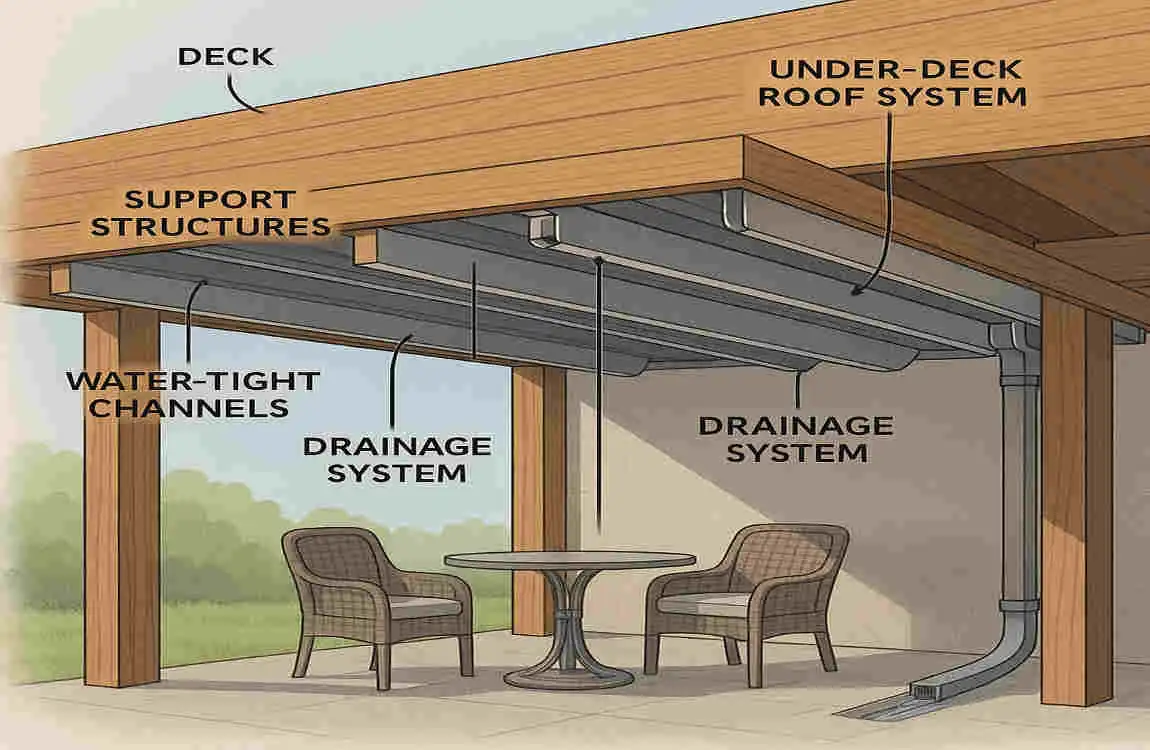
An under-deck roof is a system installed beneath an existing deck to create a dry, usable space. It’s like having an extra room in your home, perfect for outdoor living, storage, or even a home office.
Materials and Benefits
Under-deck roofs are typically made from durable materials, such as metal or vinyl. These materials are chosen for their ability to withstand the elements and provide long-lasting protection.
The benefits of an under-deck roof are numerous. Not only does it protect the space beneath your deck from rain, but it also extends your outdoor living area. You can enjoy your deck year-round, without worrying about sudden downpours ruining your plans.
Difference from Traditional Open Decks
Unlike traditional open decks, which allow water to pass through the gaps between the boards, an under-deck roof creates a barrier to prevent water from passing through. This barrier can be both a blessing and a curse, depending on how it’s designed and maintained.
Understanding Joist Rot: Causes and Consequences
Before we delve into the impact of under-deck roofs on joists, let’s take a moment to understand what joist rot is and why it’s a concern.
What is Joist Rot?
Joist rot is the decay of the wooden beams that support your deck. It’s caused by prolonged exposure to moisture, which creates the perfect environment for fungal growth.
How Moisture Leads to Rot
When wood becomes wet and remains so, it becomes a breeding ground for fungi. These fungi break down the wood fibers, causing the wood to soften, discolor, and eventually rot away.
Signs of Joist Rot
So, how can you tell if your joists are rotting? Keep an eye out for these telltale signs:
- Discoloration: Rotting wood often turns dark brown or black.
- Softness: If you can easily press your finger into the wood, it’s likely rotting.
- Sagging: As the wood deteriorates, it may start to sag under the weight of the deck.
The Dangers of Untreated Joist Rot
If left unchecked, joist rot can lead to serious structural issues. A deck with rotting joists is a safety hazard, as it may collapse under the weight of people or furniture. Repairing or replacing damaged joists can be costly and time-consuming, so it’s best to address the issue early on.
The Core Question: Will a Deck Roof Speed Up the Rot of Joists?
Now, let’s address the burning question: Will an under-deck roof accelerate the rot of joists? The answer, like many things in life, is “it depends.”
Moisture Dynamics with an Under-Deck Roof
When you install an under-deck roof, you’re creating a new environment beneath your deck. The way moisture behaves in this space can greatly impact the longevity of your joists.
On the one hand, an under-deck roof can help by shedding water away from the joists. If designed and installed correctly, the roof can direct water to the edges of the deck, preventing it from pooling on the joists.
On the other hand, there’s a risk of trapping moisture against the joists. If the roof doesn’t allow for proper ventilation, water vapor can become trapped, creating a humid environment that’s perfect for rot.
Factors Influencing Joist Rot
Several factors come into play when determining whether an under-deck roof will speed up joist rot:
- Deck design and slope: A well-designed deck with proper slope can help water drain away from the joists.
- Materials used: Some materials, like pressure-treated wood or composites, are more resistant to moisture damage.
- Quality of installation: Proper sealing and flashing can prevent water from seeping into the joist area.
- Ventilation: Adequate airflow beneath the deck can help dry out any moisture that gets trapped.
- Climate and environment: High humidity levels and frequent rainfall can increase the risk of joist rot.
Key Factors That Influence Joist Rot with Under-Deck Roofs
Let’s take a closer look at each of these factors and how they can impact the health of your joists.
Deck Design and Slope
The design of your deck plays a crucial role in how water behaves beneath it. A deck with a slight slope away from the house can help water drain off the joists more effectively.
When designing your deck, consider the following:
- Ensure the deck has a minimum slope of 1/4 inch per foot to promote drainage.
- Position the deck so that water flows away from the house foundation.
- Use a drip edge or flashing along the edges of the deck to direct water away from the joists.
Material Selection
The materials you choose for your deck and under-deck roof can greatly impact the risk of joist rot. Some materials are more resistant to moisture damage than others.
Consider using:
- Pressure-treated wood: This type of wood is treated with chemicals to resist rot and insect damage.
- Composite decking, made from a combination of wood fibers and plastic, is highly resistant to moisture and rot.
- Metal or vinyl under-deck roofing: These materials are durable and won’t contribute to moisture issues.
Quality of Installation
Even the best materials won’t protect your joists if they’re not installed correctly. Proper sealing and flashing are crucial in preventing water from seeping into the joist area.
When hiring a contractor, make sure they:
- Use high-quality flashing and sealants to create a watertight barrier.
- Install the under-deck roof according to the manufacturer’s specifications.
- Check for any gaps or leaks after installation and address them promptly.
Ventilation
Ventilation is key to preventing moisture buildup beneath your deck. Without proper air flow, any water that does get trapped can create a humid environment that’s perfect for rot.
To improve ventilation:
- Leave gaps between the deck boards to allow air to circulate.
- Install vents or fans to promote air flow beneath the deck.
- Consider elevating the deck to improve natural ventilation.
Climate and Environment
Your local climate and environment can also impact the risk of joist rot. Areas with high humidity levels and frequent rainfall are more prone to moisture issues.
If you live in a humid climate:
- Consider using more moisture-resistant materials for your deck and under-deck roof.
- Increase ventilation to help dry out any moisture that does get trapped.
- Inspect your deck more frequently for signs of rot and address them promptly.
How to Prevent Moisture Damage and Joist Rot with an Under-Deck Roof
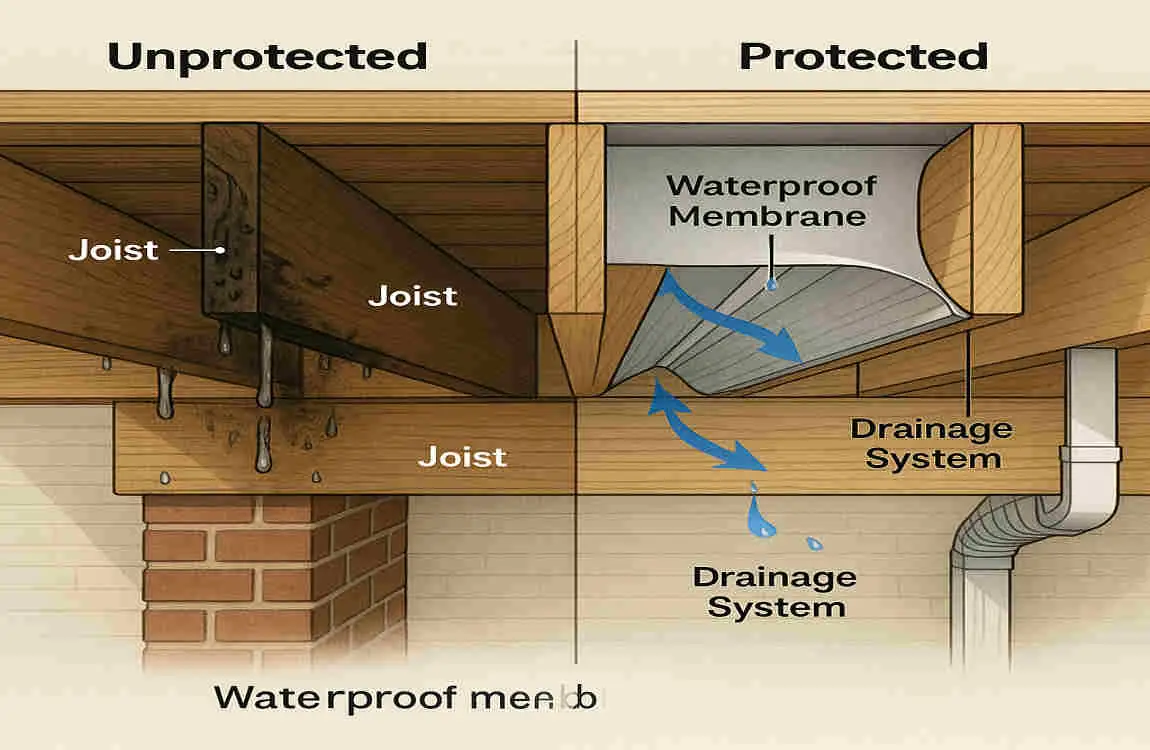
Now that we’ve covered the factors that influence joist rot, let’s discuss what you can do to prevent moisture damage and protect your house’s structure.
Choose Moisture-Resistant Materials
One of the best ways to prevent joist rot is to use materials that are resistant to moisture damage. As mentioned earlier, pressure-treated wood and composite decking are good choices for the deck itself, while metal or vinyl is ideal for the under-deck roof.
Ensure Proper Installation
Proper installation is crucial to preventing moisture issues. Make sure your contractor follows best practices for sealing and flashing to create a watertight barrier.
Install Vapor Barriers and Flashing
Vapor barriers and flashing can help divert water away from the joists. Install a vapor barrier beneath the deck to prevent moisture from rising up into the joist area, and use flashing along the edges of the deck to direct water away from the area.
Regularly Inspect for Leaks and Water Pooling
Even with the best materials and installation, leaks and water pooling can still occur. Make it a habit to regularly inspect your under-deck roof water damage.
Look for:
- Drips or leaks along the edges of the deck
- Puddles or standing water beneath the deck
- Discoloration or softness in the joists
If you notice any of these signs, address them promptly to prevent further damage.
Use Sealants and Waterproof Coatings
Applying sealants and waterproof coatings to your joists and beams can provide an extra layer of protection against moisture damage. These products can help repel water and prevent it from penetrating the wood.
Incorporate Ventilation Systems
As we previously discussed, ventilation is crucial in preventing moisture buildup. Consider installing vents or fans beneath your deck to promote airflow and help dry out any moisture that may get trapped.
Best Practices for Maintaining Your Deck Structure
Maintaining your deck and under-deck roof is essential for preventing moisture damage and extending the life of your joists. Here are some best practices to keep in mind:
Seasonal Maintenance Checklist
Create a seasonal maintenance checklist to keep your deck in top shape. Include tasks like:
- Cleaning gutters and downspouts to prevent water backup
- Trimming nearby vegetation to improve airflow
- Inspecting for signs of rot or water damage
- Applying sealants and waterproof coatings as needed
Detecting Early Signs of Rot
Catching rot early is key to preventing further damage. Keep an eye out for the signs we discussed earlier, like discoloration, softness, and sagging.
If you suspect rot, don’t hesitate to call a professional for an assessment. They can help determine the extent of the damage and recommend the best course of action.
Repair and Replacement Options
If you do find rot in your joists, you have a few options for repair and replacement:
- Sistering: Attaching a new joist to the damaged one to provide additional support.
- Replacement: Removing and replacing the entire damaged joist.
- Encapsulation: Applying a waterproof coating to the damaged area to prevent further rot.
The best option will depend on the extent of the damage and your budget. Consult with a professional to determine the most effective solution for your situation.
Alternatives to Under-Deck Roofs to Consider
If you’re concerned about the potential risks of an under-deck roof, there are alternative options to consider. These alternatives can provide moisture control and protection for your deck without the possible drawbacks of a permanent under-deck roof.
Retractable Awnings or Pergolas
Retractable awnings or pergolas can provide shade and protection from the elements without trapping moisture against the joists. These options allow for better airflow and can be easily opened or closed as needed.
Deck Covers with Built-in Drainage
Some deck covers are designed with built-in drainage systems to direct water away from the joists. These covers can provide protection from rain while minimizing the risk of moisture buildup.
Elevating the Deck
Elevating your deck can improve natural airflow beneath it, reducing the risk of moisture buildup. This option may require more extensive construction, but it can be an effective way to protect your joists.
