

When it comes to keeping your home cool and energy-efficient, one of the most overlooked factors is the color of your roof. You might be surprised to learn that the shade you choose can significantly impact your indoor temperature, energy consumption, and even your utility bills.
How Roof Color Influences Home Temperature

The color of your house roof plays a crucial role in determining how hot or cool your home feels, especially during summer. To understand this, let’s take a closer look at how solar radiation and heat absorption work.
Solar Radiation and Heat Absorption
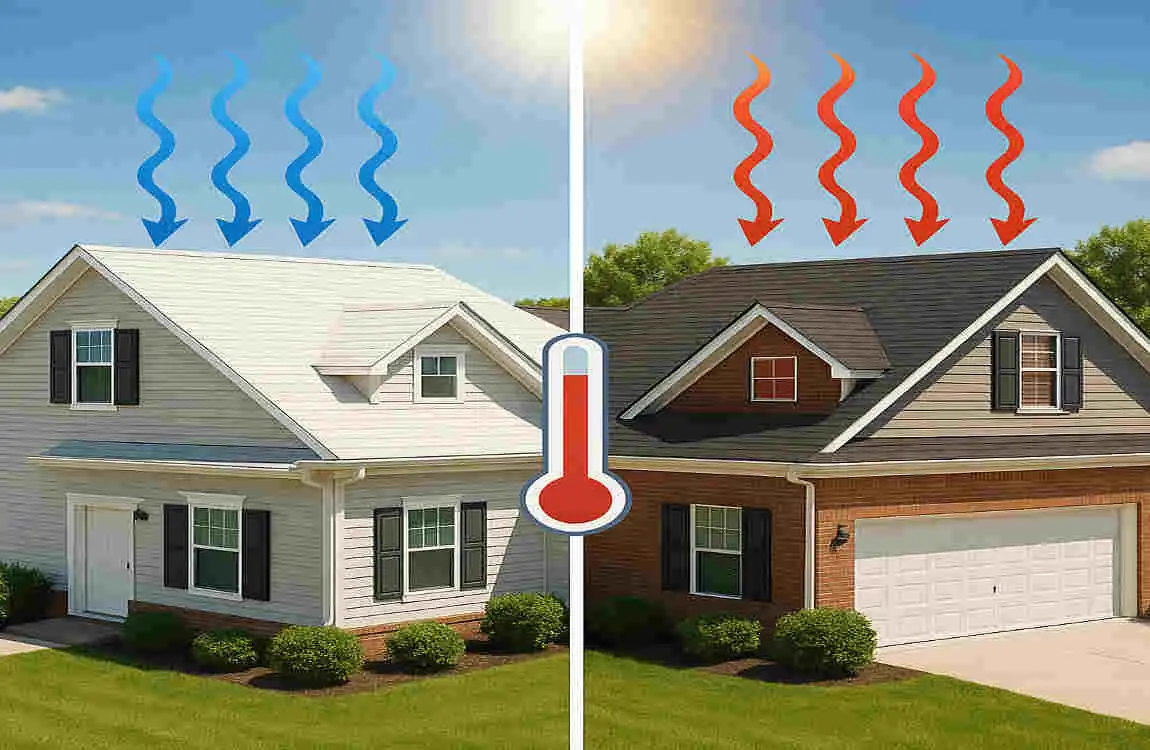
When the sun shines on your roof, its rays are either absorbed or reflected. Darker colors tend to absorb more sunlight and heat, while lighter colors reflect more sunlight and heat. This phenomenon is directly linked to a concept called albedo, which measures a surface’s reflectivity.
- High albedo surfaces (like white roofs) reflect more sunlight, keeping the surface cooler.
- Low albedo surfaces (like black or dark-colored roofs) absorb most of the sunlight, making them hotter.
This difference in absorption and reflection directly affects the temperature inside your home.
Light vs. Dark Colors: The Heating and Cooling Debate
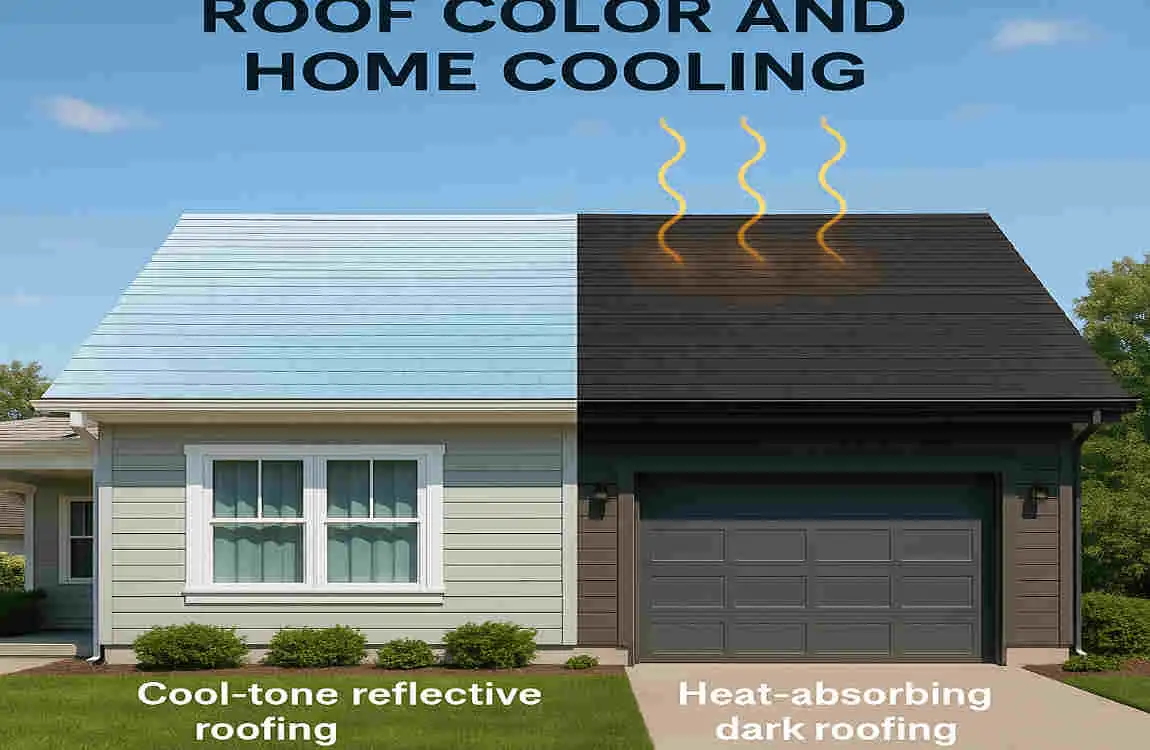
Dark-colored roofs become hotter during the day because they absorb up to 90% of solar heat, transferring that warmth into your attic and, eventually, your living spaces. On the other hand, light-colored roofs reflect a significant portion of sunlight, keeping the roof surface cooler and reducing the amount of heat transferred indoors.
Example:
Imagine standing outside on a sunny day wearing a black shirt versus a white shirt. You’ll feel much hotter in black because it absorbs more sunlight. The same principle applies to roof colors.
The Cost of Heat Absorption
Dark roofs don’t just affect your comfort—they also impact your wallet. Increased heat absorption means your air conditioning system has to work harder, leading to higher energy bills. Over time, this could also lead to increased wear and tear on your cooling equipment.
Scientific Insights: What Color Roof is Best for Cooling?
Now that we understand the basics of how roof colors affect heat, let’s dive into the science behind it. Studies have consistently shown that lighter roof colors perform better in terms of cooling efficiency.
Temperature Differences Between Roof Colors
Researchers have tested various roof colors to measure their temperature differences. Here’s what they found:
- White roofs remain the coolest, with surface temperatures 30-40°F lower than black roofs on sunny days.
- Light gray and beige roofs also perform well, staying 20-30°F cooler than darker shades.
- Black roofs, by comparison, absorb the most heat and reach the highest temperatures.
Why Lighter Colors Work Better
Lighter colors reflect more sunlight and have a higher albedo. For example:
- A white roof can reflect up to 80% of the sun, while
- A black roof reflects only 10-20%, absorbing the rest as heat.
Comparing Common Roof Colors
Here’s a simplified table comparing various roof colors and their cooling efficiency:
Roof Color Reflectivity (%)Surface Temperature on a Hot Day
White 70-80% 110-120°F
Light Gray 50-60% 120-130°F
Beige/Light Brown 40-50% 130-140°F
Dark Gray 20-30% 150-160°F
Black 10-20% 160-170°F
Popular Roof Colors and Their Cooling Performance
Choosing the best roof color doesn’t just depend on cooling—it also involves aesthetics and practicality. Let’s explore some popular options and how they perform.
White and Off-White
White roofs are often called “cool roofs” because of their high reflectivity. They are the most effective at reducing heat absorption and keeping indoor spaces cool.
- Benefits: Best cooling performance, lower energy bills, and eco-friendly.
- Drawbacks: May require more frequent cleaning to maintain their bright appearance.
Light Gray and Beige
If you’re looking for a balance between style and function, light gray or beige roofs are excellent choices. They don’t reflect as much heat as white roofs, but still perform significantly better than darker colors.
- Benefits: Aesthetic versatility, moderate cooling, and easier to maintain than white roofs.
- Drawbacks: Slightly less energy-efficient than white roofs.
Cool Roof Colors with Reflective Coatings
Some manufacturers offer cool roof coatings in various colors, including light blue, green, and even darker shades. These coatings are designed to enhance reflectivity, making even unconventional colors more energy-efficient.
- Benefits: Wide range of color options with improved cooling performance.
- Drawbacks: Higher upfront costs compared to traditional roofing materials.
Dark Colors (Black, Dark Brown, Dark Red)
Dark roofs absorb the most heat, making them less suitable for hot climates. However, they might be a good choice for colder regions where heat retention is desirable.
- Benefits: Ideal for colder climates and traditional aesthetics.
- Drawbacks: Poor cooling efficiency, higher energy costs in warm regions.
Additional Factors Affecting Roof Cooling Beyond Color
While color is an essential factor, it’s not the only one that influences roof cooling. Here are some other aspects to consider:
Roof Material and Texture
Some materials, like metal roofs with reflective finishes, can enhance cooling regardless of color. The roof’s texture also matters—smooth surfaces reflect more sunlight than rough or uneven ones.
Ventilation and Insulation
Proper roof ventilation and insulation are critical for regulating indoor temperatures. Even a light-colored roof won’t perform optimally without adequate airflow and insulation to prevent heat buildup.
Climate Considerations
Your geographic location plays a significant role in determining the best roof color. For instance:
- Hot climates: Prioritize light colors for maximum cooling.
- Cold climates: Darker colors may be more beneficial for retaining heat during winter.
Roof Pitch and Shading
The angle of your roof (pitch) and surrounding elements, such as trees or neighboring buildings, can also affect how much sunlight your roof absorbs.
Expert Tips for Choosing the Best Roof Color for Your Home Cooling Needs
Selecting the right roof color can feel overwhelming, but these expert tips will help simplify the process:
- Evaluate Your Climate: In hot regions, prioritize light colors like white, beige, or light gray.
- Consider Aesthetics: Choose a color that complements your home’s exterior while balancing cooling performance.
- Opt for Cool Roof Materials: Look for materials with reflective coatings or high albedo ratings.
- Check Local Codes: Some areas offer incentives for installing energy-efficient roofs, while others may have restrictions on specific colors.
- Consult a Professional: Roofing experts can provide personalized advice based on your home and climate.
Environmental and Cost Benefits of Choosing the Right Roof Color
Making the right choice for your roof color doesn’t just benefit you—it also has a positive impact on the environment.
- Energy Savings: A cooler roof reduces air conditioning use, lowering your utility bills.
- Eco-Friendly: By consuming less energy, you contribute to a smaller carbon footprint.
- Rebates and Incentives: Some municipalities and energy companies offer discounts for installing cool roofs.
