

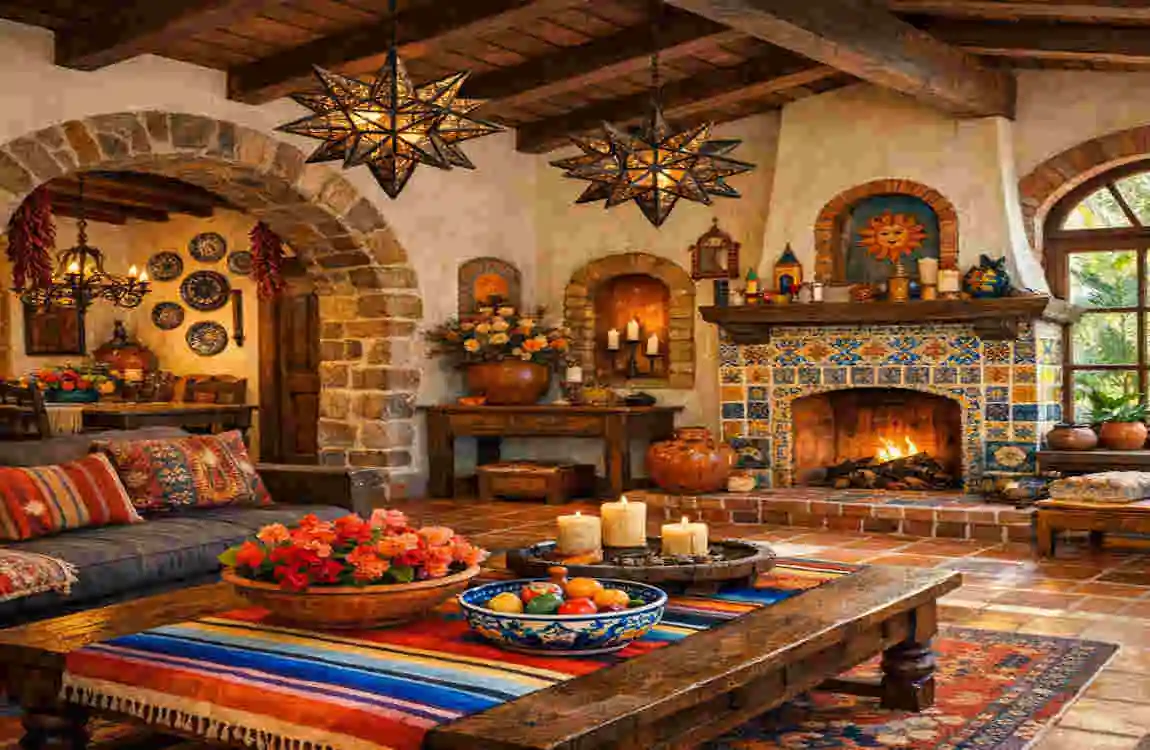
If you have ever walked into a room filled with terracotta walls, handwoven textiles, carved wood, and bright sunlight bouncing off patterned tiles, you already know the feeling of Mexican decor. It is warm, soulful, and full of personality. It does not try to look cold or overly polished. Instead, it feels lived-in, artistic, and deeply connected to culture.
So, what style is Mexican decor? It is a bold and beautiful blend of indigenous craftsmanship, Spanish colonial influence, natural materials, and colorful folk art. In simple words, Mexican home design is about warmth, texture, tradition, and comfort. It celebrates color while also respecting the earth. It blends rustic charm with handmade beauty, which is what makes it so special.
This style has become even more popular in recent years, as many homeowners seek spaces that feel personal and meaningful. People are moving away from plain, generic interiors and toward homes that tell a story. Mexican decor does exactly that. It brings history, handmade details, and a timeless sense of joy.
| Element | Traditional Features | Modern Twists | Why It Defines the Style |
|---|---|---|---|
| Colors | Vibrant terracotta reds, cobalt blues, sunny yellows | Muted earth tones with bold accents | Evokes festive warmth and nature’s energy |
| Materials | Adobe walls, terracotta tiles, hand-hewn wood | Recycled clay, polished stone, vegan leather | Grounds spaces in rustic authenticity |
| Patterns/Textiles | Woven serapes, Talavera hand-painted tiles, embroidered rugs | Minimalist weaves, geometric motifs | Adds cultural storytelling and texture |
| Furniture | Carved wooden pieces, wrought iron accents, leather chairs | Sleek teak frames, modular designs | Balances hacienda coziness with clean lines |
| Accents | Pottery, alebrijes, religious retablos | Biophilic plants, macramé hangings | Infuses artisan heritage and lively spirit |
Historical Roots of Mexican Decor House Style
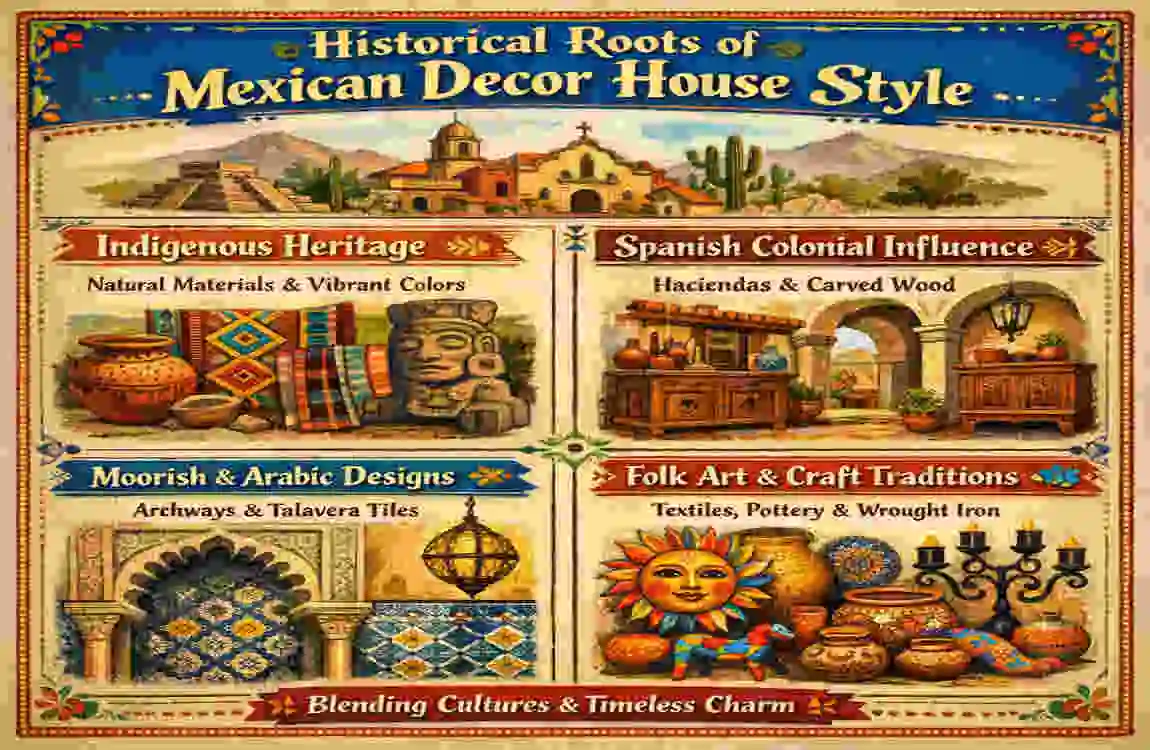
To understand the Mexican decor style, you need to look at its origins. Mexican decor did not appear overnight. It evolved over centuries through layers of history, culture, religion, and craftsmanship.
Pre-Columbian Influences
Long before Spanish colonization, Mexico had advanced indigenous civilizations, including the Aztecs, Maya, Zapotecs, and Mixtecs. These cultures had already created rich visual traditions. They used bright pigments, carved stone, woven textiles, clay pottery, and symbolic patterns in their homes and ceremonial spaces.
A lot of that influence still shows up in Mexican interiors today. You can see it in geometric motifs, earthy pottery, woven basket details, and textile patterns that feel deeply symbolic. Many of these designs were not only decorative. They also carried spiritual meaning and cultural identity.
One of the best examples is Otomi embroidery, which is known for its lively animals, flowers, and nature-inspired shapes. These colorful textile traditions helped shape the visual identity of Mexican homes. Even now, they continue to inspire pillows, wall hangings, and table linens.
Spanish Colonial Influence
When the Spanish arrived in Mexico in the 16th century, they brought a completely different design language. They introduced European architecture, wrought iron, stucco walls, arches, courtyards, and decorative tilework. Over time, these elements blended with indigenous craftsmanship to create something unique.
This is where many of the classic features of Mexican decor house style were born. Think of thick plaster walls, heavy wooden doors, iron window grilles, and Talavera tiles. These were practical materials, but they were also beautiful.
Talavera tile deserves special attention. It is one of the most recognizable elements in Mexican interiors. These hand-painted tiles often feature designs in blue, yellow, green, and white. They are used in kitchens, bathrooms, staircases, patios, and fountain edges. They bring color and artistry into everyday spaces.
Post-Revolution Revival
After the Mexican Revolution in the early 20th century, there was a renewed interest in national identity and folk traditions. Artists like Frida Kahlo and Diego Rivera played a huge role in celebrating Mexican craft, color, and cultural pride. Their homes, art, and influence helped bring folk motifs into the spotlight.
This period made Mexican design feel not only decorative but also deeply meaningful. It reminded people that homes could reflect national culture, personal history, and artistic expression simultaneously.
A Style That Keeps Evolving
Today, Mexican decor house style is still evolving. It remains rooted in tradition but now blends with modern living, sustainability, and global influences. That is why so many people ask what the Mexican house decor style is. The answer keeps growing with time, but the heart of the style stays the same: warmth, craft, and culture.
Core Characteristics of Traditional Mexican Decor House
Now let’s look at the defining features that make this style so recognizable. If you want to know what the Mexican decor style is, these are the details you need to understand.
Color Palette
Color is one of the first things people notice in Mexican interiors. The palette is rich, bold, and deeply inspired by nature.
You will often see:
- Terracotta
- Sunset orange
- Deep cobalt blue
- Cactus green
- Golden yellow
- Clay red
- Warm white
- Rust and sand tones
These colors are not random. They reflect the landscapes of Mexico itself. The desert, the mountains, the sun, the sea, and the local crafts all influence the palette.
What makes the style so appealing is the balance between bright accents and earthy grounding. The colors feel lively, but they never feel disconnected from the natural world.
Textures and Materials
Traditional Mexican interiors rely heavily on natural, tactile materials. This is a major part of the style’s charm.
Common materials include:
- Adobe or stucco walls
- Handmade clay tiles
- Solid wood furniture
- Wrought iron accents
- Rattan and woven fibers
- Natural stone
- Ceramic pottery
- Leather and cotton textiles
These materials add warmth and depth. They make the room feel lived in and human. Unlike shiny, overly perfect interiors, Mexican decor embraces texture. It invites you to touch, sit, and relax.
Patterns and Motifs
Mexican decor loves pattern, but uses it thoughtfully. You will often find:
- Floral designs
- Geometric shapes
- Sun motifs
- Birds and animals
- Papel picado-inspired cutouts
- Traditional embroidery patterns
These patterns often appear on textiles, tiles, wall art, and decorative objects. They make the space feel lively without needing lots of extra furniture.
Furniture Staples
Furniture in a traditional Mexican home tends to be sturdy, handmade, and rich in character. You are not likely to see ultra-minimal furniture here. Instead, you will find pieces with presence.
Common staples include:
- Carved wooden chairs
- Heavy wooden tables
- Colorful benches
- Low seating with woven cushions
- Rustic cabinets
- Hacienda-style beds
- Clay or ceramic decor pieces
Many homes also use serape blankets as throws, wall accents, or even table layers. These woven textiles add color and history in a simple, beautiful way.
How Traditional Mexican Decor Feels
A traditional Mexican room does not feel empty. It feels warm, expressive, and grounded. Every item has a story. You can almost feel the hands that made it. That handmade quality is one of the biggest reasons people love this style.
Traditional vs Common Misconceptions
Traditional Mexican Decor: Common Misconception
Handmade, textured, and layered. Too bright or chaotic
Grounded in earthy materials , only colorful accessories
Rich in cultural meaning , just “fiesta” style decor
Warm and rustic , old-fashioned, or outdated
Balanced use of pattern. Overly crowded rooms
When people ask what the Mexican decor style is, they often think of only bright colors. But in truth, it is much more than that. It is a thoughtful mix of craft, comfort, and culture.
Iconic Elements in Traditional Mexican Interiors
Now let’s zoom in on the details that make this style unforgettable. These are the pieces that often define a room’s atmosphere.
Walls and Floors
One of the strongest signatures of Mexican interiors is the use of textured walls and warm flooring.
You may see:
- Saltillo tiles
- Tiled stair risers
- Plastered or fresco-style walls
- Earth-toned finishes
- Hand-painted border tiles
Saltillo tile, in particular, is a favorite in Mexican-style homes. These handmade terracotta tiles have a warm, rustic look that instantly creates a traditional feeling. They work well in kitchens, living rooms, patios, and hallways.
Lighting
Lighting in Mexican decor is usually warm and atmospheric. Instead of harsh overhead lighting, the style often uses softer, more decorative pieces.
You might find:
- Talavera lamps
- Wrought iron chandeliers
- Lantern-style pendants
- Candlelit niches
- Wall sconces with warm bulbs
Lighting in this style does more than illuminate a room. It creates a mood. It gives the space a relaxed, inviting feel.
Textiles
Textiles are among the easiest ways to bring Mexican home decor to your home.
Some popular choices include:
- Huichol embroidery
- Otomi pillows
- Serape throws
- Woven rugs
- Embroidered table runners
- Ponchos or blankets are used as decorative layers
These textiles add softness, color, and personality. They also help balance out the heavier materials like stone and wood.
Accent Pieces
Mexican homes often include decorative items that make the space feel personal and artistic.
Examples include:
- Clay pots
- Alebrijes sculptures
- Piñatas as wall decor
- Ceramic fruit bowls
- Candle holders
- Day of the Dead-inspired art
- Handmade crosses or religious icons
These accents often carry meaning. They are not just decorative objects. They reflect local culture, memory, family, and celebration.
A Real-World Feeling
Imagine a courtyard in Puebla with tiled floors, painted walls, a carved wooden bench, and a few potted plants in terracotta containers. The space feels calm, colorful, and full of life. That is the heart of traditional Mexican design.
Visual Ideas for This Section
- Image 1: traditional Mexican decor in a house living room
- Image 2: traditional Mexican decor house kitchen
- Image 3: Mexican courtyard with talavera tiles and terracotta pots
Modern Twists on Mexican Decor House Style
Traditional Mexican style is beautiful, but many homeowners today want something a little more updated. That is where modern Mexican interiors come in.
If you are wondering what Mexican decor looks like in a modern sense, the answer is simple: it is still rooted in tradition but cleaner, calmer, and more flexible for everyday life.
Minimalist Mexicano
This version keeps the soul of Mexican decor but tones down the visual intensity. Instead of using bright colors everywhere, designers use:
- Neutral walls
- One or two bold accent colors
- Simple wood furniture
- Clean silhouettes
- Handcrafted decor in smaller doses
This approach works well for people who love tradition but also want a more peaceful, uncluttered look. Think of a white room with one deep blue Talavera vase and a textured woven blanket on the sofa. It is understated, but still unmistakably Mexican.
Bohemian Fusion
Many modern Mexican interiors blend naturally with boho style. This works because both styles love:
- Texture
- Handmade items
- Layered textiles
- Warm, relaxed energy
- Natural materials
In a bohemian Mexican room, you may see rattan chairs, earthy wall colors, patterned rugs, and hanging plants. The room feels casual and artistic, but still grounded in Mexican visual traditions.
Mexican Meets Mid-Century Modern
This is another stylish combination. Mid-century modern furniture tends to be simple and sculptural, which can balance the richness of Mexican decor very well. A clean teak chair or a sleek sofa can sit beautifully against a patterned tile wall or a handwoven rug.
The result is a space that feels curated, not cluttered.
Sustainable and Earth-Friendly Design
Modern Mexican interiors are also becoming more sustainable. Many homeowners and designers now value:
- Recycled glass
- Locally sourced wood
- Eco-adobe
- Handmade artisan products
- Natural lime plaster
- Long-lasting materials
This shift makes sense because Mexican design has always been closely tied to natural materials. The modern version brings that idea into a more eco-conscious future.
Current Trends
Today’s Mexican home trends often include:
- Soft beige walls with bright tile details
- Handmade wall art instead of mass-produced decor
- Open, airy layouts with cultural accents
- Indoor-outdoor living spaces
- Sustainable finishes
- Warm woods and natural textures
Why the Modern Version Works
The modern style works because it preserves the emotion of Mexican decor while adapting to today’s home needs. You still get warmth and craft, but with a cleaner and more flexible layout.
Room-by-Room Guide to Mexican Decor House
Let’s bring the style into practical reality. If you want to use Mexican decor in your home, it helps to think about it room by room.
RoomKey ElementsPro Tip
Living Room: Woven hammock chairs, colorful kilims, Talavera vases, and layered rugs for depth and comfort
Kitchen Saltillo floors, enamelware, and herb planters. Add chili string lights or open shelves.
Bedroom Canopy nets, embroidered linens, and adobe headboards. Use ochre or warm clay walls.
Outdoor/Patio Terracotta pots, papel picado garlands, fire pits. Add hammocks for a relaxed vibe.
Living Room
The living room is often the best place to start because it sets the tone for the rest of the home.
Use a warm base with:
- A neutral or earth-toned wall color
- A handwoven rug
- A carved wood coffee table
- A few bold pillows
- Ceramic vases or folk art pieces
You do not need to cover every surface. Just choose pieces that feel meaningful and keep the room balanced.
Kitchen
Mexican kitchens are often the heart of the home. They feel warm, practical, and full of life.
Good kitchen ideas include:
- Saltillo or patterned tile floors
- Open shelves with colorful dishes
- Copper or enamel cookware
- Clay bowls and planters
- Talavera tile as a backsplash
If you want one simple detail that changes everything, add a few handmade tiles behind the stove or sink. It immediately creates character.
Bedroom
A Mexican-style bedroom should feel restful, but not bland.
Try:
- Warm clay or ochre walls
- Linen or cotton bedding
- Embroidered cushions
- A carved or rustic headboard
- Soft lighting instead of bright white light
This room should feel cozy and personal. Think warmth, not formality.
Outdoor or Patio Space
Mexican decor truly shines outdoors. Courtyards, patios, terraces, and balconies all suit this style beautifully.
Use:
- Terracotta pots
- String lights
- Fire pits
- Wrought iron furniture
- Bright pillows
- Hanging plants
- Papel picado garlands
Even if you have a small balcony, you can create a charming Mexican-inspired corner with just a few bold details.
Why Room Planning Matters
When people ask what the Mexican decor style is, they often imagine the whole house transformed at once. But it is usually better to build the style room by room. That way, the home feels coherent and natural instead of forced.
How to Incorporate Mexican Decor House Style on a Budget
You do not need a huge budget to get the look. In fact, some of the best Mexican-inspired spaces come together through simple, thoughtful choices.
Start with Paint
Paint is the fastest, most affordable change you can make.
Try colors like:
- Terracotta
- Cream
- Warm white
- Clay pink
- Ochre
- Soft blue
- Desert sand
Even one painted accent wall can completely shift a room’s feeling.
Use Handmade or Artisan Items
Instead of buying lots of cheap decor, choose a few strong pieces.
Look for:
- Otomi pillows
- Handmade pottery
- Woven baskets
- Talavera bowls
- Embroidered throws
These items add authenticity and value. They also feel more personal than mass-produced decor.
DIY Small Details
You can also bring the style home with easy DIY projects:
- Paint terracotta pots in earthy tones.
- Frame colorful textile scraps.
- Use stencils to create geometric wall borders.
- Add woven baskets for storage and texture.
- Make a simple patio corner with candles and clay pots.
Budget Breakdown Example
Here is a simple way to refresh one room for under $500:
- Paint: $60
- Throw pillows: $80
- Rug: $120
- Pottery and decor: $100
- Wall art: $70
- Plants and planters: $70
You can adjust this depending on the room and your priorities.
Shopping Smart
Thrift stores, artisan markets, and handmade decor shops are great places to find authentic pieces without overspending. If you buy carefully, even a small budget can deliver a beautiful result.
Common Mistakes to Avoid in Mexican Decor House
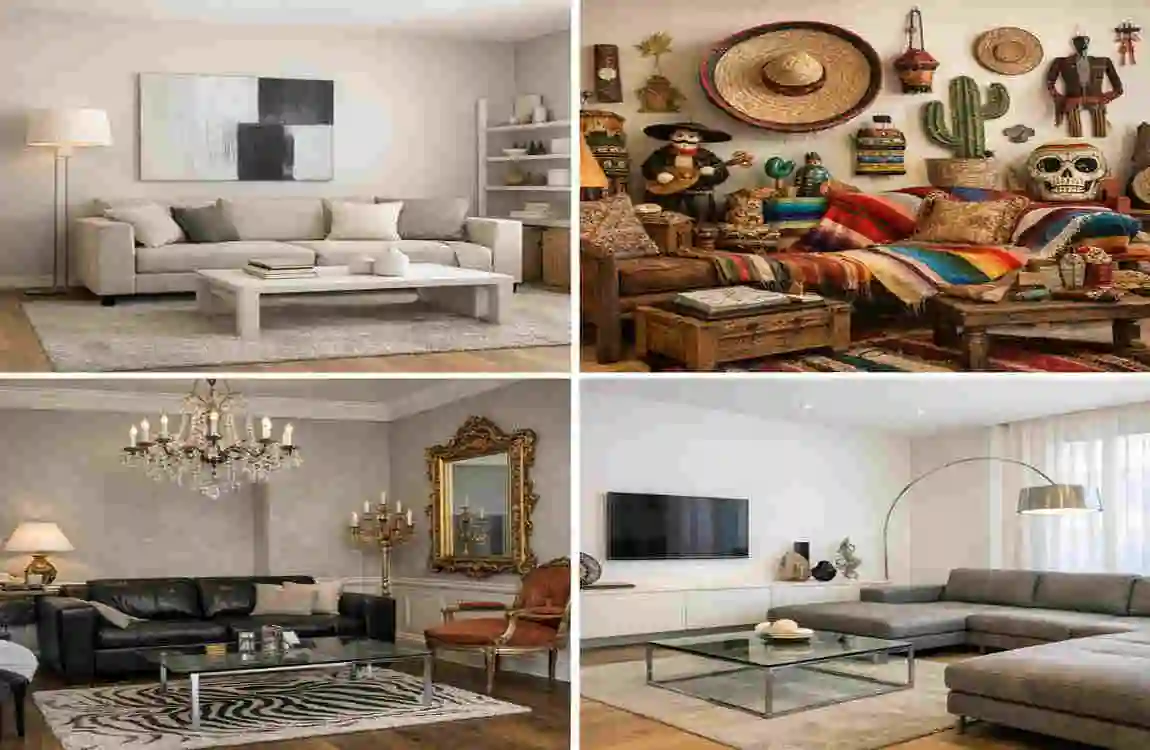
Like any strong style, Mexican decor works best when it is handled with balance and respect. Here are a few mistakes to avoid.
Overcrowding the Space
Mexican decor is colorful, but that does not mean every inch should be filled. Too many objects can make the room feel busy instead of warm.
Ignoring Scale
Bold patterns need breathing room. If you use a very detailed rug, pair it with simpler furniture. If your walls are highly textured, let your decor stay more restrained.
Making It Look Fake
Authenticity matters. Try to buy from actual artisans or trusted handmade sources when possible. Mexican decor is rooted in craft, so it loses its meaning when reduced to random themes.
Forgetting Comfort
A beautiful room should still be livable. Always think about how you use the space. Can you sit there comfortably? Can you move around easily? Does the room feel good to be in?
What style is Mexican decor house? FAQ
Mexican decor house style is a warm, colorful design style that blends indigenous craftsmanship, Spanish colonial details, natural materials, and handmade textures. It often includes terracotta tones, Talavera tiles, carved wood, iron accents, and woven textiles.
Is Mexican decor the same as Spanish style?
Not exactly. Mexican decor has stronger folk art, handmade, and earthy elements, while Spanish style often feels more formal and Mediterranean. Mexican interiors usually look more vibrant and cultural.
What are the main colors in Mexican decor?
The most common colors are terracotta, deep blue, sunny yellow, clay red, cactus green, and warm white. These shades create a cozy, lively feel.
What materials are common in Mexican house decor?
You will often see wood, clay, ceramic, wrought iron, stone, rattan, and cotton or woven textiles. These materials make the home feel natural and handcrafted.
Can Mexican decor work in modern homes?
Yes, absolutely. Many people use modern Mexican decor with neutral walls, simple furniture, and a few bold handmade accents like pillows, tiles, or pottery.
What makes Mexican decor unique?
Its biggest strength is authenticity. It feels handmade, cultural, and full of personality, not mass-produced or overly plain.
