

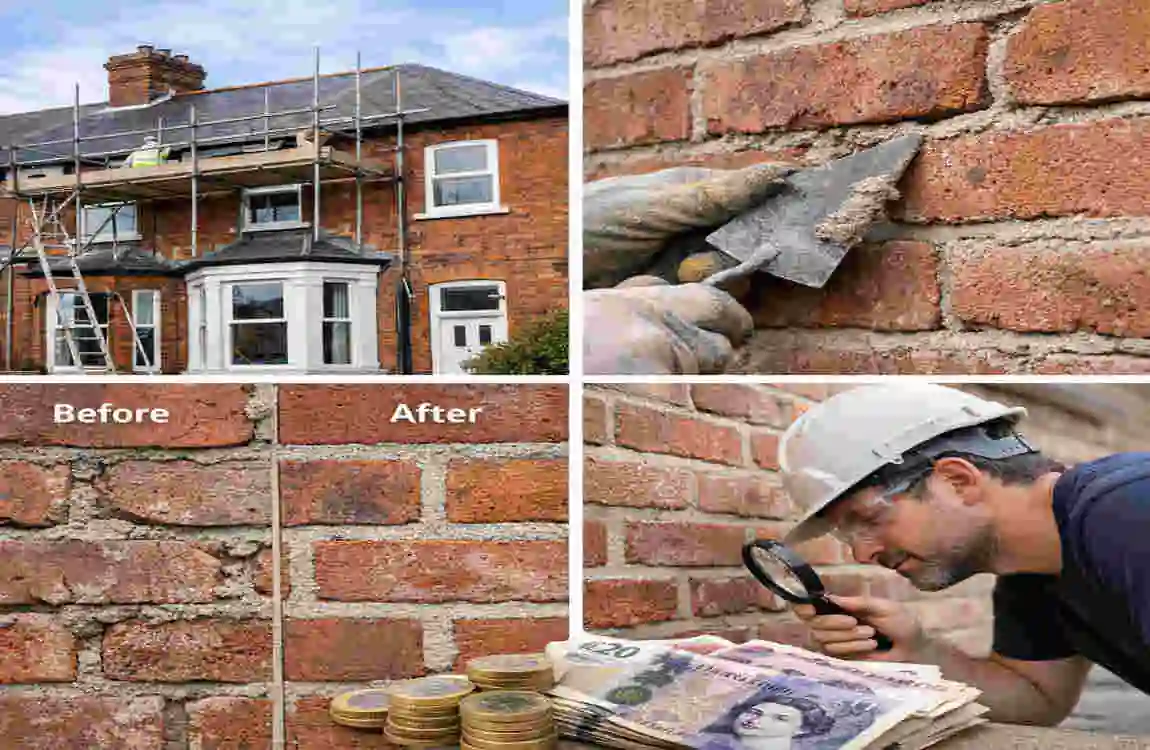
If you live in the UK, you know that our weather can be incredibly unforgiving. With the rising damp issues driven by the intense weather extremes we saw throughout 2025, more homeowners than ever are looking closely at their exterior brickwork. Driving rain, freezing temperatures, and biting winds all take a massive toll on the mortar holding your house together. When that mortar starts to crumble, water finds its way in, and your warm, cozy home suddenly faces a serious damp problem.
This brings us to a critical home maintenance question: how much does it cost to repoint a house in the UK?
If you are planning to protect your property this year, you should expect to pay between £25 and £90 per square meter (m²). For a complete house repointing project, the total bill typically ranges between £2,500 and £8,000, depending heavily on the size of your property and where you live.
While this might seem like a hefty upfront investment, house repointing is one of the most vital maintenance tasks you can undertake. It stops water ingress dead in its tracks, prevents structural disaster, and dramatically boosts your home’s curb appeal.
What is House Repointing?
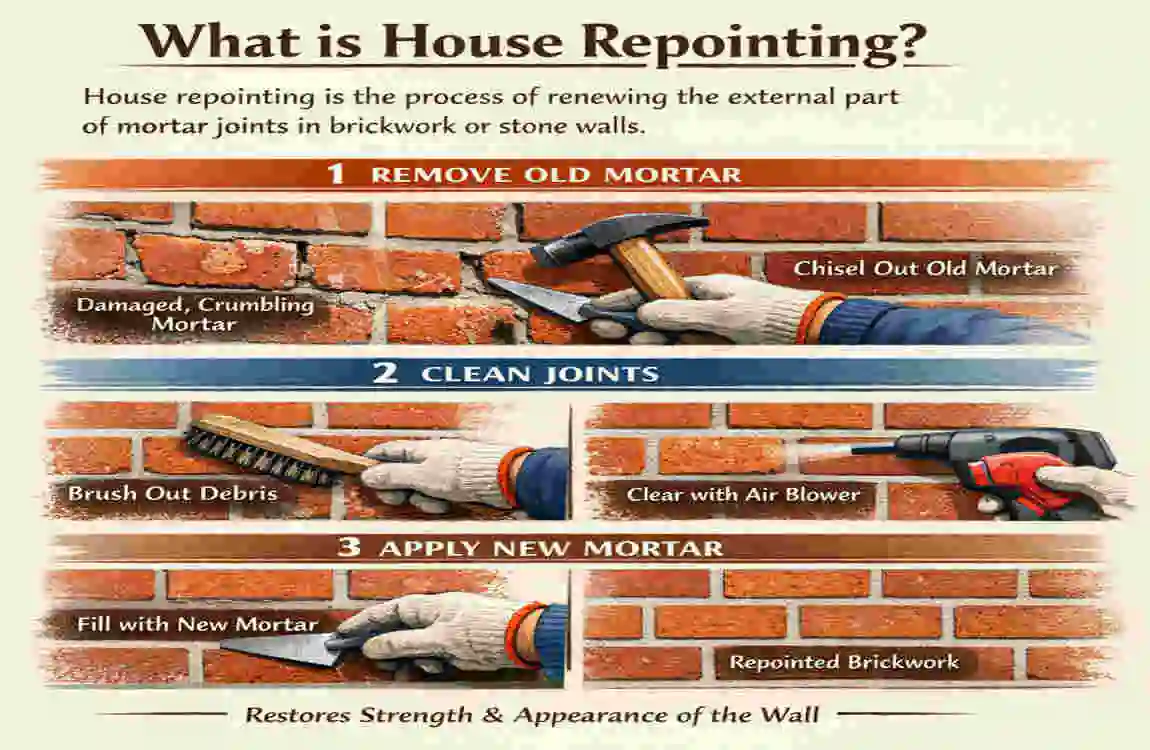
Before you start handing over your hard-earned cash, it helps to understand exactly what you are paying for. House repointing is a highly skilled restorative process. It involves carefully removing the old, deteriorated mortar from the joints between your bricks and applying fresh, structurally sound mortar in its place.
The Repointing Process Explained
A professional tradesperson will not just smear new cement over the old cracks. Doing that traps moisture and causes massive damage down the line. Instead, they start by “raking out” the old mortar. They will grind or chisel away the damaged material to a depth of about 10-20mm.
Once they create a clean, deep channel, they meticulously clean the joints to remove any lingering dust. Finally, they inject or trowel the fresh mortar—usually a modern cement mix or a traditional lime-based mix—deep into the gaps. This creates a brand-new, watertight seal.
Common Types of Pointing Finishes
You actually have a few options for the final look of your mortar. The style you choose can impact the weather resistance of your walls.
- Bucket-Handle Pointing: This is the most common style in the UK. The mason uses a curved tool to press the mortar inwards, creating a smooth, concave shape that naturally directs rainwater away from the brick.
- Flush Pointing: Here, the mortar sits completely flush and flat with the face of the brick. It looks very neat but does not repel heavy rain quite as effectively as a curved finish.
- Weather-Struck Pointing: The mortar is angled downwards, sloping away from the top edge of the brick to the bottom edge. This acts like a tiny rainwater slide, offering excellent weather protection.
Signs Your House Needs Repointing
How do you know it is time to call in the professionals? You need to take a walk around your property and look closely at the walls.
If you spot crumbling mortar that turns to dust when you touch it, you have a problem. Keep an eye out for damp patches on your interior walls, as this is a major red flag for water ingress. You might also notice cracked bricks or missing mortar chunks. These issues are incredibly common in older Victorian terraces, which naturally shift and settle over the decades.
The Hidden Benefits of Repointing
Repointing does more than make your house look pretty. A solid, watertight exterior actually boosts your home’s energy efficiency. By sealing up those drafty gaps, you can improve your thermal retention by up to 15%. Even better, a professional repointing job will easily extend the life of your exterior walls by 50 years or more. It is a long-term investment in your property’s Survival.
Factors Affecting Repointing Costs
When asking “how much to repoint a house in the UK,” you will quickly discover that no two jobs are exactly alike. Several unique variables dictate your final quoted price. A small bungalow in the North will cost drastically less than a massive detached heritage home in Central London.
To help you understand your estimates, we have broken down the main cost variables below.
Key Cost Variables Breakdown
Factor Impact on Overall Cost Example Price Range
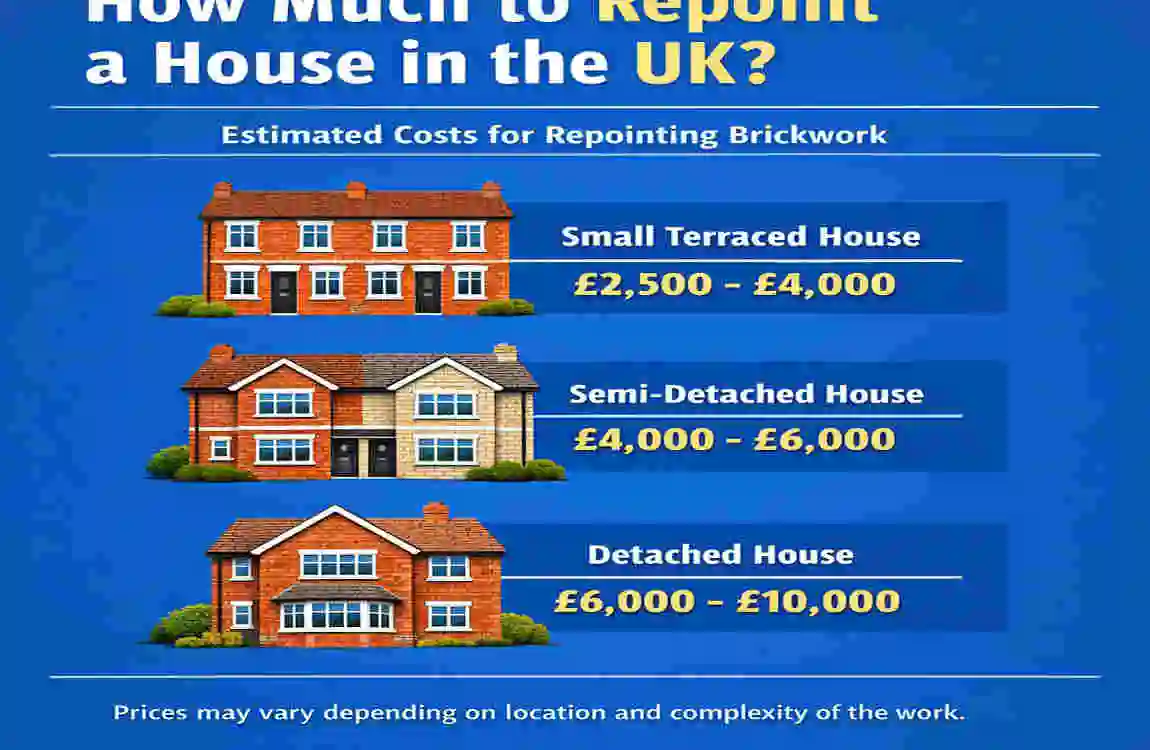
House Size and Type: Larger walls require more materials and extended labor time. Terrace: £2,500 – £4,000
Detached: £4,000 – £8,000+
Mortar Type Traditional lime mortar requires specialist skills and costs more than standard cement. Cement: £25 – £60 per m²
Lime: £60 – £90 per m²
Geographic Location: Homeowners in the South face higher labor rates than those in the North. North: £35 – £50 per m²
London: £60+ per m²
Access & Scaffolding Reaching high walls or chimneys safely requires expensive scaffolding setups. Adds £500 – £1,500 extra to total
Wall Condition: Severely damaged walls require a deeper rake-out, which takes more time. Adds £20 – £50 per m²
Labour vs. Material Costs
When you look at your final quote, it helps to know where the money actually goes. In the repointing industry, labor accounts for roughly 60% of your total cost.
Repointing is incredibly labor-intensive. It takes time, patience, and physical effort to grind out old mortar without damaging the surrounding bricks. You can expect to pay a skilled tradesperson between £150 and £250 per day. If they bring an apprentice or a laborer to help mix mortar and move scaffolding, the daily rate will increase.
The remaining 20% to 30% of your quote covers the physical materials—the sand, cement, lime, and any chemical additives needed to protect the mix during curing. The final 10% usually accounts for waste disposal and company overheads.
Average Repointing Costs UK
Now, let us get to the exact numbers. If you are trying to set a realistic budget for this year, you need a detailed house repointing price guide. We have compiled the latest average costs based on different property sizes and job scopes across the UK market in 2026.
Comprehensive Price Guide Table
Job Scope, Average Estimated Cost, Approximate m² Coverage, Important Notes
Single Wall £600 – £2,500 30m² – 50m² Usually a front or side elevation only. Often does not require full scaffolding.
Terraced House £1,300 – £4,000 65m² Covers the full exterior. Very common for Victorian-era properties.
Semi-Detached £1,900 – £5,500 95m² Covers two to three elevations. Scaffolding is almost always included in this price.
Detached House £2,900 – £8,000+ 120m²+ Covers all four exterior walls. Very large luxury homes can easily exceed £10,000.
Chimney Stack £500 – £1,300 per individual stack. Requires specialized access towers or roof ladders—great danger. Premium.
Understanding the Per Square Meter Rate
Most contractors will quote you based on the wall surface area. In 2026, the standard UK rate for repointing with standard cement mortar sits between £40 and £60 per m².
However, you must remember to factor in VAT. Unless your contractor is a sole trader operating below the VAT threshold, you will need to add 20% to your final bill.
If you live in Scotland or Wales, you will generally find more competitive rates. The average per-square-meter cost in these regions often hovers between £35 and £45 per m², providing significant savings for large detached properties.
Regional Price Breakdown
The UK property market is highly regionalized, and home maintenance costs follow this same trend. Where you live plays a massive role in answering “how much to repoint a house in the UK.”
The London and South East Premium
If you live in London or the wider South East, you will pay a Premium. The cost of living is higher, parking for tradespeople is expensive, and demand for skilled heritage bricklayers is off the charts.
Homeowners in this region should expect to pay between £3,500 and £9,000 for a full house repoint. Finding a contractor willing to work for less than £200 a day in London is incredibly rare in 2026.
The Midlands and the North
As you travel upwards through the Midlands and into the North of England, the financial pressure eases significantly. Labor rates drop to a much more manageable level.
In these regions, you can pay 10% to 20% less than your Southern counterparts. A full repointing job on a standard semi-detached house in Manchester or Leeds might only cost between £2,000 and £6,000.
Industry Trends
When planning your budget, you must consider the current economic climate. Following the supply chain issues and material shortages of late 2025, the construction industry has seen a steady rise in costs.
Experts anticipate that overall repointing costs will rise by roughly 5% throughout 2026. This is largely due to the rising cost of raw materials such as specialized sand and hydraulic lime, as well as rising fuel costs for contractors traveling between jobs. If you notice your brickwork failing, it is financially wise to book the job now rather than waiting for prices to inflate further.
Additional Costs to Budget For
When you receive a quote for repointing, you must read the fine print. Does the price cover only or and tortar, or does it include tssentialras? Many homeowners get caught up in hidden fees.
Here are the additional costs you need to budget for to avoid a nasty surprise.
Scaffolding Hire
You cannot safely repoint a two-story house while balancing on a wobbly ladder. Professional scaffolding is a legal and practical requirement for any high-level exterior work.
Hiring a scaffold structure usually costs between £800 and £2,000 per week, depending on how many sides of your house need covering. Some repointing firms own their own scaffolding and include it in their quote, while others will ask you to hire a third-party scaffolding company separately. Always ask your contractor who is responsible for this cost!
Waste Removal
Raking out old mortar creates an unbelievable amount of heavy, dusty rubble. You cannot simply throw this in your standard household bin.
Your contractor will need to dispose of this waste legally. Hiring a skip or a commercial waste removal service will add roughly £200-£400 to your final bill.
Preparation Work and Render Repair
Sometimes, your walls hide nasty secrets. Once the contractor starts raking out the mortar, they might discover cracked bricks that need replacing, or sections of damaged render that must be hacked off and repaired.
Unforeseen preparation work can easily add £500 or more to your project. As a general rule of thumb, you should assume that these additional add-ons and access requirements will inflate your base material and labor costs by 20% to 40%. Always keep a contingency fund!
How to Save on Repointing UK
Seeing numbers like £8,000 can make any homeowner wince. Fortunately, you do not always have to pay top dollar. If you manage the project wisely, you can keep your hard-earned money in your pocket.
Here are our top 8 actionable tips to save on repointing the UK in 2026:
Always Get 3 or More Quotes
Never accept the very first price a contractor hands you. By inviting at least three different local tradespeople to quote your job, you force them to be competitive. Comparing quotes allows you to spot overpriced outliers and can easily save you 15% to 20% on the overall project.
Repoint Only the Necessary Walls
You rarely need to repoint your entire house all at once. Usually, the wall facing the prevailing wind and rain (often the South or West-facing wall) takes the most damage. Ask your contractor to assess the property honestly. Doing a partial job on just the weather-beaten walls drops the average cost down to roughly £1,500.
Choose Cement Over Lime (When Appropriate)
If you own a modern home built after the 1930s, standard cement mortar is perfectly fine. It is significantly cheaper and much faster to apply than traditional lime mortar. However, if you live in a heritage or listed Victorian property, you must use lime to allow the bricks to breathe; otherwise, you risk trapping moisture and destroying the brickwork.
Schedule During the Off-Peak Season
Masonry contractors are incredibly busy during the dry summer months. If you want a discount, try booking your repointing job in the early autumn or late spring. Contractors are often looking to fill their schedules during these shoulder seasons and might offer you a 10% discount to secure the work.
Consider DIY for Small Garden Walls
If you have a small, low garden wall that needs fixing, consider doing it yourself. You can buy a decent mortar pointing trowel and a hawk for under £100. However, we strongly advise against doing your own work on the actual walls of your house. Working at heights is dangerous, and improper pointing will lead to severe damp problems inside your home. Leave the main house to the pros.
Bundle Your Home Maintenance Projects
If you already need scaffolding erected to fix your gutters, paint your fascias, or repair your roof, do the repointing at the same time! Bundling your exterior maintenance projects saves you from paying that massive scaffolding hire fee twice.
Look into Government Grants
If you live in an older property or a low-income household, you might qualify for UK retrofit schemes or local council repair grants. Some local authorities offer financial help to maintain the structural integrity of historical homes. It is always worth checking your local council’s website before starting work.
Practice Annual Maintenance
The best way to save money on a massive repointing job is to prevent it from happening in the first place. Inspect your walls every spring. If you see a tiny crack, patch it immediately. Regular, minor maintenance stops water from getting behind the mortar and blowing out entire sections during a winter freeze.
The Repointing Process Timeline
Home improvements can be disruptive, so it is helpful to know exactly how long tradespeople will be walking around your property. While every house is different, a standard semi-detached home usually takes about a week to complete.
Here is a day-by-day breakdown of what you can expect:
- Day 1: Setup and Scaffolding. The team arrives, sets up the scaffolding towers, and lays down protective sheeting over your patios and pathways to catch the dust.
- Days 2 to 4: The Rake Out. This is the noisy, dusty phase. The team spends 2 to 3 days mechanically grinding and hand-chiseling the old, dead mortar from your brickwork. They finish this stage by thoroughly washing the wall to remove the dust.
- Days 5 to 7: Pointing and Cleaning. The quiet phase begins. The team carefully applies fresh mortar, styles the joints (such as the bucket-handle finish), and brushes down the brickwork to ensure a clean, beautiful finish. Finally, they dismantle the scaffolding.
Important Note on Curing: Just because the scaffolding is gone does not mean the wall is fully ready. Fresh mortar needs roughly 28 days to fully cure and reach its maximum strength before it can handle severe weather exposure. A good contractor will protect fresh work with hessian sheets if heavy rain or frost is forecast during this initial curing phase.
Choosing a Repointing Contractor
Your house is likely your most valuable asset. You cannot afford to let an amateur loose on your brickwork with an angle grinder. Hiring the right professional is just as important as setting the right budget.
Watch Out for Red Flags
When hunting for a tradesperson, trust your gut. If a contractor cannot provide proof of public liability insurance, walk away immediately. If they damage your neighbor’s car with falling debris, you want their insurance to cover the damage, not yours. Similarly, avoid contractors who give vague, verbal quotes without putting the details and specific materials in writing.
Your Hiring Checklist
To ensure you get a top-tier job, run your potential contractors through this quick checklist:
- Are they verified on platforms like Checkatrade or TrustATrader?
- Do they have at least 5+ years of dedicated masonry experience?
- If you have a period property, are they proven specialists in traditional lime mortar application?
Crucial Questions to Ask
Before you sign a contract, look the tradesman in the eye and ask these questions:
- “How will you match the existing mortar color?” A true professional will mix a few test batches and let them dry to ensure the new pointing blends seamlessly with the old.
- “Do you offer a warranty on your work?” Reputable companies usually offer a 5- to 10-year guarantee on their repointing work, giving you absolute peace of mind.
Frequently Asked Questions (FAQs)
We know that navigating home repairs can feel overwhelming. To clear up any lingering doubts, we have gathered the most common questions homeowners ask when researching “how much to repoint a house in the UK.”
How much does it cost to repoint a house in the UK?
On average, repointing a standard UK home costs between £2,500 and £8,000. The final price depends on the size of your house, the type of mortar required, and whether you need extensive scaffolding.
What is the average repointing cost per square meter?
You should expect to pay between £25 and £90 per m². Standard cement work generally falls on the lower end (£40-£60), while specialized lime mortar work on heritage properties pushes the price toward the higher end.
How much to repoint a terraced house vs a detached house?
A standard terraced house usually costs between £1,300 and £4,000 because you only have the front and rear elevations to worry about. A large detached house requires repointing all four sides, pushing the cost to anywhere from £4,000 to over £8,000.
Should I use lime or cement mortar?
This depends entirely on the age of your house. If your home was built before the 1930s, you almost certainly need lime mortar. Lime is breathable and flexible, allowing the older, softer bricks to move slightly and release moisture. Using hard, modern cement on a Victorian house will trap moisture, causing the brickwork to blow off during a freeze.
How long does repointing last?
A high-quality, professional repointing job should easily last between 50 and 100 years. It is a one-time investment for most homeowners.
Do I need planning permission for repointing?
Usually, no. Repointing falls under permitted development rights. However, if you live in a listed building or a conservation area, you will likely need consent, especially if you are changing the color of the mortar or style of the mortar.
Is repointing a messy job?
Yes, it is incredibly messy. Raking out the old mortar creates a massive amount of fine brick dust. A professional team will minimize this by using dust-extraction tools and laying down heavy protective sheets.
Can I patch up the bad spots myself?
You can patch small, low areas, but “spot pointing” often looks patchy and ugly because the new mortar color rarely matches the old, weathered mortar perfectly. For large areas, it is always best to rake out whole sections for a uniform look.
Will repointing stop penetrating damp?
Absolutely. If the dampness in your home is caused by rain driving through cracked or missing exterior mortar, a full repoint will seal your home’s envelope and stop penetrating damp completely.
How deep should mortar be raked out?
Industry standards dictate that old mortar should be raked out to a depth of at least 10mm to 20mm, or twice the width of the joint. If a contractor only scrapes the surface, the new mortar will fall out within a year.
