

If you are reading this in 2026, chances are you have been outside recently, looked up at your home, and felt a pit in your stomach. Maybe you noticed curling, brittle asphalt shingles. Perhaps a recent spring storm blew through your neighborhood, leaving a trail of debris and a leaky ceiling in its wake. Or you opened your latest utility bill and gasped at the skyrocketing costs to cool your home.
You are not alone. Thousands of homeowners are actively switching away from traditional roofing materials to highly durable, energy-efficient metal alternatives. However, finding clear, straightforward pricing can feel like trying to solve a complex puzzle. Many contractors avoid giving straight numbers, leaving you to guess if you can actually afford the upgrade.
What Is Metal Roof Replacement? A Simple Definition
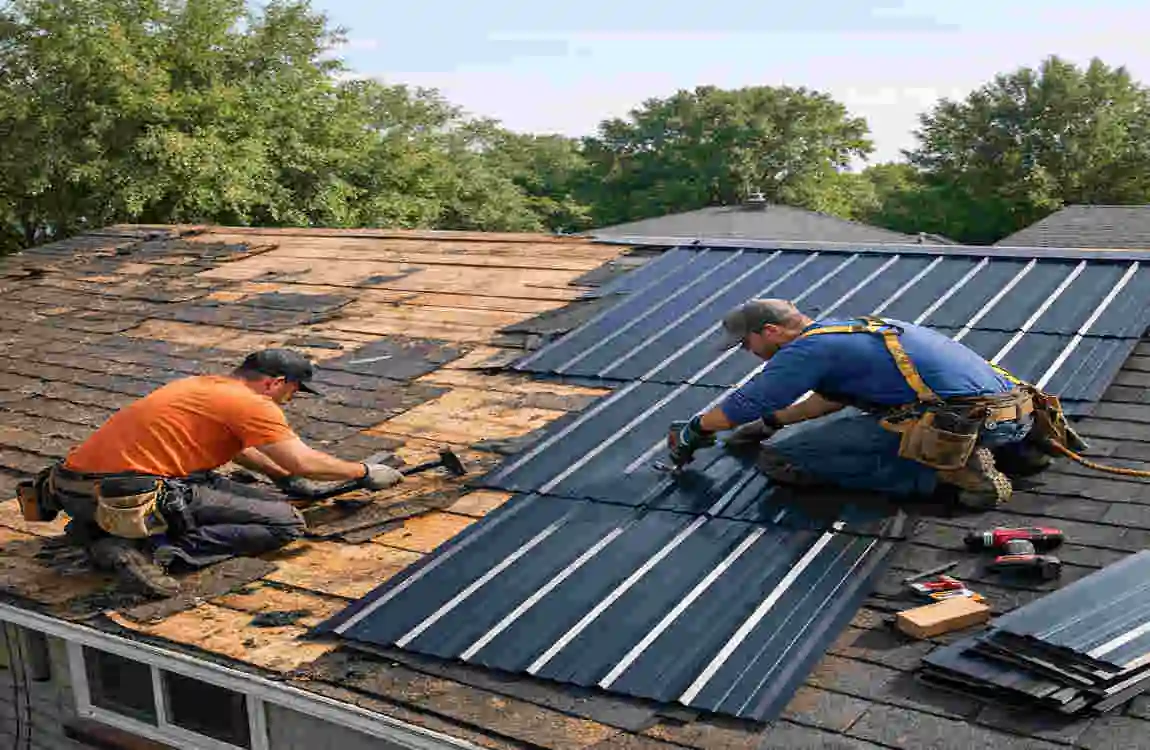
Before we start crunching numbers, let’s get on the same page about what this project actually entails. Metal roof replacement is the complete process of tearing off your old, failing roof system and installing a brand-new metal roofing system on your house.
Think of it like completely replacing the protective helmet of your home. We are not talking about nailing a few shiny panels over a rotten deck, and we are certainly not talking about minor patch jobs.
When you compare this to a standard asphalt shingle replacement, the core idea is the same: out with the old, in with the new. However, metal requires specialized skills, different tools, and a completely different approach to waterproofing your home.
Many homeowners ask us if they can fix a few leaks instead of doing a full replacement. While roof repairs are great for isolated damage, a roof older than 15 to 20 years is usually subject to system-wide fatigue. Fixing one spot pushes the problem to another spot.
Therefore, this guide focuses entirely on whole-house metal roof replacement. We want to show you the cost of a permanent, beautiful solution that will protect your family and your belongings for decades to come.
Average Cost to Replace a House Roof with Metal
This is the moment you have been waiting for. Let’s answer your main question directly: how much is metal roof replacement? Keep in mind that these numbers reflect the realities of the 2026 housing and materials market.
Overall Average Cost Range
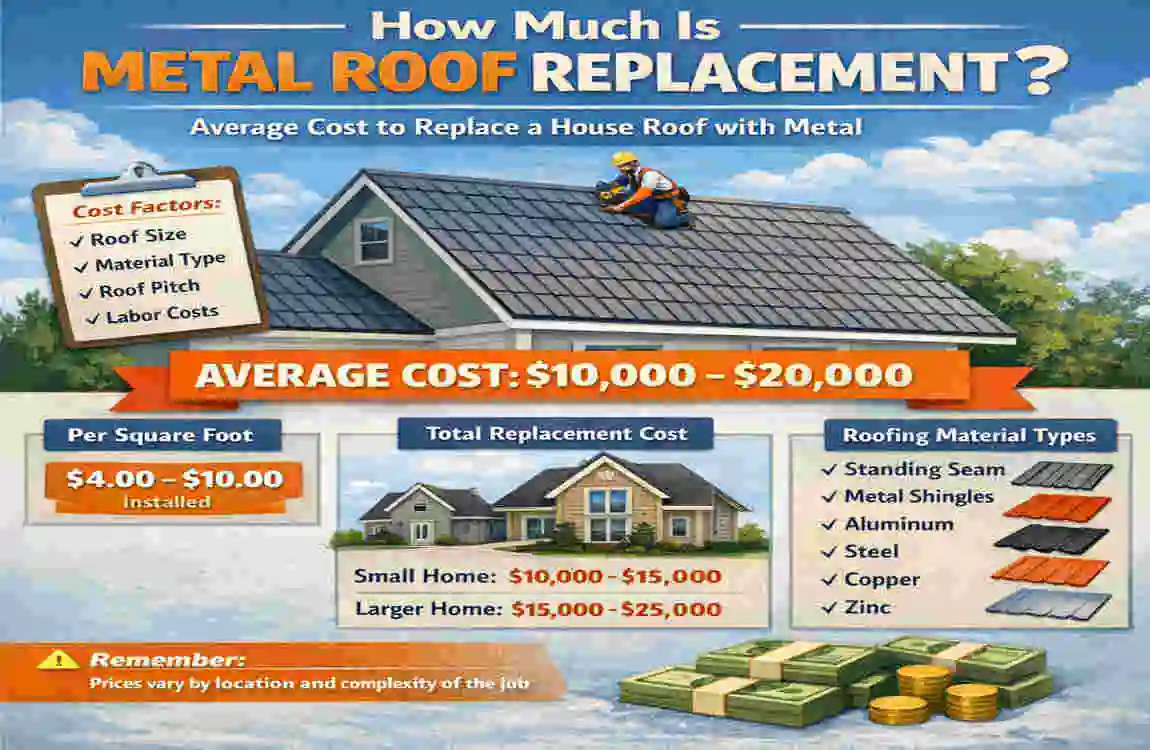
For a standard, average-sized single-family house (roughly 1,500 to 2,500 square feet), most homeowners pay between $12,000 and $32,000 for a complete metal roof replacement.
That is quite a wide range. The reason the gap is so large is that “metal roofing” is a very broad category. You can choose basic, budget-friendly materials to keep costs low, or opt for Premium, custom-fitted metal panels that push the price toward the higher end.
To give you a clearer picture: the national average cost sits comfortably around $19,500 for a standard metal roof replacement.
Cost Per Square Foot and Per Square (100 sq ft)
To understand how roofers calculate your bill, you need to know about square footage. Contractors break down the cost into either the average cost per square foot or the cost per square foot.
In the roofing industry, a “square” means 100 square feet of roof space. So, a 2,000-square-foot roof equals 20 squares.
Here is how the costs (including both materials and professional labor) break down in 2026:
- Budget-Friendly Metal (Corrugated Steel/Aluminum): Expect to pay between $6.00 and $9.00 per square foot. Suppose your contractor quotes you by the square, which translates to $600 to $900 per square. These panels feature visible screws and have a classic, rustic look.
- Mid-Range Metal (Metal Shingles or Stamped Metal): These materials mimic the look of wood, slate, or asphalt but offer the strength of metal. You will typically pay between $9.50 and $13.00 per square foot, which comes out to $950 to $1,300 per square.
- Premium Metal (Standing Seam, Copper, Premium Aluminum): This is the top tier of roofing. Standing seam roofs hide their fasteners, making them incredibly sleek and weather-tight. For this luxury, expect to pay $14.00 to $22.00+ per square foot, or $1,400 to $2,200+ per square.
Example House Sizes and Total Cost
Sometimes, doing the math yourself is a headache. To make things as simple as possible, we have put together a quick reference table.
This table estimates the total replacement cost based on your house’s square footage. Note: We calculated these estimates using a mid-range standing seam or high-end corrugated metal option, averaging about $12.00 per square foot installed.
House Size (Square Feet)Estimated Roof Size (Sq Ft)*Average Estimated Total Cost (Materials + Labor)
Small (1,000 – 1,500 sq ft) 1,200 – 1,800 sq ft $14,400 – $21,600
Medium (1,500 – 2,000 sq ft) 1,800 – 2,400 sq ft $21,600 – $28,800
Large (2,000 – 2,500 sq ft) 2,400 – 3,000 sq ft $28,800 – $36,000
Extra Large (2,500 – 3,500+ sq ft) 3,000 – 4,200+ sq ft $36,000 – $50,400+
( Roof size is generally larger than your home’s indoor square footage because of overhangs, pitches, and garage spaces.)*
Whenever you find yourself asking, “How much is metal roof replacement for my specific house?” you can use this table as your starting baseline.
Key Factors That Decide “How Much Is Metal Roof Replacement?”
You might look at the table above and wonder why two houses of the same size might get vastly different quotes. The truth is, no two house roofs are identical.
Several crucial factors influence the final price you will pay. Let’s take a closer look at the elements that drive your estimate up or down.
Type of Metal Roofing
The biggest factor in your budget is the actual material you choose for your home.
Corrugated Steel and Aluminum are your most economical choices. Manufacturers press these large metal sheets into wavy patterns to give them structural strength. Because they install quickly and use exposed fasteners (screws that you can see), they cost less upfront. However, the rubber washers on those screws can degrade over time, meaning slightly more maintenance down the road.
Metal Shingles offer a fantastic middle ground. They give you the gorgeous, traditional aesthetic of a standard roof but with the impenetrable defense of steel or aluminum. They cost more than corrugated panels because manufacturing the individual shingles requires more time, and installation is a bit more tedious.
Standing Seam Panels represent the gold standard for residential metal roofing. The contractor locks these long, sleek panels together at raised seams. Because the seams “stand” above the water runoff level and all the fasteners are completely hidden beneath the metal, these roofs rarely leak. They require specialized labor and heavy-duty materials, which drive up the upfront cost, but they offer unparalleled long-term value.
Specialty Metals like copper and zinc are the absolute peak of luxury. They naturally change color (patina) over time and can last for well over a century. However, they come with a massive Premium price tag that usually places them out of bounds for the average suburban home.
Roof Size and Complexity
Next, step outside and look up at your house. Does it look like a simple, flat triangle? Or does it look like a complex mountain range with multiple peaks, valleys, and protrusions?
The square footage of the house roof directly impacts the volume of materials the contractor needs to order. But complexity impacts the labor.
If your home features multiple slopes, dormer windows, sharp angles, and deep valleys, the roofing crew has to do a lot of custom cutting. Every cut takes time. Every angle requires special flashing to prevent leaks.
Furthermore, if your roof has a high pitch (i.e., very steep), the crew cannot simply walk on it. They must install safety harnesses, scaffolding, and toe-boards. This slows down the process considerably, which in turn increases your labor costs. Attached structures, like sprawling porches or multi-car garages, also add to the total surface area you need to cover.
Demolition and Tear-Off Costs
Before the shiny new metal goes on, the crusty old roof must come off.
On average, tearing off an old house roof adds about $1.50 to $3.00 per square foot to your total bill. This price covers the intense physical labor of stripping off heavy asphalt, wood, or old metal, as well as the fees for renting a dumpster and safely disposing of the waste at a local landfill.
Sometimes, homeowners ask if they can install the new metal directly over the old asphalt shingles. This is called an “overlay.” While an overlay can save you money on tear-off costs, it is often risky. If the wood decking beneath your old roof is rotting, covering it with metal traps the rot forever. Furthermore, many local building codes in 2026 strictly prohibit adding a second or third layer of roofing due to the immense weight it puts on your home’s structural framing.
Labor, Location, and Market Conditions
Where you live matters just as much as what you buy.
Regional labor costs play a massive role in your final quote. If you live in a booming urban center with a high cost of living, roofing crews charge more for their time. Conversely, if you live in a quiet rural area, labor costs might be significantly lower.
You must also account for local permits and building codes. Your city government will likely require an inspection to ensure the roof meets 2026 safety standards. These permits can add anywhere from $200 to $800 to your project.
Finally, we have to talk about market conditions. Over the last few years, steel and aluminum prices have experienced significant volatility due to shifts in global supply chains. As more homeowners demand metal roofs for their extreme weather resistance, the high demand can slightly inflate material prices during the busy summer months.
Roof Underlayment, Insulation, and Accessories
A roof is not just metal; it is a complete ecosystem.
Beneath the metal panels, your contractor must install proper underlayment. This synthetic, water-resistant fabric acts as the final line of defense against moisture. In cold climates, you also need specialized “ice and water shields” installed along the edges and valleys to prevent ice dams from destroying your home.
You also need ridge vents, which allow trapped hot air to escape your attic. Without proper ventilation, your attic will bake in the summer, driving up your air conditioning bills and potentially warping the metal.
Consider optional upgrades. Adding extra rigid foam insulation under the metal can radically improve your home’s energy efficiency. If you plan to go green, pay extra for solar-ready rails or seam-mounted units (SMUs) that let you easily snap solar panels onto your standing-seam roof later without drilling any holes.
Metal Roof Replacement vs. Asphalt Shingle Replacement Cost Comparison
When you see the price tag for a metal roof, you might instinctively want to run back to the comfort of traditional asphalt shingles. To make a smart decision, you need to compare direct costs to justify the metal-roof investment.
Let’s break down the current 2026 numbers:
- Asphalt-Shingle House Roof: The average cost to replace an asphalt roof currently sits between $4.50 and $7.50 per square foot.
- Metal House Roof: As we discussed, the average cost ranges from $9.00 to $15.00+ per square foot for mid-range and Premium options.
At first glance, metal costs roughly twice as much as asphalt. However, looking at the upfront cost is a massive trap. You must consider the cost-per-year or the lifetime cost of the materials.
An asphalt shingle roof, especially in areas prone to high heat, heavy storms, or hail, typically lasts 15 to 25 years. Around year 12, you will likely start paying for minor repairs, replacing blown-off shingles, and cleaning off ugly black algae streaks.
A modern metal roof, on the other hand, easily lasts 40 to 70 years. It will not curl, crack, or grow moss. It shrugs off 140 mph winds and bounces hail right off.
If you plan to stay in your home for more than 15 years, you will likely have to replace an asphalt roof twice during the lifespan of a single metal roof. When you factor in the 20% to 30% savings on your summer cooling bills from the metal’s reflective properties, the long-term math heavily favors metal.
So, ask yourself: Is metal roof replacement worth it for your house? If you want a “one-and-done” solution that adds incredible resale value to your property, the answer is a resounding yes.
Hidden or Often-Overlooked Costs When You Replace a House Roof with Metal
No homeowner wants to sign a $20,000 contract, only to get hit with a surprise $4,000 bill halfway through the project. To help you avoid the frustrating “sticker shock,” we want to shine a light on the hidden costs of roof replacement.
When you ask, “How much does metal roof replacement cost with tear-off and labor?” make sure your contractor is checking for the following items:
- Roof Decking Repair or Replacement: Once the crew tears off your old shingles, they might uncover rotten, soft, or water-damaged plywood underneath. You cannot install a heavy metal roof over bad wood. Replacing sheets of plywood decking usually costs between $70 and $100 per sheet.
- Permit and Inspection Fees: As mentioned earlier, city halls love collecting these fees. Ensure your contractor includes the permit-pulling cost in their initial bid so you don’t have to pay it out of pocket later.
- Gutter Adjustments or Replacement: Metal roofs shed water much faster than rough asphalt. Sometimes, your existing gutters cannot handle the rapid water flow and will overflow. You might need to pay to upgrade to larger, 6-inch gutters.
- Flashing and Chimney Work: The areas around your chimney, skylights, and vent pipes are the most likely places for a roof to leak. Custom-bending metal flashing to hug these obstacles perfectly takes time and Premium materials, which can slightly bump up the price.
- Seasonal Timing: If you wait until September or October—right before winter hits—roofing contractors are incredibly busy. This high demand can cause labor rates to surge. Booking your project in the early spring or late winter often secures you a much better rate.
When Should You Replace Your House Roof with Metal?
Knowing the cost is only half the battle; knowing when to pull the trigger is equally important. How do you know when it is finally time to stop patching and start replacing?
First, look for the obvious signs of failure on your current roof. If you have active leaks staining your living room ceiling, you are already living on borrowed time. Go outside and look for curling, buckling, or completely missing shingles. If your roof looks like a patchwork quilt of different colored repairs, it is time for an upgrade.
But sometimes, you should replace your roof proactively. Metal becomes a highly strategic upgrade depending on where you live.
If you reside in a storm-prone area that gets battered by hurricanes or tornadoes, metal’s incredible wind-uplift resistance is a lifesaver. If you live in a dry, forested region, you know the terror of wildfire season. Because metal is completely non-combustible, a stray ember landing on your house roof will burn out rather than ignite your home.
Finally, consider the long-term savings. If your energy bills are suffocating your monthly budget, switching to a reflective metal roof can drastically reduce your air conditioning usage. You are not just paying for a roof; you are investing in energy efficiency, longevity, and lower maintenance.
Step-By-Step: What Happens When You Replace a House Roof with Metal
When you hand over a large sum of money, it is natural to feel a bit anxious about the chaos that is about to descend on your property. Let’s walk through a mini-story of the project process so you know exactly what to expect and can feel completely confident in your investment.
Here is how metal roof replacement is done on a house:
- Roof Inspection and Quote. A professional estimator visits your home. They will fly a drone or climb a ladder to precisely measure your house roof, assess the existing damage, and sit down with you to discuss metal options and colors.
- Old Roof Tear-Off and debris Removal. On day one of the project, a large dumpster arrives in your driveway. A crew arrives early, spreads out tarps to protect your landscaping, and systematically strips away the old, heavy asphalt shingles down to the bare wood. It will be loud and messy, but a good crew cleans as they go.
- Deck Repair and Underlayment Installation. The foreman inspects the bare wood for rot. Any bad wood is cut out and replaced. Next, the crew rolls out the synthetic underlayment and applies the sticky ice-and-water shield to the edges. Your home is now temporarily waterproofed.
- Metal Roof Installation. This is where the magic happens. The crew meticulously hoists the custom metal panels or shingles onto the roof. Starting from the bottom edge, they interlock the panels, secure the hidden fasteners, and custom-cut the metal to fit perfectly around your chimneys and vents.
- Cleanup, Inspection, and Final Walkthrough. The crew installs the final ridge caps, sweeps your yard with heavy-duty magnets to pick up any stray nails, and packs up their gear. The project manager will then walk you around the house to inspect the flawless new roof, ensuring you are 100% satisfied before signing off.
How to Save Money on Metal Roof Replacement Without Sacrificing Quality
We know that a metal roof is a Premium product, but that does not mean you should overpay. There are several strategic, homeowner-friendly ways to keep your costs down without compromising on the quality of your new roof.
First and foremost, always get multiple quotes from local roofing contractors. Do not just accept the first bid you receive. Aim for at least three distinct quotes. This allows you to compare material prices, labor rates, and the overall professionalism of the companies.
Second, choose the right metal type for your house size and climate. If you live in a mild climate without extreme weather, you might not need the absolute thickest, most expensive standing seam panel available. A mid-grade metal shingle or a high-quality corrugated steel might serve you perfectly well and save you thousands of dollars.
Third, plan the project during milder seasons. As we mentioned earlier, avoiding the peak storm-season rush is a great way to save money. If you can schedule your roof replacement for late winter or early spring, contractors are often willing to offer discounts to keep their crews busy during the slow months.
Finally, a quick warning: do not try to install the metal yourself to save money. While DIY-friendly policies are great for tearing down drywall inside your house, installing a metal roof is dangerous and highly technical work. One misplaced screw or improperly bent flashing can cause catastrophic water damage. Leave the installation to the professionals to protect your home and validate your manufacturer’s warranty.
Frequently Asked Questions (FAQs) About Metal Roof Replacement Cost
When you are making a major financial decision, it is natural to have many specific questions. Let’s tackle the most common homeowner queries directly.
How much does it cost to replace a house roof with metal in 2026? While the exact price varies by home, the national average cost to replace a house roof with metal currently sits around $19,500. Depending on the size of your home and the style of metal you choose, you should expect a realistic range between $12,000 for a small, simple home and $32,000+ for a larger, complex home.
How much is metal roof replacement per square foot? If you are trying to calculate the math yourself, plan for an average cost of $9.00 to $15.00 per square foot for the total project (materials and labor combined). Budget corrugated metals will sit closer to $7.00, while Premium standing seam systems will push past $16.00 to $20.00 per square foot.
Is metal roof replacement more expensive than asphalt? Yes, the upfront cost of a metal roof is typically twice that of an asphalt roof. However, because metal lasts up to three times longer than asphalt, requires virtually no maintenance, and drastically lowers your energy bills, metal is actually much cheaper in the long run.
How long does it take to replace a house roof with metal? For an average-sized single-family house, a professional, experienced crew can usually complete a full metal roof replacement in 2 to 4 days. If your roof is exceptionally steep, large, or complex, or if the weather turns bad, the project could extend to a full week.
Can you install metal over an existing roof? Technically, yes. Installing metal over an existing asphalt roof is called an overlay, and it can save you money on demolition. However, we rarely recommend it. Overlays prevent us from inspecting the wooden roof deck for hidden rot, and the combined weight of two roofs can stress your home’s structural framing. Most reputable contractors in 2026 strongly advise doing a full tear-off.
