

Picture this: you’re enjoying a quiet evening at home when you suddenly notice a suspicious water stain spreading across your ceiling. Your heart sinks as you realize what this means – your roof has sprung a leak. If you’re like most homeowners, your first thought is probably, “How much is this going to cost me?”
Don’t panic just yet. Understanding the cost of roof leak repair doesn’t have to feel like solving a complex puzzle. Whether you’re dealing with a minor drip or a more serious issue, knowing what to expect financially can help you make smart decisions and protect both your home and your wallet.
Understanding Roof Leaks: Causes and Risks
Common Culprits Behind Roof Leaks
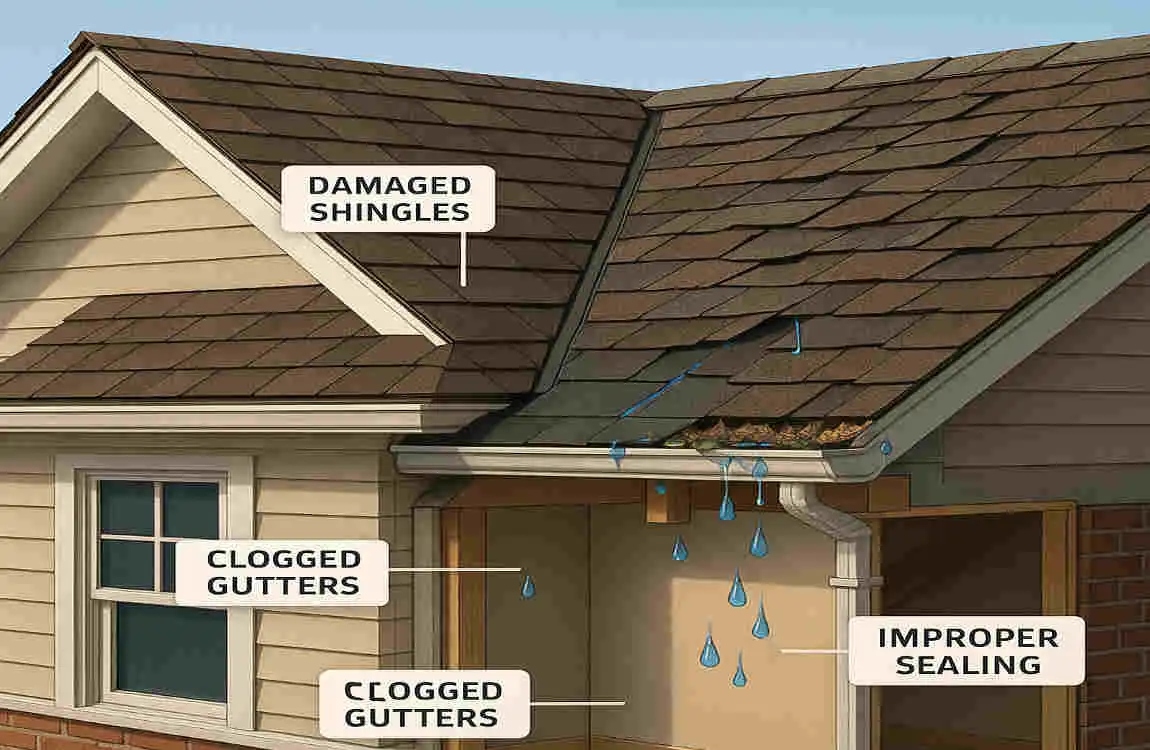
Your roof faces a constant battle against the elements. Age is often the primary villain in this story. Most roofing materials have a lifespan of 20-30 years, and as they age, they become more vulnerable to damage.
Weather plays a significant role, too. Heavy rain, hail, strong winds, and ice dams can all compromise your roof’s integrity. Even something as simple as clogged gutters can cause water to back up and seep under your shingles. Poor installation from the get-go? That’s another recipe for future leaks.
Don’t forget about those sneaky tree branches that scrape against your roof during windy nights. They might seem harmless, but they’re slowly wearing away your roof’s protective layers.
The Hidden Dangers of Ignoring Leaks
Here’s what happens when you pretend that the water stain doesn’t exist. Water seeps into your home’s structure, weakening wooden beams and causing them to rot. Your insulation becomes waterlogged, losing its effectiveness and driving up your energy bills.
Mold growth is perhaps the scariest consequence. Within 24-48 hours of water exposure, mold can begin to form in dark, damp spaces. This isn’t just a cosmetic issue – it’s a health hazard that can trigger allergies and respiratory problems.
The financial impact extends beyond just the roof leak repair cost. You might face damaged drywall, ruined flooring, and destroyed personal belongings. What starts as a $300 repair can balloon into thousands of dollars in restoration work.
Early Detection Saves Money
Regular roof inspections are your best defense. Catching problems early means lower repair costs and less stress. Look for warning signs like missing shingles, damaged flashing, or granules in your gutters. Inside your home, watch for water stains, peeling paint, or musty odors in the attic.
Factors That Influence Roof Leak Repair Cost
Size and Location Matter
Not all leaks are created equal. A small leak near the edge of your roof might only require a simple patch job. But a leak in the middle of your roof? That’s often more complex and costly to fix.
The size of the damaged area directly impacts your repair bill. A few missing shingles cost $150-$400 to replace. However, if water has seeped through and damaged the underlayment or decking, you’re looking at a much bigger project.
Your Roofing Material Makes a Difference
Asphalt shingles are the most common and typically the least expensive to repair. You might pay $300-$1,500 for most asphalt shingle repairs. Metal roofing, while durable, can cost more to fix – often $500-2,000 for repairs.
Tile and slate roofs? They’re beautiful but pricey to repair. Individual tiles can cost $10-50 each, and the specialized labor required to complete the repair drives up the overall cost. Wood shakes fall somewhere in the middle, both in terms of aesthetics and repair costs.
Complexity and Accessibility Challenges
Some roof designs are straightforward. Others? Not so much. Steep roofs, multiple levels, and intricate architectural features all increase repair complexity and cost. If your roofer needs special equipment or extra safety measures, expect to pay more.
Accessibility plays a huge role, too. A single-story ranch home with easy roof access will cost less to repair than a three-story Victorian with dormers and turrets. The harder it is to reach the problem area, the higher your bill will be.
Regional Price Variations in 2025
Where you live significantly affects repair costs. Urban areas typically have higher labor rates than rural locations. In 2025, homeowners in cities like San Francisco or New York might pay 30-50% more than those in smaller Midwest towns.
Climate matters too. Areas prone to severe weather often have higher demand for roofing services, which can drive up prices. Local building codes and permit requirements also influence the final cost.
Additional Repairs Add Up
Sometimes fixing a leak reveals other problems. Your gutters might need to be replaced ($1,000- $ 3,000). The insulation could be water-damaged ($1,500- $ 3,000 to replace). Damaged fascia boards or soffits add another $600-2,000 to your bill.
These additional repairs affect your total roof leak repair cost, but addressing them prevents future problems and protects your investment.
Average Roof Leak Repair Cost in 2025
Breaking Down the Numbers
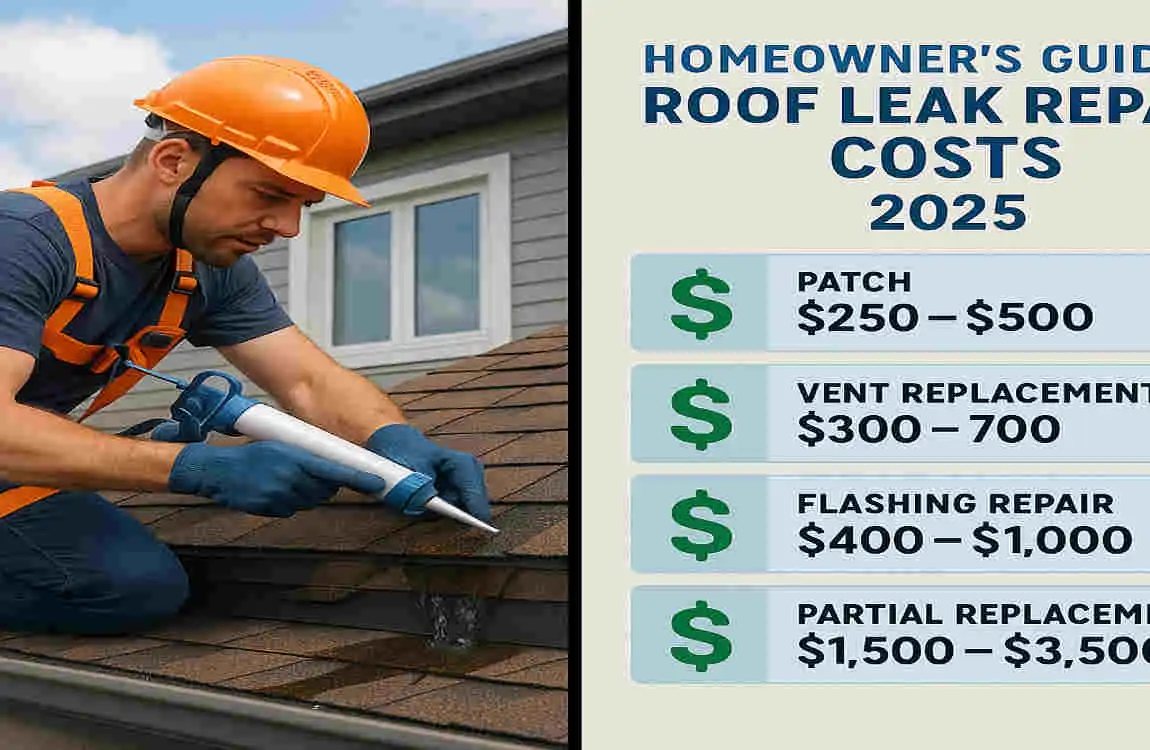
Let’s talk real numbers for 2025. The national average for roof leak repairs ranges from $400 to $2,500, with most homeowners spending around $1,200. But remember, these are averages – your specific situation might fall outside this range.
Here’s a detailed breakdown of common repair costs:
Type of Repair Cost Range Typical Scenarios
Minor Patching $150-$400 Small holes, minor flashing issues
Shingle Replacement $300-$1,000 10-20 damaged shingles
Flashing Repair $200-$750 Around chimneys, vents, or skylights
Valley Repair $300-$1,500 Where two roof slopes meet
Underlayment Repair $400-$1,800 Water barrier beneath shingles
Decking Repair $500-$3,000 Structural wood damage
Full Roof Replacement $5,000-$15,000+ Extensive damage beyond repair
DIY vs. Professional Services
The DIY route can save money on minor repairs. Basic patching materials might cost $50-200, and you’ll invest some sweat equity. But here’s the catch – roof work is dangerous, and mistakes can be costly.
Professional repairs cost more upfront but offer expertise, warranties, and peace of mind. Most pros charge $75-200 per hour for labor, plus materials. For a typical repair taking 2-4 hours, labor alone runs $150-800.
Budget-Friendly Repair Options
Savvy homeowners know how to minimize roof leak repair costs without compromising quality. Consider these strategies:
Timing matters. Schedule repairs during the off-season (late fall or early spring) when contractors are less busy and more willing to negotiate.
Bundle repairs. If you need multiple fixes, having them done simultaneously often reduces the overall cost per repair.
Choose quality materials wisely. Mid-range materials often offer the best value – they’re durable without the premium price tag.
Step-by-Step Guide to Budget-Friendly Roof Leak Repairs
Starting with a Thorough Inspection
Before you can fix anything, you need to find the source of the leak. Start in your attic on a sunny day. Look for sunlight streaming through holes or water stains on the wood. Mark these spots with chalk for easy identification.
Outside, examine your roof systematically. Use binoculars from the ground first—it’s safer and often reveals obvious problems. Check for missing or damaged shingles, cracked caulking, and rust spots on flashing.
Document everything with photos. This helps when getting estimates and can be helpful for insurance claims.
Gathering Your DIY Repair Arsenal
For minor repairs, you’ll need some basic tools and materials. Here’s your shopping list:
Essential tools:
- Ladder (with someone to spot you)
- Hammer and roofing nails
- Utility knife
- Caulking gun
- Putty knife
- Safety gear (non-slip shoes, gloves, safety glasses)
Materials you might need:
- Roofing cement or sealant
- Replacement shingles
- Roofing tape
- Flashing material
- Roofing felt
Total investment for DIY supplies typically runs $100-300, significantly less than the cost of the professional roof leak repair.
Simple DIY Techniques for Small Leaks
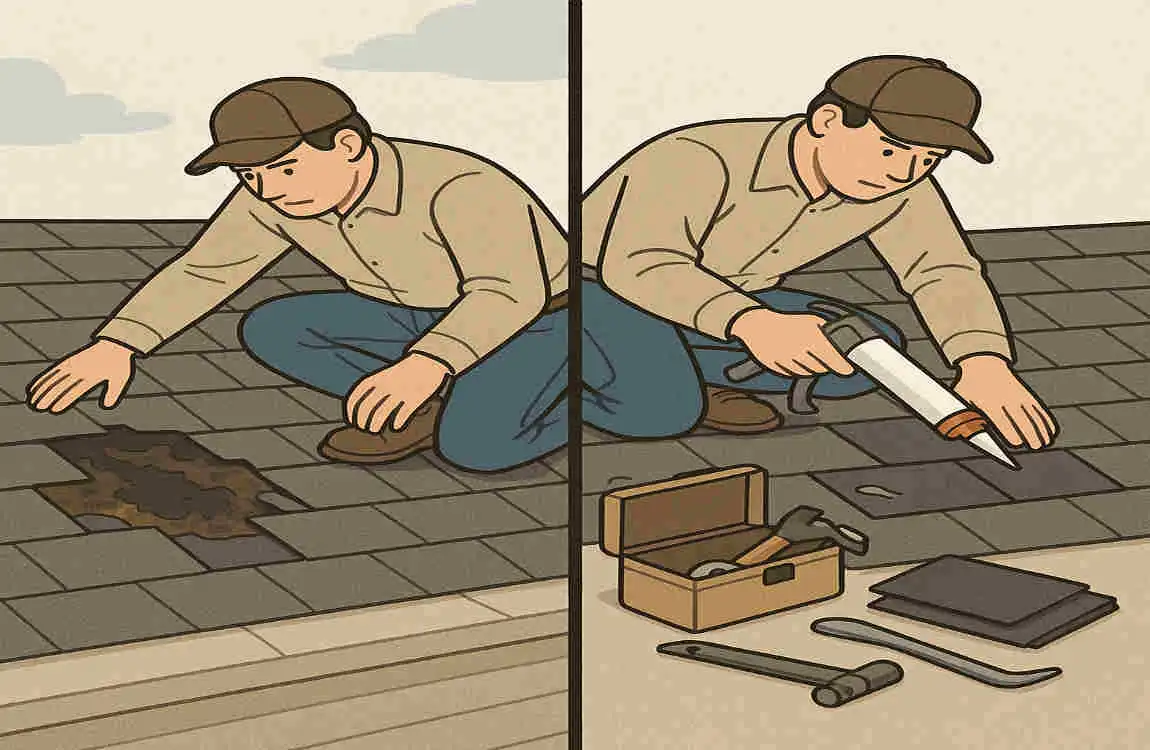
Patching small holes is manageable for handy homeowners. Clean the area thoroughly, apply roofing cement liberally, and press a piece of flashing or shingle over it. Seal the edges with more cement.
For curled shingles, apply roofing cement along the edges and press them down firmly. Weight them down for 24 hours if needed.
Cracked shingles can often be repaired rather than replaced. Apply roofing cement under the crack, press together, and then apply more cement on top. Spread it with a putty knife for a smooth finish.
Knowing When to Call the Pros
Some situations demand professional expertise. If you’re dealing with extensive damage, structural issues, or leaks around complex areas like skylights, it’s time to call in reinforcements.
Getting estimates? Contact at least three contractors. Ask for detailed, written quotes that break down labor and materials. This transparency helps you understand exactly what affects your roof leak repair cost.
Smart Cost-Saving Strategies
Regular maintenance is your secret weapon against high repair costs. Clean your gutters twice yearly. Trim overhanging branches. Remove debris from your roof promptly.
Schedule professional inspections after major storms. Many contractors offer free or low-cost inspections, hoping to earn your business if repairs are needed.
Consider preventive treatments like roof coatings or sealants. These can extend your roof’s life and prevent leaks, typically costing $500-2,000 – much less than major repairs.
Insurance and Warranty Considerations
Check your homeowner’s insurance policy. Storm damage is often covered, which can significantly reduce your out-of-pocket costs for roof leak repair. Document damage thoroughly and file claims promptly.
Many roofing materials come with warranties. If your roof is relatively new, repairs might be covered. Keep all documentation from your original installation—it could save you thousands.
Hiring a Professional: What to Expect and How to Choose
Essential Questions for Contractors
When interviewing potential contractors, come prepared with specific questions. Ask about their experience with your type of roofing material. How long have they been in business? Can they provide local references from the past year?
Inquire about their process. How do they identify the leak source? What’s their approach to minimizing future problems? Understanding their methodology helps you gauge their expertise.
Don’t shy away from discussing money. Ask for a detailed breakdown of the roof leak repair cost. What’s included? What might cause the price to increase? Are there any guarantees or warranties?
Verifying Credentials and Insurance
Never skip this step. Verify that your contractor has proper licensing for your area. Check with your state’s licensing board—it only takes a few minutes online.
Insurance is non-negotiable. Your contractor should have both liability insurance and workers’ compensation. Ask for certificates of insurance and verify them with the insurance company. This protects you from liability if an accident occurs on your property.
Look for additional credentials, such as manufacturer certifications or professional organization memberships. These indicate a commitment to quality and ongoing education.
Red Flags to Avoid
Watch out for contractors who demand large upfront payments. Reputable professionals typically ask for 10-30% down, with the balance due upon completion.
Be wary of door-to-door solicitors, especially after storms. Legitimate contractors are usually too busy to go door-knocking. High-pressure sales tactics are another warning sign.
Extremely low bids often indicate corners will be cut. If one estimate is significantly lower than others, ask why. Sometimes it’s efficiency, but usually it’s inferior materials or missing steps.
Additional Costs and Hidden Expenses to Watch For
Permit and Inspection Fees
Many homeowners forget about permit costs when budgeting for repairs. Depending on your location and the extent of work, permits can add $50-500 to your project. Some repairs don’t require permits, but significant work usually does.
Professional contractors typically handle permit applications, but the cost gets passed to you. Always confirm who’s responsible for obtaining permits and whether the permit fees are included in your estimate.
Structural Surprises
Once work begins, contractors might discover additional damage. Rotted decking is a common surprise that can add $500- $ 3,000 to your bill. Damaged rafters or trusses are even more expensive to repair.
This is why detailed inspections matter. Good contractors will warn you about potential hidden issues before work begins, helping you budget for worst-case scenarios.
Cleanup and Disposal Costs
Roofing projects generate debris. Disposal fees can add $100-500 to your total cost, depending on the amount of material removed. Some contractors include this in their estimate; others bill it separately.
Ask about cleanup procedures. Will they protect your landscaping? How will they handle nail pickup? Proper cleanup is part of professional service and affects your final roof leak repair cost.
Maintenance Tips to Minimize Future Roof Leak Repair Costs
Creating a Maintenance Schedule
Consistency is key to preventing expensive repairs. Mark your calendar for bi-annual roof inspections – once in spring and again in fall. These seasonal checks help you catch problems early.
Clean your gutters at least twice a year, more often if you have overhanging trees. Clogged gutters cause more roof leaks than most homeowners realize. Consider installing gutter guards to reduce maintenance frequency.
Schedule professional inspections every 3-5 years, or after severe weather events. These thorough examinations can identify issues you might miss and prevent costly roof-leak repairs down the road.
Post-Storm Protocol
After significant storms, perform a ground-level visual inspection. Look for apparent damage, such as missing shingles or bent flashing. Document any damage with photos for insurance purposes.
If you suspect damage, don’t wait. Temporary repairs, such as tarping, can prevent water infiltration until permanent repairs are made. Many contractors offer emergency storm damage services.
Investing in Prevention
Consider preventive treatments as investments rather than expenses. Roof coatings can extend your roof’s life by 10-15 years for a fraction of replacement cost. Regular moss and algae treatments prevent deterioration of roofing materials.
Proper attic ventilation and insulation aren’t just about energy efficiency. They prevent ice dams and reduce moisture buildup that can lead to leaks. This investment pays dividends in the form of both avoided repairs and lower utility bills.
