

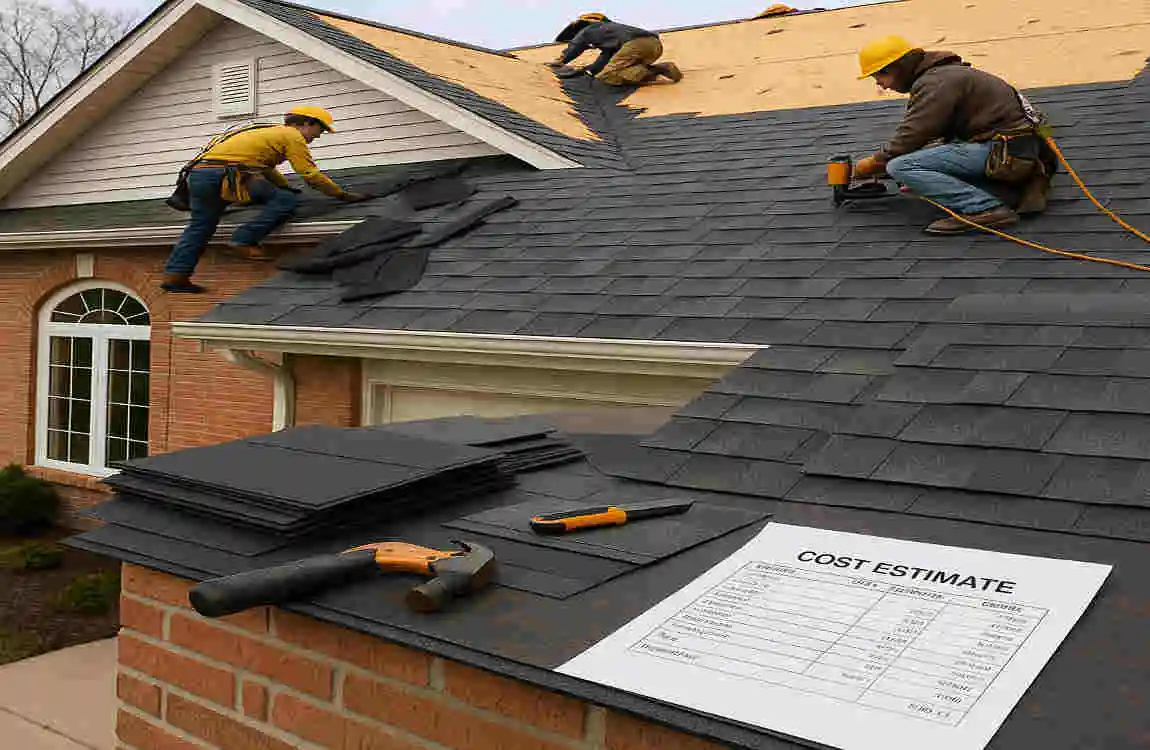
Your roof stands as the first line of defense against nature’s elements, protecting everything you hold dear inside your home. When it comes time to replace this crucial barrier, one question echoes through every homeowner’s mind: “How much does it cost to replace a roof?”
Understanding the financial commitment involved in roof replacement isn’t just about numbers on a quote. It’s about making informed decisions that protect your investment for decades to come. Whether you’re facing emergency repairs or planning ahead for an aging roof, accurate budgeting can mean the difference between a smooth project and financial stress.
Understanding Roof Replacement: What Does It Involve?
What Exactly Is Roof Replacement?
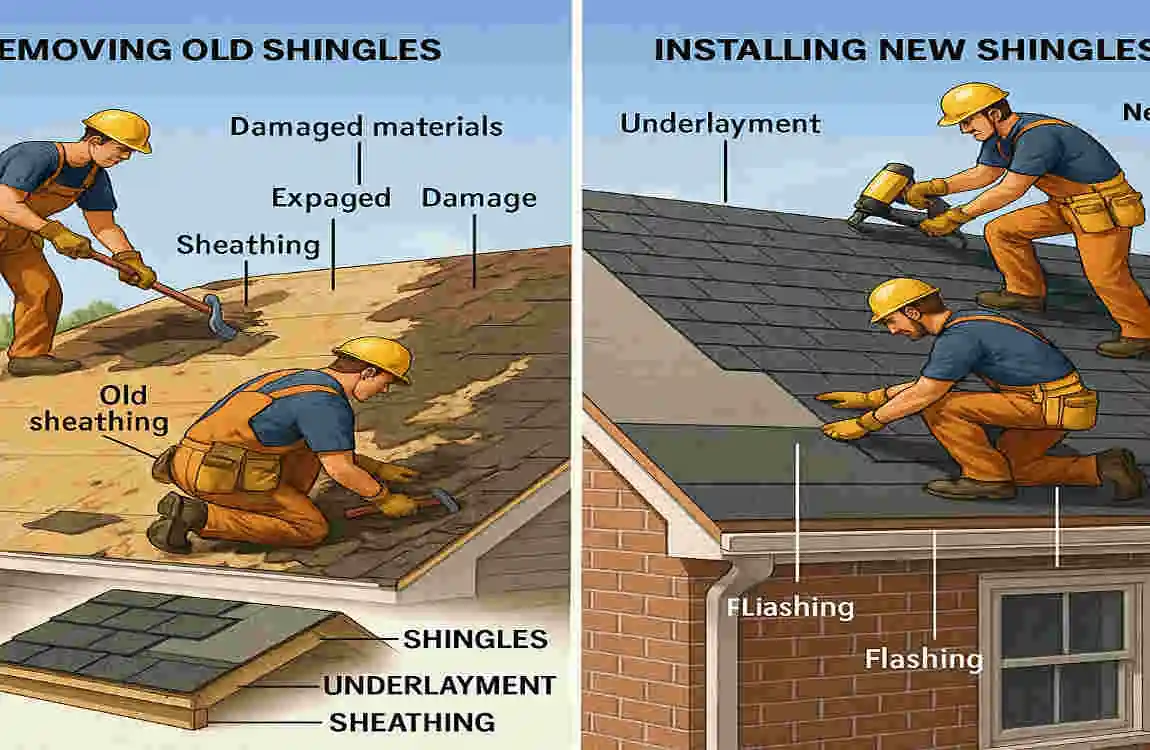
Roof replacement goes far beyond simply swapping old shingles for new ones. This comprehensive process involves stripping your existing roof down to the decking, inspecting and repairing the underlying structure, and installing an entirely new roofing system. Think of it as giving your home a complete protective makeover from the top down.
The process typically includes removing all old materials, examining the roof deck for damage, replacing any compromised wood, installing new underlayment and ice barriers, and finally adding your chosen roofing material. Professional contractors also ensure proper ventilation and Install new flashing around chimneys, vents, and other roof penetrations.
Signs Your Roof Needs Replacement vs. Repair
Not every roofing issue requires complete replacement. Minor problems like a few missing shingles or small leaks often need only repairs. However, certain warning signs indicate it’s time for full replacement.
Watch for these telltale indicators:
- Shingles that are curling, cracking, or missing in large patches
- Daylight visible through the roof boards in your attic
- Sagging areas on your roof deck
- Excessive granules in your gutters
- Water stains on interior ceilings and walls
- Your roof is approaching or has exceeded its expected lifespan
Average Lifespan of Different Roofing Materials
Every roofing material comes with its own expected service life. Understanding these timelines helps you plan and budget for eventual replacement.
Asphalt shingles, the most common choice in American homes, typically last 20 to 30 years. Architectural shingles can push this to 30 years with proper maintenance. Metal roofs offer impressive longevity, often lasting 40 to 70 years, depending on the material and coating.
Clay and concrete tiles can protect your home for 50 to 100 years when properly maintained. Wood shakes and shingles generally need replacement after 20 to 40 years, depending on climate conditions and maintenance. The champion of longevity? Slate roofing can last over a century with minimal maintenance.
Impact of Roof Condition on Cost
The current state of your roof significantly influences replacement costs. A roof that’s been well-maintained with only surface-level wear will cost less to replace than one with extensive structural damage.
Water damage to the decking can add thousands to your project cost. Rotted rafters or trusses require carpentry work before new roofing installation begins. Even seemingly minor issues like poor ventilation can lead to premature deterioration, increasing the scope and cost of replacement.
Factors That Influence Roof Replacement Cost
Roof Size and Complexity
The most obvious factor affecting your replacement cost is roof size. Contractors measure roofs in “squares,” with one square equaling 100 square feet. A typical single-family home might have 20 to 30 square feet of roofing.
But size tells only part of the story. Roof complexity dramatically impacts pricing. A simple gable roof costs less to replace than a complex design with multiple valleys, dormers, and varying pitch angles. Each architectural element requires additional labor, materials, and expertise.
Steep roofs present special challenges. Pitches exceeding 6:12 require extra safety equipment and slow down work progress. Some extremely steep roofs might need specialized scaffolding, adding to both material and labor costs.
Type of Roofing Material Used
Your choice of roofing material represents one of the most significant cost variables in any replacement project. Each material brings its own price point, installation requirements, and long-term value proposition.
Basic three-tab asphalt shingles offer the most budget-friendly option, while architectural shingles provide enhanced durability and aesthetic appeal at a moderate price increase. Metal roofing costs more initially but offers exceptional longevity and energy efficiency.
Premium materials like slate, clay tiles, or cedar shakes command top dollar but deliver unmatched beauty and decades of service. Synthetic alternatives to these Premium materials provide similar aesthetics at more accessible price points.
Labor Costs in Different Regions
Geographic location plays a crucial role in determining labor costs. Urban areas with higher costs of living typically see higher contractor rates. A roof replacement in San Francisco or New York City will cost significantly more in labor than the same project in rural Kansas.
Regional weather patterns also influence pricing. Areas prone to severe weather may require additional reinforcement or specialized materials, increasing both material and labor costs. Contractors in hurricane zones, for instance, must follow stricter building codes that add to project complexity.
Roof Accessibility and Pricing Impact
How easily workers can access your roof directly affects labor costs. Single-story homes with minimal landscaping obstacles cost less to work on than multi-story buildings surrounded by mature trees or delicate gardens.
Contractors need safe, efficient access to transport materials and remove debris. Homes requiring special equipment like cranes or extended scaffolding will see higher quotes. Even factors like narrow driveways that prevent close parking of supply trucks can increase labor time and costs.
Additional Repairs and Hidden Costs
Hidden damage often emerges once old roofing is removed. Contractors might discover rotted decking, damaged rafters, or inadequate insulation that requires immediate attention.
Updating components like flashing, gutters, and downspouts during roof replacement makes practical sense but adds to overall costs. Many homeowners also choose to upgrade ventilation systems or add skylights while the roof is exposed, further increasing project scope.
Permit and inspection fees vary by location but typically range from $100 to $1,000. Some areas require multiple inspections throughout the project, each carrying its own fee. Don’t forget disposal costs for old roofing materials, which can add several hundred dollars to your final bill.
Typical Cost Breakdown by Roofing Material
Asphalt Shingles: The Popular Choice
Asphalt shingles dominate the residential roofing market for good reason. Three-tab shingles cost between $3.50 and $5.50 per square foot installed, making a typical 2,000-square-foot roof replacement cost $7,000 to $11,000.
Architectural shingles offer better wind resistance and longer warranties at $4.50 to $7.50 per square foot. For that same 2,000-square-foot roof, expect to pay $9,000 to $15,000. Premium designer shingles can push costs to $8 per square foot or higher.
The affordability of asphalt shingles makes them attractive for budget-conscious homeowners. Modern manufacturing techniques have improved their durability and appearance, with some Premium lines mimicking the look of wood or slate.
Metal Roofing: Durability Meets Efficiency
Metal roofing has surged in popularity thanks to its exceptional longevity and energy efficiency. Steel panels cost $7 to $12 per square foot installed, while aluminum runs $9 to $14 per square foot.
Standing seam metal roofs, prized for their clean lines and superior weather resistance, range from $10 to $16 per square foot. Copper roofing, the Premium metal option, commands $14 to $25 per square foot but can last over a century.
While initial costs exceed asphalt shingles, metal roofs often pay for themselves through energy savings and minimal maintenance requirements. Many insurance companies offer discounts for metal roofs due to their fire and impact resistance.
Tile Roofing: Regional Favorite
Clay and concrete tiles bring Mediterranean charm to homes while providing exceptional durability. Concrete tiles cost $7 to $10 per square foot installed, while traditional clay tiles range from $10 to $18 per square foot.
Installation complexity increases tile roofing costs. These heavy materials often require structural reinforcement, adding $1,000 to $10,000 to project costs. However, their 50 to 100-year lifespan makes them cost-effective over time.
Regional preferences strongly influence tile roofing popularity. Southwest and coastal areas embrace tiles for their heat resistance and hurricane-rated wind resistance.
Premium Options: Wood, Slate, and Synthetics
Wood shakes and shingles create rustic elegance at $8 to $14 per square foot installed. Cedar remains the most popular wood roofing material, offering natural insulation and distinctive weathering patterns.
Slate represents the pinnacle of roofing materials, costing $15 to $30 per square foot installed. This natural stone can last centuries but requires specialized installation expertise and robust structural support.
Synthetic roofing materials bridge the gap between aesthetics and affordability. Synthetic slate costs $7 to $12 per square foot, while synthetic wood shakes run $6 to $10 per square foot. These materials offer a Premium appearance without the weight and maintenance requirements of natural materials.
How Much Does It Cost to Replace a Roof? — Average National Prices
National Average Cost Ranges
Across the United States, typical roof replacement costs range from $5,000 to $45,000, with most homeowners spending between $8,000 and $15,000. These figures reflect complete tear-off and replacement projects for average-sized homes with standard materials.
The national median sits around $11,500 for a 2,000-square-foot home with architectural asphalt shingles. This includes the removal of one layer of old shingles, minor deck repairs, and standard installation practices.
Regional variations can shift these averages significantly. Coastal areas and major metropolitan regions often see costs 20% to 50% higher than the national average, while rural areas might enjoy slightly lower pricing.
Cost Examples by Roof Size
Small roofs (1,000 to 1,500 square feet) typically cost $5,000 to $8,000 with basic asphalt shingles. Upgrading to architectural shingles pushes this range to $6,500 to $11,000.
Medium-sized roofs (1,500 to 2,500 square feet) represent the most common residential projects. Expect to pay $7,500 to $12,500 for standard shingle replacement, or $15,000 to $25,000 for metal roofing.
Large roofs (2,500 to 4,000 square feet) command Premium pricing due to increased material and labor requirements. Basic shingle replacement runs $12,500 to $20,000, while Premium materials can exceed $40,000.
Quick Reference Comparison Table
Roof Size: Asphalt Shingles, Metal Roofing, Roofing Slate Roofing
Small (1,000-1,500 sq ft) $5,000-$8,000 $10,000-$18,000 $10,000-$20,000 $15,000-$30,000
Medium (1,500-2,500 sq ft) $7,500-$12,500 $15,000-$25,000 $15,000-$30,000 $22,500-$45,000
Large (2,500-4,000 sq ft) $12,500-$20,000 $25,000-$40,000 $25,000-$48,000 $37,500-$72,000
How to Estimate Your Roof Replacement Cost Accurately
Measuring Your Roof Size
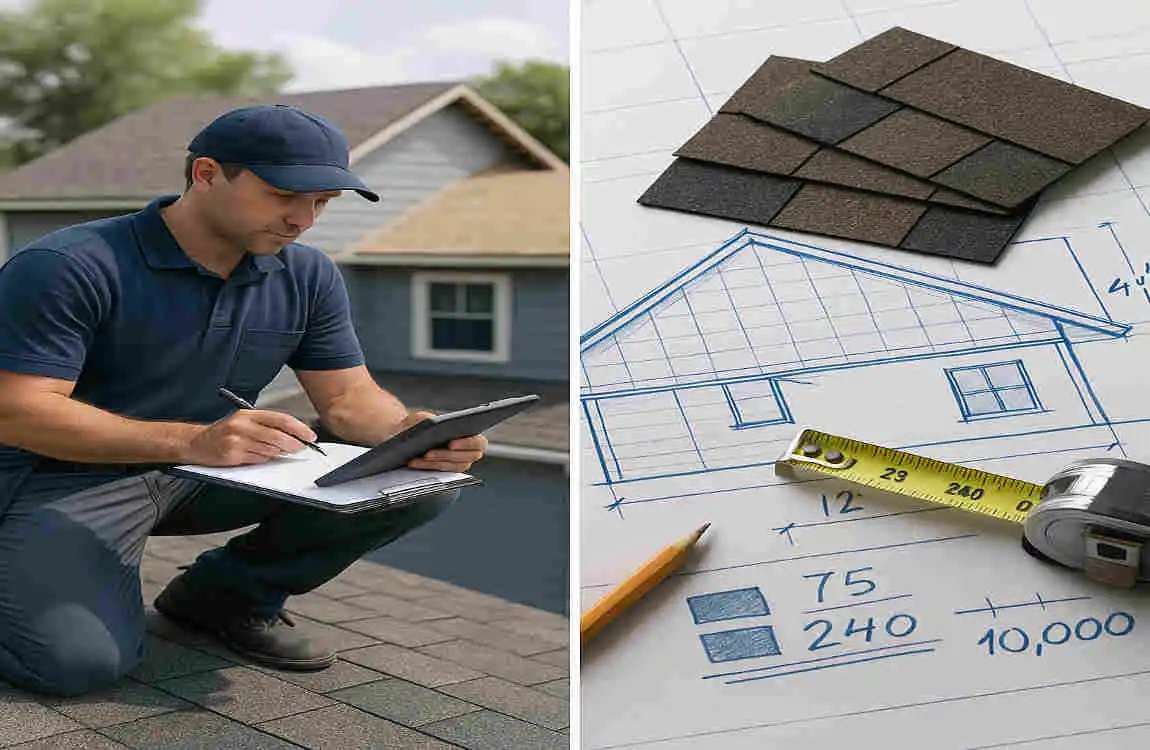
Start your cost estimation by determining your roof’s square footage. While professional measurements provide the most accuracy, you can get a reasonable estimate using your home’s footprint.
Measure your home’s length and width at ground level, then multiply these numbers to get the footprint square footage. Add 10% for a simple gable roof, 17% for a hip roof, or 20% for complex designs with multiple facets.
Remember that the roof square footage exceeds your home’s living space due to overhangs and pitch. A 2,000-square-foot home might have 2,400 to 2,800 square feet of actual roof surface.
Calculating Roofing Squares
Convert your square footage into roofing squares by dividing by 100. A 2,400-square-foot roof equals 24 squares. This standardized measurement helps contractors provide consistent pricing.
Factor in waste allowance when ordering materials. Simple roofs need 10% extra material, while complex designs might require 15% to 20% additional coverage for cuts and overlaps.
Don’t forget to account for starter strips, ridge caps, and hip shingles. These specialized pieces cost more per square foot than field shingles and can add several hundred dollars to material costs.
Using Online Calculators and Getting Professional Estimates
Online roof replacement calculators offer quick ballpark estimates based on basic inputs like zip code, roof size, and material choice. While convenient, these tools can’t account for specific conditions that affect your project’s cost.
Professional estimates provide the most accurate pricing. Reputable contractors perform thorough inspections, measuring not just square footage but also assessing structural integrity, ventilation needs, and local code requirements.
Get at least three detailed estimates from licensed contractors. Compare not just bottom-line prices but also included services, warranty terms, and material specifications. The lowest bid isn’t always the best value if it excludes necessary work or uses inferior materials.
Budgeting Tips for Your Roof Replacement
Setting Aside Contingency Funds
Smart budgeting includes a contingency fund of 10% to 20% above your estimated costs. This buffer covers unexpected discoveries like damaged decking or structural issues that only become apparent during tear-off.
Hidden problems lurk beneath many aging roofs. Water damage might have compromised larger areas than are visible from the initial inspection. Outdated electrical work or inadequate ventilation might require updates to meet current building codes.
Consider seasonal price fluctuations when planning your budget. Spring and summer represent peak roofing season with higher demand and prices. Fall installations offer better pricing but risk weather delays.
Financing Options for Homeowners
Several financing paths can make roof replacement more manageable. Home equity loans or lines of credit offer competitive rates for homeowners with sufficient equity. These secured loans typically provide better terms than personal loans.
Many roofing contractors partner with financing companies to offer payment plans. While convenient, carefully review interest rates and terms. Some promotional offers include deferred interest that can become costly if not paid within the promotional period.
Credit cards work for smaller projects or cover unexpected overages. However, high interest rates make them expensive for financing entire roof replacements. Consider cards with introductory 0% APR periods if you can pay off the balance before regular rates apply.
Insurance Coverage Considerations
Homeowner’s insurance might cover roof replacement if damage resulted from covered perils like storms, fire, or falling trees. Age and maintenance history affect coverage eligibility.
Document storm damage immediately with photos and written descriptions. File claims promptly, as insurers often impose time limits. Keep records of all roof maintenance and repairs to support your claim.
Understand your policy’s terms regarding actual cash value versus replacement cost coverage. ACV policies deduct depreciation, potentially leaving you with significant out-of-pocket expenses. Replacement cost coverage provides fuller reimbursement but typically costs more in premiums.
Long-term Savings and Energy Efficiency
Viewing roof replacement as an investment rather than an expense helps justify quality materials and proper installation. Energy-efficient roofing can reduce cooling costs by 10% to 30% in hot climates.
Cool roof materials reflect more sunlight and absorb less heat than traditional roofing. Light-colored shingles, metal roofing, and specialized coatings qualify for energy rebates in many areas. These incentives can offset hundreds or thousands of dollars in upfront costs.
Extended warranties protect your investment and provide peace of mind. Manufacturer warranties cover material defects, while contractor artistry warranties address installation issues. Some Premium shingles include 50-year or lifetime warranties that can transfer to new homeowners, adding value if you sell.
How to Save Money on Roof Replacement
Choosing Cost-Effective Materials
Balancing quality with affordability requires careful material selection. Architectural asphalt shingles offer excellent value, providing enhanced durability and curb appeal without Premium pricing.
Consider materials appropriate for your climate and expected ownership duration. If you plan to sell within five years, Premium materials might not provide a return on investment. However, if this is your forever home, spending more on durable materials saves money long-term.
Look for manufacturer promotions and rebates. Roofing companies often run seasonal specials or offer discounts on discontinued colors. These deals can save hundreds without compromising quality.
Timing Your Replacement Strategically
Off-season scheduling often yields better pricing. Late fall and winter represent slower periods for roofers in many regions. Contractors may offer discounts to maintain steady work for their crews.
Plan ahead when possible rather than waiting for emergency replacement. Rushed projects limit your ability to compare bids and might force you to accept whatever contractor is immediately available.
Bundle roof replacement with other exterior projects for potential savings. Some contractors offer package deals for roofing, siding, and gutter work. Coordinating projects also minimizes disruption to your daily life.
DIY Considerations and Pitfalls
While DIY roof replacement might seem like a money-saver, consider the risks carefully. Roofing ranks among the most dangerous home improvement projects, with falls causing serious injuries and deaths annually.
Professional installation affects warranty validity. Many manufacturers void warranties on DIY installations. Even if you Install materials perfectly, a lack of professional documentation can eliminate warranty protection.
Consider partial DIY involvement for savings without full risk. Some homeowners handle the tear-off themselves, then hire professionals for installation. Others perform prep work like removing satellite dishes or trimming overhanging branches.
Negotiating Without Compromising Quality
Effective negotiation starts with multiple detailed bids. Use competing quotes as leverage, but avoid playing contractors against each other aggressively. Focus on value rather than just price.
Ask about cash payment discounts. Some contractors offer 3% to 5% reductions for cash payment since they avoid credit card processing fees. Ensure any cash deals include proper documentation and receipts.
Inquire about material sourcing options. Some contractors pass along their bulk purchasing discounts. Others might allow you to purchase materials directly if you have access to wholesale suppliers.
Common Mistakes That Can Increase Roof Replacement Costs
Ignoring Timely Maintenance
Deferred maintenance creates compound problems that escalate replacement costs. Small leaks grow into significant water damage. Missing shingles expose the underlayment to deterioration. Clogged gutters cause water backup that rots fascia boards.
Regular inspections catch problems early when repairs cost hundreds instead of thousands. Annual professional inspections typically cost $100 to $300, but can identify issues before they require expensive remediation.
Simple maintenance tasks like cleaning gutters, trimming overhanging branches, and removing debris prevent premature deterioration. These basic steps extend roof life and reduce replacement scope when the time comes.
Selecting Contractors Based on Price Alone
The cheapest bid often becomes the most expensive option. Unlicensed contractors might skip permits, use substandard materials, or cut corners on installation techniques.
Verify contractor credentials before signing contracts. Check license status, insurance coverage, and Better Business Bureau ratings. Request references from recent projects similar to yours.
Read contracts carefully to understand what’s included. Low bids might exclude necessary elements like permits, disposal fees, or flashing replacement. These “extras” can add thousands to your final cost.
Overlooking Structural Damage
Failing to address underlying structural issues before roofing installation leads to premature failure and warranty voids. Sagging rafters, inadequate ventilation, and compromised decking must be corrected first.
Proper ventilation prevents moisture buildup that causes mold, rot, and shingle deterioration. Adding soffit and ridge vents during replacement costs less than retrofitting later.
Structural repairs discovered during replacement can’t be postponed. Budget flexibility becomes crucial when contractors uncover problems requiring immediate attention.
How to Choose the Right Roofing Contractor
Essential Contractor Qualifications
Start your search by verifying fundamental credentials. Licensed contractors meet state requirements for knowledge and experience. Insurance protects you from liability if workers are injured on your property.
Look for manufacturers’ certified installers who receive specialized training on specific products. This certification often provides enhanced warranty coverage and demonstrates a commitment to quality installation.
Check online reviews across multiple platforms. Look for patterns in feedback rather than focusing on individual complaints. Please pay attention to how contractors respond to negative reviews, as this reveals their customer service approach.
Questions to Ask During Estimates
Prepare a comprehensive list of questions for each contractor. Ask about their experience with your specific roofing material and architectural style. Inquire about crew composition—will they use employees or subcontractors?
Request detailed timelines including start date, expected duration, and weather contingency plans. Understand their process for protecting your property during work and cleanup procedures.
Discuss warranty terms explicitly. What does the artistry warranty cover? How long does coverage last? What actions might void warranty protection? Get all warranty terms in writing before signing contracts.
Understanding Contracts and Warranties
Thorough contracts protect both parties by clearly defining project scope, materials, timeline, and payment terms. Ensure contracts specify exact materials, including manufacturer and product names.
Payment schedules should align with project milestones. Avoid contractors requesting large upfront payments. Typical terms include a small deposit, progress payments, and final payment upon satisfactory completion.
Understand the difference between manufacturer and contractor warranties. Material warranties cover defects but not installation issues. Artistry warranties address installation problems but not material failures. Comprehensive coverage requires both types of protection.
Red Flags to Avoid
Beware of door-to-door solicitors, especially after storms. Legitimate contractors rarely need to canvas neighborhoods for work. Storm chasers often provide substandard work and disappear when problems arise.
Avoid contractors who pressure you to sign immediately or offer “today only” pricing. Reputable professionals understand that roof replacement is a significant decision requiring careful consideration.
Be suspicious of cash-only contractors or those lacking proper documentation. Professional contractors provide detailed written estimates, maintain appropriate licensing and insurance, and accept standard payment methods.
