

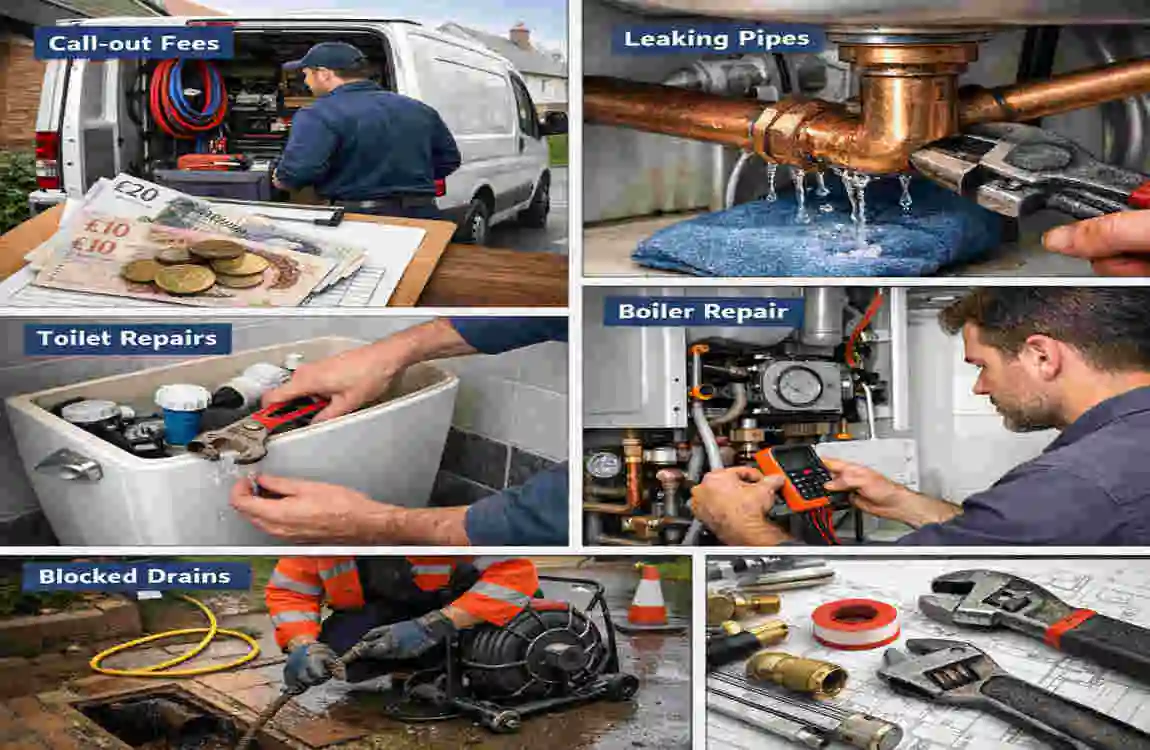
Picture this: you wake up on a chilly Tuesday morning, step into your kitchen to make a cup of tea, and instantly feel your socks soak through. You look down to find a spreading puddle of water creeping out from beneath your sink. Suddenly, your quiet morning has turned into a frantic scramble for towels and buckets. After you manage to turn off the water supply, a very stressful question pops into your head: “How much is it to fix plumbing in a house in the UK?”
If you are a homeowner in the UK, you are certainly not alone in wondering about this. Understanding UK plumbing repair costs can feel like trying to solve a complicated puzzle in the dark. A “plumbing repair” in a typical British home covers a massive variety of jobs. It could mean anything from fixing a stubbornly dripping tap to unblocking a backed-up toilet, or repairing leaky pipes, to sorting out cold radiators or replacing a faulty shower pump. Because the scope of work is so wide, figuring out exactly what you should expect to pay can be incredibly frustrating.
Homeowners often struggle to find clear, transparent pricing. You might call three different plumbers and get three wildly different quotes. Why does one person charge £50 while another asks for £150 for what seems like the same job? This confusion leaves many people worried about being overcharged or, conversely, hiring someone so cheap that the work ends up causing bigger problems down the line.
How Plumber Pricing Works in the UK
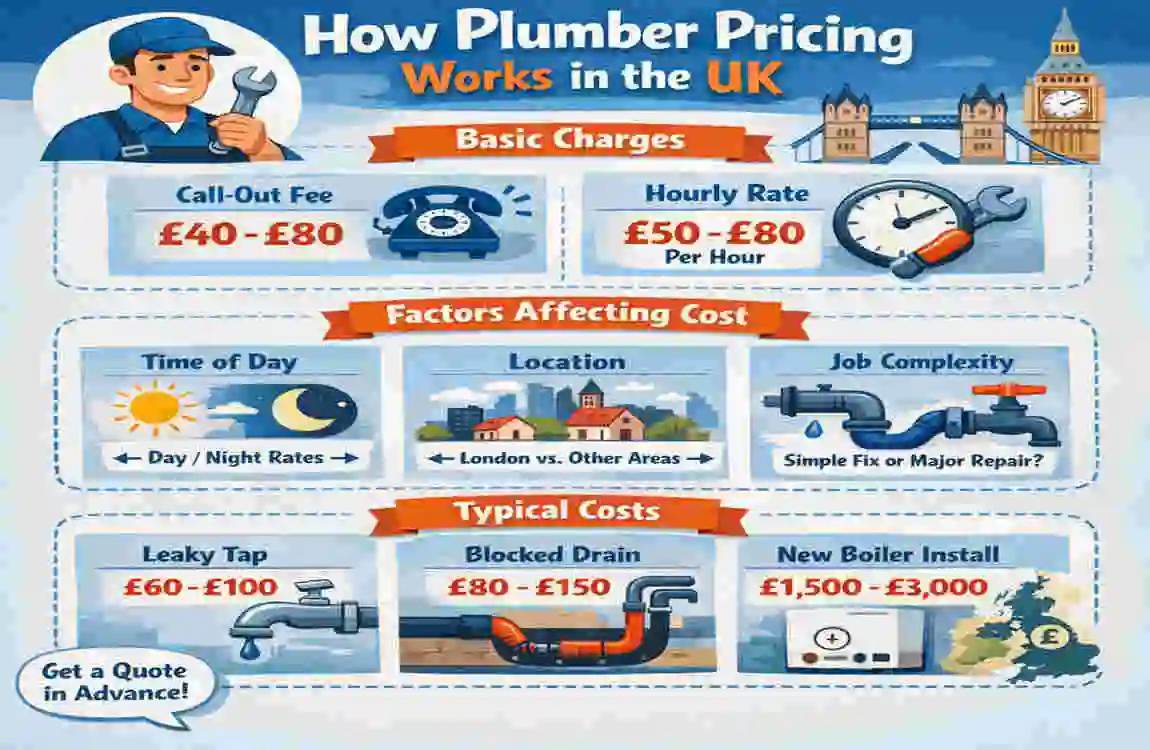
Before we dive into specific job costs, it is incredibly helpful to understand how a plumber actually calculates their bill. Plumbers do not just pull numbers out of thin air. Their pricing usually follows a few standard models, and understanding these can save you a lot of confusion.
Common Pricing Models
When you hire a professional, they will generally quote you using one of three methods: an hourly rate, a fixed flat fee for the job, or a day rate for much larger projects.
For smaller repairs, the hourly rate is the most common. In the UK, the typical hourly rate for a qualified plumber is roughly £40-£70. However, this can fluctuate wildly depending on the plumber’s experience level and where you live. For a straightforward job like swapping out a kitchen tap, an hourly rate makes sense.
On the other hand, many plumbers prefer to quote a fixed price for a job. This means they will look at your leaky pipe or broken toilet, assess the work, and say, “I will fix this for £120, total.” Homeowners often prefer this because it provides peace of mind; if the job takes two hours longer than the plumber expected, you don’t pay a penny more. Finally, for large jobs—like replacing all the pipes in a house—you will likely be quoted a day rate, which generally hovers between £250 and £400 per day.
Call‑Out Charges and Emergency Call‑Outs
Have you ever wondered what an average plumber’s call-out charge in the UK entails? A call-out fee is basically the cost of getting the plumber to your front door. It covers their travel time, the fuel for their van, and the initial diagnosis of your problem. The average call-out fee typically ranges from £50 to £100. Often, plumbers include the first hour of work in the call-out fee, but you should always ask to clarify this before they arrive.
Things get pricier if you need an emergency plumber. If a pipe bursts at 11:00 PM on a Sunday, you are going to pay a premium. Emergency plumber prices in the UK can easily be double the standard rate. You are paying for their willingness to drop everything, sacrifice their weekend or evening, and rush to isolate a leak before it destroys your living room ceiling.
Why Prices Vary So Much
You might be asking, “Why do prices jump around so much?” Several factors come into play. First is your region. A plumber working in central London faces higher living costs, parking fees, and congestion charges, all of which are passed on to customers. A plumber in a rural village might charge less per hour but might have a higher call-out fee to cover the long drive to your farmhouse.
Second is the quality of materials. If you want a basic, functional tap, it will cost far less than a high-end, designer brass mixer. Finally, consider the split between labour and parts, and whether VAT (Value Added Tax) is included in the quote. Always ask if the price you are hearing is “inclusive of VAT,” as that extra 20% can be a nasty surprise on your final invoice!
Typical Plumbing Repair Costs by Job Type (UK‑Wide)
Let’s get down to the numbers. If you are typing “how much is it to fix plumbing in a house in uk” into your search engine, you likely have a specific problem in mind. Below, we have broken down the average costs for the most common household plumbing repairs. Keep in mind that these are ballpark figures based on national averages, and they usually cover both labour and basic materials unless stated otherwise.
Taps and Mixers
Taps are the most frequently used plumbing fixtures in your home, so it is no surprise they wear out.
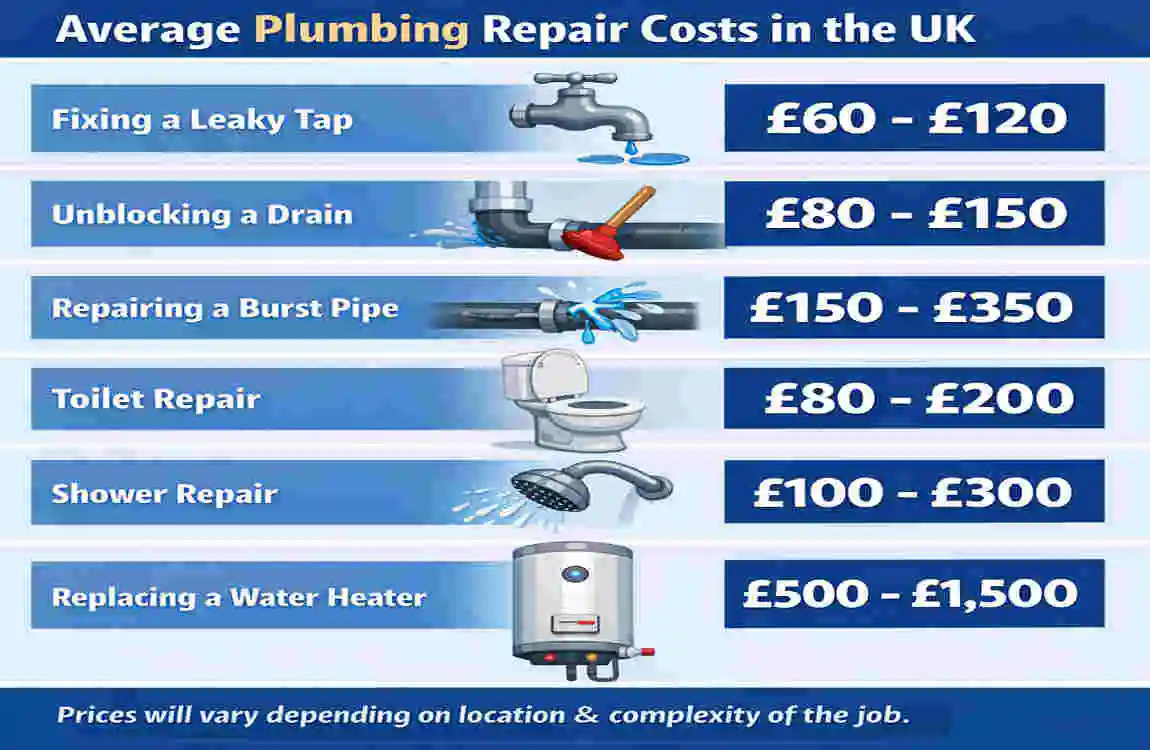
- Fixing a dripping tap: If your tap is keeping you awake at night with a constant “drip, drip, drip,” fixing it is usually a quick job. It typically involves replacing a worn-out washer or ceramic cartridge. You can expect to pay approximately £60 to £125.
- Replacing a tap: Sometimes, a tap is beyond saving, or you want a stylish upgrade. Removing the old tap and installing a completely new one will generally cost around £80 to £150, plus the cost of the new tap.
Blocked Drains and Toilets
There is nothing quite as panic-inducing as watching the water rise in your toilet bowl rather than flush away.
- Unblocking a sink or bath: For a simple blockage caused by hair or grease, a plumber can usually clear it quickly with a plunger or a basic drain snake. This costs about £80-£150. However, if the blockage is deep in your exterior drains and requires high-pressure jetting, the price can climb to £150 to £400.
- Unblocking a toilet: A standard toilet unblocking falls in the £80 to £150 range. If the plumber has to remove the toilet pan to reach the blockage temporarily, expect to pay at the higher end of that scale.
Toilets and Cisterns
Toilets have internal moving parts that eventually degrade.
- Toilet cistern repair: If your toilet is constantly running water into the bowl, or if it simply won’t flush, the internal mechanisms (such as the flush or fill valve) need to be replaced. This is a common and relatively simple fix, usually costing between £100 and £200.
- Full toilet replacement: If the porcelain is cracked or you are doing a mini-makeover, removing the old unit and fitting a new one will roughly cost £150 to £500. This depends heavily on how expensive the new toilet model is and how much labour is required to adjust the existing pipework.
Leaks and Pipes
Water leaks are the silent assassins of home maintenance. They need immediate attention.
- Minor leak repair: A small, accessible leak under your kitchen sink might cost an average of £150 to diagnose and fix.
- Pipe joint repair: If a specific joint in your copper or plastic piping has failed, cutting it out and replacing it usually costs between £100 and £200.
- Major pipe replacement: If you have an old, corroded pipe hidden behind a wall or under floorboards, the cost jumps significantly. Depending on how difficult access is, expect to pay £200-£500 or more.
Showers, Pumps, and Bathrooms
Bathrooms are the plumbing epicentre of your house.
- Fixing a leaking shower: Whether it is a leaky showerhead, a faulty thermostatic bar, or a leaking shower tray, repairs usually cost around £90 to £150.
- Replacing a shower pump: If your home relies on a pump for water pressure and it breaks down, replacing it is a bit more intensive. Expect to pay between £280 and £450.
- Bathroom suite plumbing (labour only): If you are ripping out the whole bathroom and installing a new one, the plumbing labour alone will range from £1,000 to £3,500, depending on how complex the new layout is.
Radiators and Heating‑Related Plumbing
Plumbers don’t just deal with water; many also handle your central heating system.
- Fitting a new radiator: If you want to replace a rusty radiator or move one to a different wall, the labour will cost £150 to £300. You also need to buy the radiator itself, which adds £80-£300 to the bill.
- Central-heating small repairs: Call-outs for cold radiators, balancing the system, or fixing radiator valves usually range from £80 to £400, depending on the exact fault found.
Quick Cost Summary Table
To make things easy for you to digest, here is a quick reference table of average UK plumbing costs:
Plumbing Job Type Average Estimated Cost (UK)What This Usually Includes
Fix dripping tap £60 – £125 Labour, new washers/cartridge.
Unblock toilet/sink £80 – £150 Labour, manual rodding/plunging.
Repair toilet cistern £100 – £200 Labour, replacement flush/fill valves.
Fix minor pipe leak £100 – £200 Labour, localized pipe/joint replacement.
Replace shower pump £280 – £450 Labour, new standard shower pump.
Fit new radiator £230 – £600 Labour AND cost of a standard radiator.
(Note: These prices are estimates and can vary based on the factors discussed below).
Regional Price Differences in the UK
If you ask your friend in London and your cousin in Yorkshire, “How much is it to fix plumbing in a house in the UK?”, you will get two totally different answers. Geography plays a massive role in trade pricing across the country.
Let’s look at the capital first. London and the South East are notoriously the most expensive places to hire any tradesperson. If a minor leak repair costs an average of £150 nationwide, a Londoner might easily be quoted £250-£500 for the same job. Plumbers in London have to factor in sky-high commercial insurance rates, the Ultra Low Emission Zone (ULEZ) charges, expensive parking, and a generally higher cost of living.
Compare this to regional cities like Birmingham, Manchester, or Newcastle. Here, prices align much more closely with the national average. You might pay between £80 and £150 to get a tap replaced or a sink unblocked. The market is competitive, but overheads are significantly lower than in the capital.
If you live in a rural area or a smaller town like Hull or a village in Cornwall, the hourly rate might be the lowest in the country. However, you have to watch out for the call-out fee. Because homes are spread far apart, a plumber might have to drive 45 minutes to reach you. They will naturally need to charge a higher initial fee to cover their travel time and fuel.
Because the answer to “how much is it to fix plumbing in a luxury house in the UK” changes so dramatically by postcode, you should never rely solely on national averages. The best approach is always to gather local quotes specific to your neighborhood.
Big Projects vs. Small Repairs: What Costs More?
It sounds like a silly question—obviously, big projects cost more, right? But the reality of plumbing is that the line between a “small repair” and a “massive project” is sometimes separated by a single, hidden drop of water.
When a “Small Job” Becomes Expensive
Imagine you hire a plumber to fix a wobbly toilet. You expect a £100 bill. But when the plumber lifts the toilet, they discover a slow leak that has been rotting the wooden floorboards underneath for five years. Suddenly, you don’t just need a plumber; you need a carpenter to replace the floor, and perhaps a decorator to fix the ceiling in the room below.
Hidden damage is the number one reason small jobs spiral in cost. Poor access is another culprit. If a leaky pipe is buried beneath heavy, glued-down hardwood flooring or tucked into the tightest, darkest corner of your loft, the plumber has to spend hours just getting to the problem. More hours equal a higher bill. Similarly, if your home has outdated, obsolete pipework (like old lead pipes), the plumber might not be able to patch it; they may be legally and practically required to replace a larger section of the system.
Full‑House Plumbing vs. One‑Room Work
It is also important to distinguish between a “plumbing repair” and a “plumbing installation.”
If you are buying a fixer-upper and want to completely re-plumb a standard 2-bed to 4-bed house, you are looking at a massive installation project. Rough ballparks for a full-house re-plumb range from £13,000 to £24,000, depending on the size of the property and the luxury level of your chosen fittings.
Even stripping it back to just one room is a major investment. If you are doing bathroom-only plumbing (excluding the cost of the actual bath, sink, and toilet fixtures), expect to pay between £2,700 and £4,000 per room. A smaller ensuite might cost £2,400 to £3,000, while a simple downstairs WC could run £1,200 to £1,800.
These jobs shift you into an entirely different price bracket because they require days or weeks of labour, lifting floors, routing new pipes, and running rigorous tests, rather than simply swapping out a broken part in an afternoon.
Factors That Push Up Your Plumbing Repair Bill
Even if you know the average prices, you might still end up with a bill that makes your eyes water. Let’s break down the hidden factors that can push up the final cost of your plumbing repairs.
Emergency and After‑Hours Work
Water doesn’t care about standard business hours. If a pipe bursts at 2:00 AM on a Bank Holiday weekend, you are going to pay for it. Night, weekend, and holiday call-outs usually cost 20% to 50% more than standard daytime work. When looking at emergency plumber prices UK, remember that you are paying for immediate peace of mind and the prevention of catastrophic water damage to your home.
Access and Property Age
We touched on this earlier, but the age of your home is a huge factor. Older period properties often feature quirky layouts, cramped lofts, and outdated pipe sizes that don’t match modern metric fittings. Upgrading these connections takes specialized adapters and extra time. If a plumber has to spend an hour squeezing under your floorboards to reach a valve, you are paying for that uncomfortable hour.
Materials and Quality of Fixtures
You have complete control over this factor. If you want a basic chrome tap from a standard DIY store, your materials bill will be tiny. If you insist on a brushed-brass, designer, waterfall-style mixer tap imported from Italy, your materials bill will skyrocket. Furthermore, high-end, complex fixtures often require more delicate, time-consuming installation, which increases labour costs.
Hidden Damage and Extra Work
Plumbers are experts in pipes, not necessarily drywall or tiling. If a leak has ruined the wall behind your shower, the plumber will fix the pipe, but you will still need to pay a plasterer or tiler to make the wall look new again. Water damage spreads quickly, and repairing the structural aftermath often costs more than the plumbing fix itself.
VAT and Insurance Backups
Never forget the taxman! Ensure you know whether your quote includes VAT (Value Added Tax), which is usually added to the base price for residential work at a rate of 20%. Additionally, highly reputable plumbers carry comprehensive public liability insurance and professional certifications. These overheads mean their hourly rate might be slightly higher than that of an uncertified handyperson. However, that insurance protects you. If an uninsured handyperson accidentally floods your house, you are left with the bill. Paying a slightly higher rate for a fully insured professional is an investment in your own security.
How to Tell If You’re Being Overcharged
Trust is a major factor in letting a tradesperson into your home. Unfortunately, rogue traders do exist, and it is vital to know how to spot them. Here is how to tell if you are being treated fairly or being taken for a ride.
Warning Signs of a Rip‑Off
The biggest red flag is a vague quote. If a plumber looks at your sink, sucks air through their teeth, and says, “That’ll be roughly four hundred quid, mate,” without explaining why, alarm bells should ring. You should never accept a job without a written estimate or at least a clear, itemised breakdown of costs.
Another warning sign is a price that wildly exceeds area averages for incredibly simple jobs. If someone wants to charge you £300 to replace a rubber washer in a dripping tap, they are overcharging you. Period.
What a Fair Quote Should Include
A professional, trustworthy plumber will provide a transparent quote. A fair quote should clearly separate the costs. It should show:
- The breakdown of Labour vs. Materials.
- The expected time they will be on site.
- The initial call-out fee (if applicable).
- A clear statement on whether VAT is included.
- Any “extras” that might apply, such as the cost of legally disposing of your old toilet or rubble.
Getting Multiple Quotes
In the UK, it is normal practice to gather 2 to 3 quotes from different plumbers before making a decision, especially for jobs over £200. This is the absolute best way to gauge the true market rate for your specific problem.
When you compare these quotes, make sure you are comparing apples to apples. Ensure every plumber quotes the same scope of work and the same quality of materials. Do not unthinkingly choose the lowest number; sometimes a quote is suspiciously low because the plumber plans to cut corners or use substandard parts.
DIY vs. Professional: When to Avoid DIY Plumbing
With the rise of YouTube tutorials, many homeowners are tempted to strap on a toolbelt and tackle plumbing issues themselves. While a DIY approach can save you money, knowing your limits is crucial to avoiding disaster.
Simple Jobs That Homeowners Can Handle
There are definitely tasks you can manage on your own without calling a pro. If your tap is dripping, turning off the water, tightening the nut, or replacing a basic washer is a great beginner DIY project. Replacing a simple non-tank showerhead, bleeding radiators with a radiator key, or using a basic plastic drain snake to pull hair out of a bath plug hole are all safe, easy jobs that can save you a call-out fee.
Jobs That Always Need a Pro
However, there is a hard line you should not cross. You should always call a professional for major pipe leaks, hidden water damage, or any job requiring you to cut into copper pipes.
More importantly, never attempt gas-related work. If your plumbing issue involves a gas boiler, a hot water cylinder, or gas pipes, it is illegal and incredibly dangerous to do it yourself. You must use a Gas Safe-registered engineer.
You should also avoid any work that might affect the building’s structure or compliance with UK Building Regulations. A cheap DIY job on your main soil pipe or water supply might violate water regulations. If this happens, you could void your home insurance policy, meaning that if your DIY fix fails and ruins your home, the insurance company won’t pay a single penny.
How to Save Money Without Cutting Corners
If you want to keep your plumbing costs down, the secret is proactive maintenance. Save money by regularly draining and bleeding your radiators so your boiler doesn’t overwork. Clean your showerheads with vinegar to remove limescale blockages. Most importantly, fix tiny drips promptly. A small £80 fix today can prevent a £2,000 ceiling repair for water damage next month.
How to Choose the Right Plumber in the UK
Now that you know what you should be paying, how do you actually find the right person for the job? Choosing a plumber isn’t just about finding the cheapest rate; it is about finding someone reliable, safe, and professional.
Licensing, Insurance, and Certifications
Before you let anyone touch a wrench in your house, ask about their credentials. As mentioned, if the job involves your boiler or gas central heating, checking that they are on the Gas Safe Register is non-negotiable.
For general plumbing, ask to see proof of their public liability insurance. You should also look for plumbers who are members of recognized UK trade bodies. Affiliations with organizations such as the Association of Plumbing & Heating Contractors (APHC) and Trustmark, or being a vetted member on platforms such as Checkatrade, indicate that the plumber operates to a recognized professional standard.
Reviews, References, and Local Reputation
Word of mouth is still incredibly powerful. Ask your neighbors or local community Facebook groups for recommendations. When looking online, utilize Google Reviews, Checkatrade, and MyBuilder. Don’t just look at the star rating; read the actual comments. Look for mentions of punctuality, tidiness, and whether the final bill matched the initial quote.
Clear Communication and Professionalism
A good plumber is also a good communicator. Take note of how they treat you during your first phone call. Do they reply promptly? Are they willing to clearly explain their pricing structure to you? Do they patiently answer your questions without talking down to you? Professionalism before the job starts is a great indicator of the quality of work you will receive.
How Our Business Can Help
If you are looking for a stress-free experience, our team is here to help. We pride ourselves on prompt, reliable response times and 100% transparent pricing—no hidden fees, no nasty surprises. We cover the local area extensively, and our certified professionals are fully insured, meaning you can sit back and relax. At the same time, we get your home’s plumbing back in perfect working order. We treat your home with the same respect we treat our own.
FAQ: “How Much Is It to Fix Plumbing in a House in the UK?”
To wrap up the specifics, here are quick, straightforward answers to the most common questions homeowners ask us:
Q: How much does a plumber charge per hour in the UK?
A: On average, you can expect to pay between £40 and £70 per hour. However, this rate can rise to £100+ per hour in central London or for specialized engineers.
Q: How much should I pay for a plumber to fix a leak?
A: For a minor, easily accessible leak (like under a kitchen sink), expect to pay around £100 to £150. If the leak is hidden behind walls or under floors, the extra time required for access can push the price to £200–£500.
Q: What is the average call‑out fee for a plumber in the UK?
A: The standard call-out fee generally sits between £50 and £100. This covers their travel and initial assessment. Many plumbers include the first hour of labour in this fee, but always confirm this beforehand.
Q: Is it cheaper to fix plumbing on weekdays vs. weekends?
A: Yes, absolutely. Booking a plumber during standard weekday working hours (usually 8 AM to 5 PM) is significantly cheaper. Weekend, evening, or Bank Holiday emergency call-outs typically carry a 20% to 50% premium.
Q: How much does it cost to repair a leaking pipe in a house in the UK?
A: Repairing a standard leaking pipe joint costs about £100 to £200. If a large section of pipe needs to be completely replaced or access is difficult, the price will increase based on the additional labour hours required.
