

Drop ceilings, also known as suspended ceilings, have become a popular choice for homeowners looking to enhance their interior spaces. Not only do they offer functional benefits, such as hiding ductwork and improving acoustics, but they also enhance the aesthetics of your rooms. However, one common question arises when selecting the right drop ceiling: “Is a 2×2 or a 2×4 drop ceiling better for residential spaces?”
What is a Drop Ceiling?
Before diving into tile sizes, let’s take a closer look at what a drop ceiling is and why it’s a popular choice for homes.
Definition and Purpose
A drop ceiling, also known as a suspended ceiling, is a secondary ceiling installed below the central structural ceiling. It consists of a grid framework that holds lightweight ceiling tiles in place. This design is handy for concealing wiring, pipes, and ductwork while still providing easy access for maintenance.
Advantages of Drop Ceilings
Drop ceilings bring several advantages to residential spaces, including:
- Aesthetic Appeal: They add a clean, finished look to rooms while offering a variety of styles and textures.
- Soundproofing: Many drop ceiling tiles are designed to improve acoustics and reduce noise.
- Accessibility: Unlike drywall ceilings, drop ceilings allow for easy access to utilities and wiring above.
- Installation Flexibility: They can accommodate lighting fixtures, HVAC vents, and other functional elements.
Now that we understand what a drop ceiling is, let’s explore the two main tile sizes: 2×2 and 2×4.
Understanding Ceiling Tile Sizes: 2×2 vs. 2×4
Drop ceiling tiles typically come in two standard sizes:
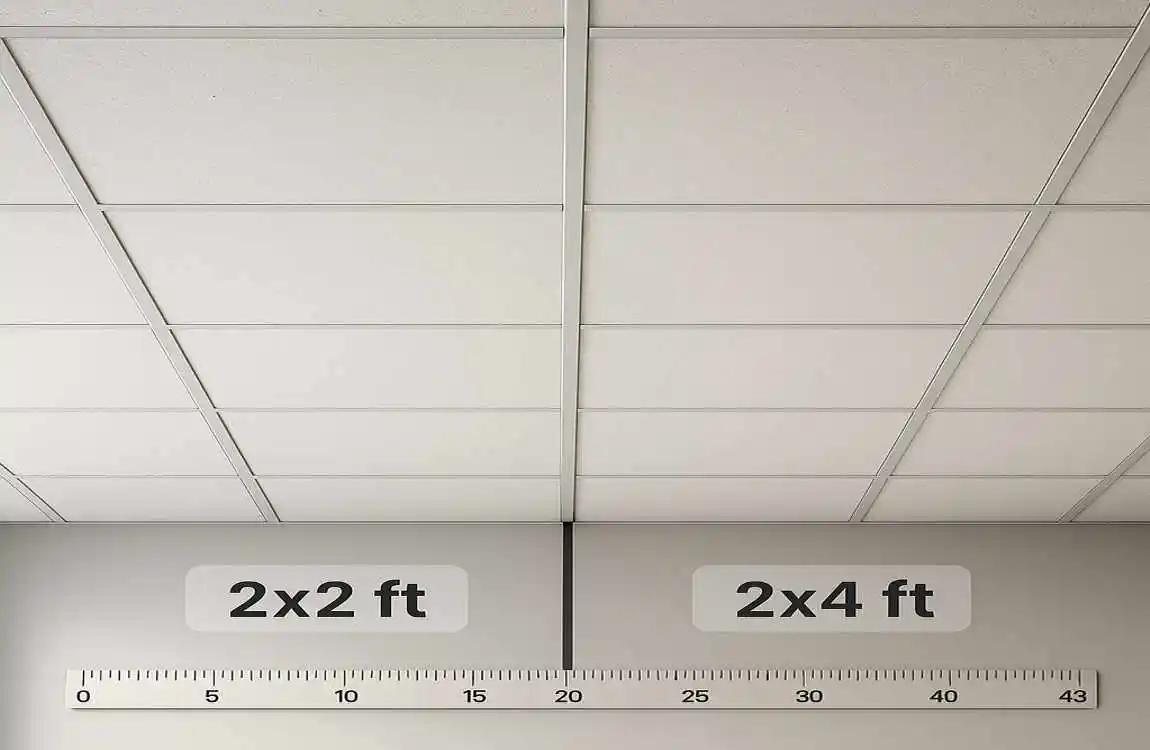
- 2×2 tiles, measuring 24 inches by 24 inches.
- 2×4 tiles, measuring 24 inches by 48 inches.
Visual Comparison
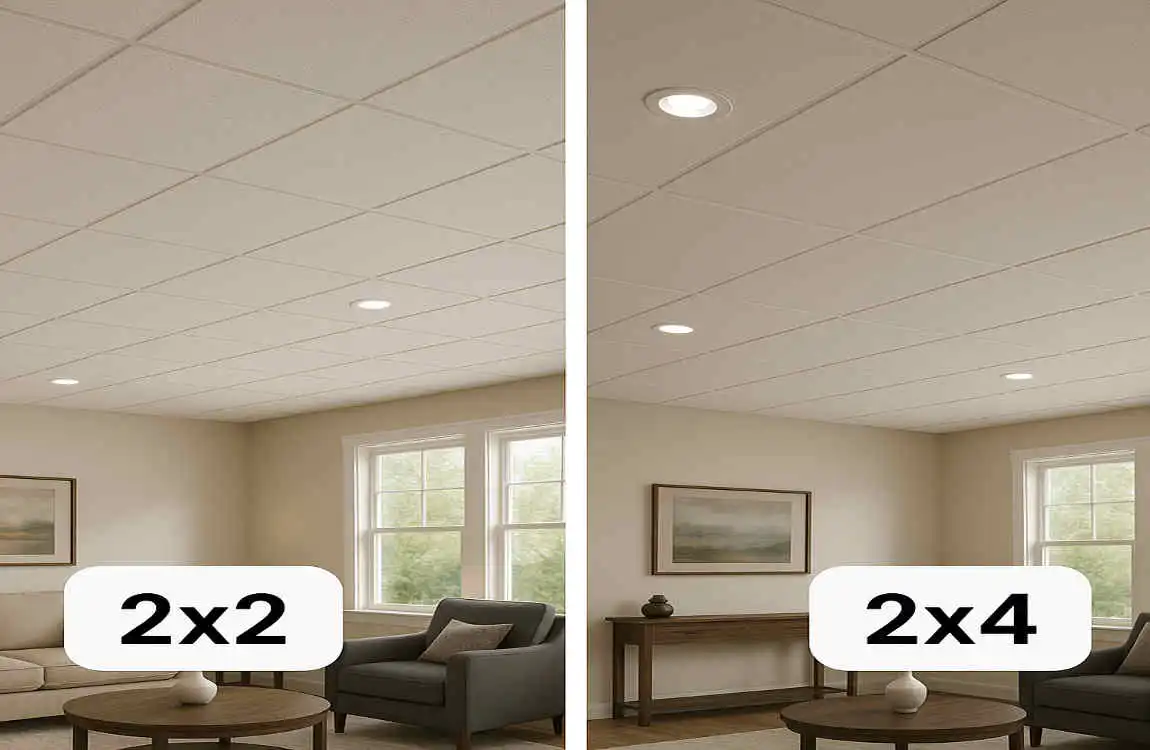
2×2 tiles are square-shaped, while 2×4 tiles are rectangular. This difference in shape and size significantly affects how the ceiling appears and functions in a given space. For instance:
- 2×2 tiles create a compact, grid-like pattern that feels modern and uniform.
- 2×4 tiles result in larger, elongated panels, which can make the ceiling feel more spacious.
Common Grid Sizes
In most residential settings, the grid framework for drop ceilings is designed to accommodate both 2×2 and 2×4 tiles. This means you can switch between the two sizes without needing a separate grid system, giving you greater design flexibility.
Factors to Consider When Choosing Between 2×2 and 2×4 Drop Ceilings
When deciding between 2×2 and 2×4 drop ceiling tiles, several factors come into play. Let’s break them down in detail:
Room Size and Ceiling Height
- Smaller rooms often benefit from 2×2 tiles as their compact size creates a balanced, proportional look.
- Larger rooms tend to accommodate 2×4 tiles better since fewer seams create a cleaner, more open feel.
- Ceiling height also matters—2×2 tiles can make low ceilings feel less cramped, while 2×4 tiles might emphasise height in taller spaces.
Aesthetic Preferences
- If you prefer a clean and modern grid pattern, 2×2 tiles are ideal.
- For a traditional or classic look, 2×4 tiles can provide a timeless style with fewer visible seams.
Ease of Installation and Maintenance
- Smaller 2×2 tiles are lighter and easier to handle during installation or replacement.
- Larger 2×4 tiles may reduce installation time by requiring fewer tiles, but they can be heavier to handle.
Cost Considerations
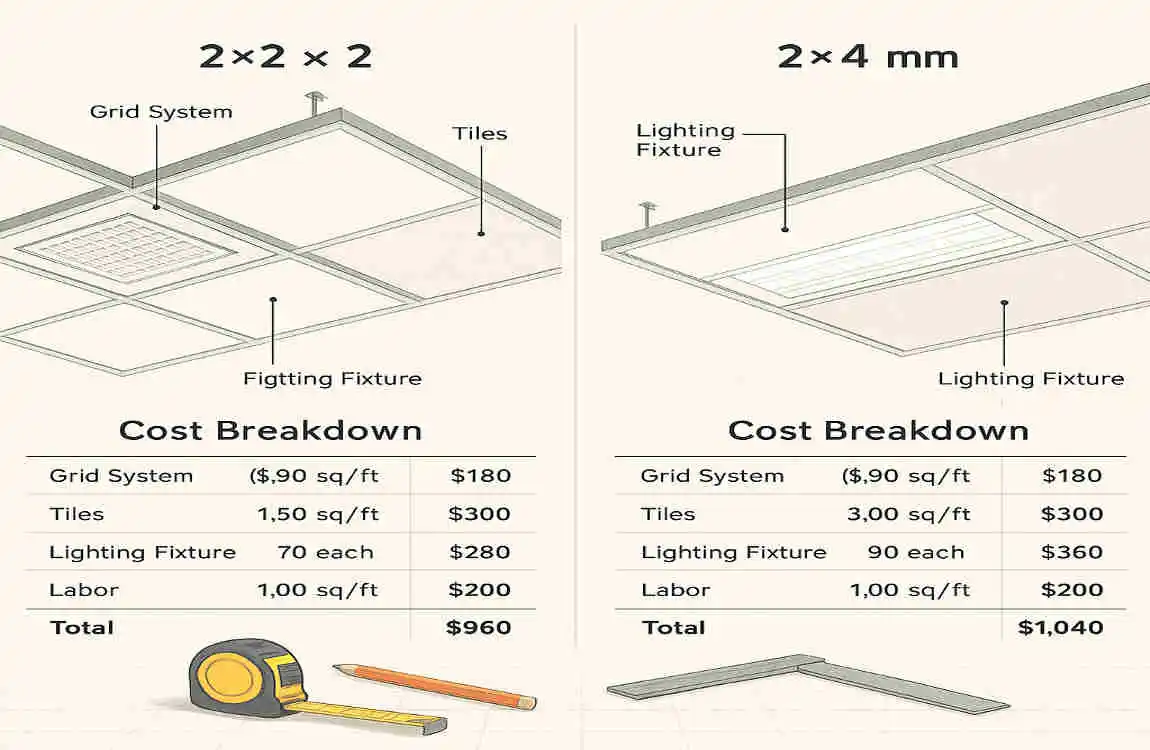
- 2×2 tiles are typically more expensive per square foot because more tiles are needed.
- 2×4 tiles are often more cost-effective, especially for larger spaces, since fewer pieces are required.
Lighting and HVAC Compatibility
- 2×2 tiles work well with modern LED panels and compact lighting fixtures.
- 2×4 tiles are better suited for traditional fluorescent light fixtures and larger HVAC vents.
Acoustics
- 2×2 tiles generally offer better sound absorption due to their smaller size and more frequent seams.
- 2×4 tiles are less effective in soundproofing but still provide decent noise control.
Durability and Material Options
Both sizes are available in a variety of materials, including mineral fibre, PVC, and metal. The choice of material can impact the durability and overall look of the ceiling.
Advantages of Using 2×2 Drop Ceiling Tiles.
Let’s take a closer look at why 2×2 tiles might be the better choice for certain homes:
- Perfect for Small Spaces: Their compact size makes them ideal for smaller rooms, such as bedrooms or home offices.
- Ease of Maintenance: If a tile gets damaged, replacing a 2×2 tile is simpler and quicker than replacing a 2×4 panel.
- Modern Look: The uniform 2×2 tile grid complements minimalist or contemporary interior designs.
- Versatile Lighting Options: These tiles work seamlessly with LED lighting panels and recessed lights.
Advantages of Using 2×4 Drop Ceiling Tiles.
On the other hand, 2×4 tiles shine in larger spaces or for homeowners looking to save on costs:
- Fewer Seams: With fewer tiles required, 2×4 ceilings create a more seamless, open appearance.
- Cost-Effective: Since fewer tiles are required, 2×4 ceilings are often cheaper to Install, especially in large areas.
- Spacious Look: The elongated shape of 2×4 tiles can make a room feel bigger and more expansive.
- Traditional Appeal: They fit well in homes with a classic or traditional aesthetic.
Comparing 2×2 vs. 2×4 Drop Ceilings in Residential Spaces
Here’s a side-by-side comparison to help you visualise the differences:
Aspect2x2 Drop Ceiling2x4 Drop Ceiling
Aesthetics : More uniform, grid pattern visible, Larger tiles, fewer seams
Installation: More tiles to Install, slightly longer. Fewer tiles, quicker installation
Cost: Generally higher due to more tiles. Usually, the material cost is lower.
Maintenance: Easier to replace individual tiles. Larger tiles might be heavier to handle
Lighting Compatibility Works well with LED panels. Fits fluorescent fixtures well
Acoustics : Potentially better sound absorption slightly less surface variation
Ideal Room Size : Smaller to medium rooms , Medium to larger rooms
Installation Tips for Drop Ceilings in Homes
Here are some tips to ensure a smooth installation process:
- Measure the Space: Accurate measurements are key to avoiding waste or shortages.
- Invest in Quality Grids: A durable grid system will provide long-lasting support for your tiles.
- Follow Manufacturer Instructions: Each tile type may have specific installation guidelines.
- Consider DIY vs. Professional Help: While small spaces might be manageable as a DIY project, larger installations often require professional expertise.
